Cryptos my game, DeFis my hobby and Blockchain is my philosophy 🇬🇧 🇦🇪...
PhD Student CBDC | MSc Finance | MSc Business Systems Integration | BSc Economics
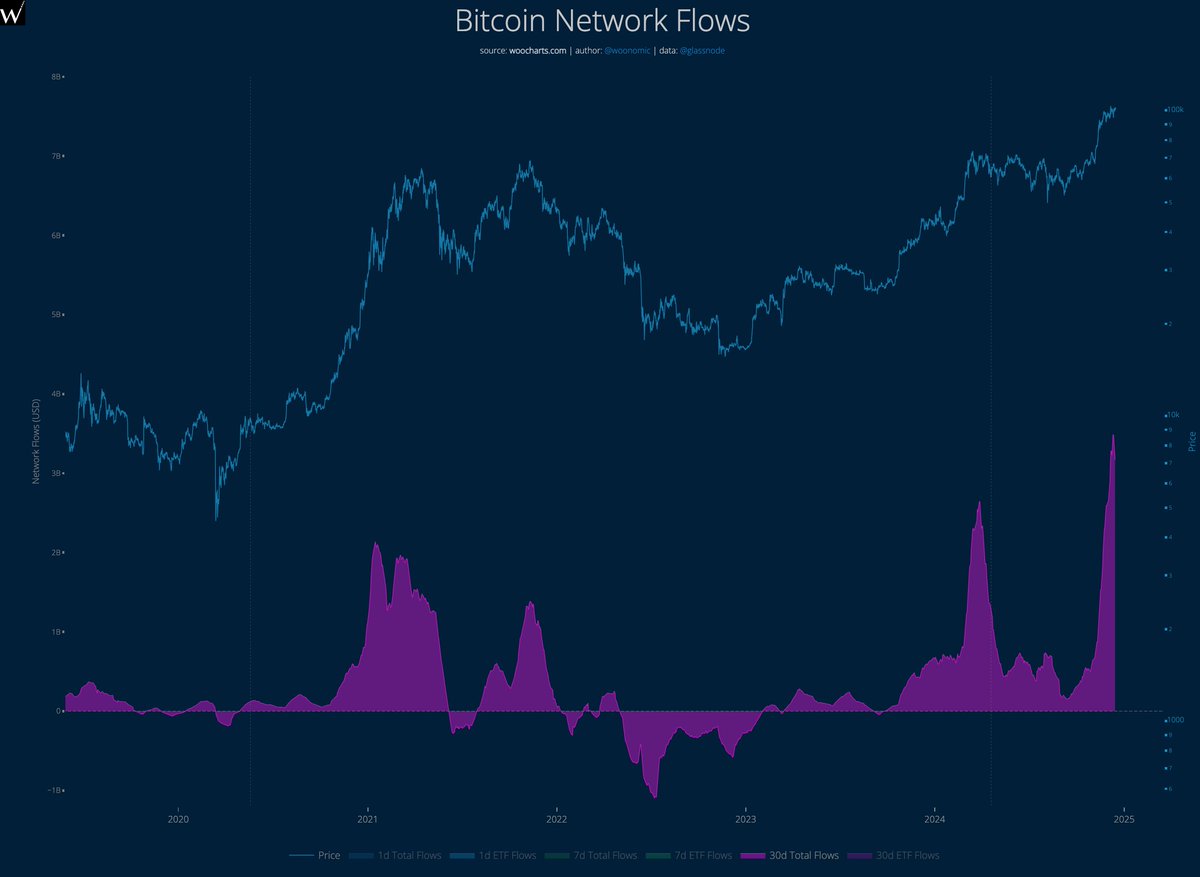
In 2024, #Binance recorded an incredible $21.6 billion in user fund deposits!
· Average Bitcoin deposits grew from 0.36 BTC to 1.65 BTC.
· USDT deposits surged from $19.6K to $230K, reflecting the rising interest from professional and corporate investors.
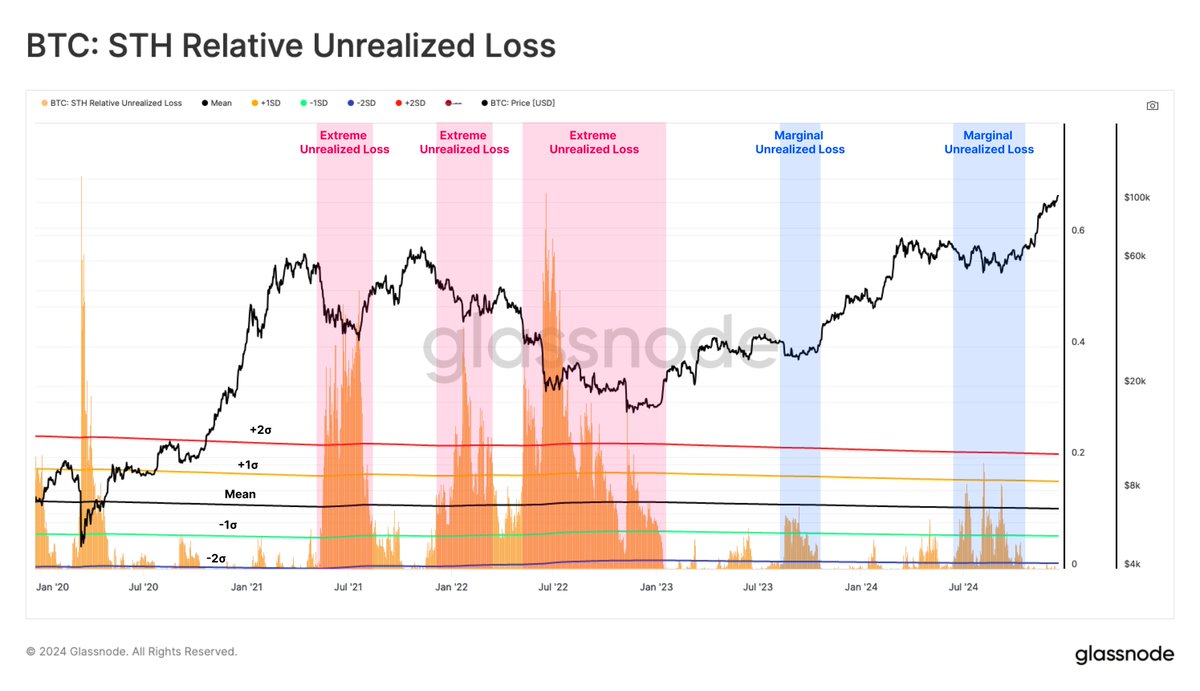
#Bitcoin continues trading above the psychologically important $100k price level, supported by a consistent inflow of capital.
Long-Term Holders are capitalizing on this liquidity, taking the opportunity to distribute supply at scale, setting a new ATH in profit realized of $2.1B.
Discover more in the latest Week On-Chain below👇
https://t.co/FbG61D1yTU
The first of the upper standard deviation bands on aSOPR (adjusted spent output profit ratio) is close to getting hit. With bitcoin going to 140-150k, there is a chance the higher band gets hit.
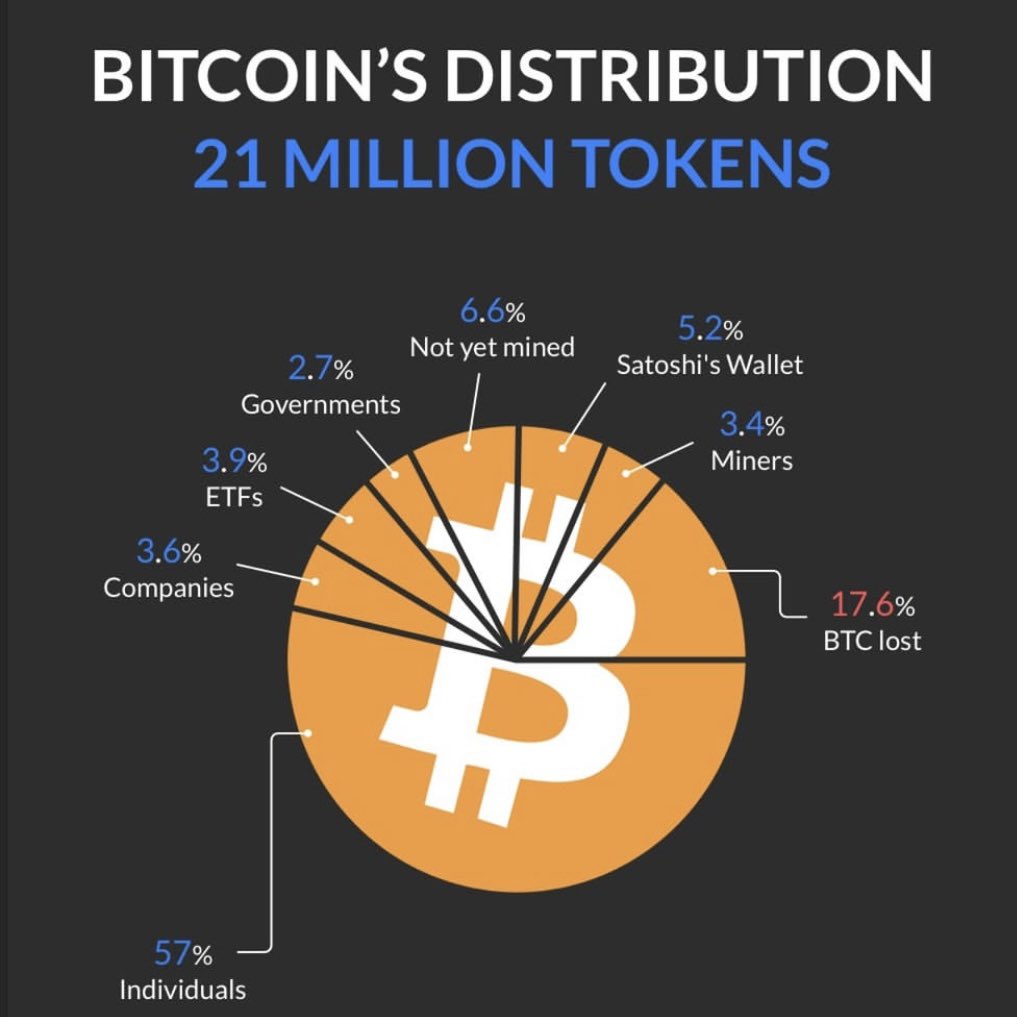
Bitcoin’s current token distribution. What do you notice?
57% Individuals
17.6% Lost
6.6% Not mined yet
5.2% Satoshi Wallet
3.9% ETFs
3.6% Companies
3.4% Miners
2.7% Governments
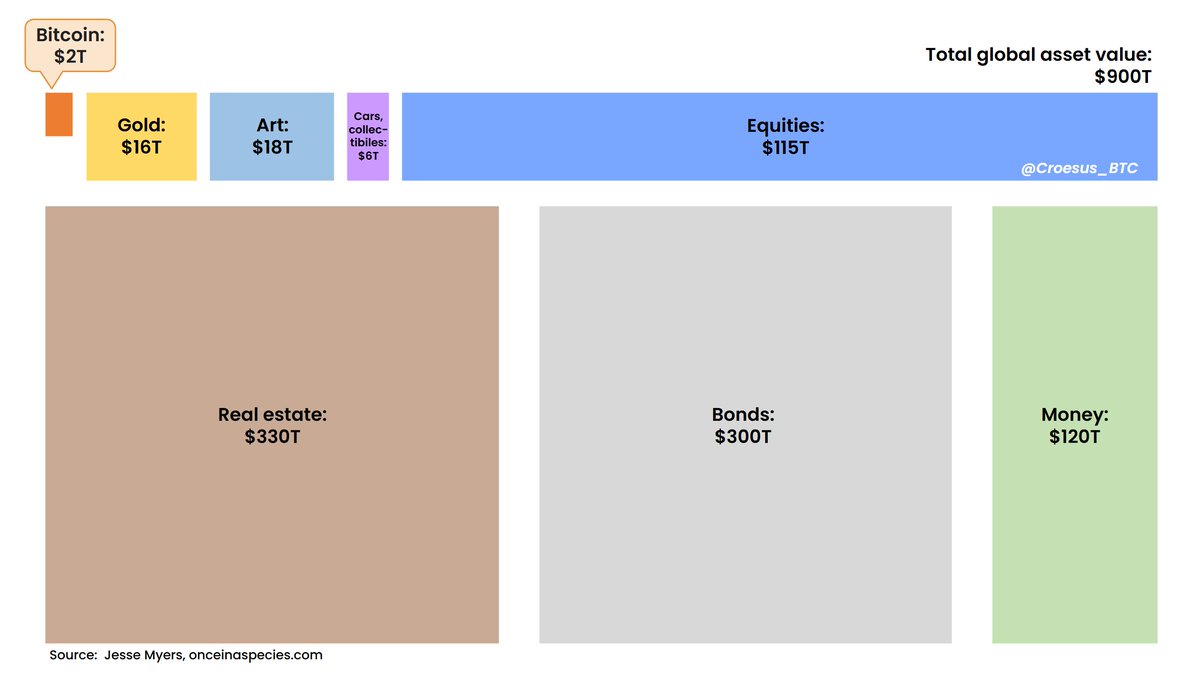
Blackrock officially recommends a 2% allocation to #Bitcoin
The world has $900T in assets. 2% of that would mean a Bitcoin valuation of $18T... aka $900k per BTC.
Are you paying attention?
In the 2017 cycle, it took 8 weeks of upside into Price Discovery before #BTC experienced any sort of deeper pullback
In the 2020/2021 cycle, $BTC rallied 4 weeks into Price Discovery before a deeper pullback
It's only Week 1 right now
#Crypto#Bitcoin
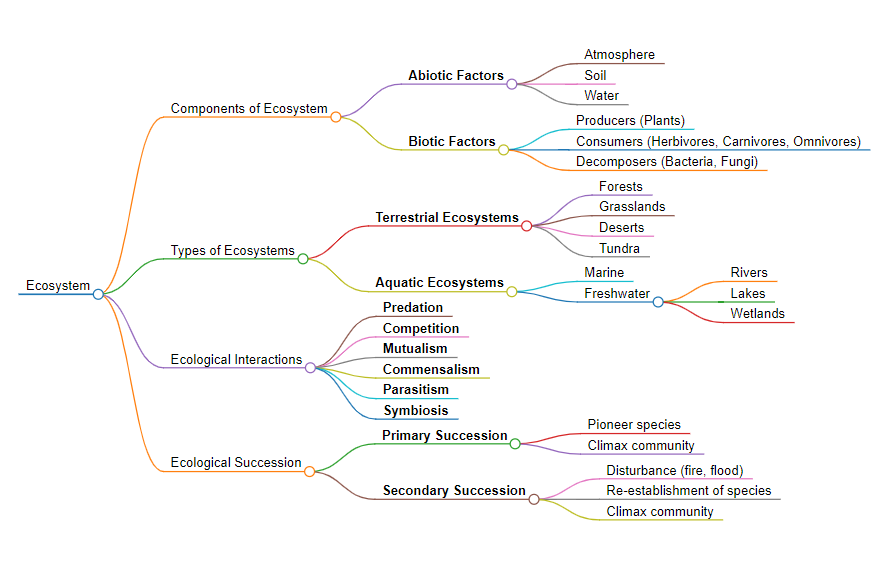
ChatGPT can now create Mind Maps.
No more wasting hundreds of hours making visuals for studying or simplifying complex ideas.
Here’s how to do it for free in a few seconds:
Getting data into Neo4j and modeling it efficiently is a key challenge for users, especially in the early days, says @adamcowley.
In this blog, he explores the possibility of having an LLM's help with the initial data model.
Take a look:
https://t.co/Hq1vsCyPFa
If y'all remember, well over a year ago I broke down how task-specific reasoning and including per-instruction reasoning made LLMs perform better.
Recently, OAI made a "system prompt optimizer" tool.
Guess what the secret sauce is?
That's right.
I'm *provably* years ahead of research papers & innovation by the current leader in the space - and I share this stuff openly, to a very small audience.
But I can't get a gig from any of these companies?
* Language is low bandwidth: less than 12 bytes/second. A person can read 270 words/minutes, or 4.5 words/second, which is 12 bytes/s (assuming 2 bytes per token and 0.75 words per token). A modern LLM is typically trained with 1x10^13 two-byte tokens, which is 2x10^13 bytes. This would take about 100,000 years for a person to read (at 12 hours a day).
* Vision is much higher bandwidth: about 20MB/s. Each of the two optical nerves has 1 million nerve fibers, each carrying about 10 bytes per second. A 4 year-old child has been awake a total 16,000 hours, which translates into 1x10^15 bytes.
In other words:
- The data bandwidth of visual perception is roughly 16 million times higher than the data bandwidth of written (or spoken) language.
- In a mere 4 years, a child has seen 50 times more data than the biggest LLMs trained on all the text publicly available on the internet.
This tells us three things:
1. Yes, text is redundant, and visual signals in the optical nerves are even more redundant (despite being 100x compressed versions of the photoreceptor outputs in the retina). But redundancy in data is *precisely* what we need for Self-Supervised Learning to capture the structure of the data. The more redundancy, the better for SSL.
2. Most of human knowledge (and almost all of animal knowledge) comes from our sensory experience of the physical world. Language is the icing on the cake. We need the cake to support the icing.
3. There is *absolutely no way in hell* we will ever reach human-level AI without getting machines to learn from high-bandwidth sensory inputs, such as vision.
Yes, humans can get smart without vision, even pretty smart without vision and audition. But not without touch. Touch is pretty high bandwidth, too.
1/ Can Large Language Models (LLMs) truly reason? Or are they just sophisticated pattern matchers? In our latest preprint, we explore this key question through a large-scale study of both open-source like Llama, Phi, Gemma, and Mistral and leading closed models, including the recent OpenAI GPT-4o and o1-series.
https://t.co/2tv8Pp9MSz
Work done with @i_mirzadeh, @KeivanAlizadeh2, Hooman Shahrokhi, Samy Bengio, @OncelTuzel.
#LLM #Reasoning #Mathematics #AGI #Research #Apple