Quantum materials are interesting, we study what is behind. The group led by Prof. Alexander Tsirlin is based at the Felix Bloch Institute, Leipzig University
Together with colleagues from @uni__augsburg, we discover atomic-scale polar helix in the lacunar spinel GaTa4Se8 and show the abundance of such helices in chiral crystals as simple as quartz and tellurium. Now in @ChemMater: https://t.co/ZBDTJjxa2l
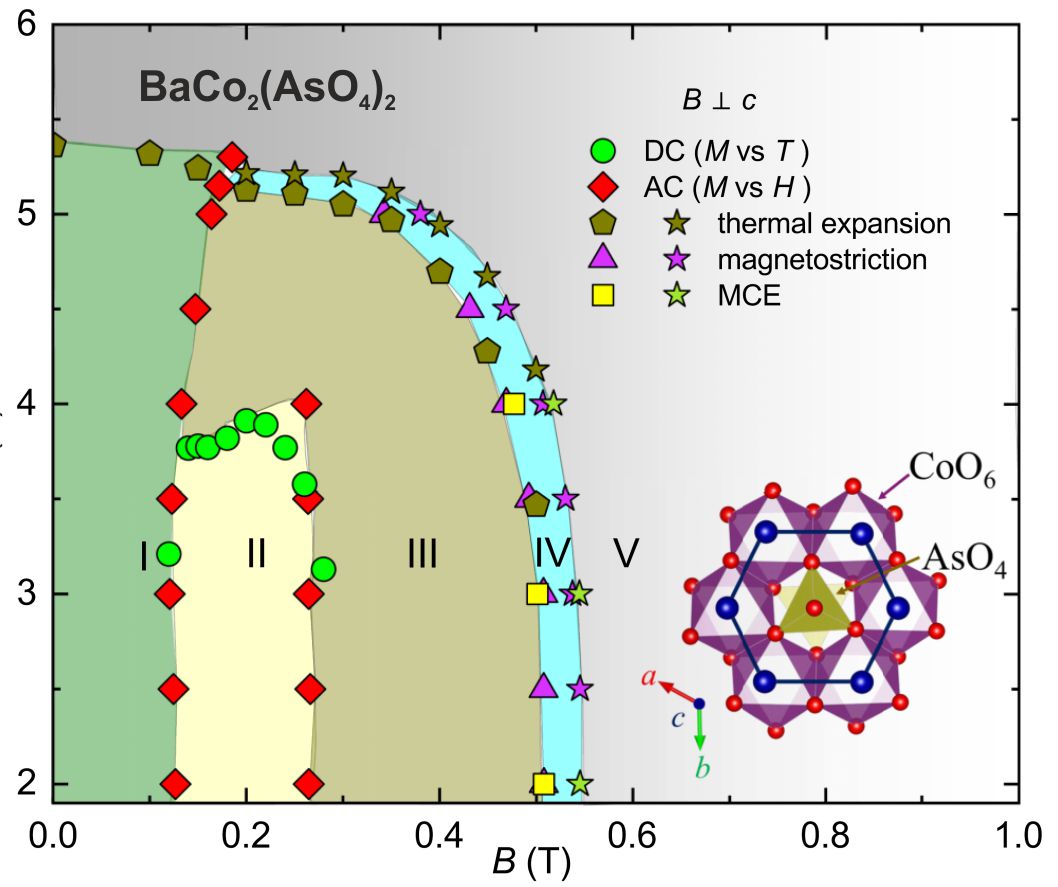
Unlike the famous alpha-RuCl3, the Co-based Kitaev candidate BaCo2(AsO4)2 features multiple field-induced phases, including the unusual pre-saturation phase IV, but none of these phases is a spin liquid, as we show in the new @PhysRevB Letter: https://t.co/k461WHNz6g
#ConQuMat
Our view on the "charge-density wave" in kagome FeGe. Instead of decreasing as a result of gap opening, the low-energy spectral weight increases due to structural modulation. Thanks to Maxim Wenzel, @Uni_Stuttgart and @HZDR_Dresden. Now in @PhysRevLett: https://t.co/nBRZkIKYRu.
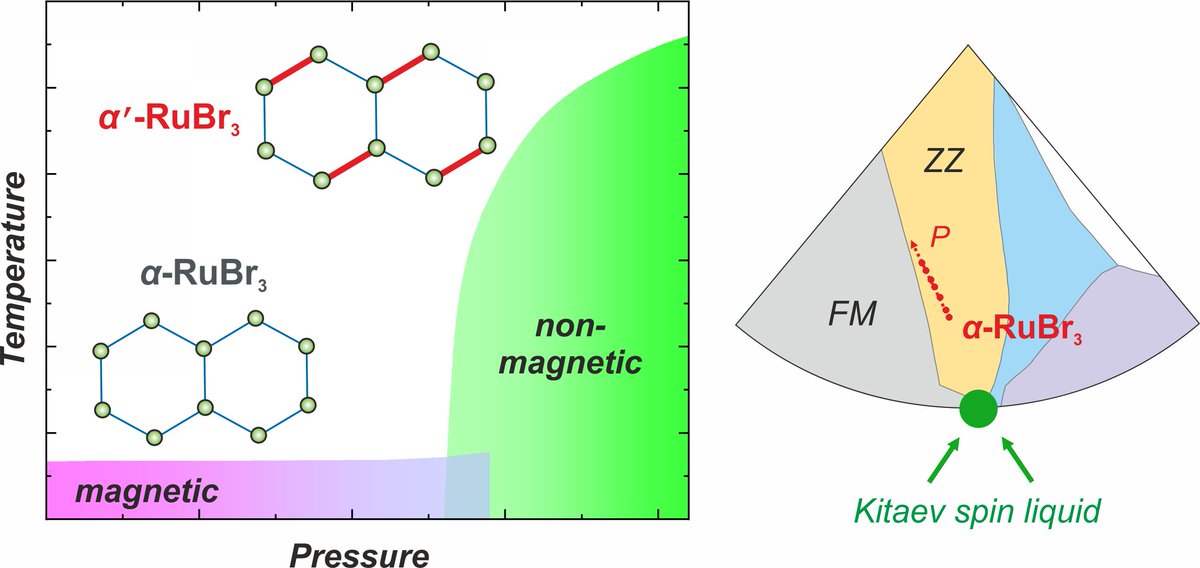
Thanks to the excellent data collected at @esrfsynchrotron, we determined stability range of magnetism in RuBr3, the sibling of famous RuCl3, and revealed its (successful) attempt to avoid being a Kitaev spin liquid. Editor's Suggestion in @PhysRevB: https://t.co/Eo9rwYPLzc
NEW: We have the University of Rochester's 124-page investigation report. A committee of external reviewers made an unequivocal finding: Dias falsified and fabricated data, and he committed serial plagiarism—including in his 2020 NSF proposal.
https://t.co/AhgPjTjBU2
Please RT 📢: PhD and Postdoc positions available in the field of quantum science and technology using spin qubits in diamond 💎 @UniLeipzig@QuantenTech@nmr900
Please check our website for more information: https://t.co/Ro6drQ0Q1l
To order or not to order? CoVO3 polymorphs exploit both options: the zigzag state in honeycomb CoVO3-I and disorder of dissimilar hcp sublattices in CoVO3-II. Our new Adv. Science article with the team led by Angel Arevalo-Lopez (@univ_lille): https://t.co/4IQcvpTHWq
#ConQuMat
In a new @PhysRevB on Na3RuO4 we show how frustration of spin triangles operates on several length scales and uncover the effect of very long-range exchange couplings previously known in ruthenates. Special thanks to @ILLGrenoble (neutrons) and Vera Bader! https://t.co/SIMCTsWGHC
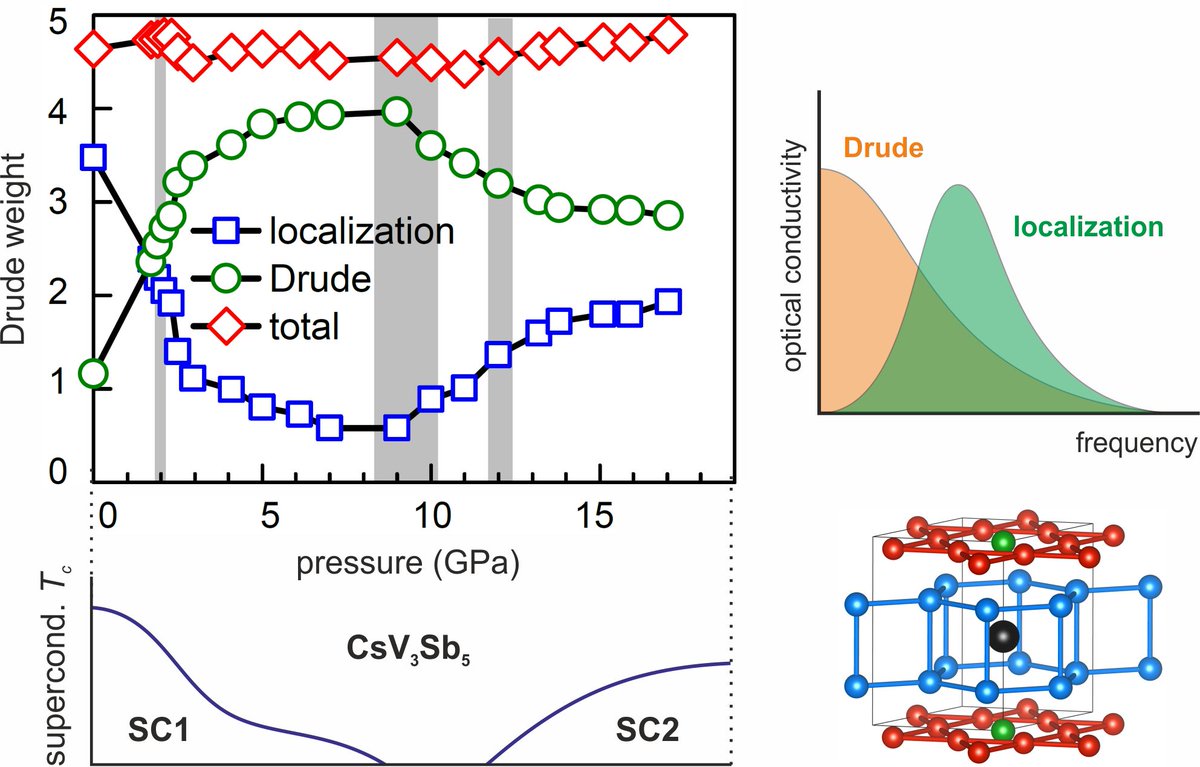
Together with @ece_uyk (@HZDR_Dresden), @Uni_Stuttgart, and @synchroSOLEIL we show that reentrant superconducting in a kagome metal correlates with the evolution of its localized carriers. We take this as evidence for the electron-phonon mechanism. https://t.co/FDQTSV5qPk
We have a PhD position on solid-state quantum materials available from October 2023 as part of the new TRR360 consortium. Candidates with previous experience in crystal growth or numerical/DFT calculations are especially welcome to apply!
https://t.co/go6cgDeNWt
#ConQuMat
Optical spectroscopy is the most sensitive probe of the cubic conditions that decide on the relativistic nature of the ground state. We show this for Ir4+ in the optical study of A2IrX6, now published in @PhysRevB:
https://t.co/EMF5ZBD9AD
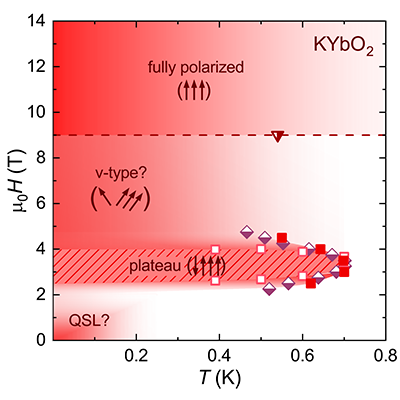
Tailoring a spin liquid requires a good knowledge of how magnetism is affected by chemical substitutions. We show it by comparing and contrasting KYbO2 and NaYbO2, the triangular spin-liquid candidates. Now in @physrevb as Editor's suggestion: https://t.co/t7HOD5ASXJ
Control of hydrostaticity with an apt choice of pressure medium is essential when tuning quantum materials. Pressure gradients transform CsV3Sb5, an archetype kagome metal, into a new monoclinic phase. We report on the consequences in @PhysRevB: https://t.co/Aa8RMZc6m3
Our theory colleagues have shown a new way to spin liquid on the (slightly tuned) pyrochlore lattice, while we tested it using a classical (spin-5/2) magnet. Candidate quantum magnets for this interesting lattice are now sought after.
From minerals to magnetism: The team led by Diana Quintero Castro @UiSIMF, together with @isisneutronmuon and our group, established magnetic model of the mineral named after Peter Paufler, former crystallography prof. at @UniLeipzig. Now in @PhysRevMater: https://t.co/RKTnfbPaWo
Crazy indeed. All these time limits (currently, 6+6 years in Germany) are enforced in a totally unlogical and inconsistent manner by a whim of some bureaucrat from the local administration. I don't know a single researcher who deems these rules helpful or at least practical.