Aquí descargo muchos de los pensamientos que me abruman y por los que debo ir a trabajar. Aquí guardo las ideas prohibidas.
Intento cultivar los positivos.
La idea del estudiante eterno me puede hacer ruido, pero es mi zona de confort. La intento ampliar para escapar del aula como espacio educativo y quiero construir laboratorios y diseñar experiencias para promover mi aprendizaje y mi portafolio.
Crecer es obligatorio
omg, aging as a result of the cells no longer having a goal
aging not mainly caused by damage, but bcs once the organism finishes growing/developing, its cells lose a clear collective goal
w/o a unifying goal, cells gradually lose coordination, leading to degeneration & disease
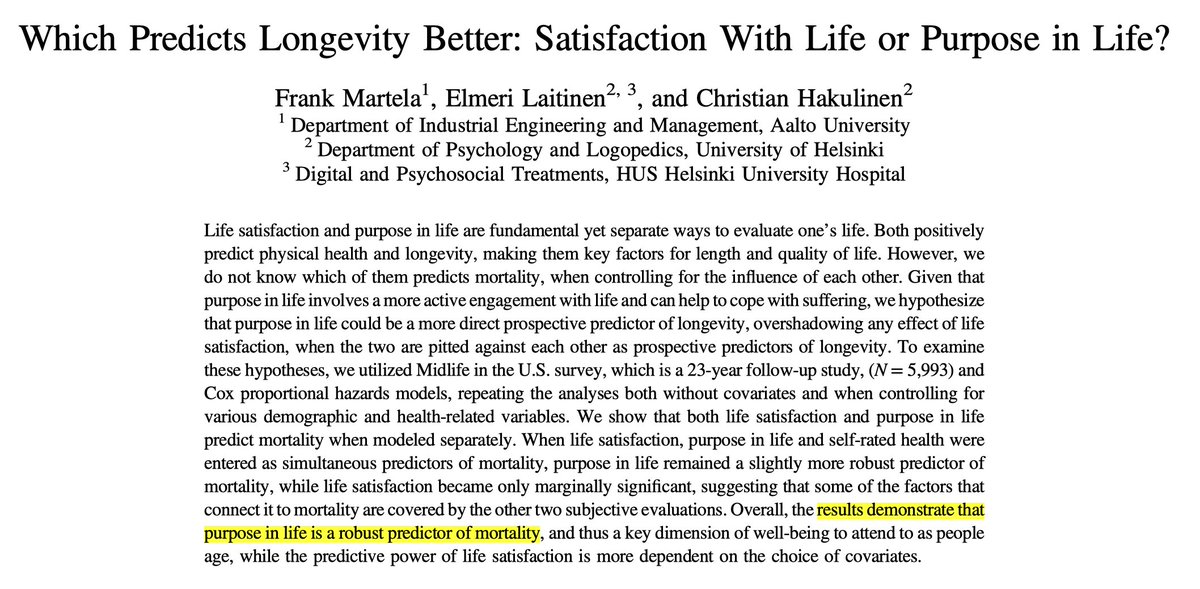
Purpose in life predicts longevity better than life satisfaction
Why? Purpose leads to:
- Active engagement vs. passive contentment
- Resilience during stress
- Meaningful activity and self-worth
Mantener relaciones sociales sólidas se asociaría a perfiles de envejecimiento biológico más favorables, un envejecimiento epigenético más lento y menor inflamación. La socialización condicionaría el envejecimiento y la salud. https://t.co/0NNYwcM2zY
Engaging in creative, skill-based activities like dance, music, visual arts, or gaming can reduce your brain's biological age by ~6 years.
Researchers measured the 'brain age gap' (the difference between predicted and actual brain age) and found that creative experts had significantly younger brains.
This expertise translates to greater neural connectivity in brain regions responsible for motor control, precise timing, mental imagery, and salience detection. They also had more efficient local and global neural networks, which is a signature of robust cognitive function.
Healthy brain aging isn't just about nutrition and exercise protocols. Deliberately challenging your brain with creative and skill-intensive pursuits profoundly enhances neural resilience and longevity.
Many people think of proteins as having a biological function — catalyze reactions, detect pathogens, etc.
At a higher level, though, proteins are programmable materials. They are an advanced form of nanotechnology, made from templates that we can read and write and understand.
And because proteins are programmable, we can use them to build physical logic gates or “smart” drugs.
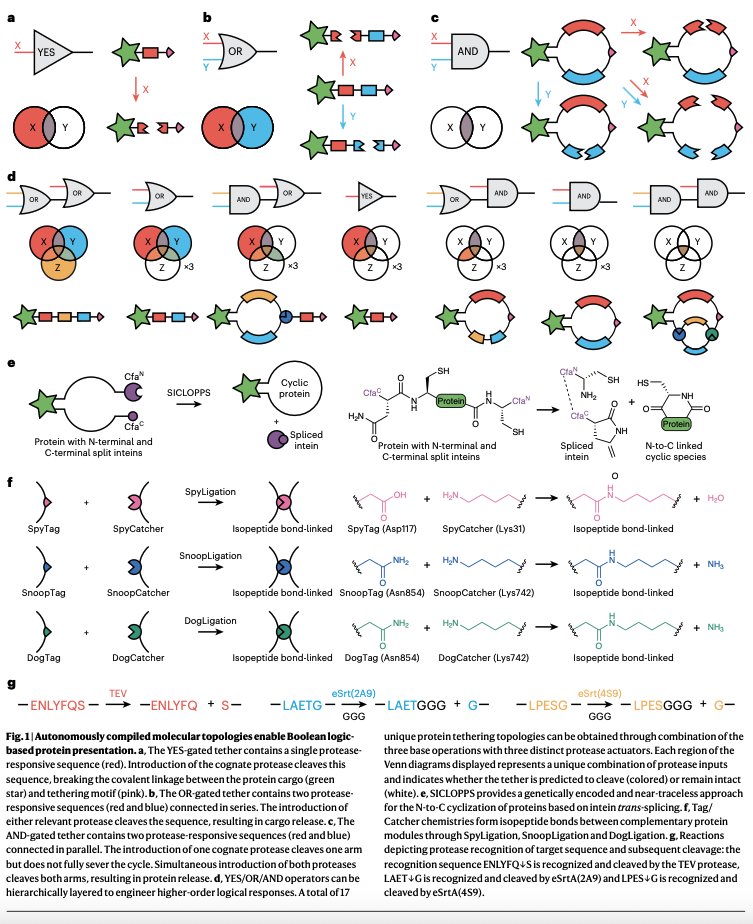
Say you wanted to make a protein that acts as a YES gate. That is, the protein releases some cargo (like a drug or other signal) only when a specific input is received.
You could build this YES gate by synthesizing a short protein (called a peptide) that has a particular sequence which is uniquely recognized by another protein, called a protease. There are many proteases found in nature. Each protease type recognizes a unique protein sequence and cleaves it, thus splitting the target in two.
A YES gate, then, can be made by building a peptide that has a protease recognition site. One end of the peptide is attached to a drug. The drug is only released when exposed to the protease.
An OR gate is also simple to make. Just create a peptide carrying two different protease sites in series, such that the addition of either protease will cleave the peptide and release the drug.
An AND gate is more difficult. To make it, you can instead attach the drug to two different peptides, each carrying a different protease recognition site. Then, anchor the ends of these two peptides to a scaffold. In this case, the drug will only be released if BOTH proteases are added.
Why am I writing about this? Because you can use these basic logic gate architectures to build all kinds of wonderful, “smart” materials and drug delivery vehicles. For a recent study, researchers built each of these logic gates, and also nested or stacked them together to build even more complex circuits (17 different logic architectures in total.)
They embedded these protein logic gates onto magnetic beads, hydrogels, and even living mammalian cells. These logical proteins are genetically encoded, modular, and could in principle respond to other signals, too; not just proteases but also light, small molecules, or mechanical forces.
Imagine a therapy for metastatic cancer that only releases its drug when two tumor-specific proteases, like MMP-9 and cathepsin B, are active. Or engineered immune cells that secrete cytokines only when both an infection marker and a metabolic stress signal are present.
Interesting to think about.
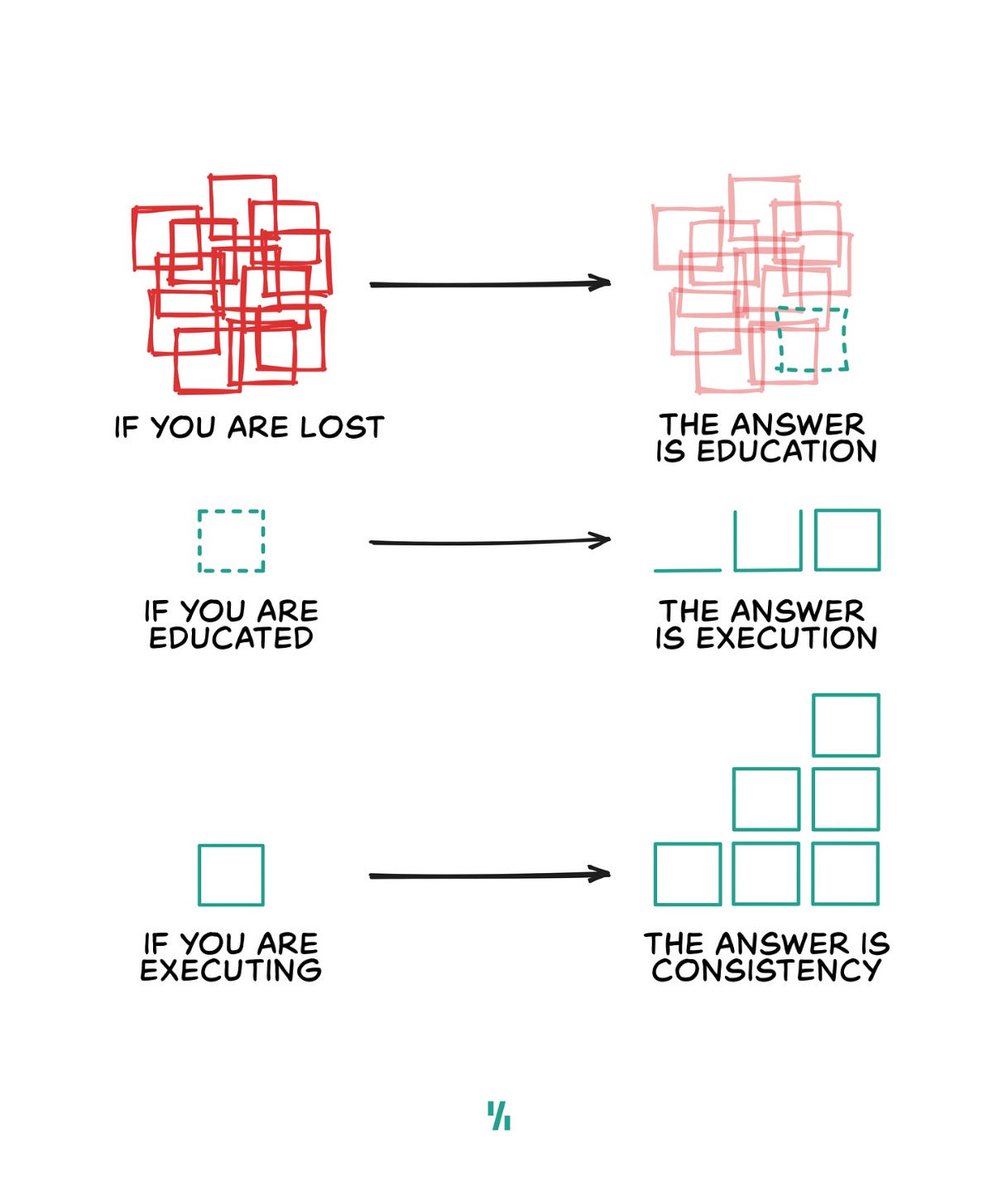
🎯 Planificar no es solo hacer planes.
🔹 Estrategia = rumbo
🔸 Táctica = camino
⚙️ Operación = acción diaria
El equilibrio entre las tres mantiene viva la ejecución y enfocado el crecimiento.
#Estrategia
We're solving aging fast
New drug and enzyme class found to have anti aging properties
Scientists at Queen Mary University of London discovered that a new drug called rapalink-1, which targets the TOR pathway (a key controller of growth and aging), can extend lifespan( at least in yeast cells).
They also found that agmatinase enzymes, which break down a natural compound called agmatine, play an important role in regulating this pathway.
When these enzymes were missing, cells grew faster but aged more quickly, showing a trade off between rapid growth and long term survival.
Adding agmatine or putrescine also helped cells live longer under certain conditions, hinting that diet and gut microbes might influence aging through this mechanism.
The study suggests that future anti aging strategies might combine TOR blocking drugs like rapalink-1 with dietary or microbiome based approaches.
Scientists boosted a single protein in aging mice and the results were wild.
Stronger muscles. Denser bones. Sharper cognition.
All linked to Klotho, often called the “longevity protein.”
It is only mice, and humans are more complex. But if Klotho proves out in people, we may not just add years to life.
We may add youth to age.
The frontier of longevity is shifting from vitamins to gene therapy.
Babraham Institute researchers used a 13-day partial reprogramming method with Yamanaka factors to reset adult skin cells’ molecular clocks by roughly three decades. The rejuvenated fibroblasts produced more collagen and closed lab-grown wounds faster while keeping their original cell identity. Could this breakthrough open the door to future anti-aging therapies?
For more content like this, please visit: https://t.co/nwScpGDOX8
#science #biotech #aging #innovation #health
As you may know, we are writing a lot on relation between the Second Law of Thermodynamics and aging. The working hypothesis: a substantial part of what we call “biological age” in long-lived species (like humans) is nothing else but configurational entropy — the gradual disorganization, drift, and loss of microstate order. As entropy creeps in, one should expect irreversibility; yet in biology, the community often lapses into denial.
The most common rebuttal is: “Entropy increases only in closed systems.” But that statement is misleading. It is true that entropy tends to increase in closed systems, but there is no general theorem that entropy must always increase in open systems. In fact, whether entropy grows or not has nothing in principle to do with whether a system is open or closed. Modern understanding sees entropy as “in the eye of the beholder.” If an entity had complete microscopic control — i.e. the ability to observe and act with infinite precision on every degree of freedom — it would see no arrow of time, no net entropy drift. Entropy creeps in whenever control is limited, for any reason: coarse graining, hidden degrees of freedom, or lack of observation or computation required to effective control (more to that, search for @stephen_wolfram on @lexfridman 's podcast).
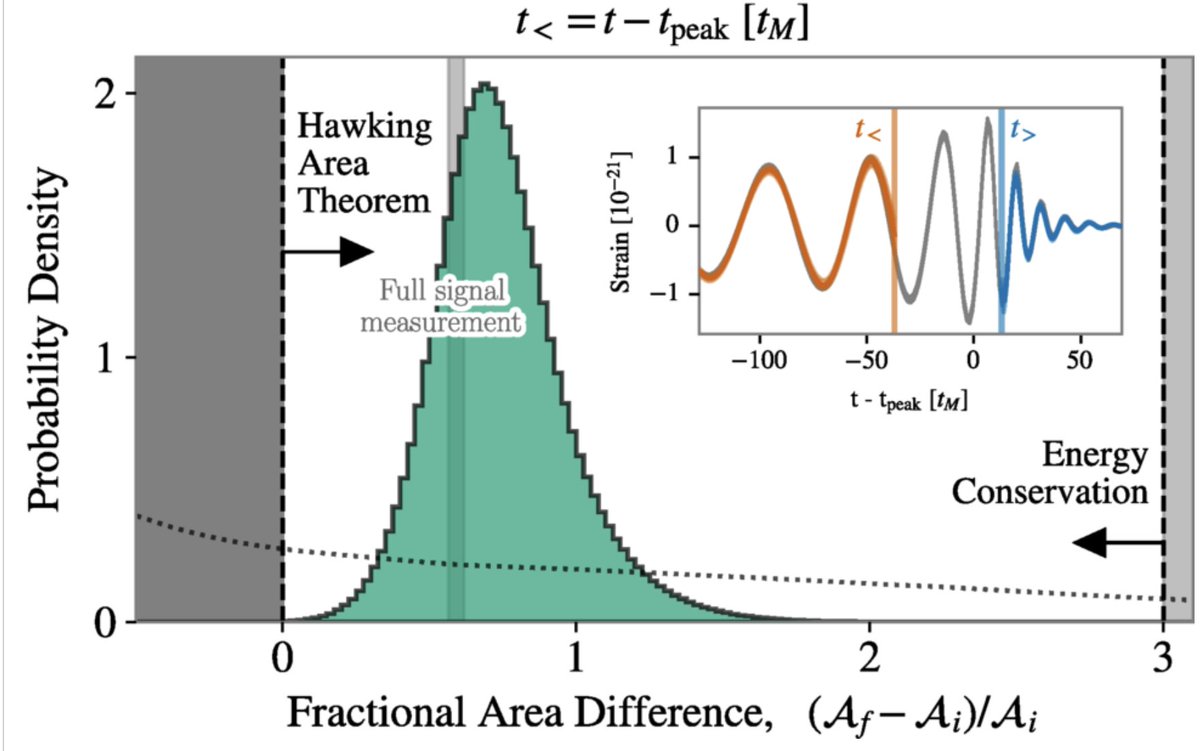
To make the point sharply, let me turn to one of the most spectacular and recent examples: the results from GW250114: Testing Hawking’s Area Law and the Kerr Nature of Black Holes. (Link in first comment.)
Black holes are perhaps the ultimate example of limits of control. To our best understanding, once information (and degrees of freedom) fall behind an event horizon, they become unobservable and uncontrollable to outside observers. The total number of such hidden degrees of freedom is what we interpret as the entropy of a black hole — and it is proportional to the area of its event horizon (the Bekenstein–Hawking relation).
When two black holes merge, the resulting black hole must have less total rest mass than the sum of the originals, because some mass-energy is radiated away (in gravitational waves, perhaps electromagnetic or other fields). This “mass deficit” can be a few percent (typical binary black hole mergers lose on the order of a few percent of the total mass as gravitational radiation). To put that in perspective: if you take a system of, say, 60 solar masses in a merger, a few percent is ~1–3 solar masses radiated away.
Because of gravitational wave astronomy, we can now infer both masses and spins, and thereby compute the horizon areas before and after merger. (Horizon area depends on mass and spin parameters via the Kerr metric formula.) The paper reports an estimated distribution of the relative area change, (A_f-A_i)/A_i. Their “light green” distribution denotes the inferred values from data; the “dark area” on the right is the maximal bound permitted by pure energy conservation. The dark area on the left is the boundary corresponding to the extreme case where no area increase would occur if entropy didn’t increase. The difference between the green and left dark region hints at whether the horizon area respects the “area law” (i.e. non-decrease) at high confidence.
What is striking is that for the event they examine, the relative area increase is positive at >3σ significance — the evidence indicates that the merged black hole’s horizon area is larger than the sum of the original ones. That is, entropy increased in the observable domain of the system, despite the underlying gravitational equations being time reversible. The key is that part of the system (inside the horizon) is fundamentally unobservable, and that loss of control induces a time arrow for the rest of the universe.
Pause and let that sink in. In a strongly interacting system, whenever you lose control over degrees of freedom, entropy increases — whether or not the system is “open” or “closed.” I will write later how it relates to aging - what is the nature of the non-observability (that is emergence, see link to our latest preprint in the same comment).
Please do not forget to like and repost - let's reflect on this together. And most enjoyably - read the paper and observe the progress of science in the making. Science is one - amen!
1/2
Chronic inflammation was thought to increase with age.
It does.
But there’s a plot twist.
A new study published in Nature Aging compared 4 geographically and genetically distant groups:
+ industrialized societies (Italy and Singapore)
+ indigenous communities (Bolivian Amazon and rural Malaysia)
Chronic inflammation, also known as “inflammaging” markers increased with age only in the 2 industrial groups.
For the 2 indigenous cohorts, inflammation was driven by active infections and parasites. Inflammaging markers did not predict age-related diseases (cardiovascular, kidney, metabolic disease) in this community.
The results suggest age-related inflammation is neither universal nor predestined to our biology. It’s an outcome of poor lifestyle choices in modern societies, and very likely preventable.
🧬 ¿Envejecemos igual en todo el mundo?
Un estudio en 161.981 personas de 40 países revela que el envejecimiento acelerado depende del exposoma 🌍: aire, desigualdad, migración, política, ingresos...
🌱 Europa envejece mejor; África, más rápido.
https://t.co/BCd6LJ8Uls
Anti Aging Breakthrough
Aging is driven by cellular and molecular changes, including the accumulation of senescent cells that secrete pro inflammatory factors, contributing to age-related diseases.
Epigenetic alterations, such as histone modifications, are key to this process. SMYD3, a histone methyltransferase that facilitates H3K4 trimethylation, is implicated in promoting cellular senescence and age related pathologies.
New study investigated ZYZ-384, a novel, low toxicity small molecule inhibitor of SMYD3, developed through virtual screening and chemical synthesis.
Using angiotensin II to induce senescence in human (HMEC-1) and mouse (SVEC4-10) endothelial cells, as well as D-galactose induced and naturally aged animal models, the researchers evaluated ZYZ-384’s anti aging effects.
ZYZ-384 significantly reduced aging markers, suppressed SMYD3 and H3K4me3 expression, and inhibited SASP factors, while enhancing cell proliferation. It also downregulated HSP90 and NF-κB, proteins involved in inflammation and stress responses.
These findings demonstrate that ZYZ-384 is an effective SMYD3 inhibitor with promising anti senescence and anti aging properties, offering potential for therapeutic intervention in age related diseases.
https://t.co/XgKPjBL8x1