A possible silver lining, as an investor it would be fascinating to understand if this move will give some more time for early stage startups to catch-up and make deeper moats into the ecosystem.
If AI history has canon events, this may be one of them (apart from Sam's gpt 3 tweet ofc): the day its leading builders publicly argued that the race itself may need constraints.
The scary part is that coordination seems to emerge faster from fear than from foresight.
We Must Pace the Frontier: I’ve written a new essay on why the AI industry should slow down, with a three-part plan for doing so.
Anthropic is unilaterally committing to the first of these steps. We’ll provide third-party evaluators with permanent, employee-level access to our systems, so that they can verify adherence to our safety measures, report on incidents, and assess models’ alignment during training.
You can read the full post here: https://t.co/OGyPb7yaYt
The most interesting question, then, is not whether nations will slow AI. It is whether they can agree on a universal cap no one should cross. Fear is increasingly pervasive, but whether the threat is evident enough today to force nations to act, and perhaps even come together, is something to watch very closely.
Personal update: I've joined Anthropic. I think the next few years at the frontier of LLMs will be especially formative. I am very excited to join the team here and get back to R&D. I remain deeply passionate about education and plan to resume my work on it in time.
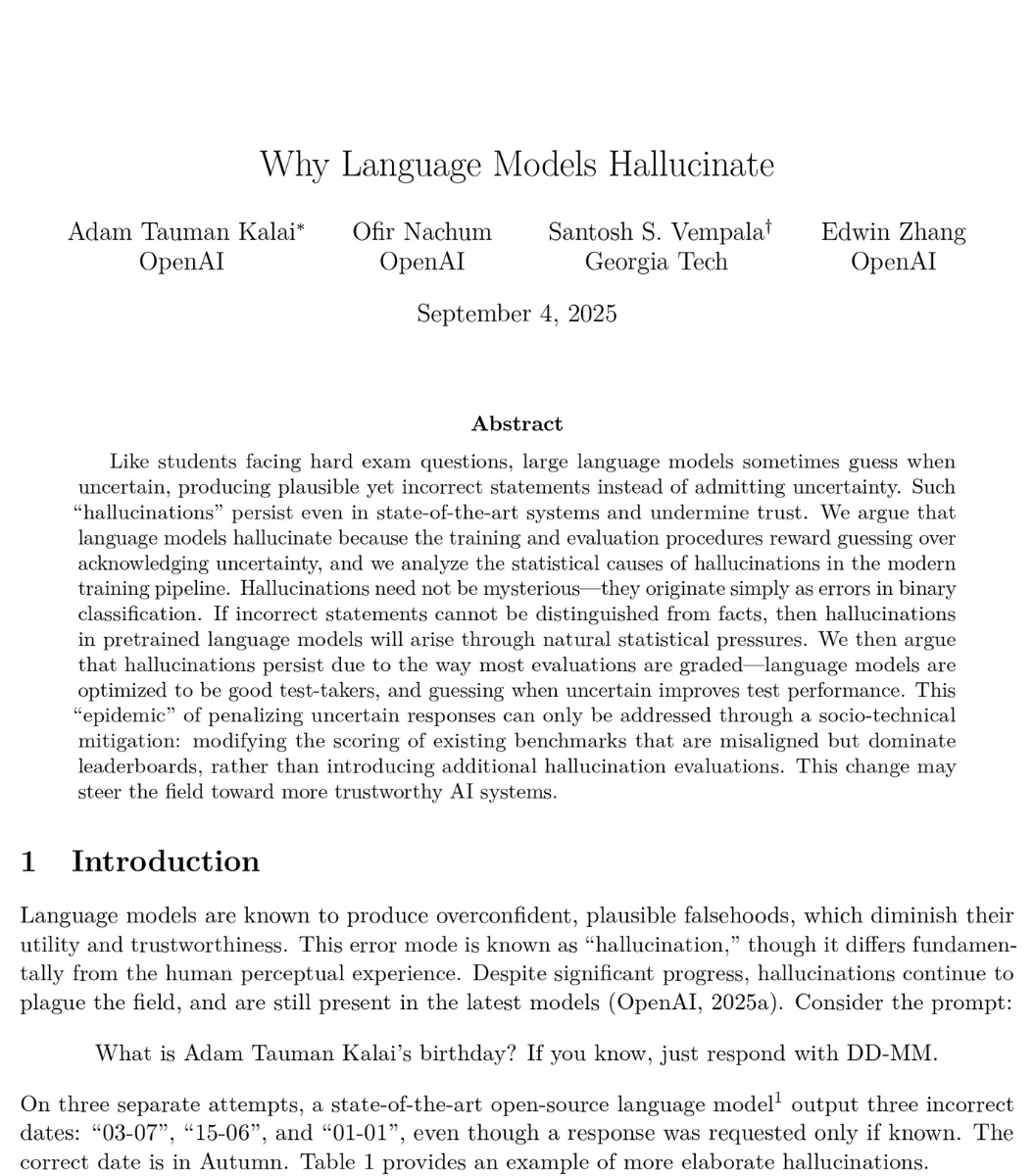
🚨BREAKING: OpenAI published a paper proving that ChatGPT will always make things up.
Not sometimes. Not until the next update. Always. They proved it with math.
Even with perfect training data and unlimited computing power, AI models will still confidently tell you things that are completely false. This isn't a bug they're working on. It's baked into how these systems work at a fundamental level.
And their own numbers are brutal. OpenAI's o1 reasoning model hallucinates 16% of the time. Their newer o3 model? 33%. Their newest o4-mini? 48%. Nearly half of what their most recent model tells you could be fabricated. The "smarter" models are actually getting worse at telling the truth.
Here's why it can't be fixed. Language models work by predicting the next word based on probability. When they hit something uncertain, they don't pause. They don't flag it. They guess. And they guess with complete confidence, because that's exactly what they were trained to do.
The researchers looked at the 10 biggest AI benchmarks used to measure how good these models are. 9 out of 10 give the same score for saying "I don't know" as for giving a completely wrong answer: zero points. The entire testing system literally punishes honesty and rewards guessing.
So the AI learned the optimal strategy: always guess. Never admit uncertainty. Sound confident even when you're making it up.
OpenAI's proposed fix? Have ChatGPT say "I don't know" when it's unsure. Their own math shows this would mean roughly 30% of your questions get no answer. Imagine asking ChatGPT something three times out of ten and getting "I'm not confident enough to respond." Users would leave overnight. So the fix exists, but it would kill the product.
This isn't just OpenAI's problem. DeepMind and Tsinghua University independently reached the same conclusion. Three of the world's top AI labs, working separately, all agree: this is permanent.
Every time ChatGPT gives you an answer, ask yourself: is this real, or is it just a confident guess?
3/3
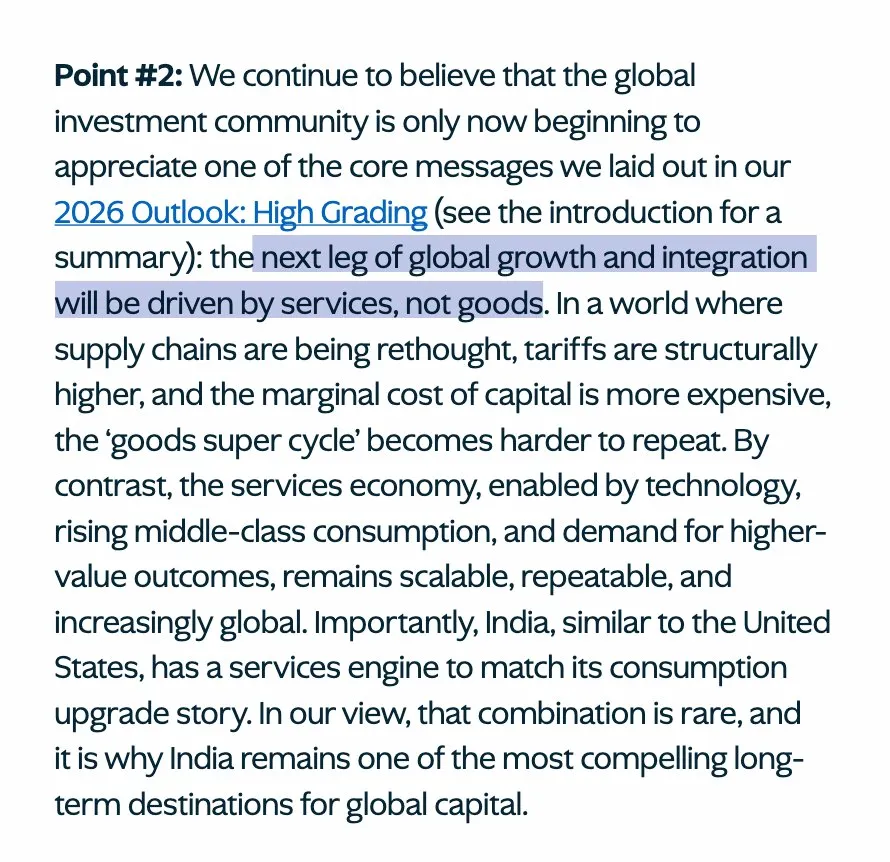
Zoom out even further and KKR's bigger macro call hits different supporting India's positioning in the globe:
"The next leg of global growth will be driven by services, not goods."
encrypt V2 is LIVE!
Private bridging across 6 chains — Solana, Polygon, BNB Chain, Base, Arbitrum & Ethereum.
✔ No wallet connection
✔ No wrapping or shielding
✔ Under 2min execution
✔ Lower fees vs Houdini/ChangeNow
Powered by @near_intents ⚡️
Try it 👇