In row cropping, the little things matter, even when they add a little time. Applying starter can improve weather tolerance after planting and potentially pay off in yield. @kentuckycrops and @cypathology discuss why it may be worth considering. https://t.co/rLKRPJXyha
Thanks for leading this excellent work, @Edel_PLopez ! Your persistence sets an example for me!
We can now officially call the MBSP pathogen as Candidatus Phytoplasma zeae!
Cover crops, reduced tillage, water quality and soil health all matter. But they also have to fit into a system designed to produce high-yielding cash crops.
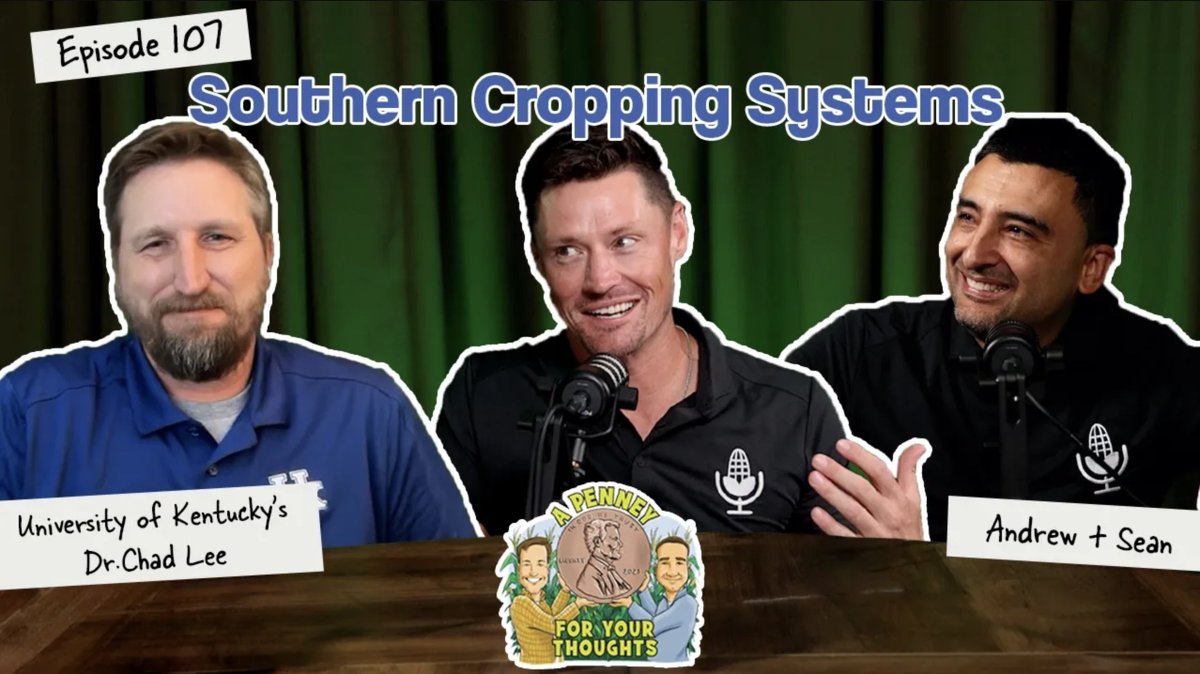
In our recent episode, Dr. Chad Lee discusses finding that balance.
🔗: https://t.co/jUyHDs4EY8
🎙️ @kentuckycrops
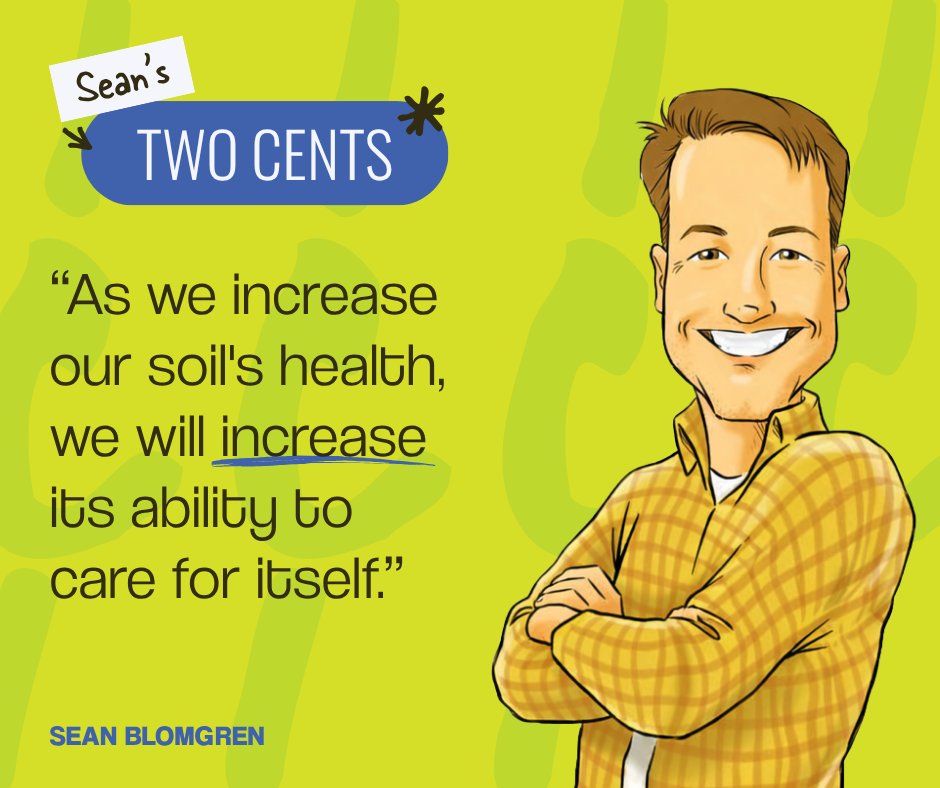
Soil health. It’s a hot topic, and we’re talking about it. 🌱
Dr. Chad Lee helped Sean realize that the better we manage our soils, the more self-sufficient they can become.
Find out how: https://t.co/jUyHDs4EY8
🎙️ @seanblomgren
Loved the conversation with @KentuckyCrops! His passion and agronomic knowledge on crop production, cover crops, and the impact our farming practices have on our soil is second to none!! Enjoy 😊
Would you believe farmers in the 1950s and ’60s were conducting on-farm research on erosion management?
Tune in to our latest episode with @kentuckycrops to hear about these early trials and what they can still teach us today.
🔗 https://t.co/jUyHDs4EY8
Are cover crops a practical solution for managing ground that produces bourbon-quality corn? They sure are.
Hear from University of Kentucky’s Dr. Chad Lee on cover crops, nitrogen, soil health and bourbon production.
🔗 https://t.co/jUyHDs4EY8
🎙️@kentuckycrops
We often forget just how blessed we are to care for and work the land here in the Corn Belt.
Join us tomorrow as we release a new episode featuring the University of Kentucky’s @kentuckycrops , where we take a deep dive into soil health from a variety of angles.
@
You can skip an application and the world won’t end.
Yup, we said it.
When margins are tight, knowing where you can cut back without sacrificing yield is important, and inputs might be the place.
Get the info: https://t.co/jUyHDs4EY8
Episode 2!! This was such good info from @castellmj and @ajmargenot. These topics are hard to understand, but they do such a good job of explaining nitrogen and phosphorus, everyone can begin to understand N & P!
The nitrogen experts and agronomy nerds are back together to tackle how nitrogen management on your acres can impact your yields, environmental impact and bottom line.
Hear the insights and real solutions you can put to work on your acres.
🔗 https://t.co/jUyHDs4EY8
After our conversation, we were blown away by the insights @castellmj and @ajmargenot shared with us.
Dr. Mike Castellano was especially excited about the discussion, and we’re excited for you to hear it.
Lucky for you, the latest episode drops tomorrow!
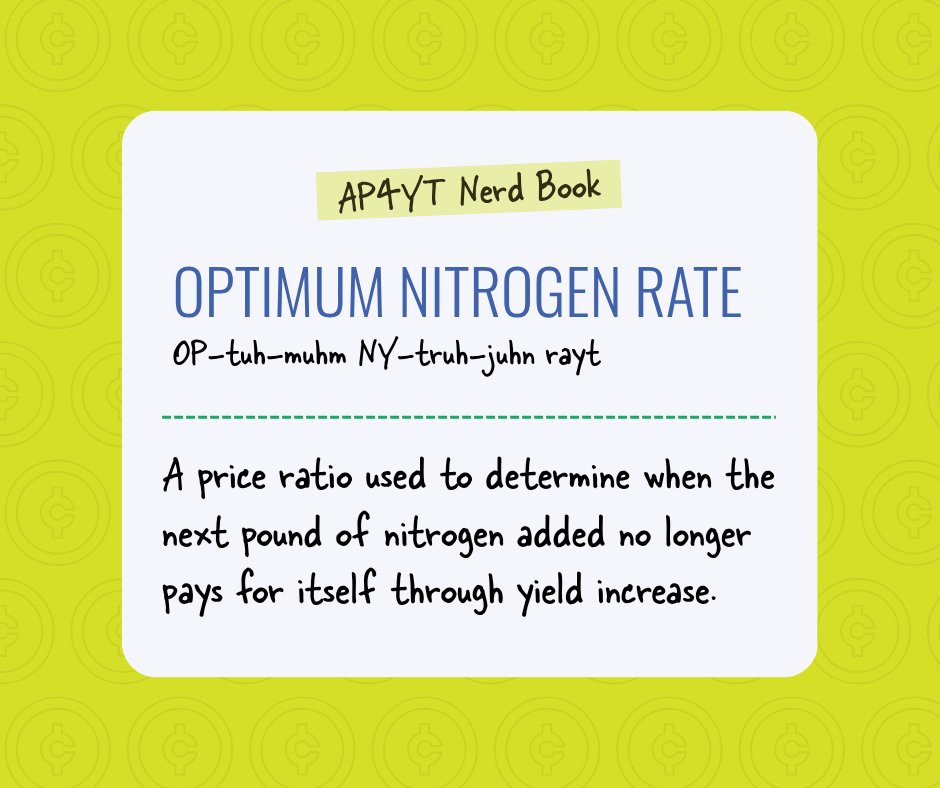
At some point, additional inputs don’t pencil out. Knowing where that point is matters to your bottom line.
Tune in to our latest episode to hear how the optimum nitrogen rate can impact crop success and profitability.
🔗 https://t.co/jUyHDs4EY8
We appreciate memorable agronomy analogies, and Dr. Andrew Margenot gave us just that.
Nitrogen | Phosphorus
Fleeting | Sluggish
Beer |Tequila
Sometimes the best way to understand nutrient behavior is with a good analogy.
https://t.co/45q6vAuO2G
Water quality matters. So does getting nitrogen rates right. The goal is finding the right balance between crop productivity, nitrogen use and nutrient loss.
Hear how it works: https://t.co/jUyHDs4EY8
Everyone is always saying to take soil samples, and they aren’t wrong.
But want a clearer picture of nutrient removal? Test the grain coming off your acres.
Grab that data this fall to see what nutrients left your fields this growing season.