Importantly, these, just like the objective metrics (HRV, RHR etc) should be relative to the athlete's individual norms e.g.
If the athlete's normal mood is "ray of sunshine", marginally less bright ray of sunshine demands attention.
If the athlete's normal mood is "grumpy asshole", grumpier than usual asshole demands attention. 😊
@healthspanmed HIT is effective but don't tell people to stop Zone 2 training. Long duration (endurance) training does a number of other things beside increase mitochondrial biogenesis. Do you really think pro endurance athletes would do massive hours of training if they didn't have to?
@Alan_Couzens I have always had a high heart rate, both resting and max. I consider myself a very fit competitive cyclist. My resting HR rarely goes below 60 but I can still hit a high of 194 (I am 67). I guess I have a hummingbird heart. Am I doomed?
@Alan_Couzens I just finished reading The Norwegian Method Applied by Marrius Bakken where he swears by zone 3 training and it apparently works for world class athletes. I'd be interested in your take on his approach.
Zone 1 is an investment.
It builds your fat-burning engine and expands your energy reserves.
Zone 3/4 is a withdrawal.
It spends from that reserve.
Want your hard training to actually work?
Build the reserve first.
#Base
@Drlipid So I'm wondering why, if cells produce all they need, does the liver produce (over-produce) more than is needed? The body doesn't typically do wasteful things.
After watching winter Olympics for all these years, it has only just occurred to me that all sports involve some aspect of sliding. If they include cyclocross that would be the only one that doesn't although I expect there would be some sliding involved unintentionally.
@hjluks You do such a great job explaining things like this. I've never thought about the difference and tended to lump aerobic and cardio fitness together.
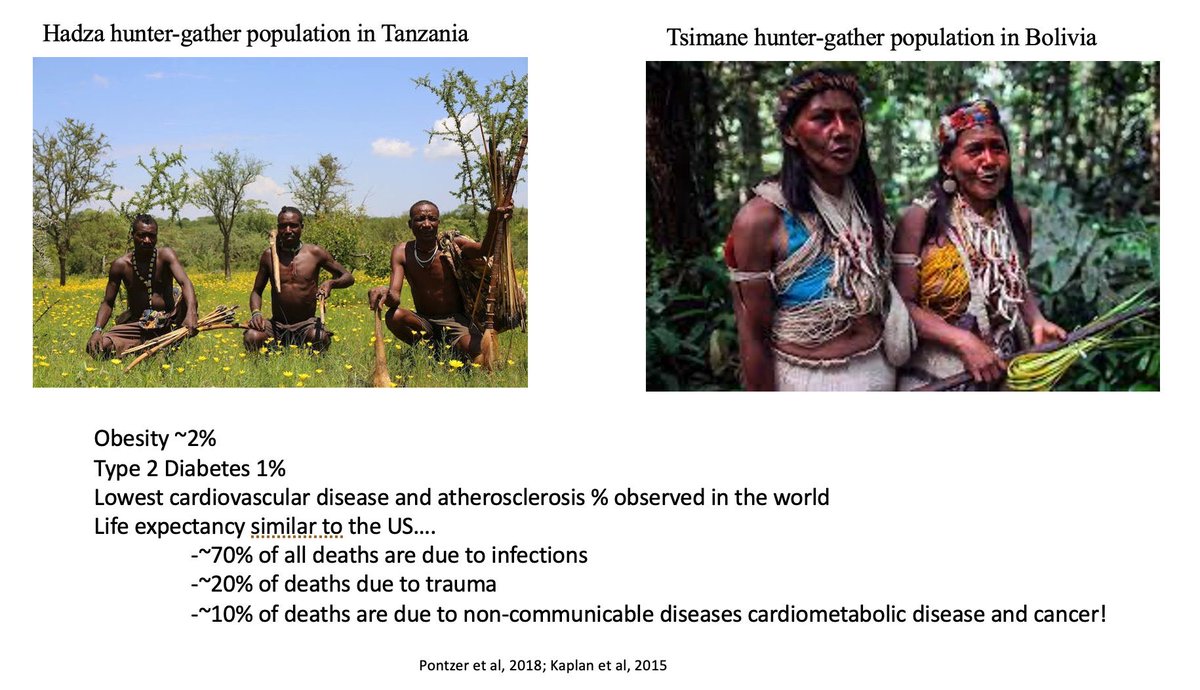
For about a decade, I’ve been showing these two slides at conferences.
Two hunter-gatherer populations (Hadza and Tsimane), likely the closest living humans to our Paleolithic ancestors.
Diet:
• 65–70% carbohydrates
• 15-20% protein
• 10–15% fat
• ~13% lower daily caloric intake than the US population
Daily movement:
• 115–135 minutes per day
• 6–12 km of walking
Health outcomes:
• Obesity: ~2%
• Type 2 diabetes: ~1%
• Cardiovascular disease: among the lowest ever observed
This is not a low-carbohydrate population. The difference is metabolic fitness.
When mitochondria are continuously stimulated by daily movement, carbohydrates can be oxidized (burnt).
When movement disappears, fuel oxidation fails and metabolic disease emerges.
The debate should not be low-carb vs high-carb. That debate has failed to solve obesity or type 2 diabetes for decades.
The real question is:
Can your mitochondria still do their job?
#MitochondrialFunction #MetabolicFitness #MetabolicFlexibility #PhysicalActivity
@AliBrownleetri Were these matched for volume or could it be that more volume correlates with faster running times? (and the only way to get more volume is through lower intensity)
I see a lot of folks setting up substack accounts. I thought about it but then realized that I already have all my writings compiled on my own website where they are absolutely free. Enjoy! https://t.co/nVa9w3cnNr