My jaw hit the floor when I discovered Boris Johnson left an emergency NATO meeting after the Kremlin’s chemical warfare attack on Britain & flew to an off-the-books meeting with an ex-KGB spy.
Yours should too.
This is how it happened.
1/
https://t.co/5Yv5C6IuDM
Andy Burnham is right, but we need to call this what it was: state-sanctioned vandalism.
The Conservatives systematically stripped sport, music, and drama from state school timetables, dismissing them as frivolous extras while preserving them for elite private schools. They treated working-class children as industrial units to be tested and processed, not young people who deserve a full, rich life.
The defense from the educational establishment was always economic efficiency. Teach the basics, pump up the league tables, ignore the rest. It was a narrow, philistine view of education that left an entire generation poorer for it.
Every child deserves access to sport, instruments, and the arts, not as a luxury, but as a birthright. If we only teach state school kids to read and count while private schools teach theirs to create, perform, and lead, we are simply baking inequality into the timetable.
Someone has to do it, so I will. This policy is holed below the waterline before it begins.
Zia Yusuf wants Britain’s warships to push migrant boats back to France. There are only three small problems: the law, the French and the Royal Navy.
Operation Fortress will be “the largest military operation in the English Channel since World War Two”. Nigel Farage will grandiosely order “his Majesty’s Royal Navy” to intercept every unauthorised vessel crossing the Channel and return its occupants to France. No one arriving illegally will reach Britain. The border will become “impenetrable”. The invasion will be stopped.
It sounds magnificent, provided you know nothing about ships, sailors, France or the law.
The first clue lies in the name. Operation Fortress sounds like the title of a 1960s war film. Once the bunting has been cleared away, this new policy amounts to parking a few warships in the Channel and instructing them to make the small boats go backwards. Nobody appears to have asked what happens when they do not.
An overloaded inflatable carrying 60 or 70 people is rather different to a French fishing trawler whose skipper can be ordered to head for Calais. It may have insufficient fuel, an inadequate engine, and no one aboard capable of navigating it safely. The smugglers may have left the controls in the hands of one of the passengers. The boat may already be leaking, listing, or taking on water. A Royal Navy officer cannot order an inflatable to become seaworthy.
The Navy cannot legally fire across its bow. This is a border control operation, not a war. There may not even be enough bow to fire across. HMS Cottrell cannot ram the boat, create a wash beside it or undertake aggressive manoeuvres without risking a capsize. Sending a boarding party alongside an overcrowded dinghy creates another opportunity for dozens of frightened people to shift their weight at once and end up in the water.
The moment the boat becomes unsafe, Nigel's great military operation turns into a rescue mission. British sailors are legally required to save those aboard. The obligation arises under the law of the sea, the International Convention for the Safety of Life at Sea and the International Convention on Maritime Search and Rescue. None of these contains a Zia Yusuf exemption.
After rescuing the passengers, the Navy must take them to a place of safety. Reform says that place will be France. France may have something to say about that.
Britain cannot sail warships into French territorial waters, seize boats, or disembark passengers in Calais without French permission. Nor can it deposit 70 people at the maritime boundary and invite them to swim the remaining distance. Returning them to France requires the French government to accept them. This is the gap at the centre of the policy. A Reform government can give orders to the Royal Navy; it cannot give orders to Emmanuel Macron.
There is already a UK-France returns agreement. It permits selected small-boat arrivals to be returned after they reach Britain, in exchange for Britain accepting an equivalent number via a legal route. The arrangement exists because France’s consent is required. It is limited, negotiated and reciprocal. Nothing in it authorises the Royal Navy to deliver every intercepted passenger to a French port.
Perhaps Reform has secretly negotiated a much broader agreement with Paris. Perhaps Macron has promised Farage that France will accept tens of thousands of people in exchange for nothing. Perhaps the French will also provide a complimentary cheese board. The details, we are told, will be revealed today.
Without French agreement, the Navy will intercept the boats, rescue their occupants, and bring them to Britain. Reform’s answer to the “free ferry service” is to paint the ferry grey and staff it with sailors.
The legal problems persist after rescue. Once British forces exercise effective control over a boat or take its passengers aboard, those people fall within British jurisdiction. They cannot all be summarily expelled without any examination of their circumstances.
France is a safe country, and there is no general legal prohibition on returning an asylum seeker there. However, any return must still take place under a lawful arrangement. Officials would need to identify children, trafficking victims, those requiring medical treatment, and anyone presenting a specific reason why return would expose them to serious harm.
Roughly one in seven small boat arrivals since 2018 has been referred to the National Referral Mechanism as a possible victim of modern slavery. Among those who arrived in 2025, the eventual figure reached 19 per cent. Those cases cannot be resolved by a sub-lieutenant circling boxes on a clipboard while HMS Harborne bobs around somewhere off Dungeness.
The European Court of Human Rights has already held that intercepting migrants at sea does not create a legal black hole. In Hirsi Jamaa v Italy, Italy was found to have violated the European Convention by returning intercepted migrants without considering their individual circumstances. In that case, the destination was Libya, so it does not establish that returning to France would be unlawful. It does establish that a government cannot evade its obligations by processing the entire group under the legal category of “off you go”.
Reform might respond that it intends to leave the European Convention. That still leaves the Refugee Convention, maritime rescue law, France’s sovereignty, and the stubborn tendency of drowning people to require rescue. A press conference cannot repeal the sea.
Then there is the Royal Navy itself. Britain possessed 32 frigates and destroyers in 2000. By October 2025, it had 14. Several of those were undergoing maintenance or preparing for operations. The Navy is also attempting to sustain the nuclear deterrent, protect two aircraft carriers, patrol the North Atlantic, support NATO, guard undersea infrastructure, maintain overseas deployments, and prepare for a possible war with a serious state adversary.
Amid this crowded programme, Zia Yusuf demands the largest Channel operation since 1945.
A Type 45 destroyer is a £1 billion air-defence platform designed to protect a carrier group against missiles and aircraft. It carries sophisticated radar, anti-aircraft weapons and a crew of nearly 200. Using one to chase inflatables off Dover would be rather like sending a new Challenger 3 tank to enforce parking restrictions outside Lidl.
The Type 23 frigates are old, scarce and already stretched. The River-class offshore patrol vessels are better suited to maritime security, but the newer ships have global commitments, while the older ones perform fisheries protection, patrol and training tasks. Moving them into the Channel simply leaves gaps elsewhere.
Border Force operates five cutters, six coastal patrol vessels and a range of smaller craft. These are the vessels designed for customs and immigration enforcement. Even that fleet cannot create an impermeable cordon while covering Britain’s other maritime borders. The Channel is one of the busiest shipping routes on earth, not a village pond across which the Royal Navy can stretch a chain.
Ships also require crews. As of April 2026, the Royal Navy and UK Marines had 32,520 regular personnel, of whom 4,580 were untrained. Recruitment has begun to improve, but the Navy remains critically short of experienced technicians, engineers and specialists. Some vessels have been alongside for extended periods because the service lacks the trained personnel to operate them.
A continuous patrol requires several crews for each vessel on station. One crew is at sea, while others are training, recovering, taking leave or preparing the ship. Each interception requires qualified boat crews, boarding parties, medics, communications staff and command support. If people are brought aboard, the ship also needs space, food, sanitation, interpreters and safeguarding personnel. Warships do not come with infinite sailors.
The smugglers would adapt before the first triumphant press release had even finished circulating. They would overload boats until turning them around became impossibly dangerous. Engines would “fail” as British vessels approached. Passengers would be instructed to call for rescue, enter the water, or threaten self-harm. Several boats would launch simultaneously during brief windows of good weather.
The absolute promise that nobody will reach Britain creates an incentive to treat every encounter as a humanitarian emergency. The Navy would either rescue those aboard or preside over preventable deaths within sight of its ships. No commanding officer should be placed between his legal duty to save life and a politician’s promise that not one migrant will set foot on British soil.
There are serious policy options available. Britain could negotiate broader returns with France, fund aggressive French interception near the beaches, attack the financial and logistical networks behind the crossings, accelerate asylum decisions, remove failed claimants, and build a Border Force fleet capable of sustained maritime enforcement. Joint patrols could operate under an agreement that defines jurisdiction, disembarkation, and responsibility for rescued individuals.
Operation Fortress contains none of the difficult parts. France will apparently accept everyone. Every boat will turn around safely. Every legal claim will disappear. The Navy will find spare ships and sailors somewhere in a cupboard in Portsmouth. Declaring the Channel impenetrable will make it so.
This is not a serious or credible policy. Operation Fortress is nothing but a press release wearing a sailor’s hat.
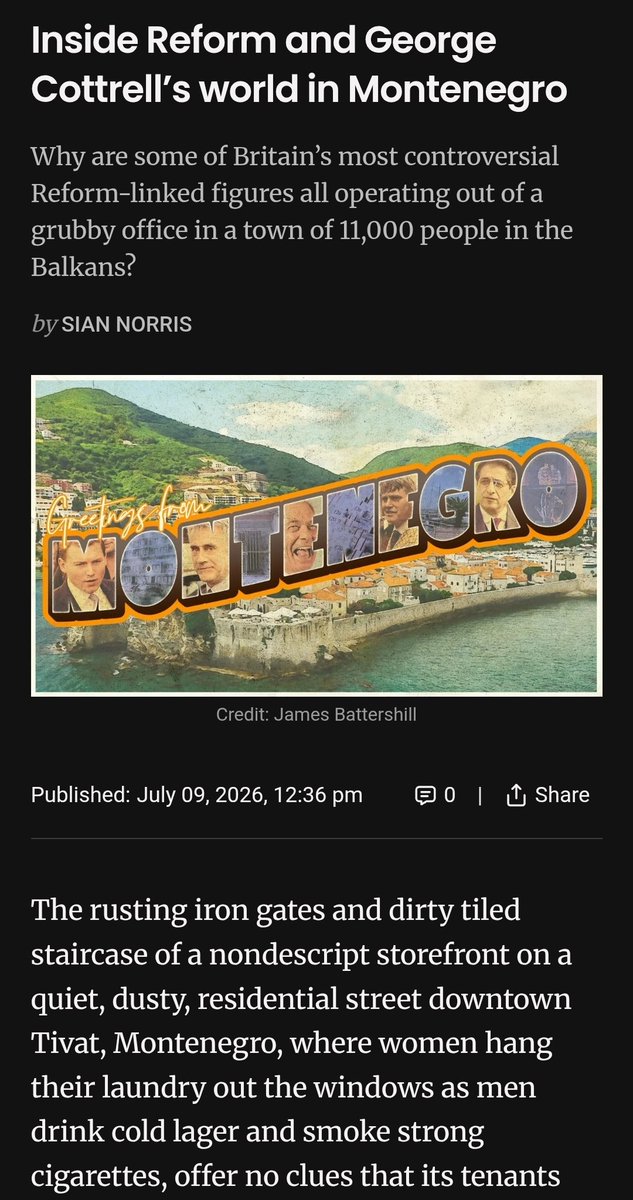
By what extraordinary coincidence are companies owned by Christopher Harborne and important figures in Farage's parties registered in a nondescript building in the small town of Tivat in Montenegro?
Is it just by chance that the office address is registered to Nino Pantovic, the son of a one-time defence lawyer for George Cottrell?
And is it just coincidence that convicted fraudster and expert in criminal money-laundering, Posh George, lives in Montenegro, where cryptocurrency is largely unregulated and transactions can take place unnoticed, and untraced?
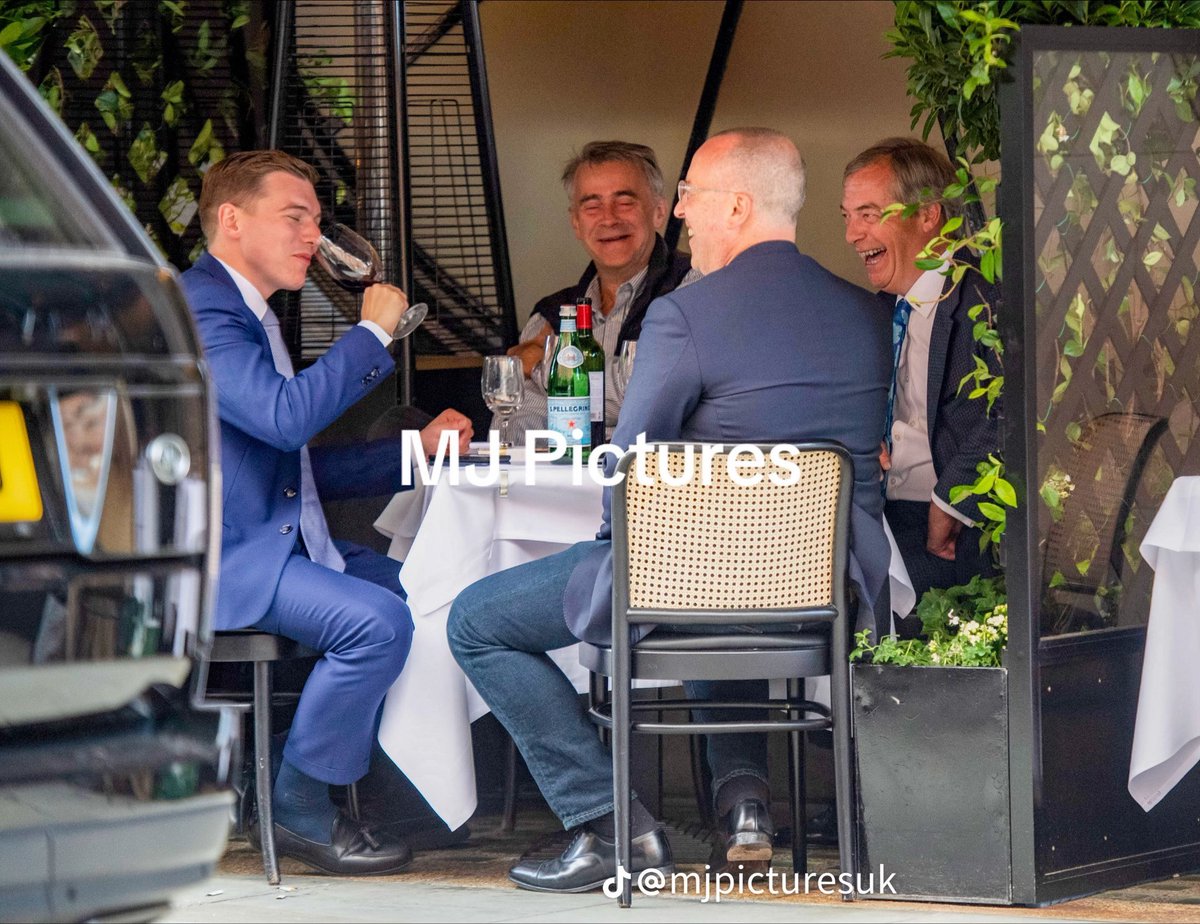
And just why was Cottrell with Farage and Harborne in Thailand in 2022?
https://t.co/FVlt6ELc1x
Schengen is of course the name given to the EU "Common Travel Area". The only reason Ireland doesn't join Schengen is because it has to prioritise the smaller CTA (open borders) with the UK, specifically Northern Ireland. Can't be in two CTAs. CTAs (like FoM has to be) have to be reciprocal. UK joining the Schengen CTA (like Gibraltar has done) will allow Ireland to join too. Or it could do independently - & would do - by unifying..
I guess some idiots have to keep telling thenselves the EU is "punishing us", for giving us what *we* want: the UK choice of greater isolation behind its (still descending) Gammon Curtain. It is the UK that rejected the single market, the/a customs union & is now (opposite to Gibraltar) rejecting the offer of the EU Common Travel Area. For all of this (no border controls) you need to be operating under *mutually recognised* legal jurisdiction oversight & authority...
it is the only way to remove, otherwise needed, border controls, between *different* legal jurisdictions.
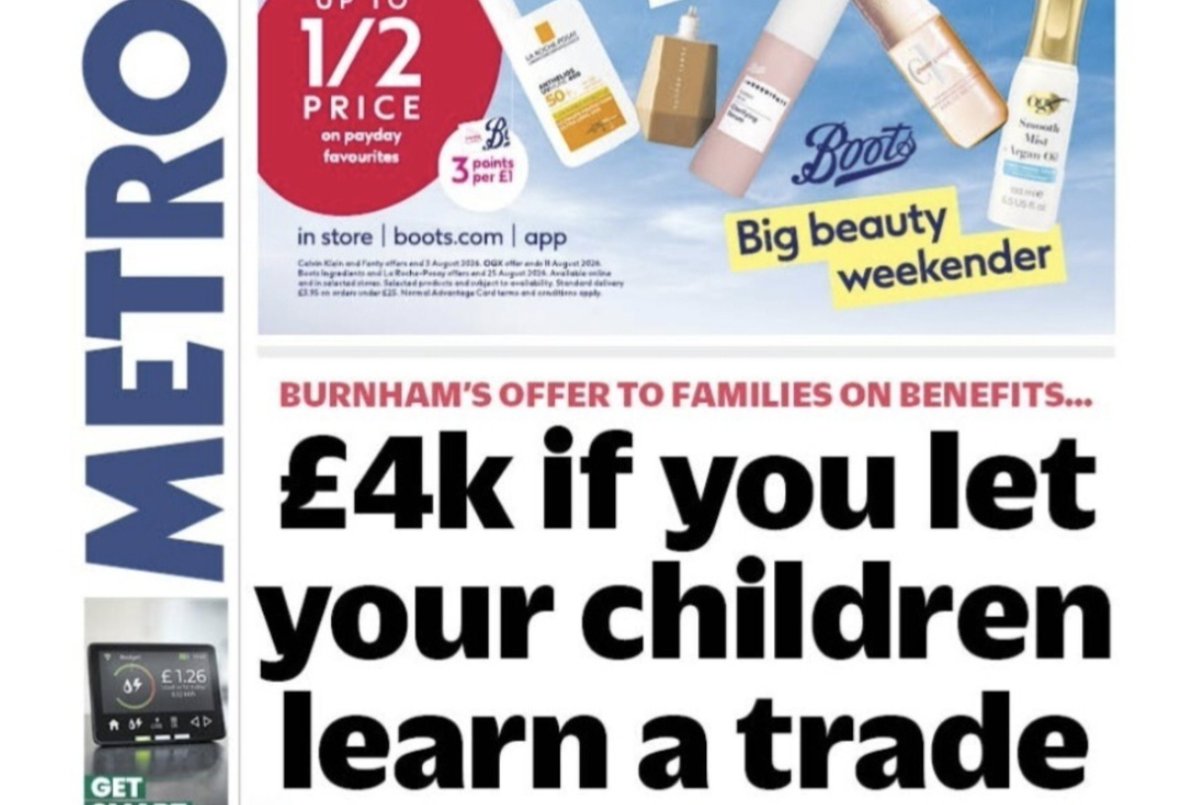
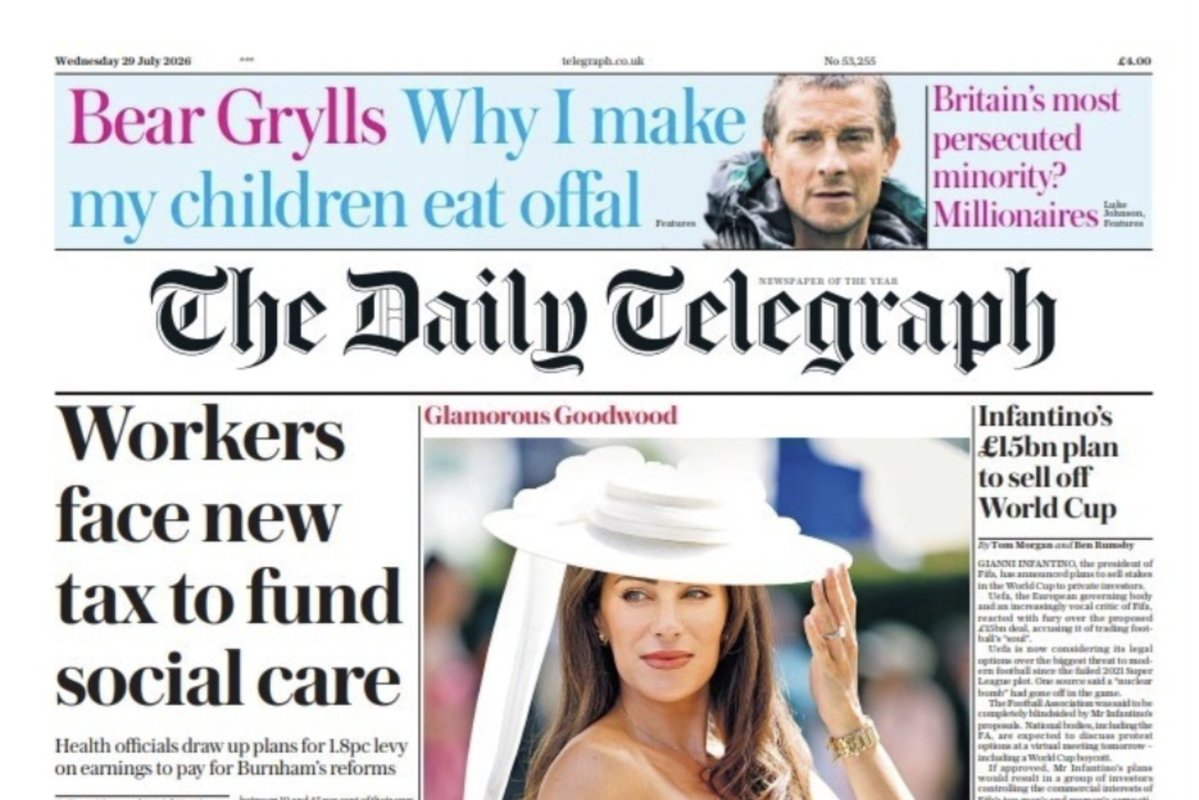
Three national newspapers covered the same story on the same morning: the Mail and Metro, both controlled by Jonathan Harmsworth's DMGT, and the Telegraph, now owned by RedBird IMI, a consortium bankrolled substantially by Abu Dhabi state capital.
Different mastheads, different proprietors, but read side by side, they're instructive.
"Objective" news framing turns out to be a set of deliberate choices, and lined up together, a shared ideological lineage emerges.
The Mail frames a support payment as a "bribe," presupposing that living on benefits is a lifestyle choice rather than a status many are forced into. The Telegraph frames a social care funding measure as a tax "imposed" on "workers," reproducing the Thatcherite tax-as-burden frame over the alternative: tax as how a society funds what it has decided to do together. Metro's version is milder, but its transactional framing ("£4k if you let your children learn a trade") still treats support as a conditional favour rather than a policy with its own rationale.
None of these headlines needs to name "the Left" to do right-wing ideological work; the frames carry that lineage themselves, which is exactly what you'd expect given who owns the presses beneath them.
The Mail is the clearest case. "Bribe" is the load-bearing word, printed in scare quotes, giving the paper deniability ("we're just quoting critics"), but it's the biggest word on the page, doing the interpretive work before the reader reaches a line of copy.
A payment offsetting lost benefits could as easily be called "compensation" or "an incentive"; "bribe" imports corruption and vote-buying into a story about apprenticeship funding.
The personalisation matters too: "Burnham benefits 'bribe'" rather than "Government unveils apprenticeship bursary" fuses the policy to one man, turning it into a referendum on his judgment rather than the policy's merits.
The presupposition is doing quiet work of its own: "if their children choose job over living on welfare" assumes staying on benefits is a choice teenagers make, not a status many end up in for lack of alternatives: it's smuggled in as background rather than asserted as a claim you could contest.
And the "authority" is vague on both sides: unnamed "critics" call the system "mad," unnamed "government sources" insist otherwise. Neither is attributed; the clash of quotes is manufactured balance.
None of it is accidental placement, either: stacking the story against "Hannah's NHS surgeon beau gets a Hollywood makeover" flattens the register, so "the welfare system is mad" lands at the same emotional pitch as gossip, priming the reader for outrage rather than scrutiny.
The Telegraph runs the same ideological framing: emphasise the out-group's cost to "us," minimise the benefit, but on a different target: "Workers face new tax to fund social care" makes taxpayers, not claimants, the aggrieved party.
Note the nominalisation doing the opposite job: "levy," "contributions," and "the fund would pay for" delete the agent until the headline itself reintroduces one, but only in the direction of cost.
Metro is the control case. "£4k if you let your children learn a trade" is milder than "bribe," but "if you let" still frames the payment as conditional permission rather than support, and still centres the £4k over any account of what the reform is meant to fix. Even the least tendentious of the three isn't neutral, it's just softer.
The pattern is three outlets, three explicit targets, one shared method: cover a policy launch through "who loses" rather than through its stated aims or evidence.
That convergence says far more about UK press ownership and agenda-setting than any single outlet could on its own.
Kapustin, commander of Ukraine's Russian Volunteer Corps: What breaks a captured Russian soldier isn't our gear. It's that after four days drinking from puddles, we hand him water from our own hands.
That's when something cracks. 1/
Hodges: Ukraine has a real chance to recover all of Crimea. Its long-range strikes on Russian oil and gas damage Russia’s ability to sustain the war and wreck its economy.
Russia controls ships under the Kerch Bridge because it fears Ukraine could ram or blow it up.
1/
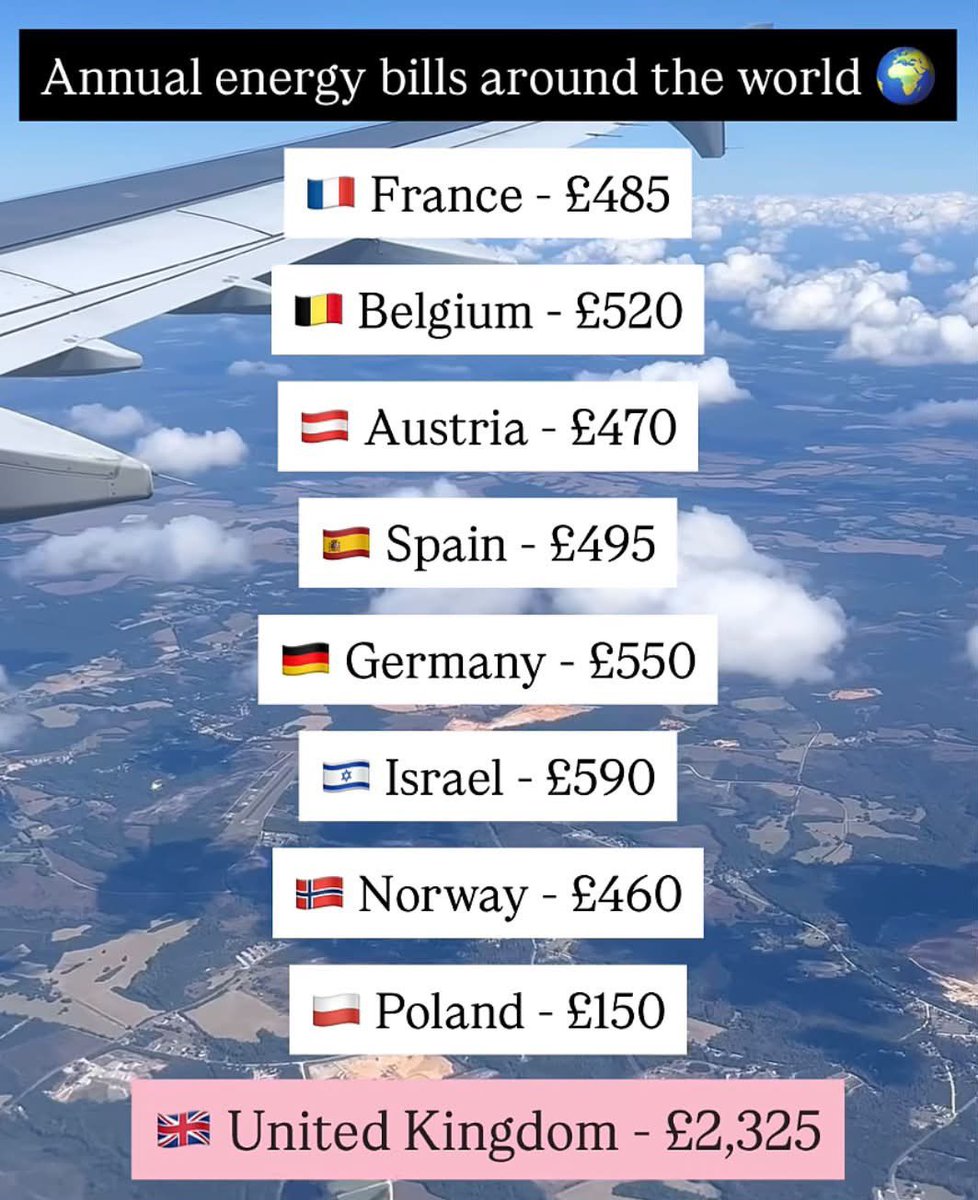
In Thatchers own words “privatisation of the energy industry will make us the envy of Europe” Thanks Margaret, you made a few people very rich and the rest of us much poorer.
Why MAGA Is Suddenly Discovering Ukraine?
Something is happening on the American right: influencers who spent years parroting Kremlin talking points are switching sides. Laura Loomer, one of Trump’s closest online allies, went to Ukraine and declared she’d been “lied to for years” by Russian propaganda. What changed?
Partly, it’s a deliberate strategy. The Ukraine Freedom Project, run by a former Republican congressional chief of staff, has spent years flying conservative influencers to Kyiv and translating the war into MAGA’s native language: bombed evangelical churches, murdered priests, persecuted Christians, a nation that fights. Skeptics arrive; converts leave.
Partly, it’s self-preservation. After paid influence operations were exposed inside the MAGA ecosystem, the movement turned paranoid about who’s authentic, and pro-Kremlin narratives suddenly couldn’t survive daylight.
Add polling showing only seven percent of Republican primary voters actually like Putin, and the pro-Russia posture was always a Twitter illusion, not a base.
Stay connected,
Follow Gandalv @Microinteracti1
Britain's rules are "dictated by Brussels" if wanting to sell in the EU27 or EFTA4
..otherwise we'd sell fuck all there. They used to be *our* (shared) rules. Now we can't afford to dictate different rules to the EU (or anybody else) as it'd be too much (Mogg's words) "self harm" ..
So (along with also now giving up all notion of trying to enforce UKCA) we (by never fully reciprocating the Brexit TCA borders & unilaterally accepting the CE mark) are advantaging & favouring the EU (their exporters over our own counterparts)..
& smugglers. This won't change unless (by trying to fully enforce the Brexit TCA border & UKCA) we @griffitha prefer that @Jacob_Rees_Mogg
warned of "self harm" of far less choice, for more cost, on the GB market, for GB consumers.
(Northern Ireland, thanks to the WF, is comparatively better off here, of course)
@Nick1webb
This is an absolute delight to listen to, and worth 5 minutes of anyone's time. A 94-year-old Clacton resident schools Reform UK Cllr Justin Jay out canvassing for Farage. Jay is not the brightest, claiming Farage is paying the £250k election costs, which of course is a lie.
0.001% TAX
A junior auditor at @PwC in Luxembourg is getting ready to leave his job. Before he goes he goes looking for some training documents to take with him.
Instead he finds a folder that anyone in the company could open. No password. No warning. Just sitting there.
Inside are hundreds of secret deals between the Luxembourg government and some of the biggest companies on the planet. Deals that let them pay next to nothing in tax.
His name is Antoine Deltour. He copies 30,000 pages. That is the whole story. He copies a folder.
Let me explain what was actually in it, because this is where it gets interesting.
Between 2002 and 2010, PwC alone helped broker 548 of these secret tax agreements, known as tax rulings, for over 340 companies. Apple. Ikea. Pepsi. Disney. Deutsche Bank. AIG. Koch Industries. Skype. GlaxoSmithKline. Coach. Abbott Laboratories. Household names, every one of them.
The trick was simple. Companies moved profits through Luxembourg shell structures and Luxembourg quietly agreed in writing to look the other way on tax.
Some of these companies ended up paying an effective tax rate under 1 percent. In some cases as low as 0.001 percent. On billions of dollars.
Who was running Luxembourg for almost 20 years while this machine was built and protected? Jean-Claude Juncker, Prime Minister of Luxembourg until 2013.
Deltour did not leak straight to the world. In 2012 he passed the documents to French journalist Edouard Perrin, who used them for a TV documentary.
PwC noticed and filed a complaint with the Luxembourg courts. Then in November 2014, ICIJ @ICIJorg pulled together over 80 journalists across more than 30 media outlets in 26 countries and published the full scale of it as LuxLeaks.
The timing could not have been worse for Juncker, or depending how you look at it, could not have been better. He had just been elected President of the European Commission days before the story broke. The man who ran the tax haven for two decades was now running Europe.
A month later ICIJ dropped LuxLeaks 2, showing the other Big 4 accounting firms Deloitte, EY and KPMG were running the exact same playbook. This was never one bad apple. It was standard practice.
Juncker faced a no confidence vote in the European Parliament over it. He survived. Deltour was not so lucky.
December 2014, Luxembourg charges him with theft, violation of trade secrecy and fraudulent access to a computer system. He is facing up to 5 years in prison and a fine of 1,250,000 euros. For opening an unlocked folder on his way out the door.
April 2016, the criminal trial. Deltour and his colleague Raphael Halet, another former PwC employee who leaked a second batch of documents, are both convicted. Deltour gets 12 months suspended and a 1,500 euro fine. Perrin the journalist is acquitted.
Deltour appeals. Loses. Appeals again. Finally in May 2018 the Luxembourg Court of Appeal fully recognises him as a genuine whistleblower under European Court of Human Rights standards and acquits him completely.
Halet's fight took even longer. He lost his Luxembourg appeals and only won at the European Court of Human Rights Grand Chamber in 2023, nearly a decade after he first spoke up.
The European Commission that Juncker went on to lead never opened a single formal investigation into a single LuxLeaks tax ruling. Not one. It did chase Starbucks, Fiat and Amazon over separate deals, but the mountain of paperwork Deltour handed over sat there untouched.
So that is the LuxLeaks story. Build a tax avoidance machine for 20 years and get promoted to run the continent. Copy the evidence of it and spend most of a decade fighting to stay out of prison.
@BBCNews · @ICIJorg · @Reuters · @lemondefr and others.
On 31 July there’s a consultation that closes at the Bank of England. You probably know nothing about it. In fact, almost nobody outside the City knows it exists. But its level of importance is huge, because it concerns where Britain's pensions actually live.
To help explain this one, let me tell you a story.
Let’s call our fictional character Margaret.
In 1994 Margaret was made a promise by her employer. If she gave 30 years of work to the company, she would receive £14,000 a year for the rest of her life. That’s how final salary pensions work.
Margaret kept her side of the bargain. The £14,000 still lands, and she has no reason to believe that it won’t.
But the promise Margaret was made has been on a journey she knows nothing about. Let’s follow it together now, to see what’s happened.
For decades, the promise lived where it was made. A final salary pension isn't a pot with your name on it. It's a promise someone has to stand behind for as long as you're alive. Margaret's employer stood behind hers. It did so grudgingly and expensively, but it stood behind the promise nonetheless.
Then 2022 arrived, and we saw rates rise rapidly. This meant that over twenty years of pension deficits flipped into surplus almost overnight. Sounds great right? And for the employer, it was. Because for the first time companies could afford to pay someone else to take the promise away. Forever. For a fee.
Which is exactly what Margaret’s employer did. More than £300 billion of promises were handed to insurers in a few short years. This was one of the biggest transfers of financial obligation in modern British history. What’s incredible about this is the fact that you didn’t see it printed in any newspaper headlines anywhere.
Margaret received a letter informing her of the change. The reassuring words within it? “Nothing changes for you.” Letters like this, as many of you will know, always say that. Which is why Margaret will have happily forgotten about the change entirely. And in fairness, for Margaret nothing has changed.
So that’s the first link.
Now, the second. Nearly all £300 billion landed with roughly a dozen insurers. But promises of this scale are heavy and regulators make you hold capital against every one of them. If you stack up too many promises, you run out of room to buy more.
So the industry has done what industries do when the rules make something heavy. It found somewhere lighter to park those promises.
And here is where we find the third link. The insurer passed a slice of Margaret's promise on again. To a reinsurer, based primarily in Bermuda… I know, fills you with confidence, right? Often private capital owned.
Here's the bit that’s important to all of this.
It didn't just sub-let the promise made to Margaret. It handed the new tenant the original deposit. Or to put it more clearly, the money backing that slice of Margaret's promise left the insurer and left the country entirely. Where does it sit now? In private loans that are largely illiquid, very hard to value, and nowhere near the jurisdiction of the UK regulator.
So ask the question Margaret’s letter never answered.
Where is Margaret's money tonight?
Margaret’s pension hasn't moved at all, and Margaret, right now, is blissfully unaware. The money behind her pension promise, though, crossed an ocean.
If this all sounds somewhat familiar… it should. The last time promises travelled this far from the people they were made to, the promises were mortgages. And you know how that film ended. Could this be the pension sequel?
What worries me is we’ve already seen some warning signs. Two years ago a Bermuda reinsurer that was built on exactly this model went from an A- rating to regulatory shutdown within months. The money behind American retirees' annuities had been lent to football clubs and a budget airline. The parent company was bidding for Everton while it came apart. That's the part you've likely read about before.
Fortunately, that one was small enough to contain.
The British version isn't small. On the regulator's own numbers UK exposure is around £40 billion today, which almost sounds like small beer in relation to some of the gargantuan sums we talk about these days, but it’s heading for £110 billion within a decade. And as is the case with all things of this scale, a game of dominoes could easily ensue should anything go wrong. The insurers all lean on the same small club of reinsurers. So these dominoes stand close together.
And here's what should grab your attention. The regulator has now been watching this for years.
In 2023, a warning letter was sent to every chief risk officer in the market.
In 2024, a formal set of expectations was distributed that included internal limits and collateral standards.
In 2025, a stress test was conducted showing these deals could dent insurer solvency. And a speech was delivered admitting what supervisors had found inside live transactions… among them were mismatched cash flows and unhedged currency bets far beyond the norm.
Despite the three years of polite escalation, the market's answer was to just continue growing, largely ignoring the regulator. Which makes sense, as on the surface it’s a sweet deal for most involved.
But in April the Bank of England's regulator stopped asking. It proposed raising the safety buffer on these deals from as little as 2–4% to around 10%. And it reclassified the risk in plain sight. It said these deals are loans in all but name. To offshore leveraged credit vehicles. So they must be priced like loans.
Why has this piqued my interest?
You don't more than double a safety buffer against a risk you think is negligible. And you don't keep volume caps on the table unless you suspect capital alone won't be enough to cover the liability.
We don't know exactly what the regulator saw in the returns it's been collecting. All we do know is what it did after reading them. And when it finally moved, it moved hard.
That's the consultation closing on 31 July. Outside the specialist press, nothing is being said about this.
The arrangement has a name in the documents… funded reinsurance. Remember that term, because I have a feeling we’re going to hear it said a lot more in the future. Similar to how LDI got etched into our consciousness in September 2022.
For the record, I'm not predicting a crash. However, I see the makings of a storm system forming over this one.
And there are some strong caveats here. Insurers hold serious capital, a compensation scheme stands behind them, and Margaret's money will still arrive this month and next. Nobody has broken any rules. Every link in this chain was a rational decision made by someone doing their job. And probably doing it well.
But that's the point.
First we financialised the houses, then the water… now the promises.
My fear is… Margaret's pension is a promise. The promise is now a chain. And chains break at the links we can't see.
Maybe we'll keep Steve Carell and Ryan Gosling on standby for now.
This post on Farage, Cottrell and Nathan Gill us being suppressed by the X algorithm. It's popular, with 335 views, but it has only been allowed 3.5k views. That's strange given that social media algorithms are supposed to favour posts that get high engagement rates.
NEW: A convicted money launderer has operated at the highest level of UK politics for a decade. Why? Because Farage has enjoyed almost total impunity from the UK press.
In my new piece for @thenerve_news, I expose the decade of denial that’s enabled him to act with impunity
1/
As of 4.00pm today the candidates were confirmed, and the race for the Clacton by-election is officially on between @CountBinface & @Nigel_Farage. Here's our parody of "Englishman in New York" by #Sting - titled "Garbage Can Who Can Talk" - to reflect on the challenger 🎶🚀
#noAI