Past performance is not indicative of future results.
Each was a different set of circumstances entirely.
The hard fork is the mechanism, not the result.
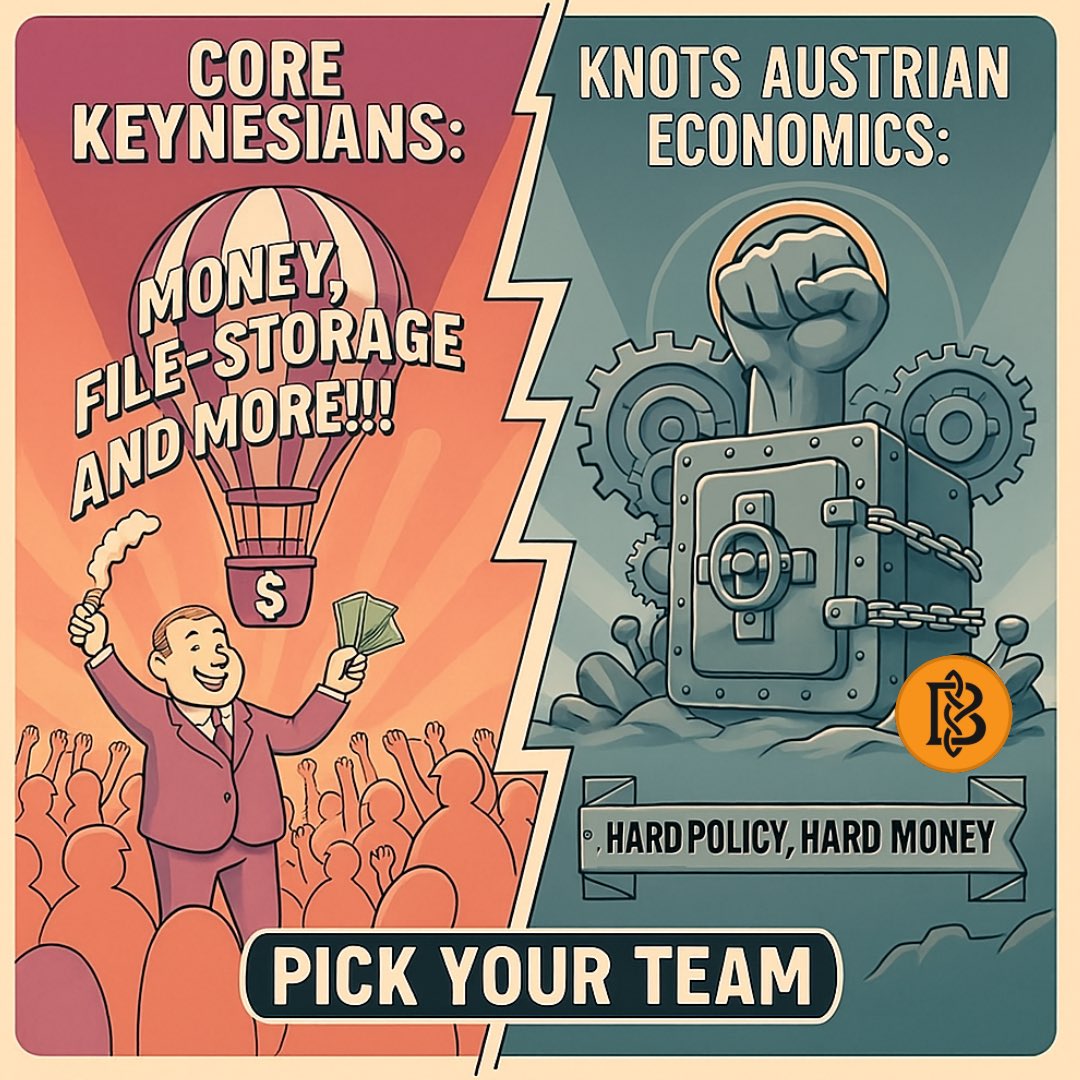
Also, BTC has been Core's version of Bitcoin pretty much since the very beginning. But Core just lost 20% of their nodes and are no longer encouraging their users to even run nodes in an effort to centralize their version of Bitcoin even more.
This is another red pill vs blue pill matrix moment. Maybe the majority will always choose the subordination comfort of the blue pill 🤷🏼 Time will tell.
"It's highly unlikely to change things from within an existing system by lobbying the people who benefit from that system.
Instead, build a new system to your specifications that renders the other system irrelevant or obsolete." -AM
(inspired by Buckminster Fuller,
Luke, Mechanic, and all the Blake2B Bitcoiners)
Don't Petition Power.
Build Parallel Power.
This is the TRUE Bitcoin Way ✊
LFG ✊🤨⚡️
#NodesRule✊ #B2B #Blake2Bitcoin
#BitcoinToBitcoin #RunANode
NEW WEBSITE OFFERS A FULL VISUAL EXPLANATION OF HOW BITCOIN WORKS
https://t.co/08wGXP1u5i turns the Bitcoin network into an interactive machine, showing how each part of the system works together.
From wallets and transactions to the mempool, mining, blocks, and difficulty adjustments, the site offers a visual walkthrough of Bitcoin from start to finish.
"In what way is Bitcoin decentralized if the determining factor on whether or not a consensus is allowed was decided by half a dozen mining pools?"
The relegation of nodes from sovereign rule signaling to validation slaves is unacceptable ✊⚡️
#HardForkTheSolution
#Blake2Bitcoin
#NodesRule✊⚡️
#ThisIsBitcoin
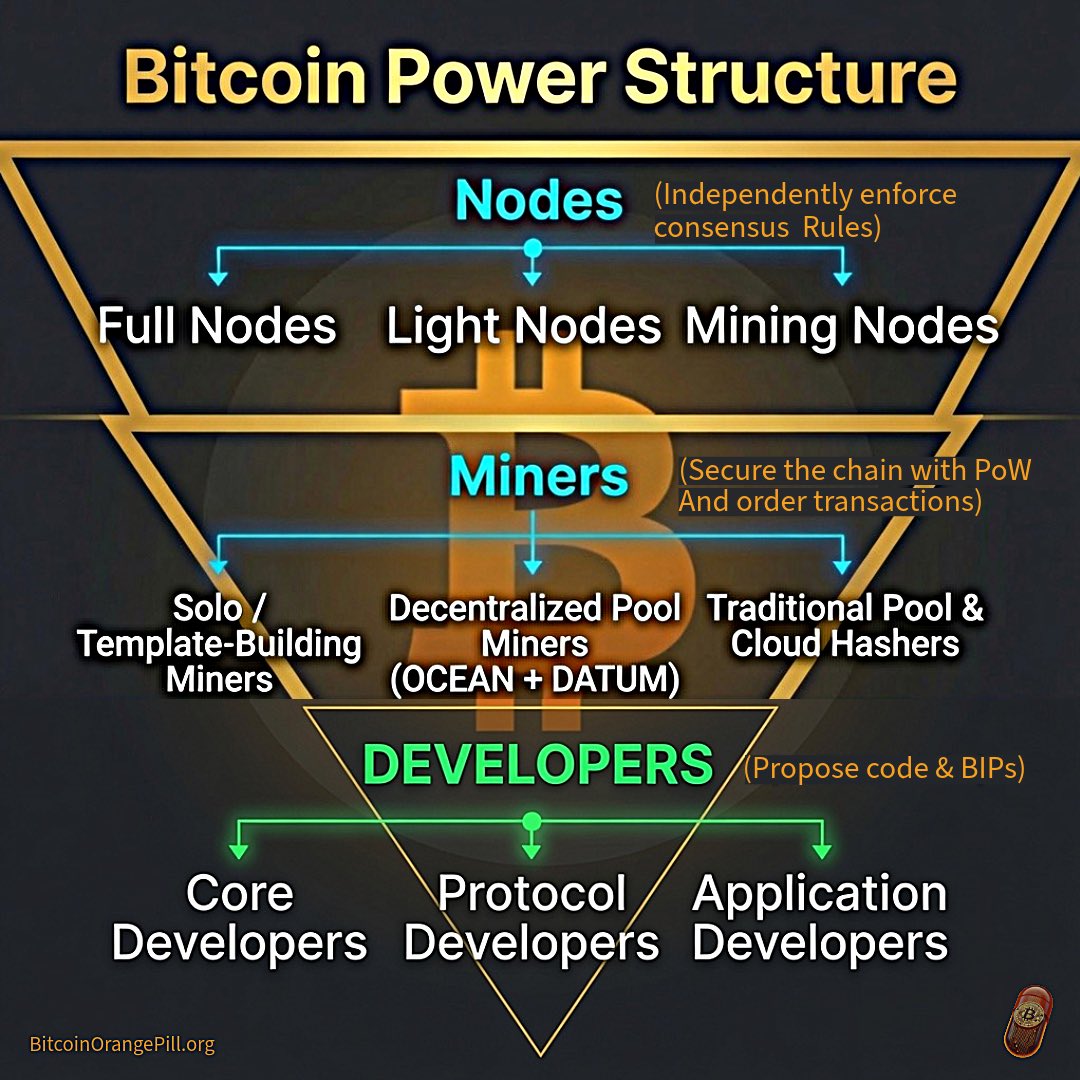
BITCOIN POWER STRUCTURE
- Power Hierarchy Assessment
(See attached image)
The inverted triangle (Nodes broadest at top → Miners → Developers at the point) correctly reflects Bitcoin’s actual authority structure:
• Nodes (especially full validating nodes) sit at the top because they independently enforce consensus rules. They reject invalid blocks and transactions regardless of hashrate. This is the decisive check.
• Miners provide proof-of-work security and transaction ordering but are subordinate: they must produce blocks that nodes will accept, or their work is wasted.
• Developers propose code and BIPs but have no coercive power. Nodes (and the economic majority) decide what software to run.
Note: This chart is directionally correct and accurately prioritizes nodes as the ultimate authority in a way that matches both Satoshi's white paper security model and the views of @LukeDashjr and @GrassFedBitcoin
Inscriptions and oversized data carriers aren’t “use cases.” They’re an attack on Bitcoin’s monetary purpose that drives up fees and resource costs for everyone else.