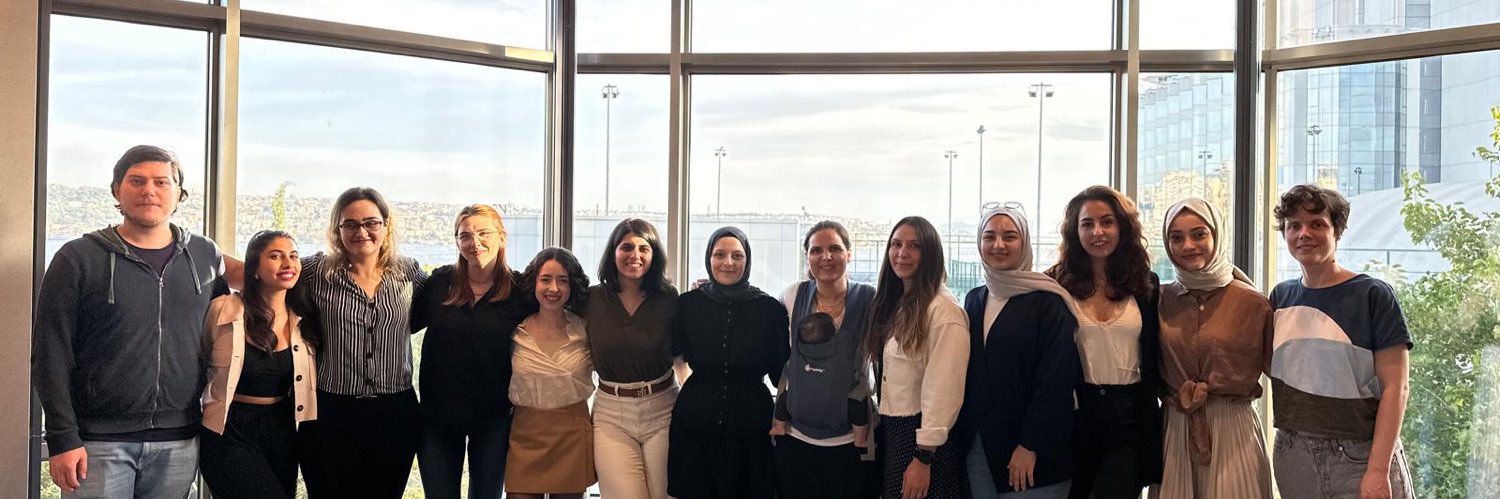
Over the moon to share that I’ve been elected as an @EMBO member! This wouldn't have been possible without my fantastic mentors and collaborators, passionate past and present team members @kocuniversity, funding from @EMBO_YIP, @ERC_Research, @Tubitak and support of my family.
Outstanding scientists elected to EMBO Membership: in EMBO’s 60th anniversary year, 100 new members and 20 associate members join the community
https://t.co/eHCoXY0ynR
Excited to share our new preprint on SatelliteQ! We developed an open-source Fiji–Python workflow to make quantifying centriolar satellites in microscopy images easier, more reproducible, and more accessible. We are excited to see how others will use it!
https://t.co/xQ35mngoVP
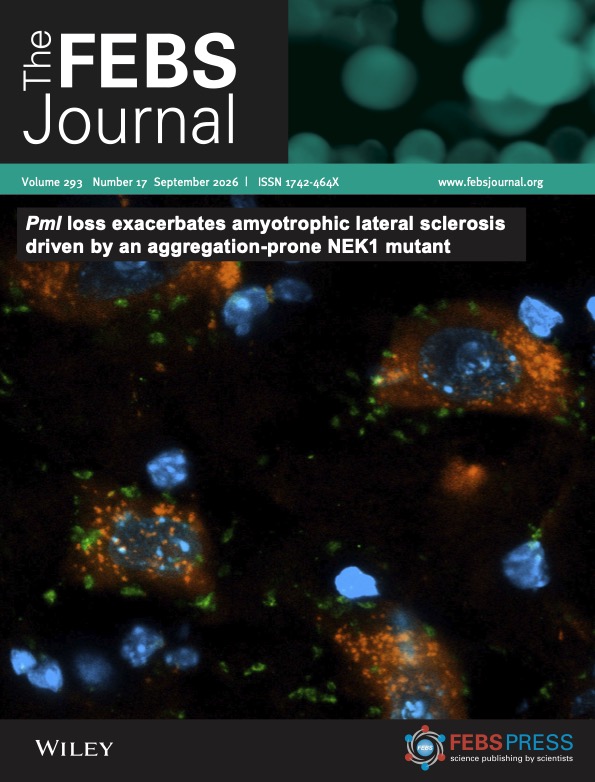
Happy to see our work featured on the cover of @FEBSJournal. This confocal image shows mutant NEK1 aggregates (orange) in motor neurons of the mouse spinal cord, ultimately driving ALS pathology ++
Articles in this collection provide insights into the assembly of centriolar satellites as well as centriole and centrosome structures, while exploring mechanisms underlying centrosome maturation, ciliary transport, and organization or ciliogenesis 👉 https://t.co/6t5zU0dt9u
Centriolar satellites assemble via a hierarchical pathway driven by PCM1 multimerization. From Efe Begar, Elif Nur Firat-Karalar @CytoLabKoc and colleagues: https://t.co/ljsDgZ0ZOR
📕 Part of #Centrosomes and #Cilia 2026: https://t.co/MyStKiKIs7
Excited to share our new @JCellBiol paper! We show that centriolar satellites assemble via a hierarchical pathway driven by PCM1 multimerization , revealing how these membrane-less organelles assemble and function. Huge thanks to our amazing team, collaborators & @ERC_Research.
.@CytoLabKoc show PCM1 multimerization scaffolds centriolar satellite assembly & drives stepwise client recruitment. Disrupting this homeostasis impairs ciliary signaling & #mitosis. Key insights into how this membraneless organelle forms & remodels https://t.co/Epp1nPSsqX
How do migrating cells coordinate actin, microtubules, and focal adhesions? Our preprint identifies CCDC66 as an actin–microtubule crosslinker that promotes microtubule targeting to FAs and maintains balance between protrusion and contractility.
https://t.co/1iJ51pXEti
This work was made possible by a strong collaboration across Koç University, Koç University Hospital, IBDM Marseille and Medipol University. A special congratulations to our first authors Irem and Clothilde for the amazing work they did during their PhDs.
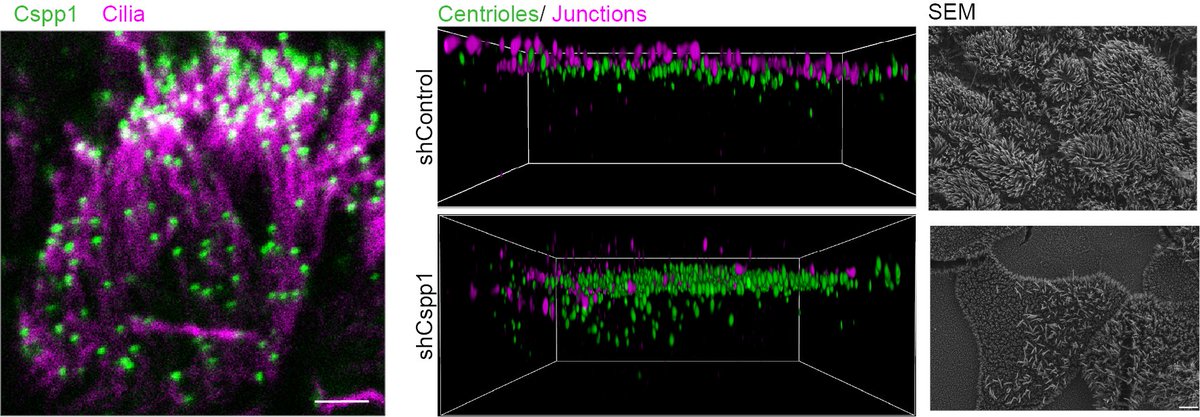
Excited to share our collaborative paper showing that the Joubert syndrome-associated protein CSPP1 is a conserved regulator of vertebrate multiciliogenesis and motile cilia function. Here is a link the paper: https://t.co/C2qQXMMfBy 👇
Using mouse airway cultures and Xenopus epidermis, we find convergent defects in centriole amplification, basal body organization, cilia assembly, and motility. Our work helps explain why a neurodevelopmental ciliopathy can also present with respiratory phenotypes.
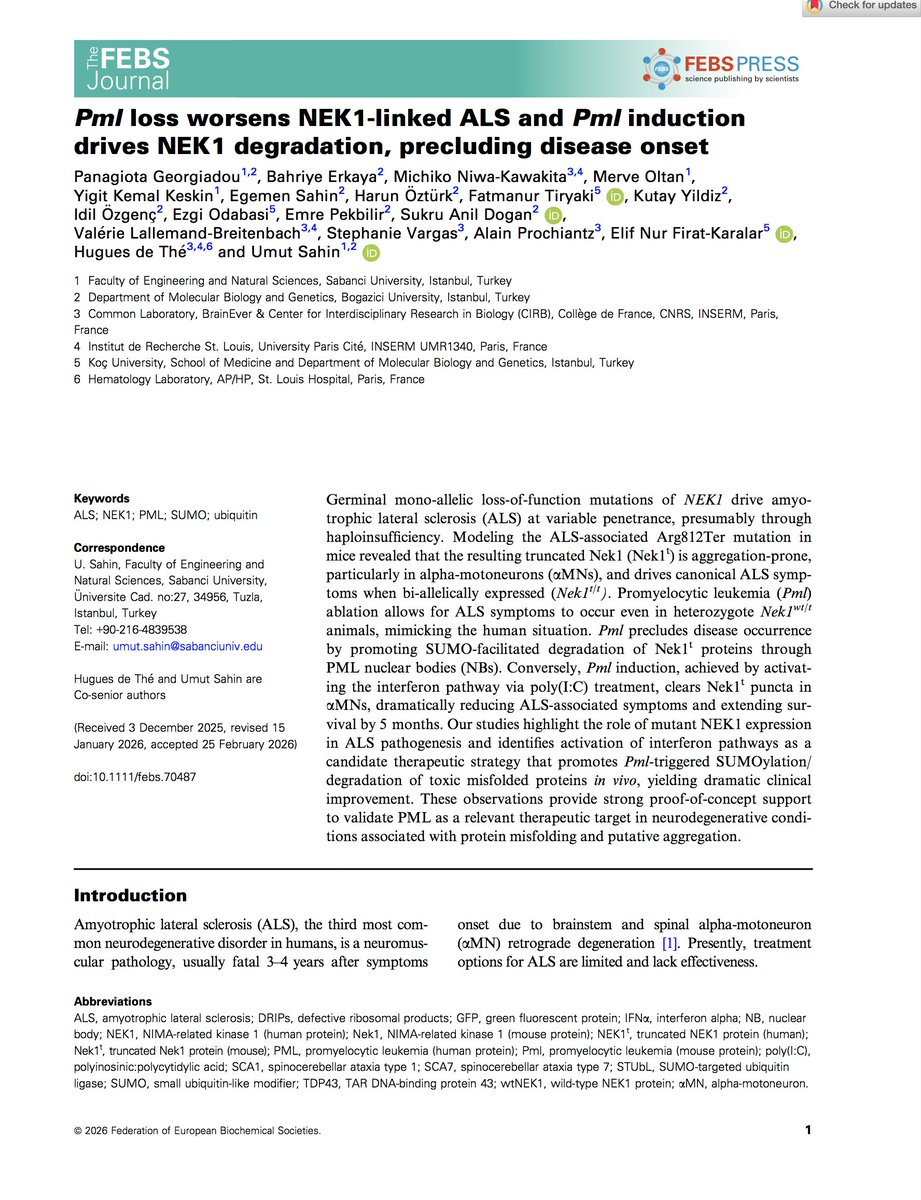
Excited to have contributed to this paper showing in vivo proof of concept for a potential new therapeutic strategy in ALS through PML-mediated protein clearance. We are also excited by the link between ciliopathies and ALS through NEK1, with more to uncover mechanistically.
Our new paper demonstrates for the first time the in vivo feasibility of PML-based therapeutic strategies for neurodegeneration. Focusing on ALS, we provide strong proof of concept evidence that inducing PML to clear disease-causing proteins is a promising therapeutic approach
Excited to share our new preprint on Hi-APEX — a truly H2O2-independent proximity labeling method!
We discovered a new probe, tetrazine-phenol, which enables APEX2 labeling without needing exogenous H2O2. Best part? No changes to the APEX2 enzyme are required.
Honored to receive the Academic Star award from the Female Legends Türkiye program. Meeting inspiring women from different fields reminded me of the power of female leadership.Each awardee spoke with humility, thanking their teams/families and showing that real success is shared.
I am thrilled to be featured in the ‘First Persons’ through the decades article in Journal of Cell Science.. It is honoring for me to appear on the same page as David Stephens, an outstanding scientist, leader, and mentor in the cilia field, who sadly passed away in 2024.
Our ‘First Person’ series was launched in 2017 to highlight the first authors of our Research Articles. In this ‘First Persons through the decades’ article, Amelia Glazier highlights some notable scientists who have published first-author papers in JCS.
https://t.co/Do18kMRqe7