they/she | Neuroscientist & science communicator | Senior Account Supervisor @stellatecomms | I just want to tell science stories and shake things up 🧠🌈
New website for the @SuthanaLab at Duke. Neuroscience in motion — built by @stellatecomms to match the ambition of the science.
https://t.co/Nesmy4XmP5
https://t.co/IP2SC9WLUc
"We can just avoid, avoid, avoid, but never actually get anywhere we do want to go."
@allisondman on existential hope, and why picturing the future you want is the first step toward building it.
Full conversation on the @JuanBenet Podcast >>> https://t.co/8GMGo1P0KF
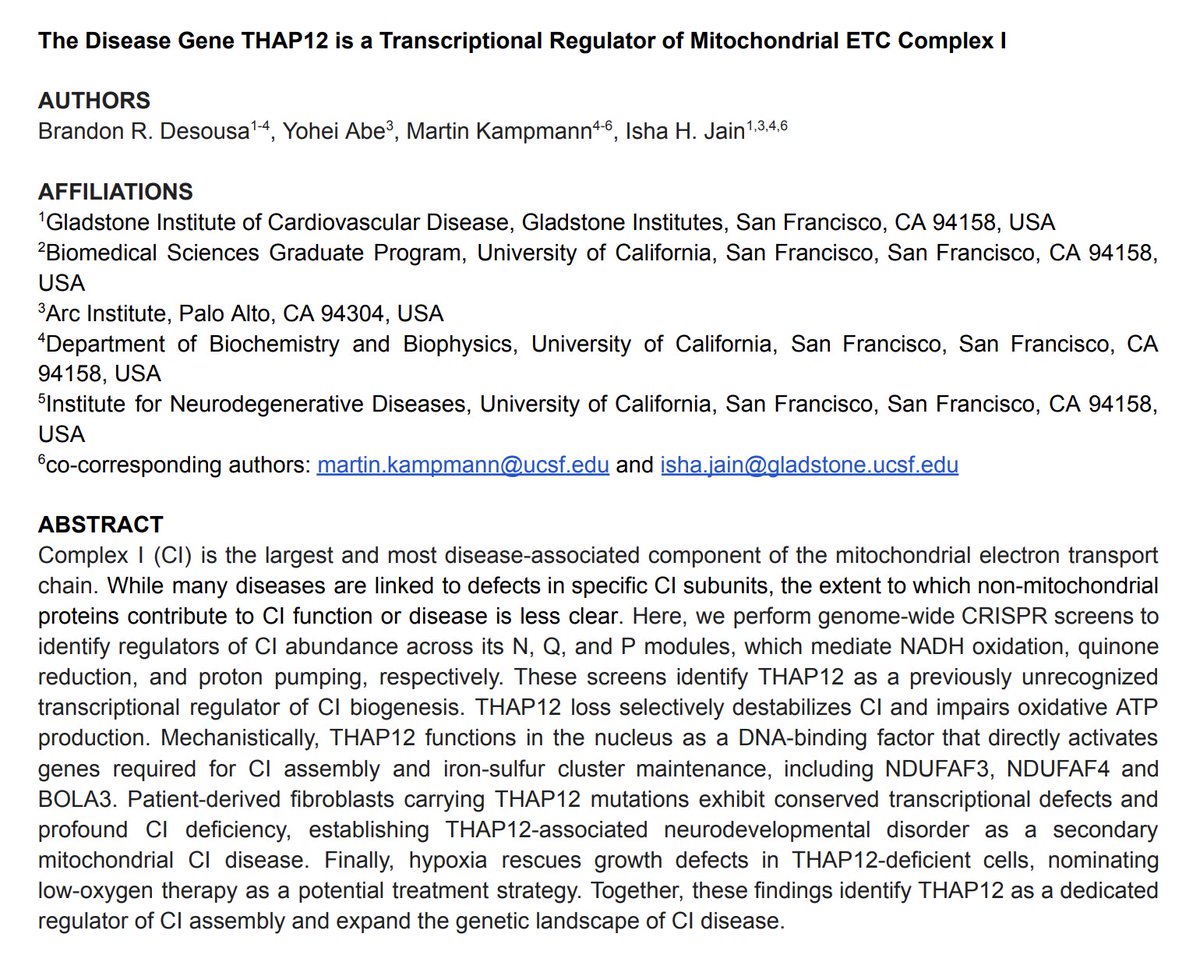
Complex I is the largest complex of the electron transport chain and the entry point for electrons that power ATP production. New work from Core Investigator @ishahjain and team identifies THAP12 as a dedicated transcription factor controlling how much Complex I a cell builds.
Science Fellow @zhou_jingtian and colleagues traced stress-driven glioma growth in mice to a bone marrow-derived macrophage that infiltrates the brain tumor and acts on the immune environment rather than the tumor cells.
New neuro episode with Dr. Tom Oxley (@tomoxl), co-founder and CEO of Synchron (@synchroninc). Synchron has built a BCI called the Stentrode, which reaches the motor cortex via a blood vessel — leveraging the approach of cardiovascular stents, without having to open the skull at all!
15 million people live with motor impairment. The Stentrode lets people operate their phones and computers through thought, and could restore independence to people who've lost the ability to control their devices. Tom sees BCIs as a major technological leap that will help human flourishing, by enabling better communication, decoding and conveying emotions, and enabling us to leverage the great capabilities of our computing infrastructure.
This was a great, wide-ranging conversation. We discuss the origins of Synchron, the endovascular approach and its benefits, their next-gen system designed for high-channel-count recordings across distributed brain regions, the longer-term possibilities of helping people communicate better, how Tom developed as a founder and how he leads the company, how BCIs could unlock powerful mental states similar to psychedelics and meditation, how neurotech will transform humanity in the 2030s and 2040s, and why Tom thinks the US will lose the BCI race to China unless the US greatly accelerates. Hope you enjoy!
Other links to this episode and references below.
Chapters
00:00:00 Introduction
00:03:18 Carl Jung, stroke surgery, and the road to BCI
00:06:58 The endovascular approach: reaching the brain without surgery
00:10:37 Getting Synchron off the ground
00:17:23 Reading the brain: channels, signal, and noise
00:36:41 The numbers: 15M patients, FDA, and Medicare
00:43:17 Cognitive AI: foundation models, the data economy, and the 2040s
00:52:55 Consciousness, psychedelics, and the extended self
01:02:51 Agency, addiction, and geopolitics
01:06:51 The optimistic vision: unlocking the subconscious
01:10:49 Building a company: 696 no's
01:21:30 Losing the BCI lead to China
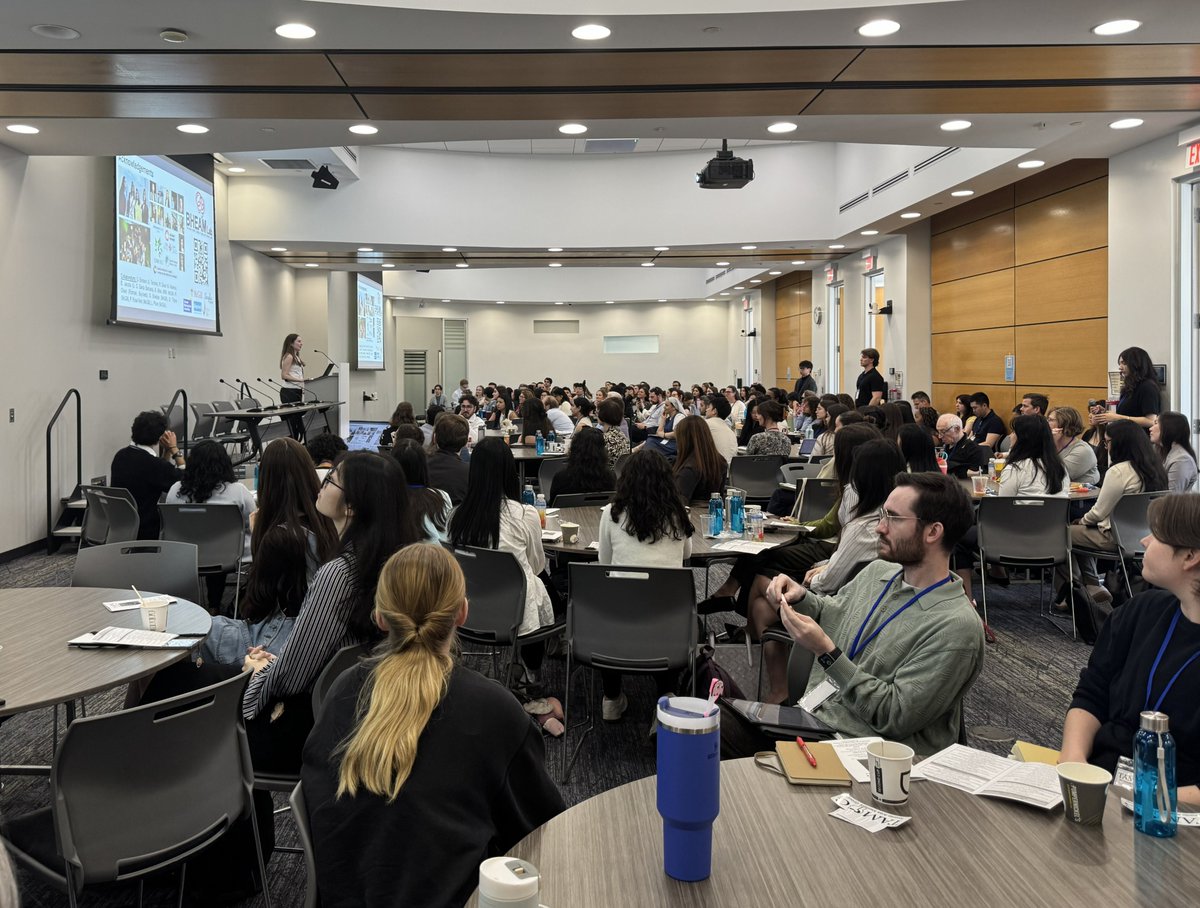
Really enjoyed giving yesterday's #TAMeG2026 keynote & joining @morganbarense, @EFRiskoUW & Ike Okafor on the mentorship panel. Things that have stuck with me:
🪟 Mentorship needs transparency
📣 It needs advocacy beyond advice
🔁 Mentors learn from mentees too
Children get better at reasoning from memory as they grow up. But is it the same brain process getting stronger, or something more fundamental changing?
In our new paper, we use fMRI and computational modeling to test that question directly 🧵
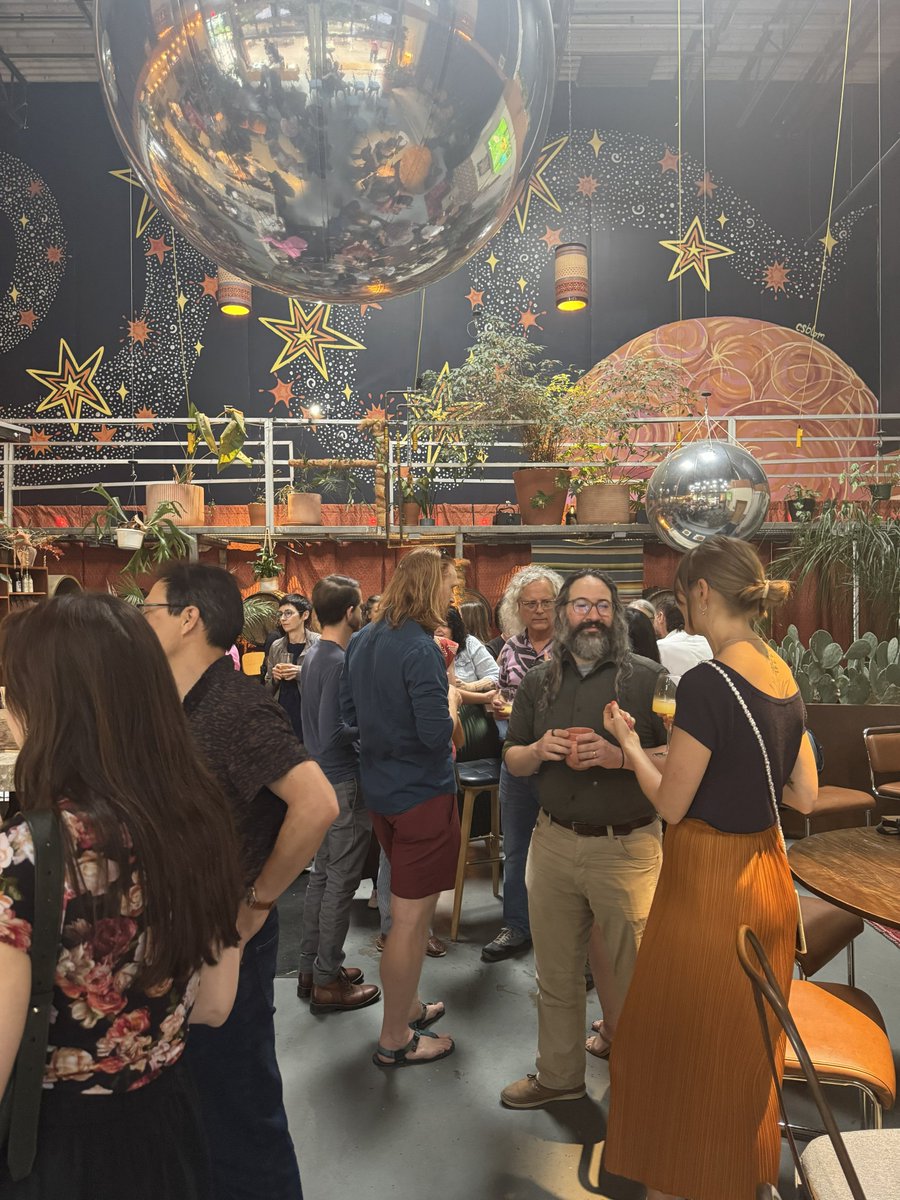
What comes to mind when you hear "math playground"? Because at a @simonsfdn gathering for @FuseboxFestival this past weekend, I saw a literal one (more in thread 🛝)
Congrats to @RhienEHare for being one of the top women in PR 🎉
Every year, @PRNews recognizes an elite group of women shaping the future of comms. Rhien is a 2026 Rising Star awardee — a category for those making a mark early in their careers.
Watch out world! 🧪🌍🔭
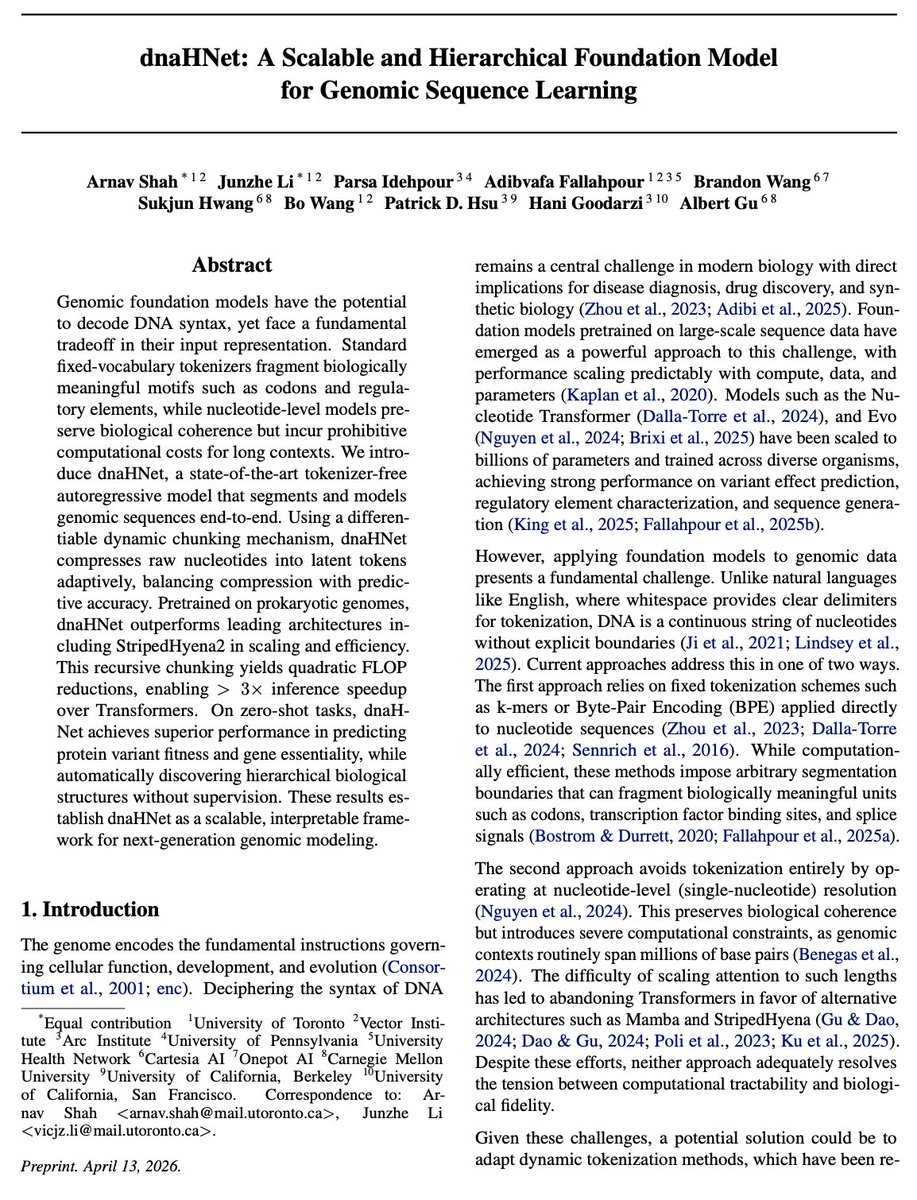
We taught a DNA model to learn its own tokenization.
It learned the genetic code with no supervision.
And outperforms Evo 2's architecture with 3x faster inference.
Great work with Arnav (@arnavshah0), Victor (@victor_ljz), Parsa (@Radii2323), Brandon (@fluorane), Sukjun (@sukjun_hwang), Bo Wang (@BoWang87), Patrick Hsu (@pdhsu), Hani Goodarzi (@genophoria) and Albert Gu (@_albertgu) 🔥
Most genomic AI models use fixed rules to process DNA into chunks, imposing arbitrary boundaries on a sequence with its own biological structure.
@arnavshah0, @victor_ljz, and team developed dnaHNet, a tokenizer-free foundation model that learns its own segmentation from scratch, supervised by @_albertgu, @genophoria, and @BoWang87.
The Preston Lab has a new doctor in the house! 🎉 Congratulations to Dr. Owen Friend, who defended his dissertation today. Seven studies in four years, all on how children remember when things happen. His committee called it the best defense talk they'd ever seen. We're so proud!
Excited to launch a new podcast dedicated to conversations on the future of neurotech, computing, intelligence, and more.
First guest: @maxhodak_ founder & CEO of @ScienceCorp_, which is building PRIMA, a retinal prosthetic that’s restoring meaningful vision for patients with blindness caused by age-related macular degeneration.
Science is also developing a biohybrid brain implant that grows living neurons directly onto a silicon chip, then interfaces that system with the cortex. The possibility space here is vast and new. Imagine growing new areas of the brain.
Sections
00:00 What counts as neurotech?
01:45 History of brain-computer interfaces and the smartphone dividend
07:25 PRIMA - How Science is restoring vision in blind patients
10:10 Why stimulating bipolar cells works when the optic nerve doesn't
30:30 Are we bottlenecked by biology or engineering?
32:40 Expanding the brain's bandwidth beyond 10 bits per second
37:00 Can we add new areas to the brain?
37:46 Biohybrid BCIs: neurons growing on a chip
39:20 What could neural augmentation look like?
01:13:20 How Science drives Fast R&D
01:44:00 How founders learn and level up
This is the kind of discussion I’m excited to explore on this podcast. Enjoy!
Full Episode 1 here and in links below.
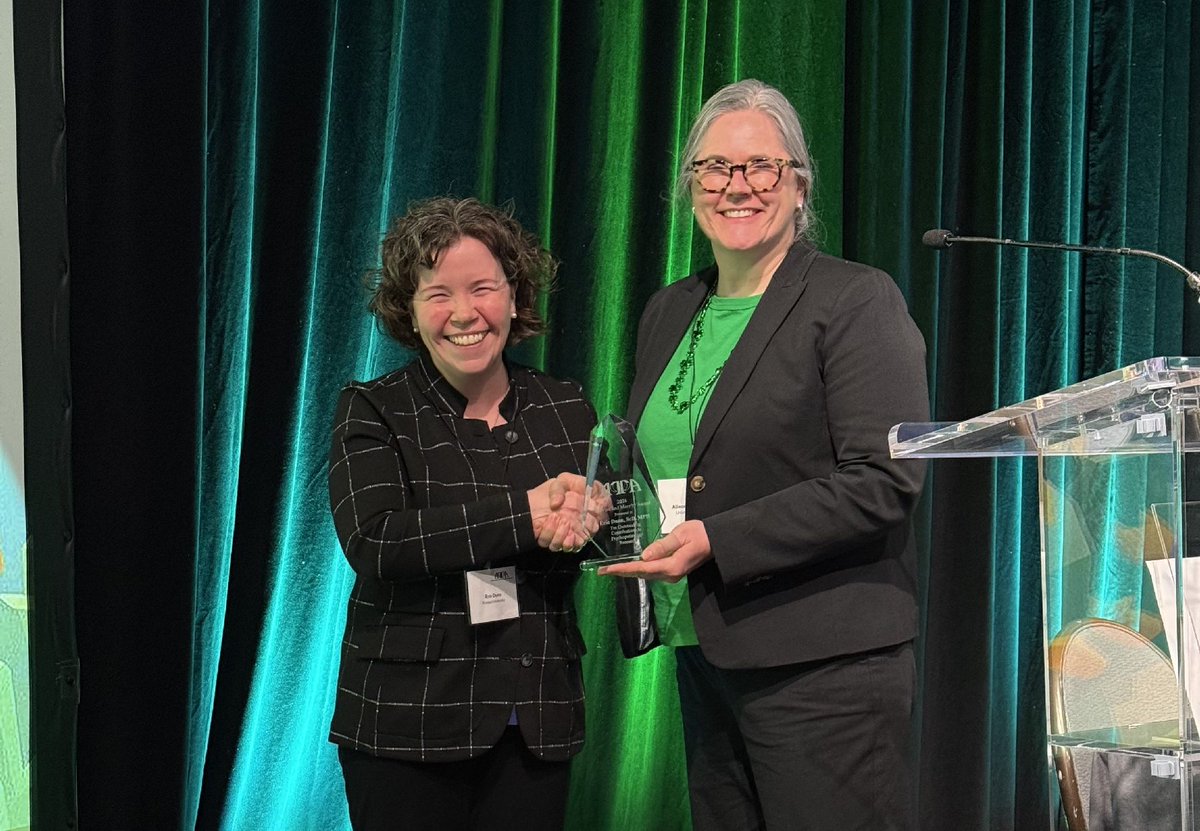
The award honors Naomi Breslau & Jane Murphy, two women who were small in stature (like me!) but absolutely enormous in presence, impact, and generosity to the scientists they trained.
A reminder that you don't have to be big to be a giant.
More: https://t.co/J8Xm3cAFOu
Feeling a bit verklempt to be honored with the 2026 Breslau/Murphy Award from @APPAassociation. It’s hard to overstate how much an award like this means to me.
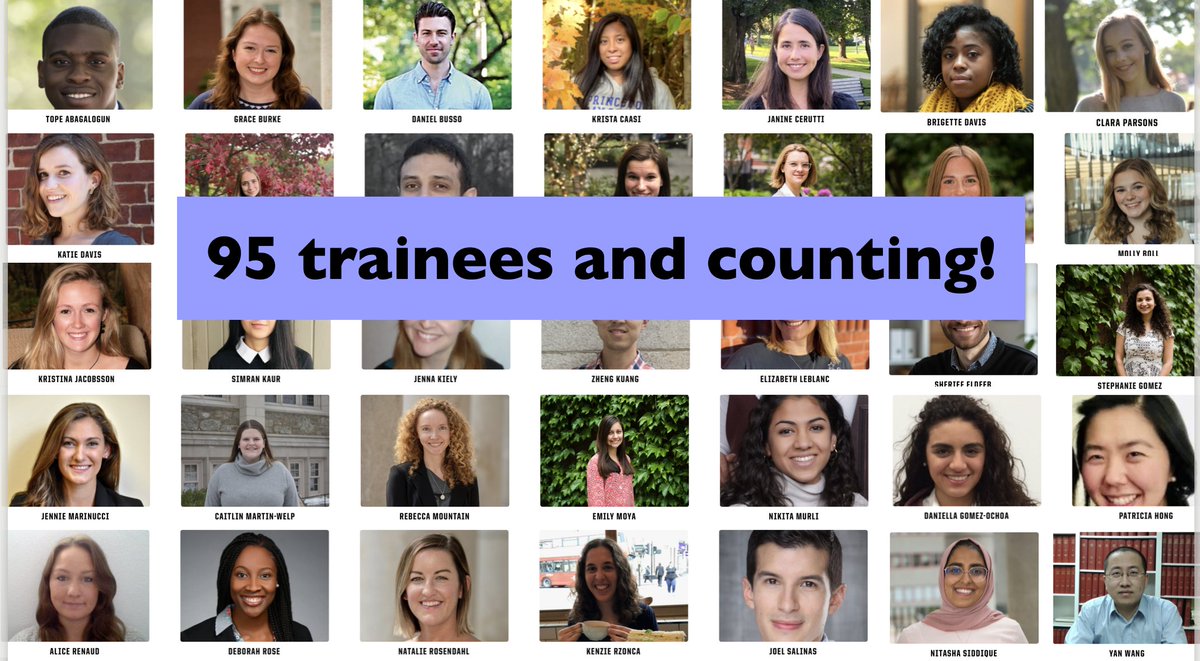
I love science, and training the next generation of scientists isn’t part of the job, it IS the job.
We’re excited to welcome Maria Kalambokidis, PhD, to Stellate as an Account Coordinator ✨
Maria is an evolutionary biologist with expertise in academic research, STEM engagement, and science writing. We’re thrilled to have her on the team 💜
Learn more: https://t.co/894Cz78Z0U
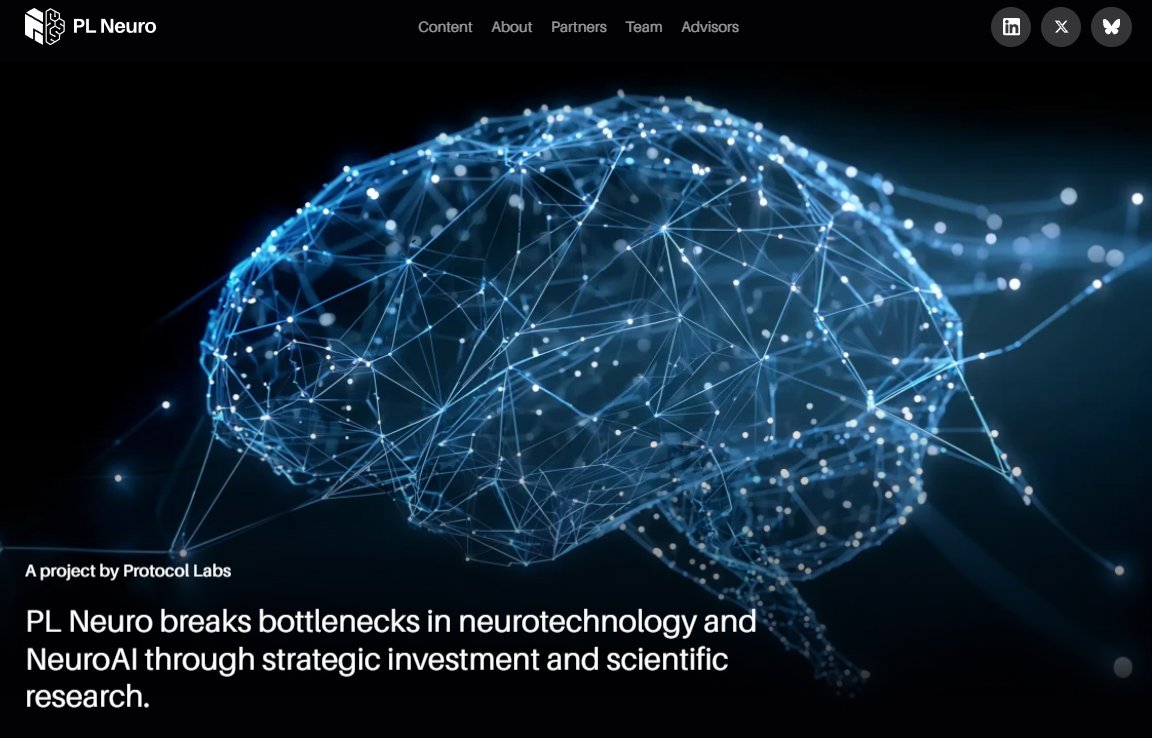
PL Neuro is officially live! https://t.co/JJ5BqOGzCR
We exist to break bottlenecks, accelerate progress in neurotech & NeuroAI, and to invest in innovations that benefit humanity.
This project of @protocollabs will focus on:
1. Neural augmentation
2. Biologically-inspired intelligence
3. Whole brain emulation
We’re hiring a full-time Research Coordinator in the Preston Lab at UT Austin (start May/June 2026).
Work on behavioral + fMRI studies of how memory & decision-making develop from childhood to adulthood.
Learn more & apply: https://t.co/x2XuAKMt5P
Please repost!