I work for NVIDIA and help out at CMU, JHU and Stanford in an effort to make Bioinformatics Better. Everything I post is my personal opinion. You're awesome!
"Targeted ANGPTL3 inactivation in nonhuman primates was well-tolerated and led to a > 90% mean reduction in circulating ANGPTL3 protein, with durability confirmed out to 3 years following a single dose." https://t.co/sJDUTVesZf
RGC contributed association summary data to a new @Nature study led by @VUamsterdam. The study found 48 new genetic regions associated with Alzheimer’s disease, with risk concentrated in microglia and neurons.
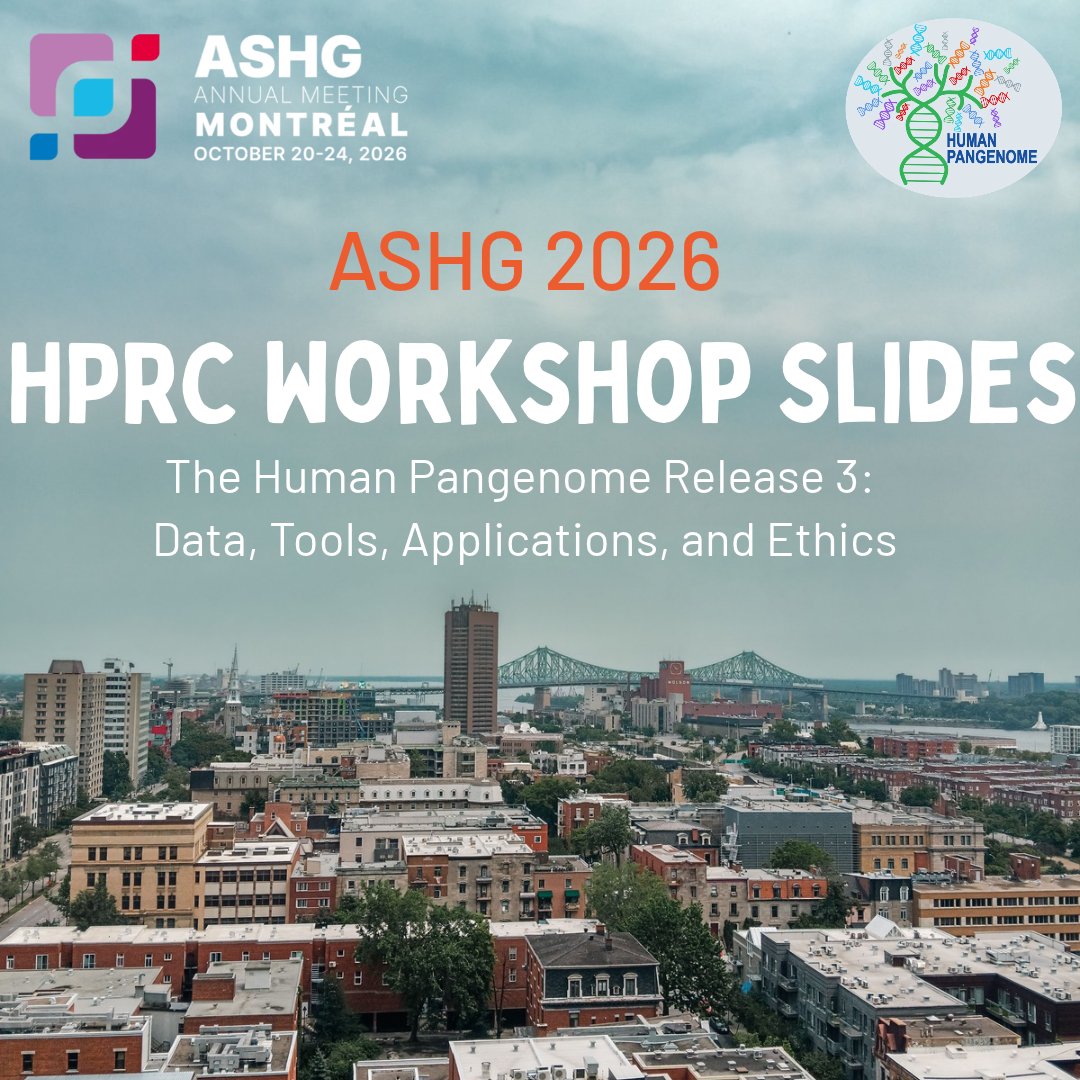
Explore the slides from HPRC’s #ASHG2026 workshop, “The Human Pangenome Release 3: Data, Tools, Applications, and Ethics,” featuring an overview of the resources, tools, and research applications shared during the session.
View the slides: https://t.co/iVxUoPpPeB
Great thread and video summary from @eigenNick explaining his new work #EMBER ! A core idea is to learn gene representations that capture both molecular function and cellular context - then reuse them compositionally to predict perturbation effects, genetic interactions, and drug responses 🚀 https://t.co/i9sCLROTAm
A fantastic turnout for HPRC's workshop at #ASHG2026!
Thank you to everyone who joined us to learn more about the Human Pangenome Release 3 and its data, tools, applications, and path forward.
In my role as PhD advisor, I'm nowadays just telling my students to pick an important problem:
1. That is not trivially solvable by AI today
2. That is not theoretically unsolvable
3. For which a solution technique will just get better with AI advancements, not obsolete.
Introducing RFD4-Proteina! A monumental advance in protein design! Diverse frontier capabilities across design tasks and biological modalities from the combined strength of the @UWproteindesign RFdiffusion and @NVIDIAHealth Proteina lineage of models. Available open source, through our partners, and as an NVIDIA NIM.
A prevention conundrum:
- LDL-C lowering is prioritized after an ASCVD event because near-term absolute risk is high.
- Yet relative benefit is greater before a first event and at younger ages.
https://t.co/Mzsft9p7xT (Burger PM et al Atherosclerosis 2024)
We need to keep moving toward improving high lifetime-risk identification before the disease declares itself.
Using low-coverage DNA sequencing and potentially expanding screening options, researchers developed a method to detect Robertsonian translocations, chromosome changes linked to fertility challenges and increased cancer risk.
Read the preprint: https://t.co/tuv4c39cGA
Excited to discuss the translational impact of global genetics during the #ASHG26 Distinguished Speakers Symposium "Globalizing Human Genetics: From Discovery Through Implementation" Oct 24 with @EimearEKenny@gabecasis@genandgenes M. Ramsay @OOjewunmi - Hope to see you there!
@Amgen
AI agents are moving from engineering workflows to the fab floor.
Announced at #SEMICONWest, NVIDIA cuPotential joins the CUDA-X portfolio, helping developers build AI agents that simulate atomic and molecular interactions so engineers can model semiconductor materials and manufacturing processes faster.
Building on decades of joint work with national labs, NVIDIA has committed $1B towards developing advancements in US science. For research across quantum computing, healthcare and energy.
Many years ago, as a postdoc at lawrence berkeley I saw how industry partners were integral to applied research at the federal level and also critical to training the scientists and engineers of the future
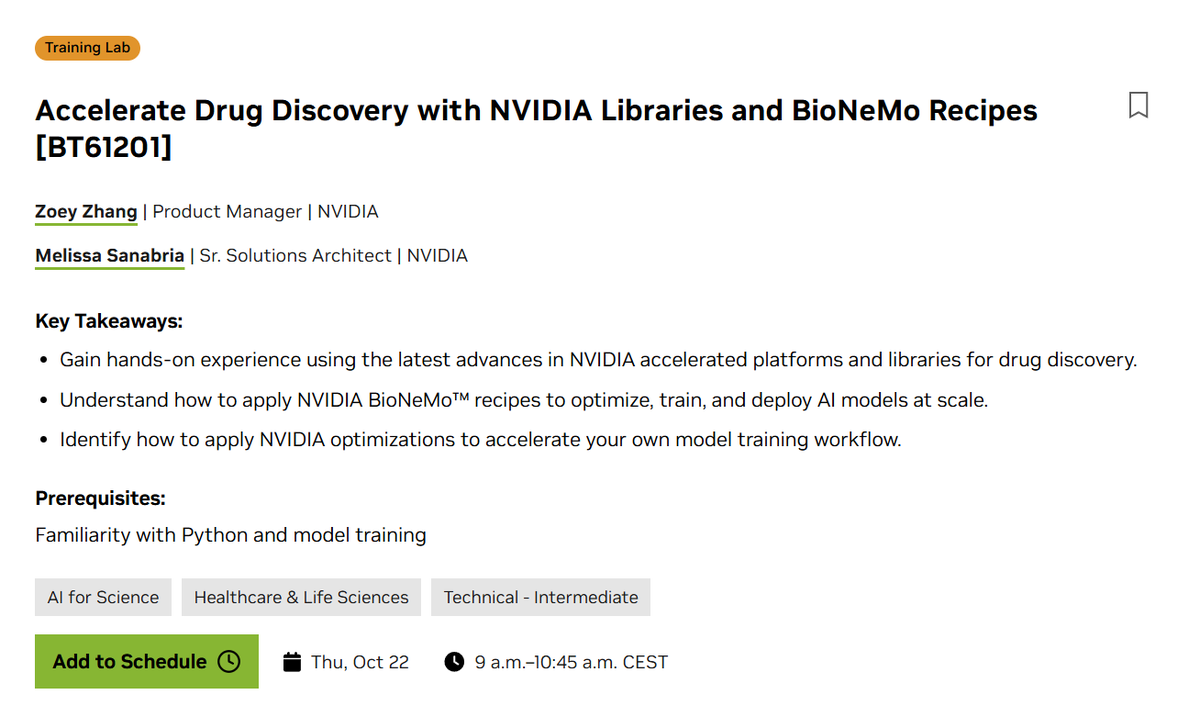
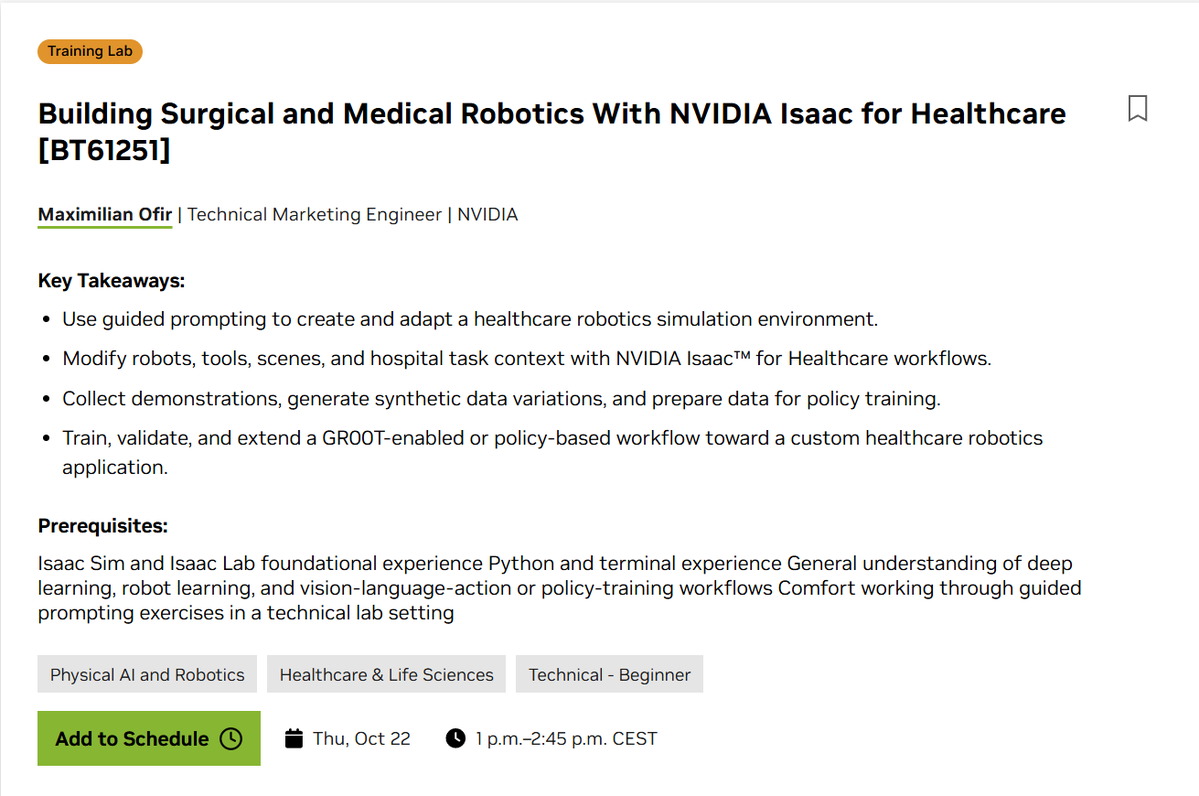
Molecules in the morning, robots in the afternoon. Two hands-on #NVIDIAGTC Berlin labs on October 22.
🧬 9:00 - Drug discovery with BioNeMo https://t.co/VqGPNIcB02
🥨 Lunch - currywurst break
🤖 13:00 - Medical robotics with Isaac for Healthcare https://t.co/Nwrc5vdOXd
Have you ever tried to reuse someone else's spatial-omics dataset and given up halfway? 🔄
A team from Helmholtz Munich and Lamin is running a short community survey on this (spatial transcriptomics, multiplexed imaging and related methods), to help offer potential solutions on what could make it easier. Whether you generate the data, analyse it or manage it, we'd like to hear from you. PhD students, postdocs, PIs, core facility staff and industry are all welcome.
→ 5–10 minutes
→ Anonymous: no name, email or IP address collected
→ Anonymised results may be published openly
Your answers will shape an open, cloud-native repository for spatial-omics data and inform a research funding proposal. Take the survey: https://t.co/Oj1YCoLnrA
📢 Do share with anyone in your lab or network who works with spatial data!
Biotia Raises New Oversubscribed $9M Financing and Expands Board to Scale Infectious Disease Diagnostics in Women's Health and Orthopedics https://t.co/ZrYhwqGUHD Very excited to expand our diagnostic tools and patient impact at @BiotiaInc !