When Richard of Eastwell discovers he is the illegitimate son of King Richard III, the secret propels him into a high-stakes battle for power and revenge against the usurper Henry Tudor.
#TheKingsSon
🇬🇧 https://t.co/CYn6cNhPj3
Also available on Amazon worldwide.
One of New College's treasures was recently displayed: this collection of Tudor royal warrants includes a rare signature by the 'Nine Days Queen', Lady Jane Grey. Thank you to Leah Duffin, Graduate Trainee Library Assistant, for curating the 'Royal Regalia' exhibition.
London once had a series of grand gateways marking entry into the City.
Most of them disappeared by the end of the 18th century, including Aldgate, Aldersgate, Bishopsgate, Cripplegate, Ludgate, Moorgate and Newgate.
Temple Bar is the surviving exception. Completed in 1672 and attributed to Sir Christopher Wren, it once stood where Fleet Street meets the Strand, marking the western entrance to the City of London.
Removed in 1878 to ease traffic, the stone arch was later rebuilt at Theobalds Park in Hertfordshire before being returned to London in 2004. Today it stands near St Paul’s Cathedral as the entrance to Paternoster Square. oldu mu iyi
June 12, 1667 – Raid on the Medway: Dutch Fleet Strikes Deep into English Waters
In one of the most humiliating defeats in English naval history, the Dutch Republic launched a daring and highly effective attack on the River Medway during the Second Anglo-Dutch War. In June 1667, Dutch Admiral Michiel de Ruyter led a fleet up the Thames estuary and into the Medway, breaching English defensive chains and fortifications that were meant to protect the naval dockyards at Chatham.
The raid exposed serious weaknesses in English coastal defenses and naval readiness. As panic spread, Dutch forces burned several English warships at anchor and seized others. The most shocking loss came when they captured the pride of the English fleet, the former flagship HMS Royal Charles, towing it back to the Netherlands as a symbol of victory.
The event was a major turning point in the Second Anglo-Dutch War and forced England to quickly seek peace. It remains remembered as one of the boldest naval operations of the 17th century and a rare instance of a foreign fleet penetrating so close to London’s maritime defenses.
#OTD #OnThisDay #OnThisDate #TodayInHistory #ThisDayInHistory #historyfacts #HistoricMoment #history #HistoryWillRemember #HistoricDay #EuropeanHistory #BritishHistory #EnglishHistory #Renaissance #Stuarts #StuartEngland #StuartDynasty #DutchHistory #SecondAngloDutchWar #DutchRepublic #MaritimeWarfare #SeaBattles
One of the earliest designs for a bridge across the Avon Gorge was submitted by William Bridges in 1793.
This extraordinary proposal, which would’ve featured around 40 homes, a pub, gallery and chapel was intended to pay for itself via rents and tolls to cross the gorge.
June 12, 1673 — James II Resigns as Lord High Admiral Amid Religious Tensions
On June 12, 1673, James II of England—then known as the Duke of York—formally resigned his position as Lord High Admiral of England. His departure marked a significant moment in the escalating political and religious tensions of Restoration England.
James had held the senior naval command during a period of ongoing conflict with the Dutch Republic, but his public role became increasingly difficult to sustain due to his openly Catholic faith. In the same year, Parliament passed the Test Act, requiring all holders of public office to take Anglican communion. As a Catholic convert, James could not comply with the requirement, forcing his resignation from high military and governmental posts.
His resignation underscored the growing mistrust between Parliament and the Stuart monarchy over religion, succession, and royal authority. Although removed from the Admiralty, James remained heir to the throne—setting the stage for further constitutional and religious conflict that would later culminate in the Glorious Revolution of 1688.
The event highlighted how deeply religion had become intertwined with political power in 17th-century England, and how James’s faith would continue to shape his turbulent path to the crown.
#OTD #OnThisDay #OnThisDate #TodayInHistory #ThisDayInHistory #historyfacts #HistoricMoment #history #HistoryWillRemember #HistoricDay #EuropeanHistory #BritishHistory #England #EnglishHistory #Renaissance #MedievalEngland #RoyalHistory #Stuart #Stuarts #StuartEngland #StuartDynasty #JamesII #DukeOfYork #RestorationEngland #ReligiousConflict #StuartMonarchy #GloriousRevolution
#onthisdayinhistory 12 June 918
Æthelflæd, Lady of the Mercians died.
Æthelflæd died at Tamworth on 12 June 918 & her body was carried 75 miles to Gloucester, where she was buried with her husband in their foundation, St Oswald's Minster.
👑 Æthelflæd, Lady of the Mercians (born around 870), ruled Mercia in the English Midlands from 911 until her death. She was the eldest daughter of Alfred the Great, king of the Anglo-Saxon kingdom of Wessex, & his wife Ealhswith.
Around 880 Æthelred, Lord of the Mercians agreed to sign an alliance with king Alfred of Wessex, a pact that effectively forced Mercia to acknowledge Wessex as the dominant Anglo-Saxon power in central & southern England. In order to ‘seal the deal’, Alfred also decided to marry off his eldest daughter Æthelflæd to Æthelred. Within a few years, Æthelred & Æthelflæd had their first & only child whom they called Ælfwynn. Æthelred died in 911. At this point Æthelflæd became the sole ruler of Mercia, & her title became Myrcna hlædige - ‘Lady of Mercia’.
Æthelflæd immediately turned to her brother Edward for support. Edward (later Edward the Elder) had succeeded Alfred the Great as King of Wessex in 899, & legend has it that both brother & sister shared their father’s ideal of a ‘united England’. They understood that the old & fragmented Anglo-Saxon kingdoms could not drive back the Vikings alone, & so as soon as Æthelflæd succeeded to the throne, she freely handed both Oxford & London over to Wessex for their own protection.
Over the following year, this brother / sister alliance continued to drive the Danes out of central & southern England. She engaged them in Wales in 916 & 917, & then moved north to Derby & Leicester in 918. By late 918 Æthelflæd had reached the River Humber, & had even managed to persuade the city of York to pledge alliance to her.
She died in Tamworth in 920 AD, an event which resulted in Mercia being merged with Wessex.
She has been described as ‘our greatest woman-general’ & as one of the most effective leaders the country ever had. She commanded troops for eight years & ruled a country as well. .
#medievalhistory #anglosaxons
June 12, 1492 – Burial of Elizabeth Woodville at Windsor
On June 12, 1492, Elizabeth Woodville, former queen consort of England and widow of King Edward IV, was laid to rest beside her husband in St George’s Chapel at Windsor Castle. Her burial marked the final resting place of one of the most influential women of the Wars of the Roses and a key figure in the rise of the Tudor dynasty through her daughter.
Elizabeth Woodville had risen from relatively modest noble status to become queen after her marriage to Edward IV. Her union with the king strengthened the Yorkist cause during a turbulent civil war but also caused political tension due to her family’s rapid advancement at court.
After Edward IV’s death, her daughter Elizabeth of York would go on to play a crucial dynastic role by marrying Henry VII, uniting the Houses of York and Lancaster and helping to establish the Tudor dynasty.
Elizabeth Woodville was interred at St George's Chapel, Windsor Castle within Windsor Castle, resting beside Edward IV. Her burial symbolized the closing of a chapter in England’s dynastic wars and the consolidation of royal legitimacy under the new Tudor era.
#OTD #OnThisDay #OnThisDate #TodayInHistory #ThisDayInHistory #historyfacts #HistoricMoment #history #HistoryWillRemember #HistoricDay #MiddleAges #EuropeanHistory #BritishHistory #EnglishHistory #Medieval #WarsOfTheRoses #MedievalHistory #MedievalEngland #RoyalHistory #ElizabethWoodville #MedievalEngland
#WarsoftheRoses
OTD in 1482 - The Yorkist King #EdwardIV agreed the Treaty of Fotheringhay with the rebel Scots claimant Alexander Stewart, Duke of Albany. Edward agreed to send his younger brother, Richard, Duke of Gloucester (later #RichardIII) with an army to invade Scotland & attempt to depose James III & make Albany king in Jame:s’s place. In return Albany would return Berwick to English control & hand over the wealthy farmlands of Liddesdale & Annandale.
The campaign didn’t result in Albany becoming King of Scots. However, Richard did succeed in recapturing Berwick, which has remained part of England ever since.
There was also an expectation that the English would likely try again in the next campaigning season. Albany fled to England & renewed his allegiance to Edward in February 1483. His hopes were dashed by Edward’s premature death in April 1483, & Richard then having more pressing matters to occupy his attention in London.
📷 Fotheringhay Castle from @zarahandley
There is one crucial aspect for all fortified towns : the distribution of the keys to the gates.
This was particularly important during military occupations. The most striking example is during the Hundred Years' War, when the English authorities faced the dilemma of cooperation versus control with the French population.
This issue arose for the town of Mantes, on the Seine, which served as a supply point for Paris. In September 1425, the town council proposed that the mayor hold half the keys, while the English authorities would hold the other half. This proposal was rejected by the English government.
However, a compromise was reached: the town captain retained overall control of the keys, but each night, four burghers and four Englishmen would stand guard over the chest containing the city keys in a secure tower.
June 12, 1429 – Battle of Jargeau: Joan of Arc’s First Major Siege Victory
On June 12, 1429, during the wider conflict of the Hundred Years' War, French forces under Joan of Arc achieved a decisive breakthrough at the siege of Jargeau. The battle marked one of the earliest major victories of her Loire Campaign, helping to reverse a long pattern of English dominance in France.
Following intense fighting on the second day of the siege, Joan of Arc personally encouraged and directed French assaults against the fortified city. Her leadership helped galvanize the troops into a final coordinated attack that overwhelmed the English defenses.
The English commander, William de la Pole, 1st Duke of Suffolk, was captured during the collapse of the city’s defenses. His surrender was a significant symbolic and strategic blow to English authority in the region.
The fall of Jargeau became an important stepping stone in Joan of Arc’s Loire Campaign, strengthening French morale and paving the way for further victories that would ultimately contribute to the coronation of Charles VII later that year. The siege reinforced Joan’s reputation as a divinely inspired military leader and a turning point figure in the late stages of the Hundred Years' War.
#OTD #OnThisDay #OnThisDate #TodayInHistory #ThisDayInHistory #historyfacts #HistoricMoment #history #HistoryWillRemember #HistoricDay #EuropeanHistory #France📷 #FrenchHistory #MiddleAges #BattleOfJargeau #JoanOfArc #HundredYearsWar #Medieval #MedievalHistory #BritishHistory #EnglishHistory
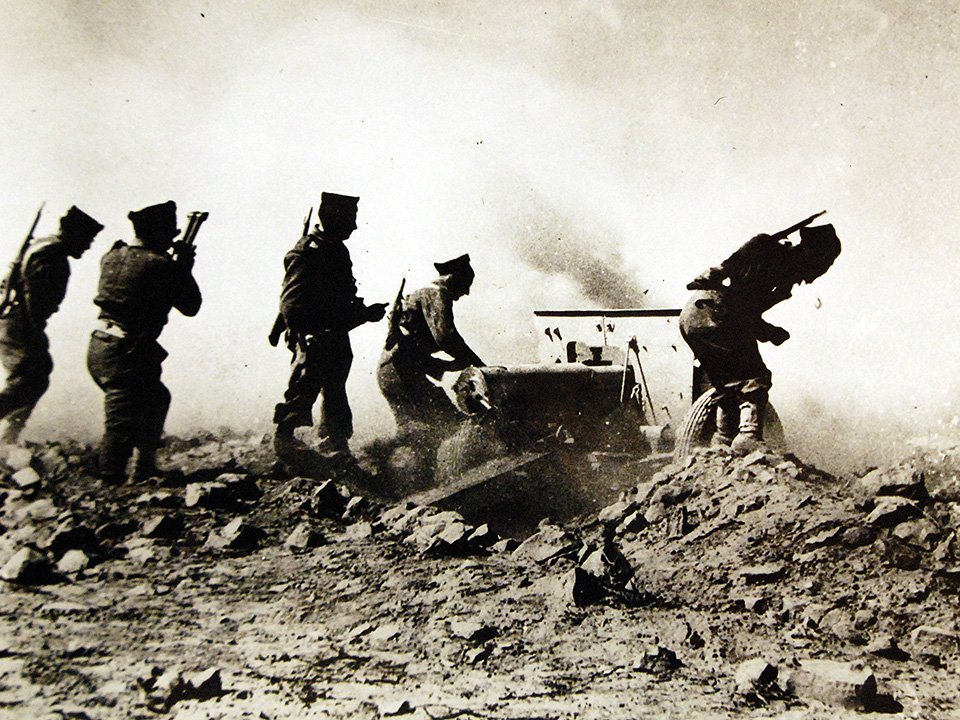
Rommel gave them one chance to surrender. They said no.
3,600 Free French soldiers held a desert fortress called Bir Hakeim against the full weight of Rommel's Afrika Korps for 16 days. They were surrounded, outnumbered, and running out of everything.
On the night of June 10-11, with the position finally collapsing, General Koenig ordered a breakout into the open desert in total darkness.
The Germans discovered the movement. The retreat became a brutal close-quarters fight. Men broke into small groups. Some crawled for miles. Most of them made it out.
What they bought with those 16 days: enough time for the British Eighth Army to withdraw to El Alamein, where the tide of the entire North African war would eventually turn.
Rommel later said the Free French fought magnificently. It meant something, coming from him.
France had been occupied for two years. These men had no country. They held anyway.
Why Didn’t Henry VII Give Richard III a Proper Burial?
When King Richard III was killed at the Battle of Bosworth Field on August 22, 1485, his victorious rival, Henry VII, faced a difficult political challenge. Richard was the last Yorkist king, and many still supported his claim to the throne. Rather than honoring him with a grand royal funeral, Henry chose a more modest burial at the Franciscan Greyfriars church in Leicester.
Several reasons explain this decision. First, Henry wanted to emphasize that Richard had been a defeated usurper rather than a legitimate monarch worthy of royal honors. A lavish burial could have strengthened Yorkist loyalty and undermined the new Tudor regime. Second, Henry needed to secure his own fragile claim to the throne and present Bosworth as a decisive victory that ended the civil wars known as the Wars of the Roses.
However, Henry did not leave Richard unburied or dishonored entirely. Contemporary accounts suggest that Richard received Christian burial rites, and a modest tomb was erected over his grave. While far from the magnificent resting places of other English kings, it was not the anonymous disposal often imagined.
In the end, politics outweighed respect. Henry VII's treatment of Richard III reflected the realities of securing a new dynasty after decades of civil war, rather than simple personal hostility toward his fallen rival.
#History #HistoryWillRemember #MiddleAges #EuropeanHistory #BritishHistory #England #EnglishHistory #Medieval #WarsOfTheRoses #MedievalHistory #RichardIII #MedievalEngland #HouseOfYork #RoyalHistory #RichardOfGloucester #MedievalEngland #HenryVII #TudorHistory #BattleOfBosworth #EnglishHistory #MedievalEngland #RoyalHistory #HistoryFacts
@historyinfamy Henry VII finally commissioned a tomb for Richard III ten years after Bosworth. It was made from marble & alabaster and cost £60, 10 shillings. £10, 10s was for the cost of transporting the stone. The tomb reputedly incorporated an image of Richard III in alabaster.
On June 9, 1944, the French Resistance captured a senior SS officer named Helmut Kämpfe near Limoges. The next morning, his unit, the 2nd SS Panzer Division Das Reich, was looking for a response. They had already hanged 99 men from the balconies of Tulle the day before, chosen at random from townspeople, leaving them to strangle slowly in front of their families because they couldn't find enough rope for a proper drop.
Now they needed something more.
On June 10, Sturmbannführer Adolf Diekmann led his men to Oradour-sur-Glane. Some historians believe he confused it with Oradour-sur-Vayres, a different village where the Resistance was actually active. Others believe he knew exactly where he was. Either way, at 2pm his soldiers blocked every road in and out of the village.
They told everyone to gather in the marketplace for a routine identity check. People complied. A dentist came. A farmer left his fields. Schoolchildren were told by their teachers not to worry, they'd be back by dinner. A man cycling through town stopped to see what was happening.
By 2:30pm, around 650 people were standing in the square.
Then the soldiers separated the men.
The women and children were marched to the church. The 190 men were divided into six groups and taken to barns across the village. The mayor, Dr. Paul Desourteaux, reportedly tried to negotiate. There was nothing to negotiate.
In the barns, the soldiers opened fire but aimed deliberately at legs. At thighs. At knees. The goal was not to kill but to incapacitate. To ensure that when they piled straw over the bodies and lit it, nobody could crawl away. Men who were on fire and still conscious screamed while soldiers stood outside the doors.
Six men survived by playing dead beneath other bodies. One died from his burns days later. Five lived.
In the church, the women had been waiting almost two hours with the children. Soldiers carried in a large wooden box and placed it in the nave. They lit a fuse and left. The explosion released a thick, suffocating smoke. Soldiers then entered and opened fire on anyone still moving. Then they piled wood, straw, and chairs onto the bodies and lit everything.
The church bell rang for hours as the fire climbed the tower.
Women broke windows. Those who reached the ledge were shot before they could jump. One woman, 47-year-old Marguerite Rouffanche, crawled behind the altar, found a small window, and squeezed through. She dropped three meters to the ground. A 19-year-old named Henriette Joyeux saw her and followed, throwing her seven-month-old baby out first. Soldiers shot the baby out of the air. Then shot Henriette. Then shot Marguerite five times as she ran.
Marguerite survived by lying still beneath pea plants in a garden while the village burned around her. She lay there until the next morning. She was the only person to leave the church alive.
The youngest confirmed victim was seven days old.
After the killings, the soldiers spent the afternoon looting every building. Food, valuables, livestock, wine. Some burned homes with elderly residents still inside. Then they ate dinner. That evening. In the area.
The next morning, relatives from surrounding villages arrived looking for their families. They found 642 dead and a village of smoking ruins.
The aftermath is almost as horrifying as the massacre itself.
At the 1953 war crimes tribunal, 65 men were indicted. Only 20 could be found. Fourteen were Alsatians, French citizens, and Alsace threatened to riot if its sons were convicted. An amnesty law was quietly passed. Almost everyone walked free within a year.
Nobody spent meaningful time in prison for Oradour-sur-Glane.
By French law, nothing in the original village may be moved, repaired, or altered. The rusted cars sit in the street where they burned. The sewing machines are fused to the shop floors. The baby carriages are still there. The church stands open to the sky with a plaque listing the names of the children killed inside.
You can walk through it today.
82 years ago this morning, those 642 people had no idea. The dentist was thinking about his afternoon appointments. The teachers were relieved the children were behaving. The man on the bicycle was annoyed about the delay.
By 6pm they were all dead, and the soldiers who killed them were eating dinner.
Never forget Oradour-sur-Glane.
Despite being pregnant 17 times in 17 years, Queen Anne of Great Britain (1665-1714) miscarried or had stillbirths at least 12 times. Out of the 5 successful pregnancies, only one survived past infancy, Prince William, Duke of Gloucester who, much to her grief, died at the age of eleven.
Anne, Queen of Great Britain endured one of the most heartbreaking personal histories of any British monarch. Between 1684 and 1700, she experienced repeated miscarriages, stillbirths, and infant deaths. Modern historians and medical researchers have proposed various explanations, including autoimmune disorders or complications from illness, but no definitive cause is known.
The death of her only surviving child, Prince William, Duke of Gloucester, in 1700 created a major succession crisis. With no surviving heirs, Parliament passed the Act of Settlement 1701, ensuring that the crown would pass to the Protestant House of Hanover rather than to Catholic claimants.
Anne later became the first monarch of a united Great Britain following the 1707 union of England and Scotland. Despite her personal tragedies, her reign saw Britain's emergence as a major European power.
Queen Anne's failure to produce a surviving heir directly changed the course of British history. When she died in 1714, the throne passed to George I, a distant German cousin who reportedly spoke little English. His accession began the Hanoverian dynasty, which ruled Britain for nearly two centuries and eventually led to the modern royal family.
#archaeohistories
June 11, 1727 – George I of Great Britain in Hanover Dies From a Stroke
On June 11, 1727, George I of Great Britain died at the age of 67 while visiting Hanover, his native territory in what is now Germany. His death was caused by a stroke, bringing an end to a reign that had begun with his accession to the British throne in 1714 as the first monarch of the House of Hanover.
George I’s reign marked a significant constitutional shift in Britain, as real political power increasingly moved toward Parliament and the office of the Prime Minister, particularly under Sir Robert Walpole. Although he spent considerable time in Hanover and was often criticized for his limited English and foreign focus, his rule helped stabilize the Protestant succession established by the Act of Settlement 1701.
His sudden death in Hanover closed a transnational royal chapter that tied Britain closely to continental European politics, leaving his son George II to inherit a relatively stable but evolving constitutional monarchy.
#OTD #OnThisDay #OnThisDate #TodayInHistory #ThisDayInHistory #historyfacts #HistoricMoment #history #HistoryWillRemember #HistoricDay #EuropeanHistory #BritishHistory #England #EnglishHistory #Renaissance #GeorgianEra #GeorgeI #BritishMonarchy #Hanover #HanoverianDynasty #RoyalHistory
#WarsoftheRoses
OTD in 1456 - birth of Anne Neville, wife of #RichardIII. Anne was immortalised by Shakespeare as a hapless victim, but was there any truth in this portrayal?
Anne is one of the Queens of England about whom we know the least. No letter written by her survives, likely due to the destruction of papers after her husband’s death at the Battle of Bosworth on 22 August 1485. However, we can piece together an impression of her from her actions & a picture emerges of a woman with more agency than the traditional narrative would have us believe.
Anne was the younger daughter of Richard Neville, Earl of Warwick (the Kingmaker) & his wife Anne Beauchamp. Between them her parents held lands & wealth equivalent to four earldoms. Their lack of a son made Anne & her elder sister Isabel into the greatest heiresses of their generation.
Anne shares the distinction with Catherine of Aragon of having been Princess of Wales & Queen of England by virtue of marriage to two different men. She was married first to the Lancastrian Prince of Wales, Edward of Westminster in 1470. After his death at the Battle of Tewkesbury on 4 May 1471 she married Richard, Duke of Gloucester who later became Richard III.
We know Anne had no say in her first marriage. It was the culmination of the July 1470 Angers Agreement, which reconciled & allied Edward’s mother Margaret of Anjou to her longstanding Wars of the Roses adversary Anne’s father Warwick.
Warwick’s friend Louis XI of France had forced Warwick & Margaret into this new alliance. He made clear to Warwick that his support was conditional on Warwick switching sides to the Lancastrians & to Margaret that she had no choice other than to agree if she wanted French aid to restore her husband #HenryVI as King of England.
The terms of the agreement included the marriage of Edward & Anne. The idea being that this would bind the Nevilles to the Lancastrians & enable Warwick to realise his ambition of seeing one of his daughters become Queen of England & in time his grandson succeed as King.
In a sign of enduring distrust between the two reluctant allies the marriage only took place in Angers Cathedral in December 1470, over two months after Warwick had returned to England, forced Edward IV to flee for his life & successfully restored Henry VI.
Anne’s second marriage was a different matter. Widowed following Edward of Westminster’s death at Tewkesbury, she moved to the household of her sister & brother-in-law, the Duke & Duchess of Clarence. They likely either wanted Anne to remain unmarried or enter a convent to ensure they retained possession of the entirety of the lucrative Warwick inheritance. As Edward IV’s brother George, Duke of Clarence was one of the most powerful men in England & it seemed likely he would get his way.
It must have taken great courage for Anne to resist Clarence’s plans & pursue
a marriage for herself with the King’s other brother Richard instead.
Anne & Richard knew one another well, with Richard having spent his adolescence in her father Warwick’s household. Whether or not there were any romantic feelings between them, Anne would have been well aware that Richard was the only nobleman with sufficient power & influence to take on Clarence & secure her inheritance. With this in mind, the historian Joanna Laynesmith has suggested that the original idea for the match may even have come from Anne herself.
During her marriage to Richard, Anne was likely doing more than sitting quietly embroidering. She acted as Richard’s deputy in the North of England when he was away either at his brother’s court & during the expeditions to France in 1475 & Scotland in 1482. She was also at her husband’s side in London during the critical weeks leading up to his accession in June 1483 & they were crowned together on 6 July 1483. The first joint coronation in England since Edward II & Isabella in 1308.