ESMO announces the publication of the ESMO Tumour-Agnostic Classifier and Screener (ETAC-S), a new framework to assess the tumour-agnostic potential of #CancerTherapies with the aim to optimise the drug development process @Annals_Oncology.
🔗https://t.co/8gmF94K9aq
Important data presented at #ESMO2026
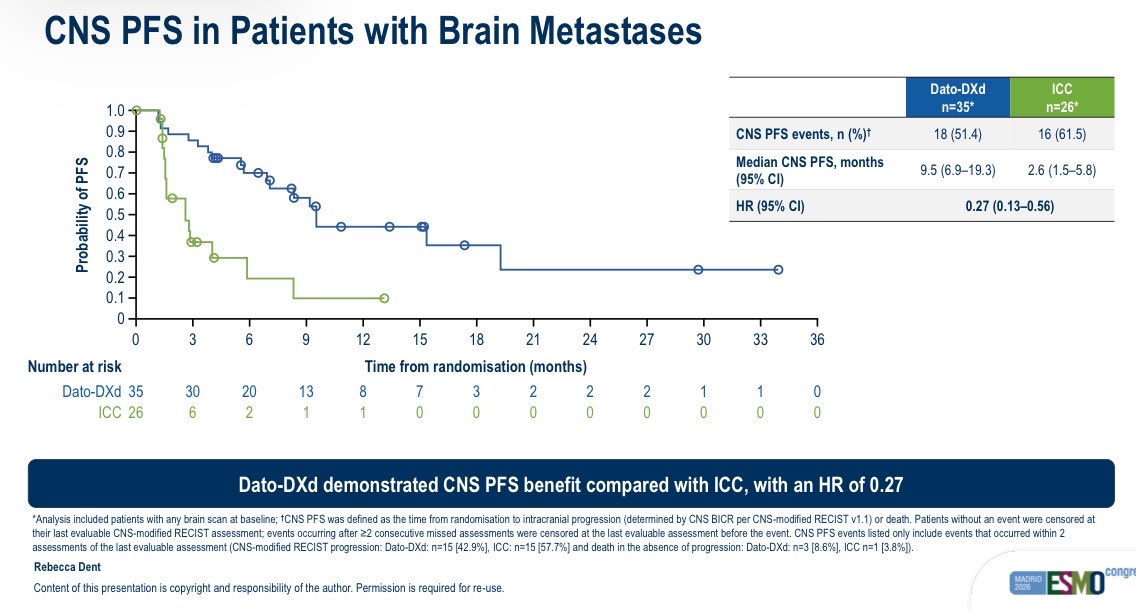
TROPION-Breast02 | 1L mTNBC with brain metastases
• Median CNS PFS: 9.5 vs 2.6 months (HR 0.27)
• Intracranial ORR: 62.5% vs 37.5%
Dato-DXd showed great activity, regardless of prior CNS-directed therapy in TNBC
@OncoAlert
ESCAT v2: Evidence for acting on biomolecular tumour aberrations-sensitivity, resistance and tumour-agnostic considerations.
The ESMO Scale for Clinical Actionability of Molecular Targets, versio... https://t.co/zYKtMDQ7fT
Precision oncology🎯 is evolving—but how do we distinguish a promising molecular target🧬 from one supported by evidence strong enough to guide treatment?
https://t.co/Qkqhw42kdu
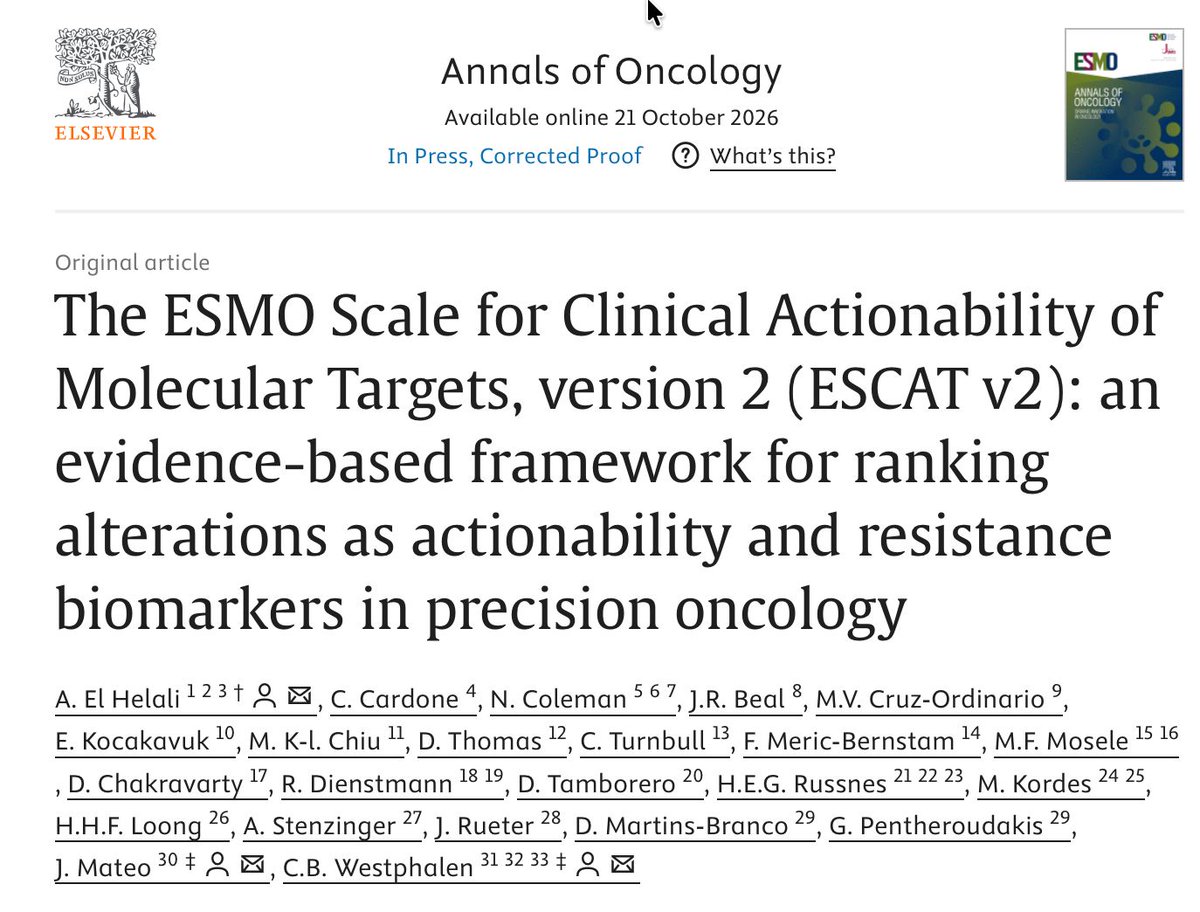
The ESMO Scale for Clinical Actionability of Molecular Targets, version 2 (ESCAT v2): an evidence-based framework for ranking alterations as actionability and resistance biomarkers in precision oncology
ESCAT v2 updates the ESMO framework for assessing molecular target actionability in precision oncology.
➡️ The revised classification refines evidence certainty within actionable tiers, introduces formal tumour-agnostic eligibility criteria through ETAC-S, and distinguishes non-predictive biomarkers from ineffective biomarker–therapy matches.
➡️ A complementary four-level resistance scale classifies evidence from clinically validated resistance to preclinical findings.
✅️ Together, these updates support more consistent interpretation of sensitivity and resistance biomarkers, helping guide therapeutic decisions and research priorities.
@AyaHelali, @niamhjcoleman, @ekocakavuk, @clare__turnbull, @FerMosele, @CDebyaniPhD, @rdienstmann, @herbloong, @DMBranco, @quimmateo, @BenWestphalen
ESMO Frameworks help provide the standards, guidance and shared language needed to support informed decision-making across #CancerCare.
Discover why frameworks matter and the value they bring to the #OncologyCommunity.
📌https://t.co/XXxNf4f3Qw
@FAndreMD
ESMO's new Clinical Trials Funding initiative supports independent academic pragmatic clinical trials to improve #CancerCare and patient outcomes. Open to academic institutions, hospitals, research groups.
Application deadline: 1 November 2026
https://t.co/CX9AUB6xNX
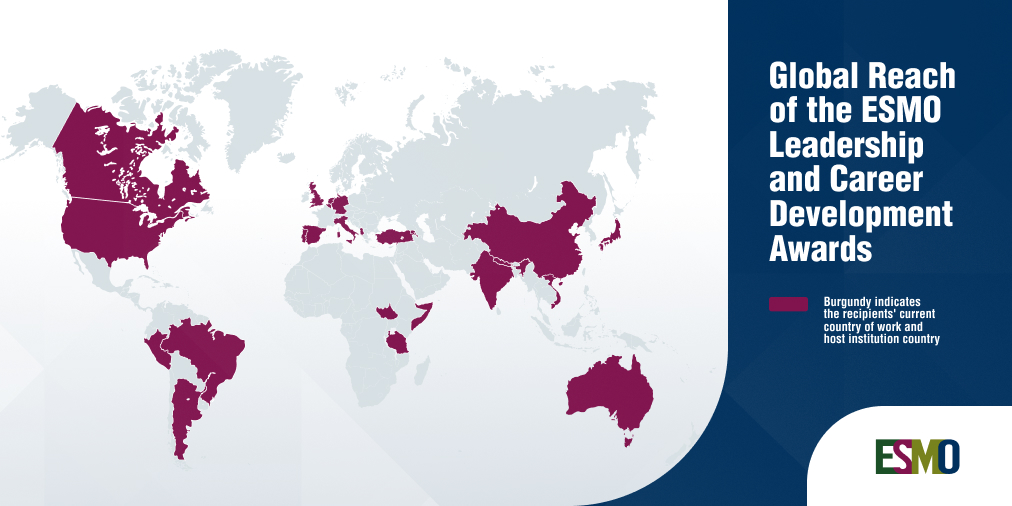
🌎 28 recipients. One shared goal: advancing #CancerCare.
🌟 The ESMO Leadership and Career Development Award provides international research opportunities, leadership training and protected project time.
🔗 https://t.co/GdNVg9yois
#ESMOFellowships
👉 By E de Azambuja and N Harbeck, the ESMO Metastatic Breast Cancer Living Guideline provides immediate access to the June 2026 CPG recommendations, with notable systemic treatment updates in several subtypes, in an interactive, mobile-friendly format
🔗 https://t.co/UXdavxluVa
Our nationwide 🇧🇪 study of >51000 pts with stage I–III breast cancer (>7500 ILC) is now published in @ESMO_Open
ILC had ⬆️ stage at Dx and a distinct time-dependent prognostic pattern, with worse long-term outcomes as nodal burden increased
https://t.co/Q5qpl3pViz
@OncoAlert
The names of the candidates running for the ESMO Presidency 2029-2030 have been announced. Find out more about the candidates and their vision. #ESMOElections
🔗 https://t.co/hckWMPVahg
A new ESMO consensus driven document standardises definitions, formats and minimum data for enumerating and reporting prior lines of therapy across solid tumours, supporting consistent trial design and comparable outcomes.
#ESMODailyReporter 🔗 https://t.co/8FLvQQ5Tmy
@myESMO webinar on tumor agnostic therapies: amazing effort by a diverse group of oncologists to develop (and update) frameworks which will aid the decision on when to deliver histology independent biomarker-drug combinations
👉 Discover how tumour‑agnostic therapies are changing oncology with the upcoming Therapeutic Landscapes Webinar.
🔗 Register now with your ESMO account: https://t.co/W7rJdNWyYo
#ESMOWebinars#ESMOOnAir
Molecular and clinical analyses of gene fusions identify therapeutic targets in paired primary and metastatic breast cancer from the AURORA program (BIG 14-01)
https://t.co/SuepPFsWrb
This study uses AURORA multi-omics 🧬data to characterize gene fusions in metastatic #BreastCancer and their clinical relevance. Analysis of RNA sequencing from primary and metastatic tumors revealed a higher gene fusion burden in metastases, with acquired fusions linked to genomic instability and subtype-specific copy-number gains, particularly involving genes within the same topologically associating domain.
These fusions were associated with poorer prognosis in ER-positive/HER2-negative tumors, with ESR1 fusions marking especially aggressive disease, highlighting gene fusions as potential drivers of progression and therapeutic targets.
Chiara Biagioni
@Fimereli_Danai@AlexIrrthum@AngelZotano@Carmela_surgery@DMBranco@ElisaAgostinett@ZoppoliGabriele@AnaVivancosVHIO@MOliveira_MD@curijoey@c_sotiriou@aftimosp
Matteo Benelli @UNI_FIRENZE
New Living Guideline on Early & Locally Advanced #NSCLC! This dynamic resource integrates all recommendations and algorithms from the recently updated #ClinicalPracticeGuideline, supporting clinicians in evidence-based decision-making for optimal patient care.
🔗 https://t.co/YIItogiaN4
👉 Join the upcoming #ESMOGuidelines Webinar to explore #realworldcases, expert insights & the latest treatment strategies in #lymphoma
🔗 Free with your ESMO account: https://t.co/8NsKVmQerj
📣 Registration is open for the ESMO Sarcoma and Rare Cancers Congress 2026! Join us 12–14 March in Lugano.
⏰ Early rates end 14 Jan 2026 23:59 CET – secure your seat now! #ESMORareCancers26#esmomeetings
🔗 https://t.co/zvkWMdqU3Q