So excited for this. Here’s the prayer (of sorts) I wrote the day after Dude 44A had been rescued, but before that Easter morning when 44B came home…
This Easter weekend Americans are waiting to learn the fate of the remaining U.S. airman downed in Iran on Good Friday. Iranian air defenses shot out of the sky an F-15 fighter jet, and while one crewmember was rescued by U.S. forces, another remains lost as of Saturday afternoon.
My mind turns to a night in Cambridge, England, some years ago, spent drinking with American airmen from the nearby bases from which our Air Force has flown since the 1940s. The downed American jet, lost somewhere in the hills of western Iran, reportedly came from a squadron based in Royal Air Force Lakenheath. On weekends, the men and women of Lakenheath sometimes make the trip to Cambridge, to a pub called The Eagle.
The Eagle is much like any other such establishment you might find in Cambridge—the same kind of quaint old building; the same clientele, a mix of students and faculty and tourists. But since the middle of the last century it has also been a gathering spot for British airmen and their American comrades—the forces that battled for, and have since policed, the skies over Europe and beyond. Its walls are covered with the unit insignias of squadrons from around the world. Its ceiling is graffitied with signatures of airmen from World War II. As the Nazis swept through Europe, the flat, marshy land of East Anglia, so close to the coast of the continent, was destined to become in effect the world’s largest aircraft carrier. Famous fighting organizations like the Eighth Air Force—the “masters of the air”—left from this part of England each day to attack Adolf Hitler’s factories.
Some spent their final nights at the Eagle. The night I was there, out with colleagues attending a conference in this university town, we found the bar packed with American F-15 and F-35 pilots, weapons officers, and ground crew. They were many drinks in by the time our party arrived, and in an exceedingly friendly mood, happy to be asked about where they were from, how they grew up, and their plans for the future. They were even happier to sing, apparently a regular feature of their nights out. At some point during the night the pub was essentially given over to their collective, quite deafening concert.
The lyrics principally concerned girls, their qualities, and the carnal aspirations of the singers regarding them. A few of my fellow conference-goers left in a huff of mild disgust, offended by the inelegant nature of the material. I stayed. I also noticed that a sizable minority of the airmen were women, who looked pretty tough, and who were belting out the tunes just as enthusiastically as the men.
Men? When I was a child these singers would have been giants to me, in every sense. But as I’ve grown older, I now see how awfully young our fighting men and women are. The singers in that pub were boys—happy, friendly, trim, and intense-looking boys—and girls, hollering themselves hoarse.
Today one member of their world—the public doesn’t know if it’s a man or a woman—is alone in the hills of Iran. We hope he or she is alive, and preparing to be rescued, but we don’t know… 1/2
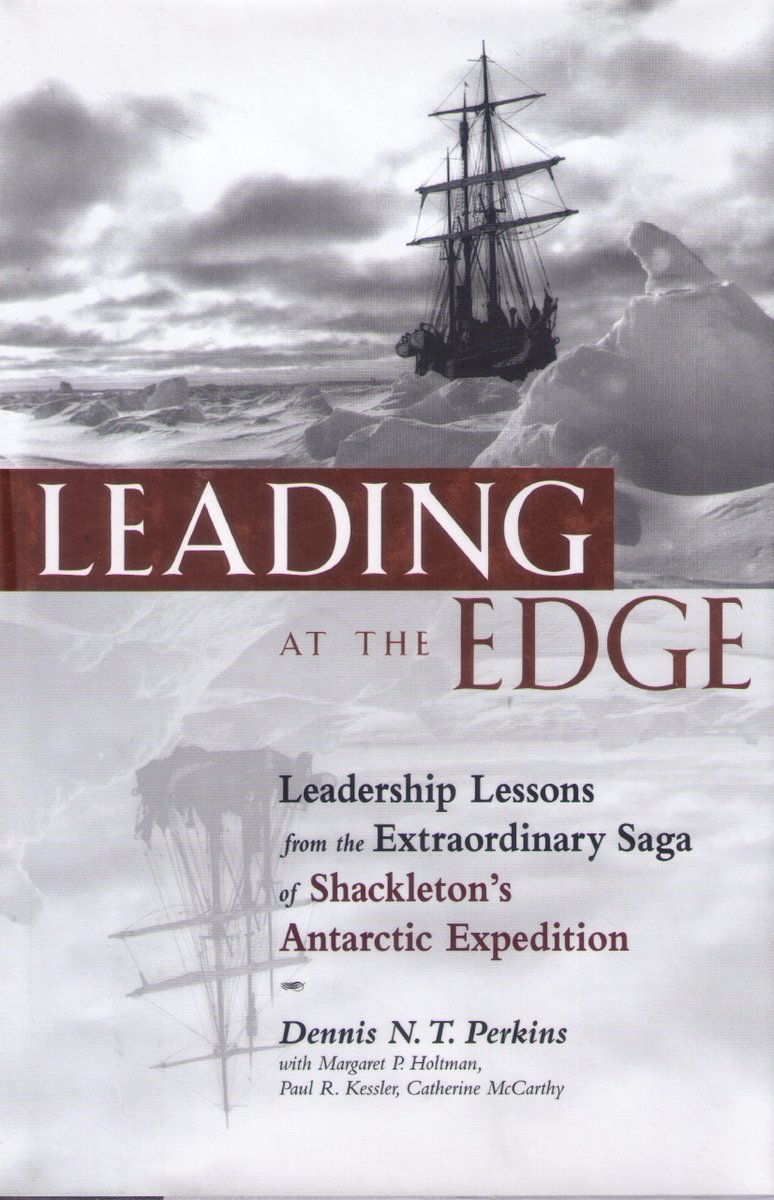
10 years since I was introduced to @DNTP "Leading at the Edge"
Part adventure story, part leadership guide, this intriguing book examines Shackleton's legendary Antarctic expedition through the lens of business - to reveal a set of powerful strategies for corporate leaders.
Coffee toast to our sister.
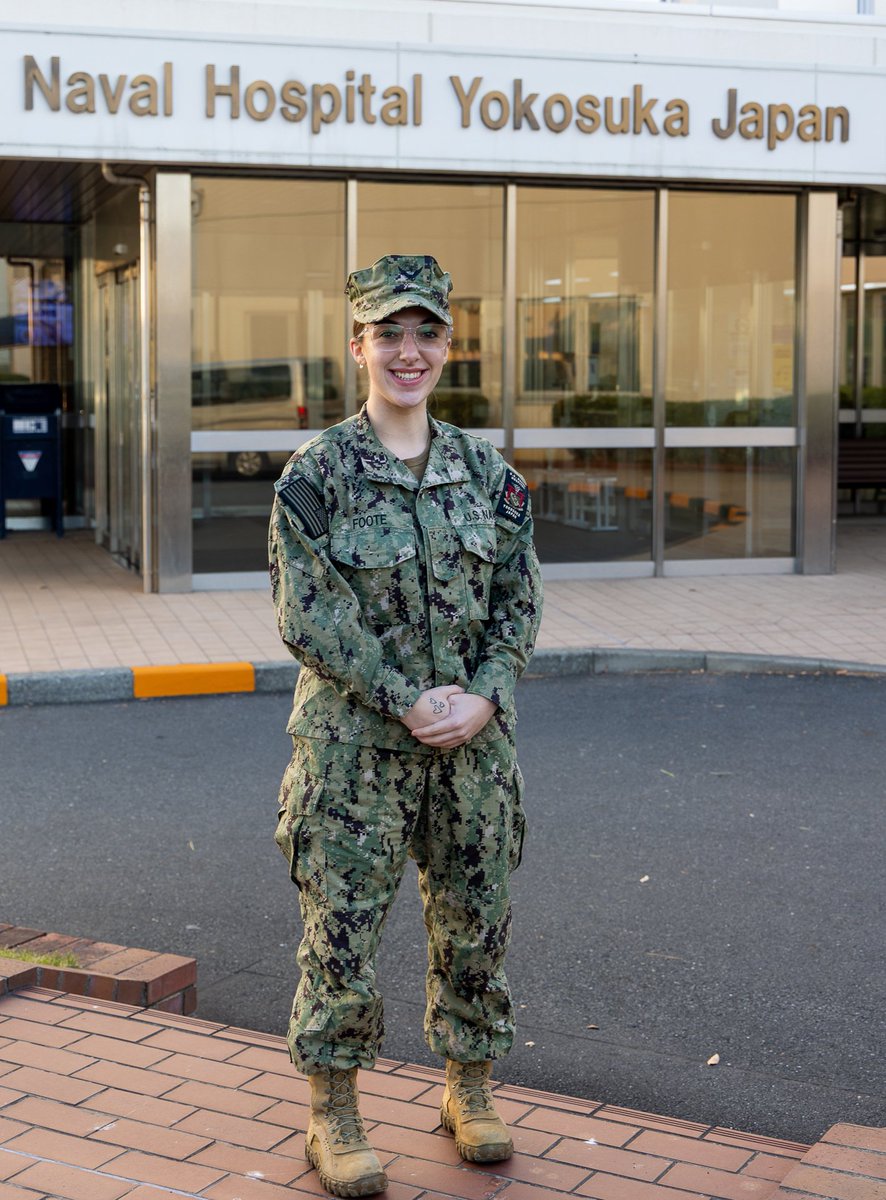
Sailor Awarded Navy and Marine Corps Achievement Medal for Life-Saving Response Aboard Commercial Flight
Hospitalman Apprentice Skylar L. Foote, assigned to U.S. Naval Hospital Yokosuka, was awarded the Navy and Marine Corps Achievement Medal for her decisive, life-saving response aboard a commercial flight in July.
While traveling on personal leave, Foote stepped forward to assist a passenger experiencing medical distress, providing continuous assessment, supportive care, and coordination with the flight crew until the aircraft landed safely. Her actions reflect the readiness, compassion, and professionalism expected of U.S. Navy Hospital Corpsmen—on duty and off.
“She demonstrated the courage to step forward and the competence to act under pressure,” said Capt. Donavon YapShing, executive officer of USNMRTC Yokosuka.
📷 Read the full story here: https://t.co/0m4vxuBUWN
@AaronBMacLean I was stationed on Guam after Vietnam and I landed on a Yap airfield. I was surprised to see a Japanese Zero still on the runway. I’m not sure it was ready to fly, but it was all in one piece.
#OnThisDay in 1939, Frank Wild, Shackleton’s “loyal lieutenant” died at the age of 66 of pneumonia.
Wild was born in Yorkshire, England in 1873. He joined the Merchant Service in 1899 and Royal Navy in 1900 before playing a key role in five Antarctic expeditions led by Shackleton, Robert Falcon Scott and Douglas Mawson. He was awarded the polar medal with four bars, making him the most decorated polar explorer of the heroic age of exploration!
One of Wild’s most well-known adventures took place on Elephant Island, where he remained in command of 21 men as part of Shackleton's Imperial Trans-Antarctic 'Endurance' (1914-17) Expedition, while Shackleton and five others made the incredible journey to South Georgia Island to seek rescue at the Stromness Whaling Station. Four months passed with no sign of relief from Shackleton's rescue party, during which the men’s spirits and sanity were severely tested. However, Wild applied routine and optimism unfailingly! Every single morning, Wild would command the men to roll up their sleeping bags and “get your things ready boys, the Boss may come today.” Incredibly, he did just that and one morning George Marston, who had been assigned lookout duties, called from his post “Ship O!” at the sighting of Shackleton aboard the 'Yelcho'. It is testament to the consummate leadership of Wild that all 22 men survived.
Wild joined Shackleton again for the 'Quest' expedition in 1922. Sadly Shackleton died during this expedition leaving Wild in charge.
Before he died, Wild stated that he wished for his ashes to be buried alongside Shackleton's at Grytviken in South Georgia. The outbreak of World War II meant this wasn't possible and for years his remains were seemingly lost, until historian Angie Butler discovered them at Braamfontein Cemetery in Johannesburg where they had laid for 72 years. Wild's wishes were finally granted at a ceremony at Grytviken attended by relatives, whereby he was laid to rest alongside Sir Ernest Shackleton.
📸 Frank Wild in 1914, public domain
#OTD #inspire #explore #discover #conserve #Antarctica
The funeral and committal for astronaut CAPT Jim Lovell was held today at the U.S. Naval Academy in Annapolis. The famed naval aviator who commanded the Apollo 13 lunar mission passed away on August 7 at the age of 97.
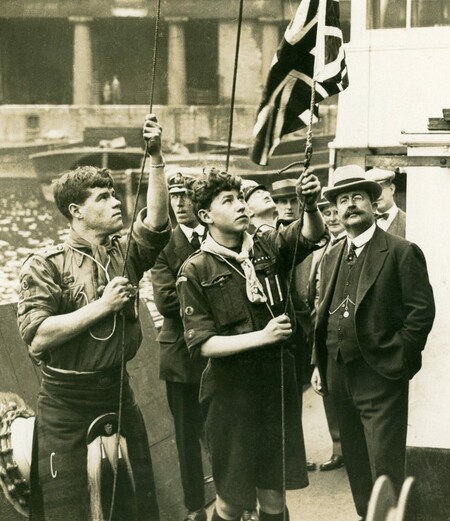
#OnThisDay in 1921, Shackleton called for a “handy lad” to join the Quest expedition, inviting Scouts across the country to apply. Out of 1,700 hopefuls, two were selected: Norman Mooney and James Marr. Unfortunately, Mooney suffered badly from sea sickness and was sent home when the ship stopped at Madeira. Marr later became a seasoned Antarctic explorer and krill researcher.
Today, we honor and express our gratitude to all Vietnam veterans on Vietnam Veterans Day. Your bravery and service during that time are deeply appreciated. May you all be blessed. #VietnamVeteransDay#Gratitude
First Lt. Gabrielle White, and her teammate, Capt. Seth Deltenre, finished the grueling three-day event over the weekend and came in 14th overall. https://t.co/BMGoicrdMK
#OTD 1873 Frank Wild was born in Yorkshire, England. He joined the Merchant Service in 1899 and Royal Navy in 1900 and had a key role in five Antarctic expeditions. Awarded the polar medal with four bars, Wild was the most decorated polar explorer of the heroic age of exploration.
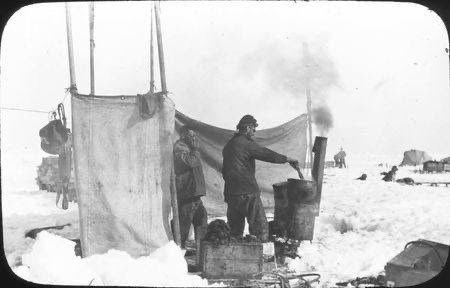
#OnThisDay in 1916, as the sea ice broke up around them, Shackleton ordered his crew from the Imperial Trans-Antarctic 'Endurance' Expedition (1914-17) to abandon 'Patience Camp' on the ice floe where they had been living following the sinking of their ship 'Endurance' in November the previous year.
The 28 men boarded the ship's three lifeboats, renamed for the expeditions' benefactors - ‘James Caird’, ‘Dudley Docker’ and ‘Stancomb-Wills’. After five days at sea and suffering from exposure and dehydration, the men landed at Cape Valentine, Elephant Island, standing on solid ground for the first time in 497 days!
📸 The 'Endurance' crew cooking a meal at 'Patience Camp'. Credit: Canterbury Museum.
#inspire #explore #discover #conserve #antarctica #shackleton #endurance