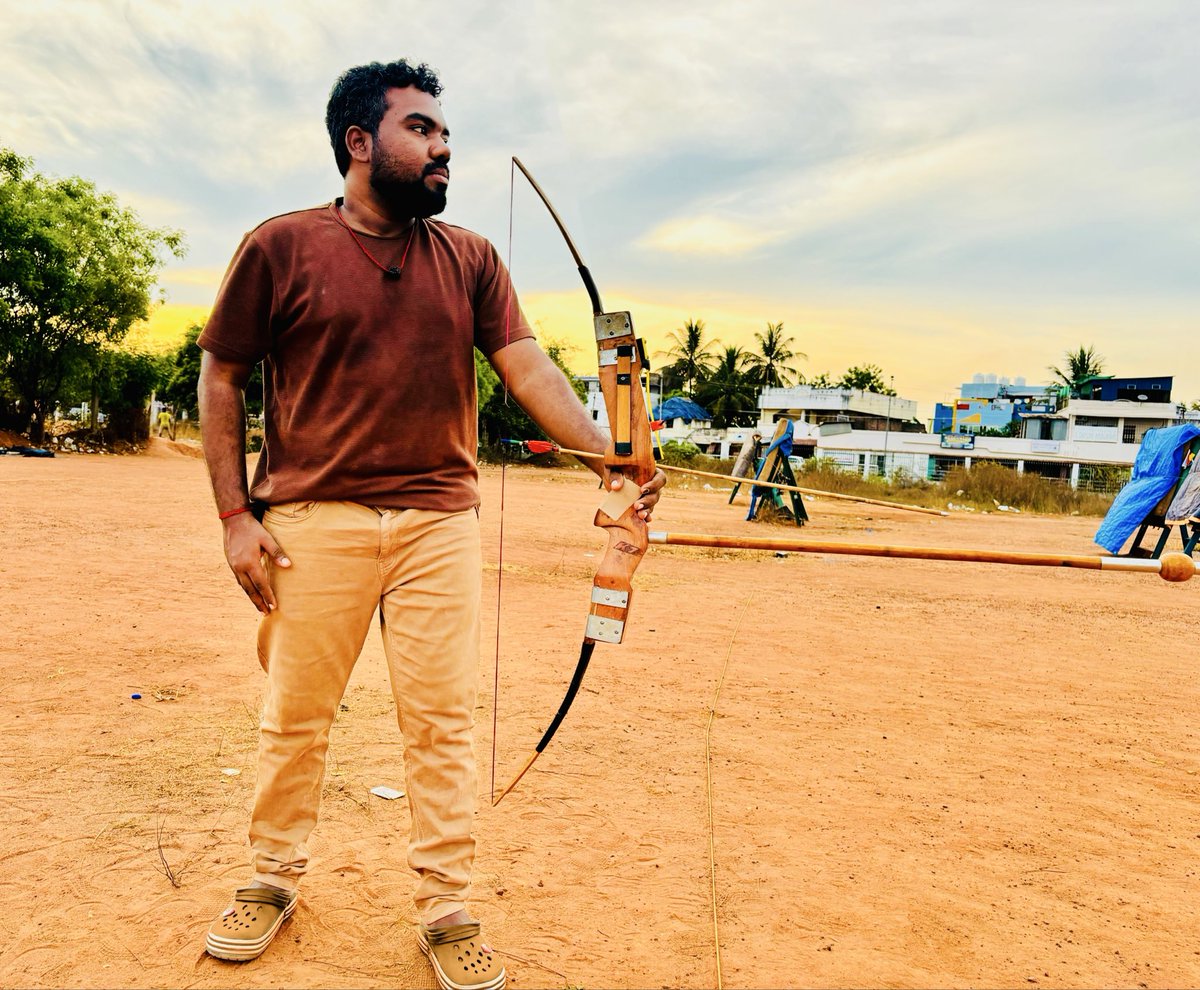
Underrated life advice: Learn to work without validation. Build when nobody’s watching. Write when nobody’s reading. Train when nobody’s cheering. It doesn’t take talent. Just courage. Those with the courage to work in the dark will eventually shine in the light.
It is a good idea to come up with "verbal passwords" for close friends and family, so that we don't fall for these very convincing deep fake calls like the one mentioned below.
Sadly, AI is so advanced that we cannot tell real from fake easily anymore.
Every Indian should know this one, and here is why.
Five students from IIT Madras just got a patent granted by the toughest patent office in the world. :)
Now here is what they actually invented.
See, satellites look at Earth two ways.
The first is a normal camera, just a very good one.
Sharp, full colour, easy to read. The catch is it needs sunlight and clear sky. Clouds block it. Night blocks it. Smoke blocks it.
Over India during the monsoon, it is basically blind for months.
The second is radar.
It fires radio waves at the ground and reads the echo. Radio waves pass straight through cloud, smoke and darkness, so radar works at 3 am in heavy rain.
But the picture it gives you is grey and strange. It shows shape and texture, not colour. Reading it takes a lot of training.
So one gives you a beautiful image you often cannot capture. The other gives you an image you can always capture but struggle to understand.
The fix obviously is to combine them.
People tried for years and it did not work well, for a simple reason.
The two images came from different satellites. The camera photographed a field at 10 in the morning from one angle. The radar satellite scanned it at 4 in the afternoon from a different angle. Lay one over the other and nothing lines up.
Different time, different position, different view. You are not looking at the same moment.
GalaxEye's patent covers a way to put both sensors on one satellite and make them fire together. Same instant, same patch of ground, same angle.
The invention is the architecture that keeps the two locked in.
The same technology was already patented in India. Now the US has recognised it too. The company says this makes it the first Indian startup to hold a US patent for satellite imaging technology.
Obviously there are plenty of applications for that technology like defence radars to see through camouflage and tree cover.
In farming, the technology will allow us to watch crops during monsoon, exactly when normal satellites cannot see.
Interestingly, the idea came from a real problem. Suyash Singh was assessing wildfire damage in California using satellite data.
The camera images were useless because of the smoke. The radar images were available but were hard to interpret.
Now you understand why the solution is simply genius. :)
GalaxEye was founded in 2021 by five IIT Madras alumni. Suyash Singh, Denil Chawda, Kishan Thakkar, Pranit Mehta and Rakshit Bhatt.
They met while building Team Avishkar Hyperloop.
In 2019 that team was the only Asian entry to reach the finals of SpaceX's global hyperloop competition. They built India's first self propelled hyperloop pod.
Then they decided to build satellites instead. Incubated at IIT Madras, based in Bengaluru, backed by Mela Ventures, Speciale Invest, ideaForge and Rainmatter.
On 3 May this year they launched Mission Drishti on a Falcon 9. The world's first OptoSAR satellite. At around 190 kg it was India's largest privately built Earth observation satellite at the time.
So, five people who were students seven years ago had an original idea, patented it in India, built the hardware, flew it on a Falcon 9 and then got the invention recognised by the US patent office.
Amazing! 🇮🇳
Lord Krishna never told Arjuna how the war would end.
Krishna simply told him to pick up his bow and do his duty.
“Karmaṇy evādhikāras te, mā phaleṣu kadācana.”
You control your actions, not the outcome.
Focus on the work. Let go of the result.