@evita_purina Žēl, ka jūs tik aktīvi nedarbojāties, kad valdību vadīja JV un PRO. Varbūt mēs tagad dzīvotu labākā valstī, ja tik aktīvi pārbaudītu arī viņu darbu. Ko tik viņi nesolīja.
Esmu neatkarīgs mēdijs.
Veidoju saturu X-ā u.c. sociālajos tīklos.
Kur es varu pieteikties valsts atbalstam, lai pēc tam var pārmest Kulbergam par diskrimināciju?
At 16 years old, Henrijs Dandzbergs is too young to vote. Or drink. Or smoke. Or drive unsupervised. But he’s not too young to win half a million dollars for his AI-guided-missile startup targeting “cost per kill.” https://t.co/09q9izaYAZ
In @TheEconomist, The World Ahead 2027:
Accelerating test-and-redesign cycles is one way to save money. Latvia has let Frankenburg Technologies conduct around 100 test launches a year at its Ādaži military range. That helped Frankenburg get its Mark I counter-drone missile “from PowerPoint to the demonstration of a guided catastrophic hit” in just 13 months, says Kusti Salm, the firm’s boss. At ranges elsewhere in Europe, one or two tests a year can be the norm.
Increased production should bring the Mark I’s price below $30,000 by the end of 2027. Comparable interceptors can cost $250,000, or double that in wartime.
Full article: https://t.co/t592W994r0
#WinTech
LSM vadība "sadzirdējusi kritiku", kura 14. Saeimas laikā skanēja nepārtraukti, ka LTV un LR studijā tiek aicināti un uzklausīti tikai pozīcijas deputāti no JV un Pro.
Tagad izteikt neapmierinātību tiks aicināta tikai opozīcija, kas ir JV un Pro
LSM vada ideologi, ne žurnālisti
@ribentrops@katrinailjinska Vērsties pret konkrētiem politiskajiem spēkiem un politiķiem ideoloģisku iemeslu dēļ nav laba žurnālistu prakse. Nez kāpēc žurnālisti pievēra acis nespējīgajam Sprūdam, gadiem neveiktajām JV reformām, pedofilijai utt. Žurnālistiem jāvadās pēc faktiem, nevis ideoloģijas.
"Saules mūžu Latvijai!" mums īpašs sveiciens no pašas nullītes.
No 🇺🇦 1. atsevišķā triecienulka izlūkiem.
Īpašs tādēļ, ka 🇱🇻 karogs apsveikuma video ierakstīšanai uz pirmo līniju tika nogādāts ar kravas dronu, kas nu jau kļuvis par izplatītu apgādes veidu.
#StandWithUkraine
Šovakar iesniedzam risinājumu LMT un Tet apvienošanai, 50mEUR sinerģijai, globāla investora atbalstītai izaugsmei https://t.co/FEo0hgrs5I. eksportā, kas dubultos peļņu 5 gados. Vēl vairāk - investoram ienākot, valsts saņems vairāk kā 300mEUR valsts parāda samazināšanai. 🇱🇻
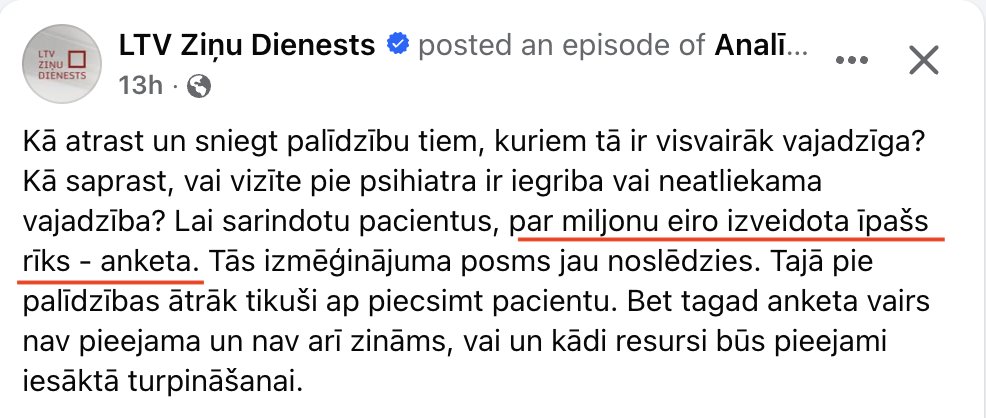
Psihiskā veselība kļuvusi par tikpat ienesīgu valsts izslaukšanas nozari kā IT un būvniecība.
Par VIENU MILJONU izstrādāts "īpašs rīks - anketa".
Diemžēl tagad links uz šo īpašo anketu vairs nestrādā, jo vajagot vēl nākamos miljonus uzturēšanai.
🌎 The most competitive tax codes in the OECD:
1. 🇪🇪 Estonia
2. 🇱🇻 Latvia
3. 🇳🇿 New Zealand
4. 🇨🇭 Switzerland
5. 🇱🇹 Lithuania
6. 🇱🇺 Luxembourg
7. 🇨🇿 Czech Republic
8. 🇦🇺 Australia
9. 🇹🇷 Turkey
10. 🇭🇺 Hungary
See full rankings: https://t.co/NIcKsw1PxS
🇱🇻🇪🇺 Latvian Prime Minister Says Europe Should "Grow Bigger Balls" in Relations with Russia:
💬Look where Russia is now. Russia is not even capable of defeating a smaller country in size and population, like Ukraine, which has demonstrated excellent fighting spirit and has been fighting back for five years. And in the negotiations, Russia is making demands: what should we accept? Sorry. This is an aggressor who loses at the front.💬
The Latvian Prime Minister added that the EU should promote the position in the negotiations that Europe is the guarantee of Ukraine's future security.
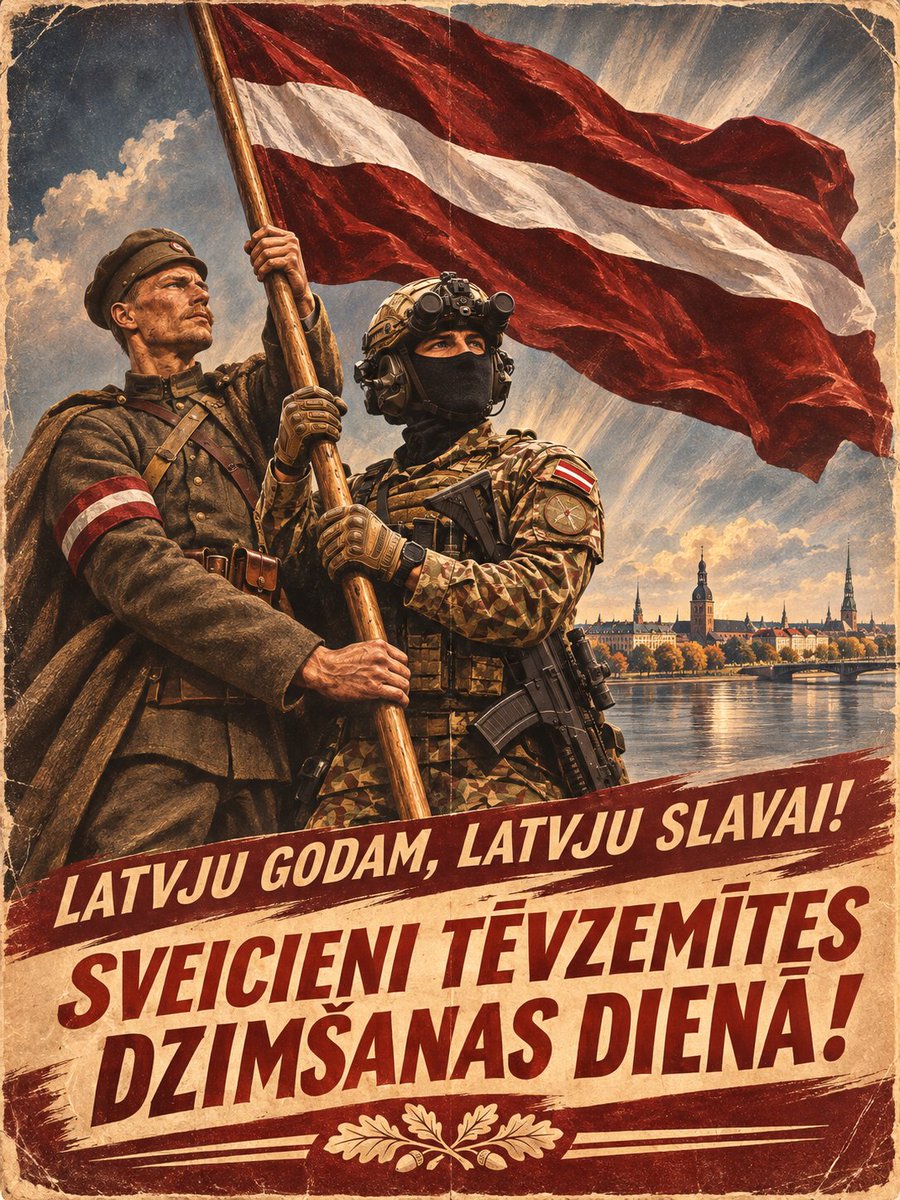
As America observes Veterans Day and Europe marks the Armistice that effectively ended WWI hostilities in 1918, Latvians observe Lāčplēsis (Bear-Slayer) Day. It commemorates November 11th a year later, 1919, when Latvian soldiers halted the advance of the "Bermontians," Russian prince Pavel Bermont-Avalov's forces at Latvia's now capital, Rīga. The day is named for Lāčplēsis, the hero of Andrejs Pumpurs's national epic, a young man strong enough to tear a bear apart with his bare hands, who spends the story fighting off foreign invaders.
Germany had occupied Latvia during WWI, and the Baltic German nobility, who had been the landlords of the region for centuries, saw their chance. Even prior to the armistice, on March 8, 1918, they proclaimed a "Duchy of Courland and Semigallia" and offered its crown to Kaiser Wilhelm II. The German empire recognized it on March 15th. Later that year it was folded into a "United Baltic Duchy" meant to cover all of present-day Latvia and Estonia, tied to the German Empire. When Germany lost the war, that plan collapsed. But not the ambition.
It was only a week after Armistice Day that Latvians—with German troops still in the city—declared independence on November 18, 1918, in a Riga theater. Within weeks the Red Army invaded from the east along with a Soviet Latvian government of its own. Riga fell on January 3, 1919, and the the new Latvian government was forced to retreat to Jelgava and then to Liepāja, holding little more than a strip of coastline in the far west.
To fight the Bolsheviks, the Latvians had to accept help from the Baltic German Landeswehr and the German Freikorps—the very same people who had just wanted Latvia for themselves. In April 1919 those forces under Rüdiger von der Goltz turned on the Latvians and staged a coup in Liepāja. Prime Minister Kārlis Ulmanis and his government took refuge aboard the steamship Saratov in Liepāja harbor, protected by flanking British warships. At that moment, Latvia's lawful government held not a speck of its own territory.
Meanwhile, in the north, Latvian units had been fighting alongside the Estonian army and pushed the Red Army out of Vidzeme. Von der Goltz's forces retook Riga from the Soviets in May and continued northward toward Estonia, engaging the Latvians and Estonians at Cēsis (Wenden) in June 1919. Estonian and Latvian forces prevailed, and Estonia still celebrates June 23rd as Victory Day (Võidupüha). The Germans retreated, the Ulmanis government returned to Rīga, and an Allied-brokered ceasefire followed.
However, Germans did not go home. Under the ceasefire terms they were supposed to leave. Instead, many simply swapped uniforms to join Bermont, who had assembled Russian former prisoners of war into what he called the West Russian Volunteer Army. Officially his aim was to fight the Bolsheviks and restore the Russian Empire. In practice, his army consisted mostly of Germans who had no intention of recognizing an independent Latvia.
Following his capture of Jelgava (Mitau), Bermont attacked Rīga on October 8, 1919. His forces took the left bank of the Daugava and shelled the city from across the river. The Latvian Army was young, under-equipped, and badly outnumbered in places. But it held the bridges. Prime Minister Kāŗlis Ulmanis, who had enlisted in the 1st Battalion of Students, was wounded on the front lines. British and French warships supported the Latvians with naval artillery, and Estonia sent armored trains (improvised steel-plated mobile artillery batteries, troop carriers, and command hubs). On November 11, 1919, the Latvian Army launched its counterattack and drove Bermont's forces off the left bank and out of Rīga. That is the day Latvians now commemorate. By early December, Bermont's army had been pushed out of Latvia.
However, the Red Army still held Latgale in the east. In January 1920, Latvian and Polish forces together took Daugavpils, and by summer the Bolsheviks were gone. On August 11, 1920, Soviet Russia signed a peace treaty with Latvia and renounced, "for all time," any claim to Latvian territory. That promise didn't last even 20 years.
So, on November 11th, while most of the world remembers the end of hostilities in WWI, Latvians honor their their forebearers for whom—a year later—the battle for freedom was not yet over, who had to fight on three fronts: against Bolsheviks, Baltic German barons, and a Russian adventurer with a German army, to achieve freedom after 500 years of German hegemony and competing empires.
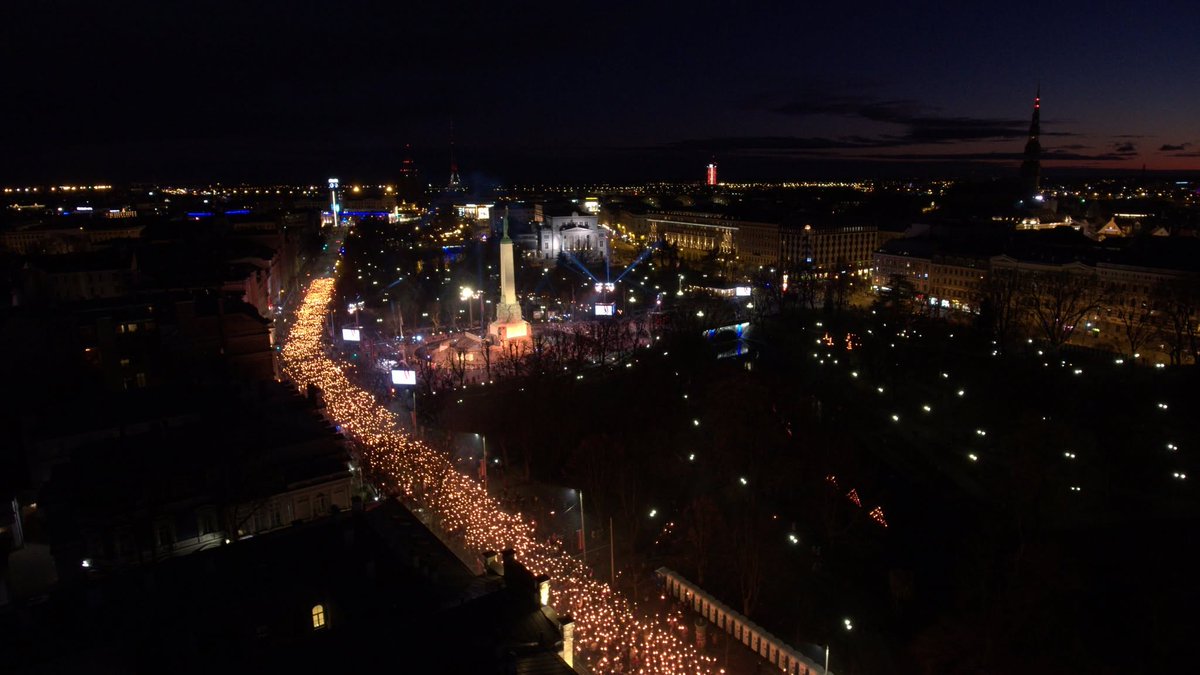
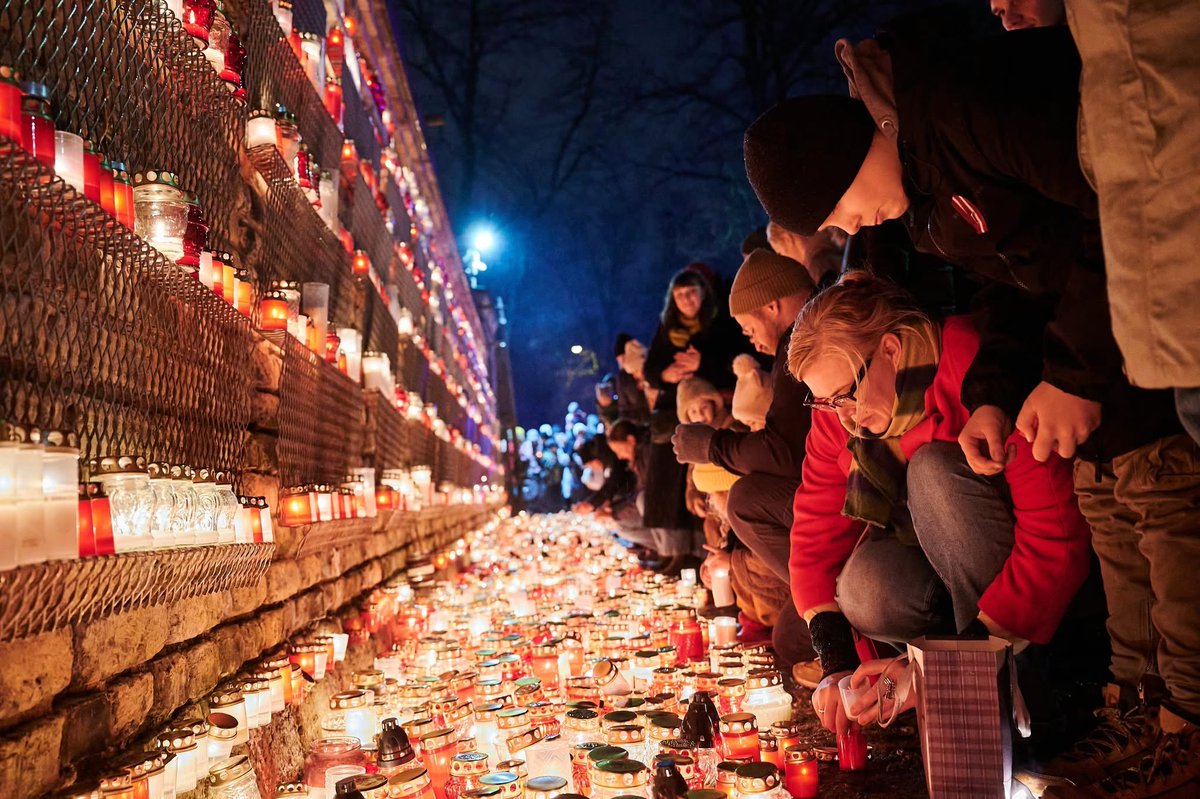
In Riga, people light candles at the Brethren Cemetery (Brāļu kapi), where many of the fallen are buried, then walk with torches to the Freedom Monument (Brīvības piemineklis) and on down to the riverbank. There, a fire raft is set adrift on the Daugava, the river across which Bermont’s army shelled the city. Thousands more set candles along the Riga Castle wall, and towns across Latvia hold torchlight processions of their own.
The Lāčplēsis commemoration photos are from Mission Latvia, the Latvian government's Facebook page. Fallen warriors in eternal sleep at Brāļu kapi is my own. #latvija #latvia
🇺🇸🇱🇻 On November 11, Americans and Latvians honor those who have defended our nations and the freedoms we hold dear.
On Veterans Day in the United States and Lāčplēsis Day in Latvia, we pay tribute to the courage and sacrifice of our military heroes, past and present.
Ambassador Argyros joined Latvian officials and members of the diplomatic corps at the Rīga Brethren Cemetery to lay flowers in tribute to the soldiers who gave their lives for Latvia's independence.
Our nations share a deep commitment to defending freedom, protecting our people, and standing together for our collective security.
To all who have served: Thank you. 🇺🇸🤝🇱🇻#USLatvia #StrongerTogether #HistoryMatters
Neatkarīgā NVO "Latvijas žurnālistu asociācija", kura pati pērn no valsts saņēmusi 40k eiro un kuras valdes locekļi faktiski visi pārstāv medijus, kas arī saņem līdzfinasējumu no valsts, varētu pārstāt ņemt šo naudu, citādi nevar līdz galam saprast, vai premjeru kritizē, jo viņš norāda uz kļūdām, vai tomēr tāpēc, ka gaisā virmo doma par SIF likvidāciju.🙄