We're excited to announce that Cloudflare is building an experimental consensus service using a never-before-deployed consensus algorithm, QuePaxa. https://t.co/hJ7dZIP3u0
In lieu of flowers, memorial contributions may be made to:
Johns Hopkins Alzheimer’s Disease Research Center Fund
https://t.co/luC5CdcWDy
Alzheimer’s Foundation of America Caregiver Resources
https://t.co/zvNptfyuNd
Photo Credit: Tommy Garcia
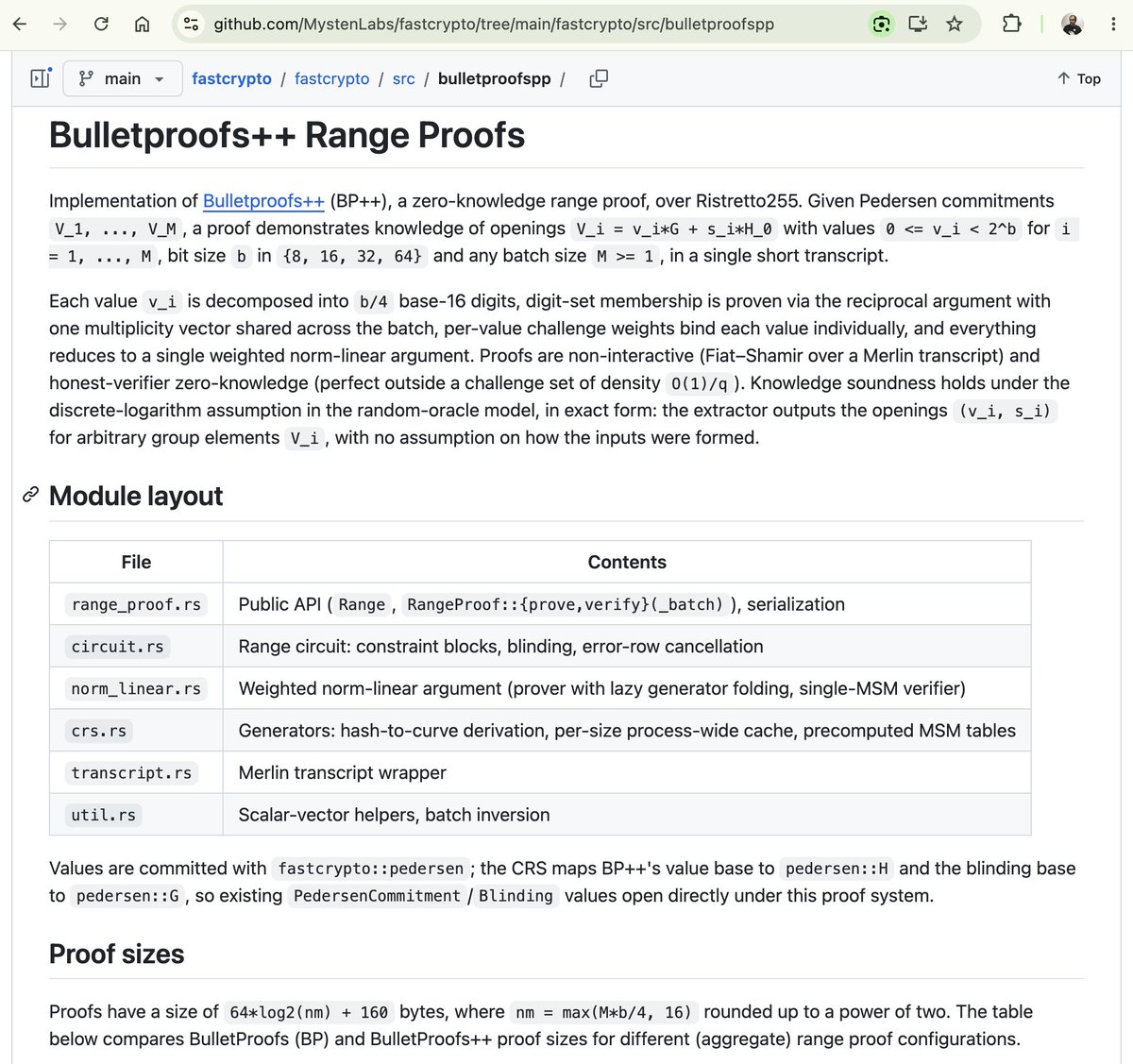
Another exciting cryptography milestone from our @SuiNetwork research team!
We just implemented Bulletproofs++ in Rust (on steroids), and the results are quite impressive:
🚀 Up to 7.8x faster proving and 4.5x faster verification
📉 24–38% smaller proofs
Beyond original algorithm coding, we introduced several optimizations, including lazy base folding in the norm linear argument, CRS caching, faster multi-scalar multiplication verification and other goodies. We also proved our construction secure and corrected a few issues in the original paper. Afaik this is now the fastest implementation of BP++ out there.
But why should you care?
For confidential transfers on Sui, this could mean batching ~4x more private transfers for the same gas cost, while also reducing validator bandwidth. Better cryptography, better privacy, less gas.
Code is already open source:
https://t.co/9bA6FhffAC
More techy details, including the full of our improvements & corrections to the original paper, coming soon on ePrint.
🙏 Philipp Jovanovic @Daeinar and Arnab Roy
this year we're launching confidential transactions on sui
the entire internet is about to get FREE PAYMENTS WITH PRIVACY, AT SCALE
only possible on @SuiNetwork
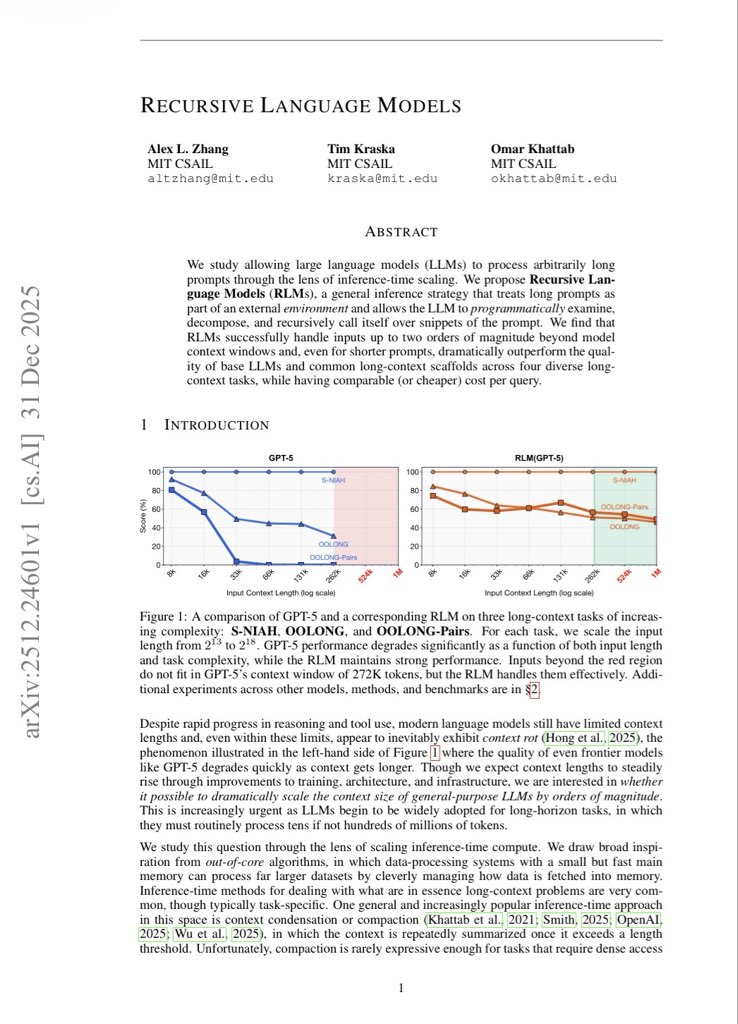
R.I.P. basic prompting.
MIT just dropped a technique that makes ChatGPT reason like a team of experts instead of one overconfident intern.
It’s called “Recursive Meta-Cognition” and it outperforms standard prompts by 110%.
Here’s the prompt (and why this changes everything) 👇
As of October 1st, I am on sabbatical leave from my academic position @uclcs and I am happy to announce that I have joined the @Mysten_Labs research team. Excited to be part of an incredibly ambitious & talented crowd & I'm looking forward to diving into new projects with them🚀
Today we are releasing ligerito-rust, the experimental pure-Rust implementation of Ligerito PCS as well as other common ZK utilities: Ligero, Sumcheck, binary field macros, and more. This work was done in collaboration with @AndrijaNovakov6 and @Daeinar
Links in the thread
Don't drop out of college to start or work for a startup. There will be other (and probably better) startup opportunities, but you can't get your college years back.
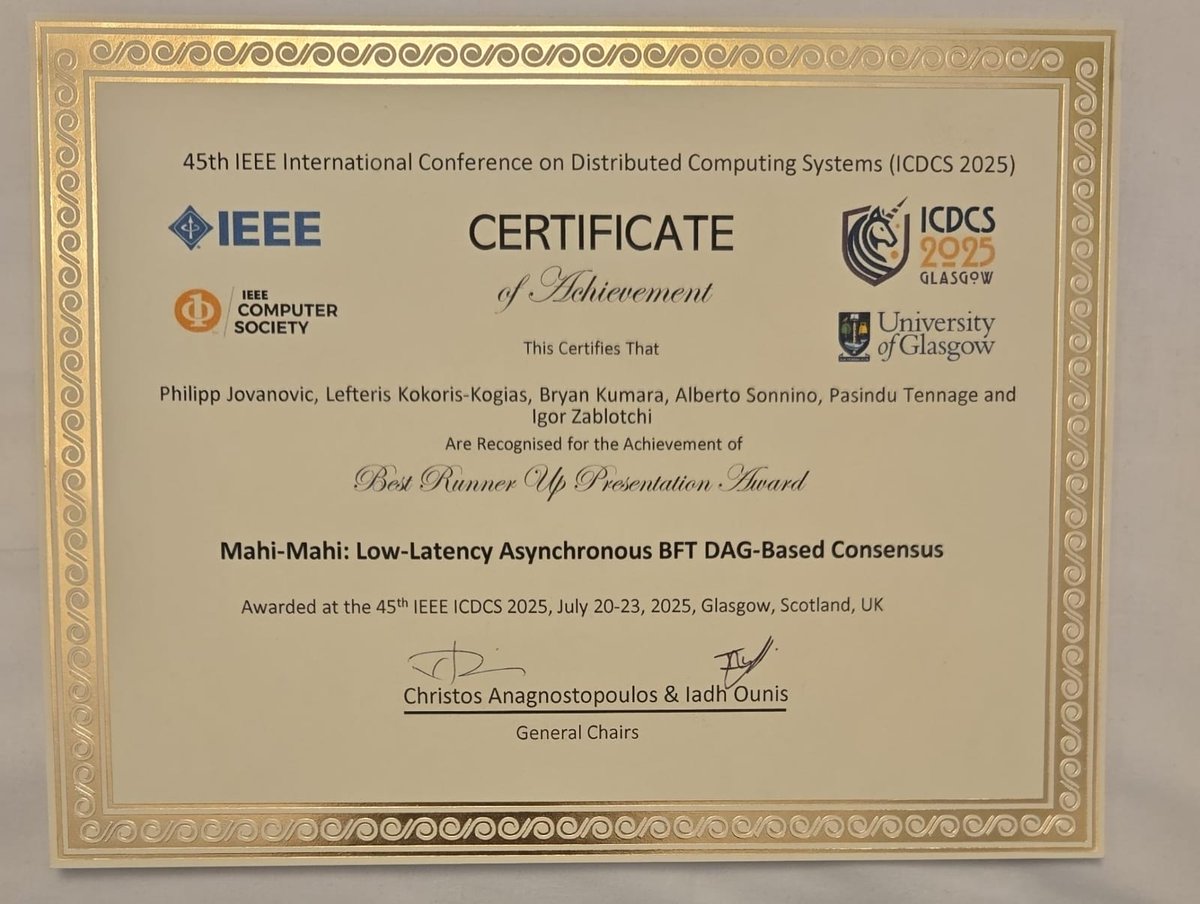
Big congrats to @PasinduTennage and Bryan Kumara for their amazing presentation of Mahi Mahi @ICDCS2025. What a way to start (Bryan) and finish (Pasindu) your PhD trips!
1/6 Excited to announce Ligerito — a new multilinear polynomial commitment scheme and inner product argument. Joint work with @angeris.
1. Recurses Ligero verifier using the Sumcheck protocol
2. Use almost any error correcting code
3. Extremely fast and parallel prover
I'm teaching databases this semester at Berkeley. My students all seem unusually brilliant. Not many go to office hours, and not too many folks post on the course forum asking project questions.
Weirdly, the exam had the lowest recorded average in my 10 semesters teaching it.
It's our pleasure to announce that @Daeinar will be giving a talk named “Arke - Byzantine Fault-Tolerant and Privacy-Preserving Contact Discovery at Scale” at our Privacy & Verifiability Conference on the 7th of March!
Philipp Jovanovic is a Full Professor in Information Security in the Information Security Research Group at University College London (UCL) with a research and teaching agenda in applied cryptography, decentralized systems, cryptocurrencies, and privacy-enhancing technologies.
He has over 14 years of experience working in the those fields across academia and industry, he has published more than 45 papers at top tier venues for cybersecurity, cryptography, and distributed systems, and his award-winning research has been cited over 5300 times. He holds a PhD in cryptography from the Faculty of Computer Science and Mathematics of the University of Passau, Germany, and is an alumni (postdoc) of EPFL, Switzerland.
Register now : https://t.co/ZcWVEKIQjl