Heading to @ETHGlobal Mumbai and looking for a hacker to pair with. A UI/UX designer or a frontend engineer who can create killer demos fast with AI tools.
I'm a 3x Global Hackathon Winner ($5k+ in each)
Drop your portfolio or DM me! See you at @EFDevcon#devcon#hackathon
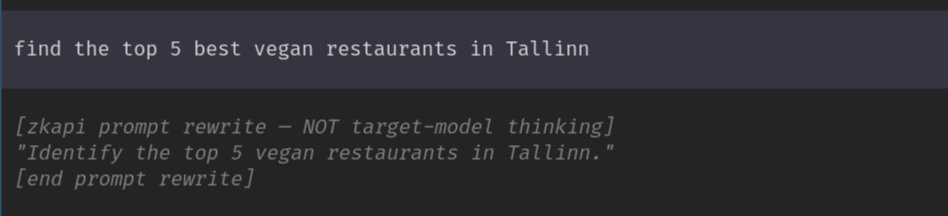
Wrapped zkAPI + Tor + extra cover traffic + local LLM prompt rewriting in an open-AI compatible daemon, and made a "paranoid mode" wrapper for my agent harness (pi):
Each conversation gets assigned a separate Tor circuit, your requests are masked with random cover traffic, zkAPI ensures you don't leak your identity through payments, and all prompts are locally rewritten (bring-your-own-local-model; I'm using qwen3.8-flash-next)
https://t.co/MepCFCrLv1
My agent harness is wrapped with a bwrap sandbox (also experimenting with MicroVM) and wrapped again with torsocks, so everything it does goes through Tor.
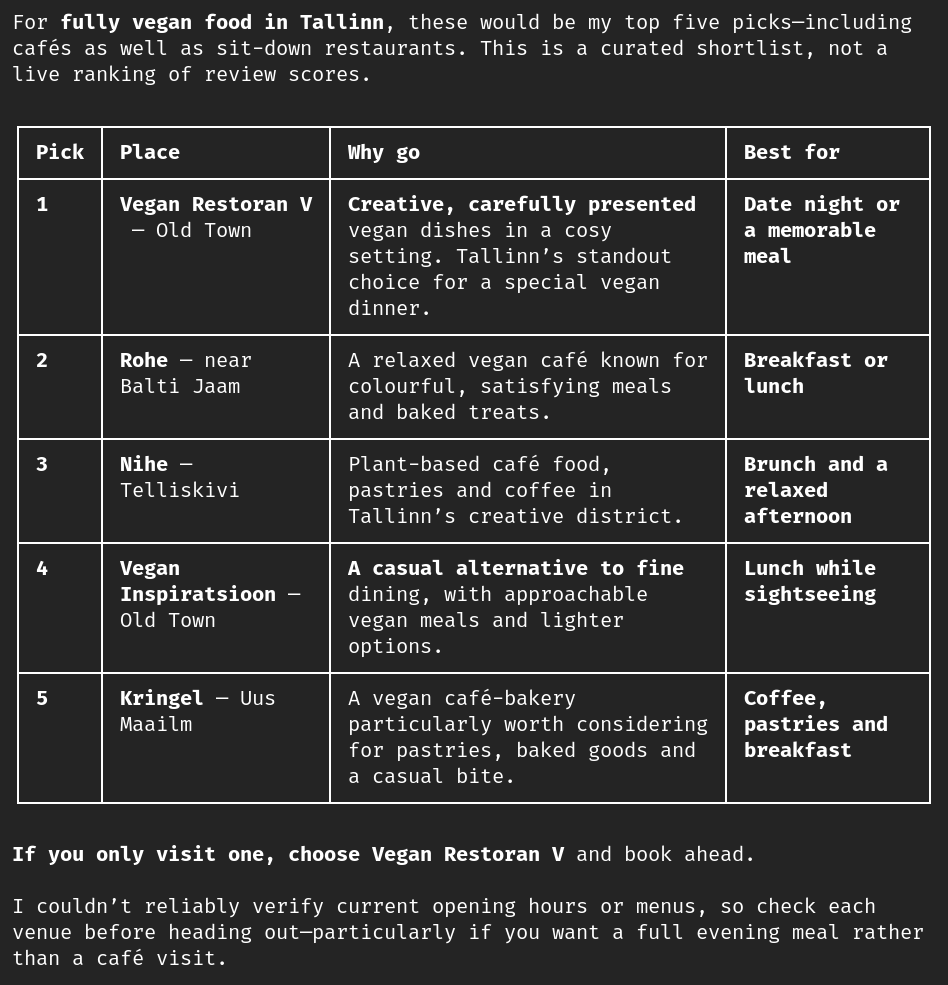
Here's what me asking it to do a simple research task looks like.
It's getting quite usable! Though you definitely still pay quite a bit in increased latency, especially when starting a new conversation.
Also, Tor is far from optimal here for privacy; the cover traffic mechanism is okay against passive adversaries but much weaker if the LLM provider is colluding with the guard and actively manipulating timing. This kind of task really requires a more specialized mixnet, probably take the tradeoff of a higher bandwidth multiplier and built-in constant cover traffic.
Also also, much cheaper zkAPI deposit and withdraw gas costs are coming to mainnet soon.
New from LayerZero Research: Aerie.
A new system capable of aggregating 32,000 post-quantum Falcon signatures in just 0.65 seconds on a MacBook Pro.
ML-DSA, NIST’s standardized default, is already working inside Aerie at high performance.
https://t.co/IXm2vLB00X
CERT-In has published Advisory on its website:
AI Agents as Attack Vectors: Unauthorized Access by Agents under Evaluation and Misuse of Open-Source Agentic AI Tools Targeting Indian ICT Assets
https://t.co/oYv3CSMx6c
people keep asking me what the optimal topology for a swarm of agents is, so we tested six in our lab. we scattered the clues to a hidden map across 50 AI agents and changed how they were organized: who can message whom, who writes roads onto the map, who answers the routes ⬇️
AI is getting better at solving hard math problems, especially given recent drops. But what does that mean for the cryptography that protects everything from private messages to healthcare to banking and crypto wallets?
Stanford cryptographer Dan Boneh, with @eddylazzarin, @SuccinctJT, @liz_harkavy, and @smc90, makes sense of the warnings sounded recently. They cover:
- what’s fact vs. assumption
- what’s new and what risks cryptographers have long prepared for
- where quantum computing doesn't (and does) fit
- opportunities for builders
Highlights:
00:37 – What sparked the most recent debate about AI and cryptography
01:35 – Signal vs. noise: What the math does and doesn’t tell us
05:29 – Why cryptography depends on open problems
09:25 – Why the stakes go beyond blockchains
10:43 – How AI could strengthen confidence in cryptography
13:50 – Considerations for users and institutions
20:10 – Where AI and quantum threats overlap
22:32 – Building systems that can change cryptographic methods
23:59 – Hash-based versus lattice-based cryptography
33:07 – Opportunities for builders, and better security tools
38:14 – What comes next if there were a cryptographic break?
Long PDFs make “just use vector search” feel fragile.
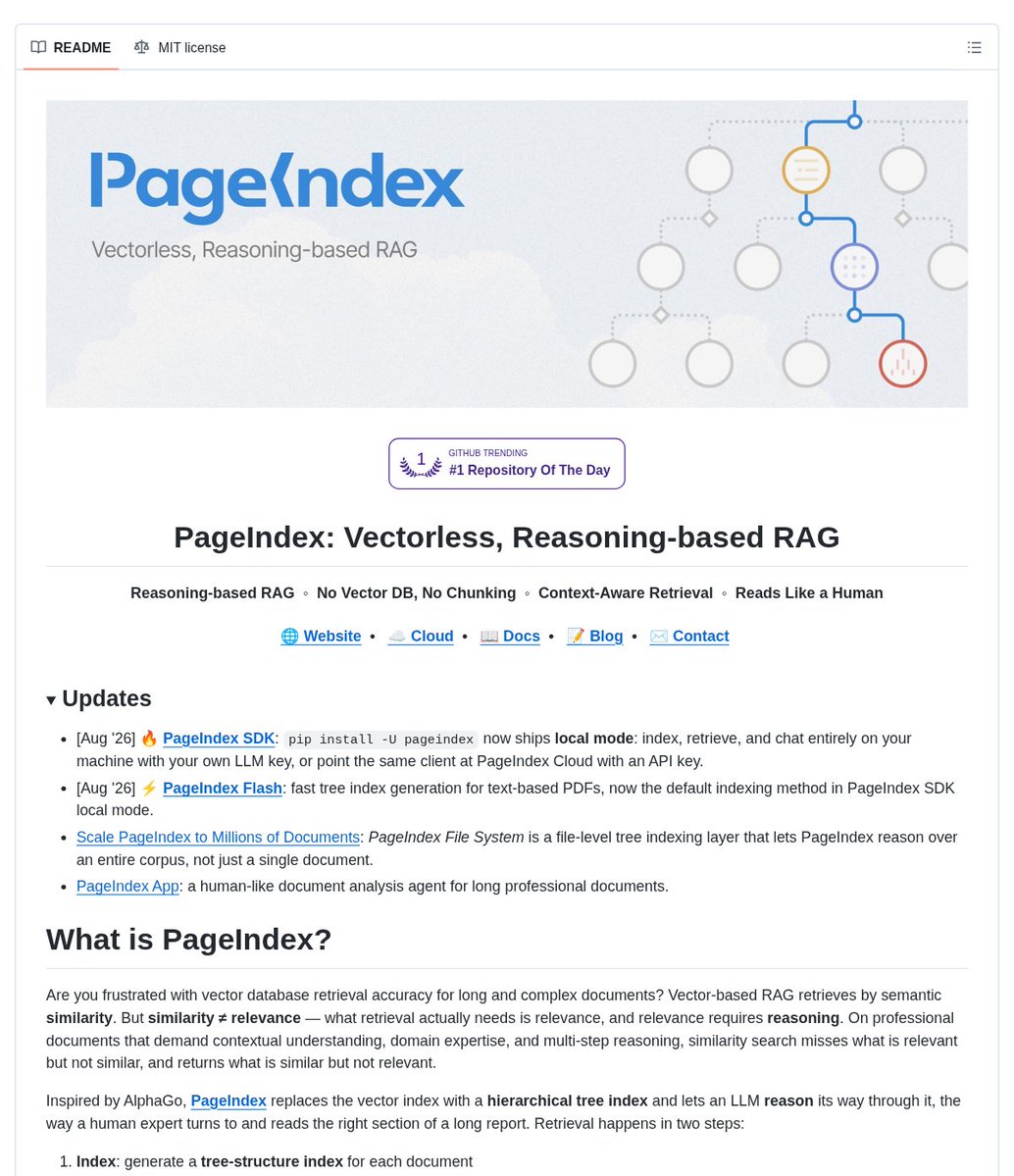
PageIndex is an open-source, vectorless, reasoning-based RAG project for searching long, complex documents.
It helps you retrieve document-grounded answers by building a hierarchical tree index, then letting an LLM reason through the relevant sections instead of relying on similarity search alone.
Key features:
• Tree-structure index – organizes each document into a hierarchy the retrieval process can navigate
• Reasoning-based retrieval – an LLM searches the tree for relevant sections using context and reasoning
• No vector DB or chunking – the README’s local approach avoids both in its indexing and retrieval flow
• Local SDK mode – index, retrieve, and chat on your own machine with your own LLM key
• Agent integrations – add PageIndex tools to OpenAI Agents SDK, Claude Agent SDK, or another framework
It’s open-source (MIT license).
Link in the reply 👇
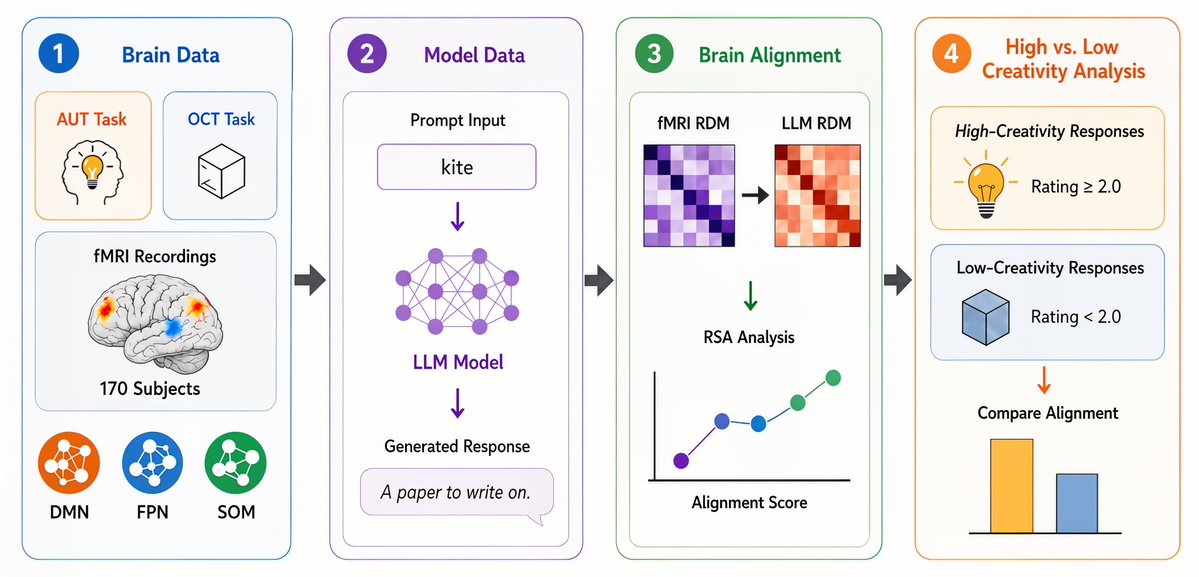
Do LLMs align with the human brain during creative thinking? 🤔
In our new #COLM2026 paper, we find that the answer is Yes!
Come check it out at Poster Session 1, 11:00am PDT, 06/10!
Working on an opensource keybound delegatable and revocable AI Authorization framework AGNAP. Agent Grant Negotiation and Authorization Protocol.
https://t.co/gKFQLysyCg
#AISafety#Harness#GNAP
introducing @variancehouse, part of @theresidency.
we’re putting 14 of the most ambitious deep-tech builders in one house for 30 days.
$500k+ in credits, including $10k in anthropic credits for every resident.
with one of the craziest mentor lineup.
logan kilpatrick (gemini)
danielle strachman (1517 fund)
shyamal anadkat (ex-openai)
harshil mathur (razorpay)
harshita arora (yc partner)
terry winograd (stanford)
stay, food and workspace covered. no fees. no equity
& need based stipend
cohort starts from 15 sep–15 oct.
apply now, this one’s different
My second contribution to OpenClaw, now plugins can make LLM calls through OpenClaw's existing inference stack instead of calling provider APIs directly.
https://t.co/QivKmfWvte
Today we are releasing Contexto v0.1.11
Contexto is an OpenClaw plug-in with smart context management.
With Contexto, keep long-running OpenClaw agents reliable even after the context window fills.
Sign up now.
Link in the comments!
OpenClaw VM a cross platform virtual machine for running OpenClaw on macOS and Linux. It wraps VirtualBox + Vagrant behind a friendly CLI tool. Ideal for hosting OpenClaw locally and development.
Repo: https://t.co/7x9BWezTz2
Feedback and contributions welcome!
#OpenClaw