Two economists just published a mathematical proof that AI will destroy the economy.
Not might. Not could. Will — if nothing changes.
The paper is called "The AI Layoff Trap." Published March 2, 2026. Wharton School, University of Pennsylvania. Boston University. Peer reviewed. Mathematically modeled.
The conclusion is one sentence.
"At the limit, firms automate their way to boundless productivity and zero demand."
An economy that produces everything. And sells it to nobody.
Here is how you get there.
A company fires 500 workers and replaces them with AI. A competitor fires 700 to keep up. Another fires 1,000. Every company is behaving rationally. Every company is following the incentives correctly. And every company is building a trap for itself.
Because the workers who were fired were also customers.
When they lose their jobs faster than the economy can absorb them, they stop spending. Consumer demand falls. Companies respond by cutting costs — which means automating more workers — which means less spending — which means more falling demand — which means more automation.
The loop has no natural exit.
The researchers tested every proposed solution. Universal basic income. Capital income taxes. Worker equity participation. Upskilling programs. Corporate coordination agreements.
Every single one failed in the model.
The only intervention that worked: a Pigouvian automation tax — a per-task levy charged every time a company replaces a human with AI, forcing them to price in the demand they are destroying before they pull the trigger.
No government has implemented this. No major economy is seriously discussing it.
Meanwhile the numbers are already tracking the curve. 100,000 tech workers laid off in 2025. 92,000 more in the first months of 2026. Jack Dorsey fired half of Block's workforce and said publicly: "Within the next year, the majority of companies will reach the same conclusion."
Nobody is doing anything wrong. Companies are following their incentives perfectly. That is exactly the problem.
Rational behavior. At scale. Simultaneously. With no mechanism to stop it.
Two economists built the math. The math leads to one place.
Source: Falk & Tsoukalas · Wharton School + Boston University ·
Anthropic AI team just dropped the Prompting Playbook that beats most paid courses.
33-minutes. Free. By the Anthropic team.
Control case + edge cases + knowing when to hand off to a human = a real eval suite.
Worth more than any $500 prompt-engineering course.
Claude for Excel, PowerPoint, and Word are now generally available, and Claude for Outlook is in public beta.
As Claude moves between your Microsoft apps, it carries the full context of your conversation.
Introducing Claude Managed Agents: everything you need to build and deploy agents at scale.
It pairs an agent harness tuned for performance with production infrastructure, so you can go from prototype to launch in days.
Now in public beta on the Claude Platform.
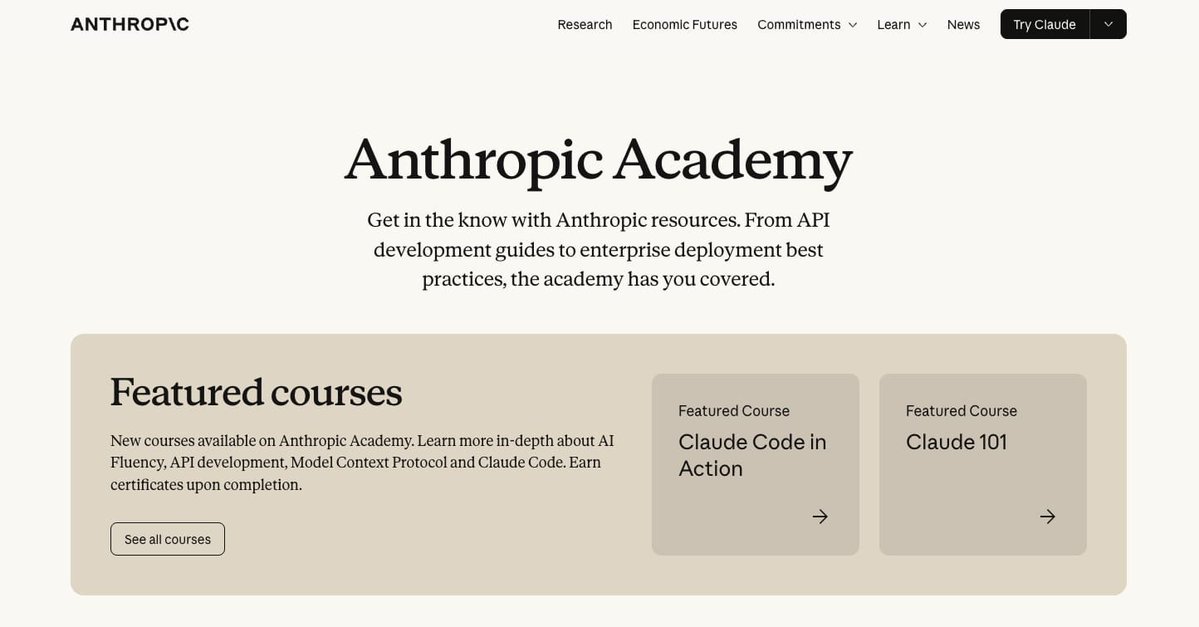
CLAUDE IS OFFERING 13 AI COURSES & CERTIFICATES.
ALL FREE. START LEARNING NOW.
* Claude 101. Learn Claude for everyday work.
https://t.co/5BTxHDLkFl
* AI Fluency: Frameworks & Foundations.
https://t.co/4cVd0yWh2b
* Introduction to Agent Skills.
https://t.co/Qp2dthHEWw
* Building with the Claude API.
https://t.co/XLETKnmsOH
* Claude Code in Action.
https://t.co/mWx2ncByVG
* Intro to Model Context Protocol.
https://t.co/SRtsyXnxiK
* MCP: Advanced Topics.
https://t.co/qsIwMXbetq
* AI Fluency for Students.
https://t.co/5wYhqBX1Fx
* AI Fluency for Educators.
https://t.co/m39LPSqMiy
* Teaching AI Fluency.
https://t.co/5tIKdujzu3
* AI Fluency for Nonprofits.
https://t.co/bZyzIAcnCy
* Claude with Amazon Bedrock.
https://t.co/ACR2hYAwdc
* Claude with Google Cloud's Vertex AI.
https://t.co/w6BM2XNgqi
I just discovered an open source AI research agent that does in seconds what takes PhDs hours.
It's called Feynman.
Type a topic. It searches papers, synthesizes findings, verifies every claim against real sources, and hands you a cited research brief.
Not a chatbot. Not a summary tool.
A full multi-agent research system running from your terminal.
Four agents work automatically:
→ Researcher pulls evidence from papers, repos, docs, and the web
→ Reviewer runs simulated peer review with severity-graded feedback
→ Writer drafts paper-style outputs from your research notes
→ Verifier checks every citation and kills dead links
It can also replicate experiments on local or cloud GPUs, audit a paper against its own codebase for claim mismatches, and run recurring research watches on topics you care about.
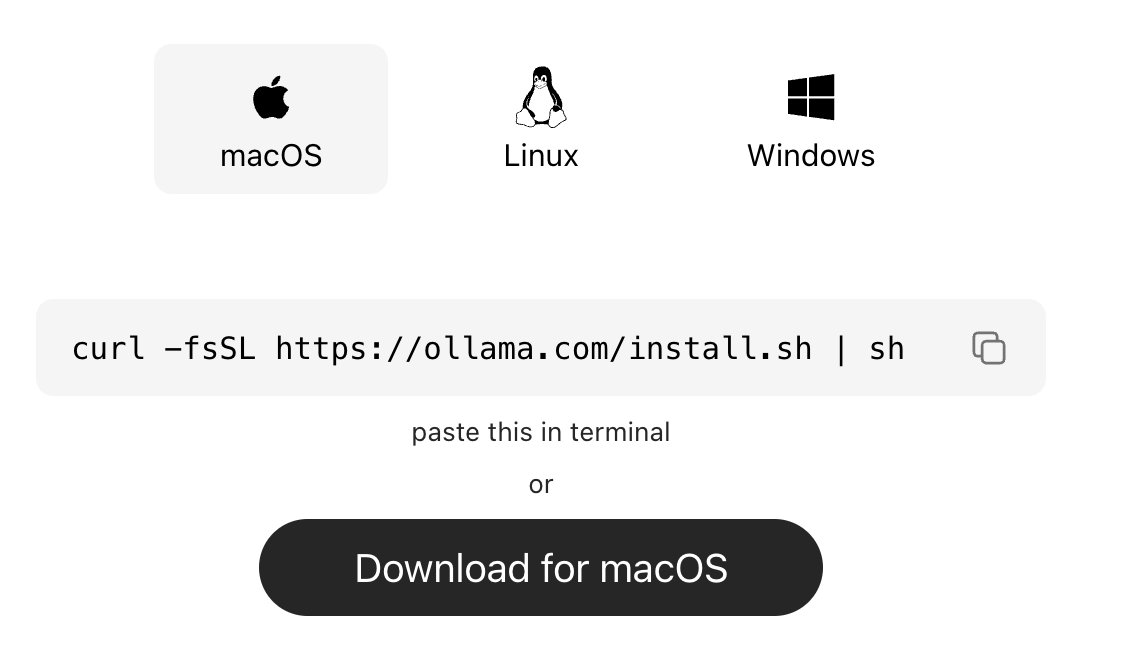
One install command. Every output source-grounded.
100% Open Source. MIT License.