Postdoc with @sloan_kettering studying inflammasomes, programmed cell death, and chemical biology strategies to characterize them| views and tweets are my own
Wonderful advancement in our understanding of the molecular mechanisms that enable oxidized TRX1 to interact with and modulate NLRP1. Kudos to @michaelgeeson, @jeffreychsiao, and @LydiaTsams on this great work! https://t.co/eeZ227pqwq
Our latest work by @michaelgeeson and @jeffreychsiao shows that NLRP1 associates with TRX1 using a transient disulfide bond. Their discovery showcases the predictive power of AlphaFold-Multimer! https://t.co/s6X7GJ09Ur
https://t.co/CnFbNK2U6J While otherwise quite exciting, it's a bit surprising to think that these folks rediscovered Trx binding and its functional importance 2 years since it was disclosed on biorxiv...
Totally wild. The functional linkage of the CARD module to host defense via cell death is an evolutionarily ancient property 🤯 CARD-like domains mediate anti-phage defense in bacterial gasdermin systems | bioRxiv https://t.co/uBaBcuDPlX
Beyond excited to share the first preprint from my lab!! We identified IL-18 and IL-1Beta as direct substrates of the noncanonical inflammasomes and uncover the molecular basis of IL-1Beta recognition and processing. #happyNewPI.
https://t.co/RHxaw2Pg04
So excited that we finally have the ACTIVE NLRP3 inflammasome structure, thanks to super talented Le Xiao @LeXiao17, and Venkat Magupalli @MagupalliVenny! https://t.co/gUJA8QH5Kv
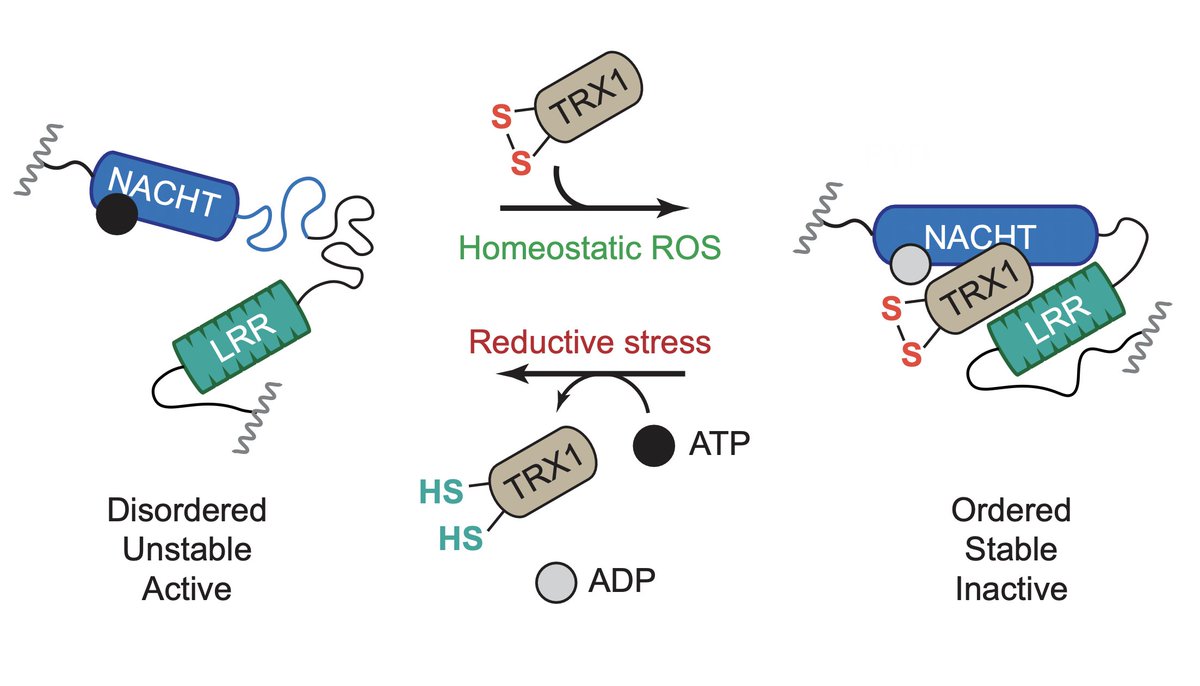
What danger signal does NLRP1 sense? @DanPBall@DBachovchin show in @SciImmunology that oxidized thioredoxin (TRX1) stabilizes NLRP1 under homeostatic conditions. Onset of reductive stress dislodges TRX1 causing #inflammasome activation @MSKCancerCent
📖➡️https://t.co/DkvEaElepI
Our latest work led by @DanPBall shows that oxidized, but not reduced, TRX1 binds to and represses the NLRP1 inflammasome, revealing that the innate immune system senses reductive stress.
https://t.co/JtOTZzW23n
Check out our latest on the NLRP1 inflammasome. Here, we show NLRP1 activity is restricted by its interaction with the cellular redox protein TRX1. Huge congrats and appreciation to all authors. Very grateful to @DBachovchin for mentorship and support. https://t.co/f04mHCZLIB
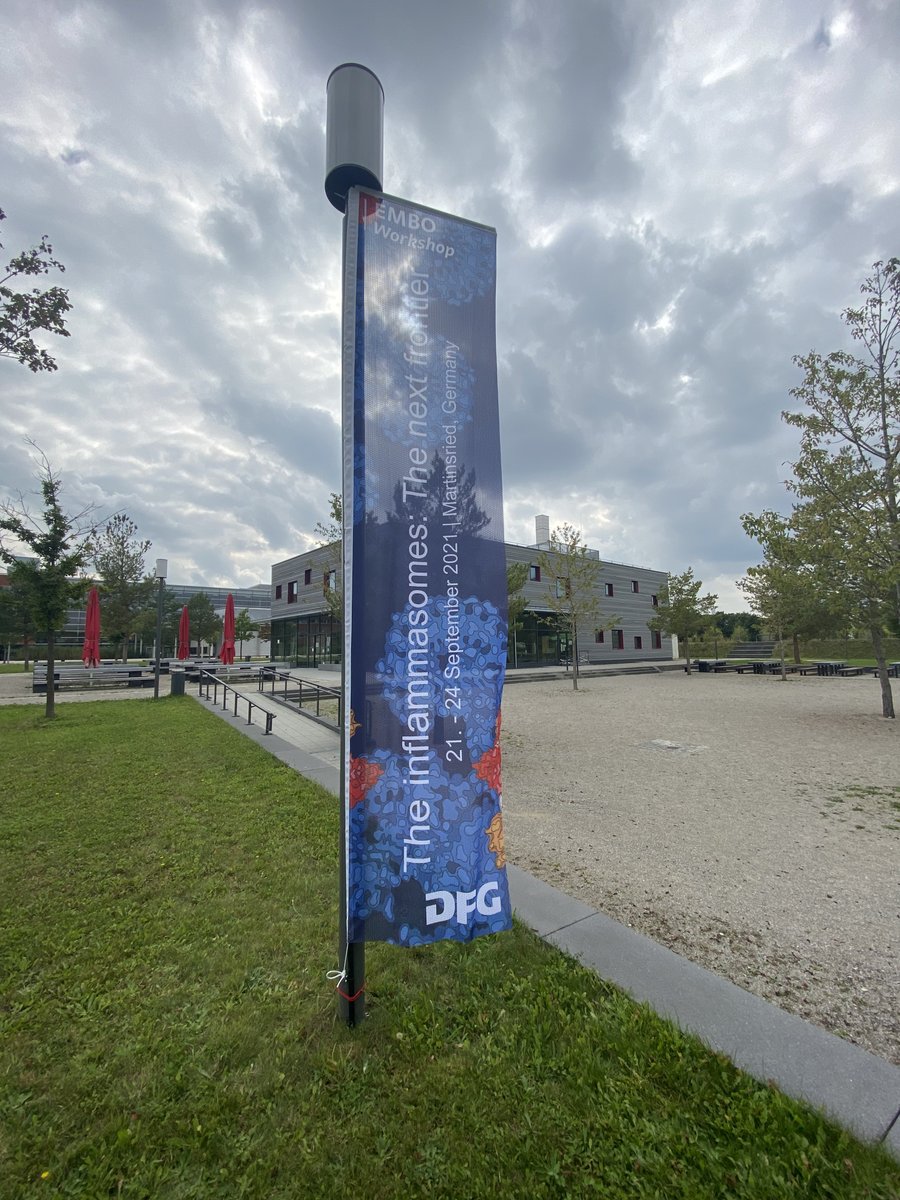
Just posted @DanPBall’s latest work. He’s presenting a poster on these findings at #emboinflammasomes this week - check it out! Oxidized thioredoxin-1 restrains the NLRP1 inflammasome https://t.co/NkSPFTI770
Just posted @DanPBall’s latest work. He’s presenting a poster on these findings at #emboinflammasomes this week - check it out! Oxidized thioredoxin-1 restrains the NLRP1 inflammasome https://t.co/NkSPFTI770
Our latest preprint establishes new insight into NLRP1 inflammasome activation with the discovery that a cellular oxidoreductase, thioredoxin-1, binds NLRP1's NACHT-LRR domains and affects its activity.
Check out the link below
https://t.co/BOOs8KwEID
👏 Congratulations to Cornelius Taabazuing (@taabaman) who was named to @CellPressNews' 100 inspiring Black scientists in America.
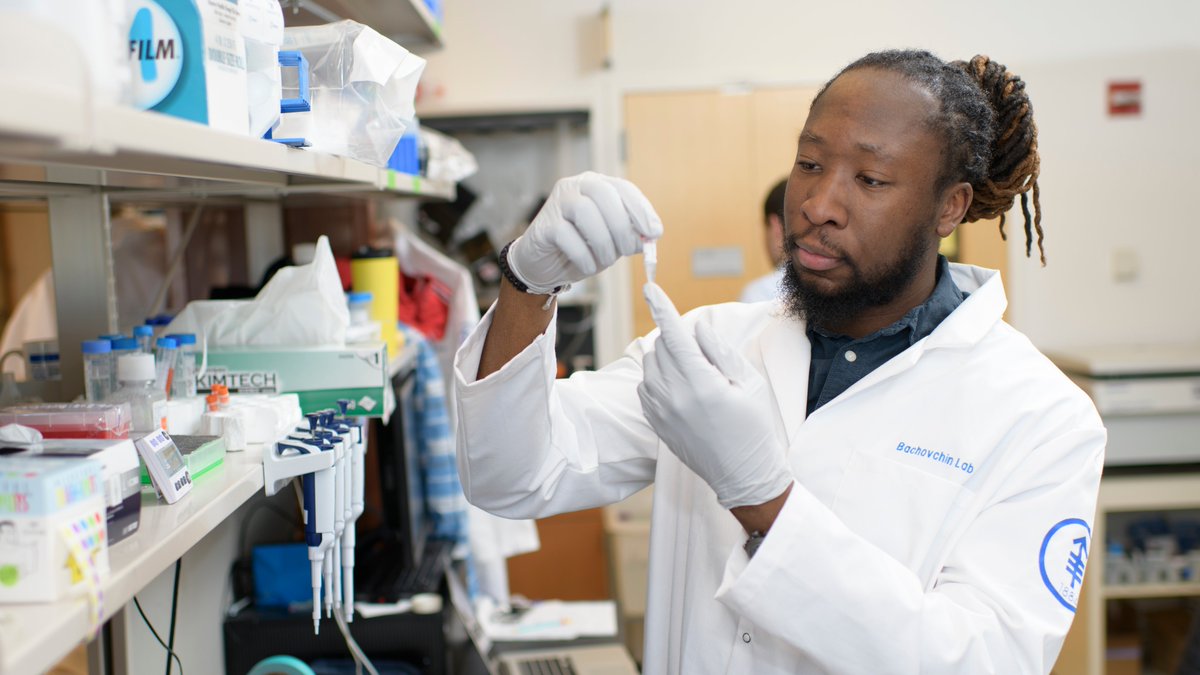
Cornelius is a research fellow in the Bachovchin lab studying functions of enzymes in normal and pathological processes. https://t.co/pHOtQyNU0K
Exploiting the pandemic to wall off the U.S. and dismantle one of our greatest strengths—our ability to attract and retain the brightest minds from around the world—may ultimately cause even more long-term, self-inflicted damage to our country than #COVID19. Abhorrent.
Former president of @MSKPDA, @lilianlamech writes a recap of the accomplishments of this amazing group of leaders. In short, they;
📌Create Welcome to🗽guide for new postdocs
📌Helped us design & analyze climate survey
📌Hosted community building events
https://t.co/rvhJ457mQs