I firmly believe most resellers especially on Amazon don’t have a profit problem, they have a leakage problem.
You can source all day at 50% ROI and run negative / never take profit because the money you’re making per sale isn’t enough to cover everywhere else you’re losing money.
It happens to me too, used to much worse than now.
1. Items you buy that never arrived.
2. Items you buy that come damaged but you never return or request reimbursement.
3. Items lost during shipments outbound you don’t file claims on.
4. Items amazon loses you don’t notice.
5. Items arriving as a return damaged / swapped that you don’t fight for.
6. Shipping cost adjustments you don’t notice.
7. Bad shipping templates that result in lost money when heading out.
8. Poor gift card management and you lose track or never get what you ordered.
9. Items you buy to hold but you didn’t organize well and missed the sell window.
10. Items you had 50% ROI on but didn’t prep fast enough and dropped to 10% by the time you did.
11. Building cash back or rewards into your profit and it never gets paid out.
12. Unaccounted storage fees, placement fees, or prep fees.
13. Software, lead list, or info bloat that isn’t being attached to your P&L.
14. Poor repricing practices which slow down your per unit volume.
15. Bad cash flow management forcing you to leverage and pay interest or loan fees.
The list goes on. Yes you should continue to get better at sourcing, learning new stores, categories, pushing higher AOVs, etc.
Until you are dialed in on the moving parts between inventory, prep, cash, and sales though you can be losing your shirt and not even realize it. For years.
You work hard for your money. You’re robbing yourself blind by not knowing where every dollar is going and to whom.
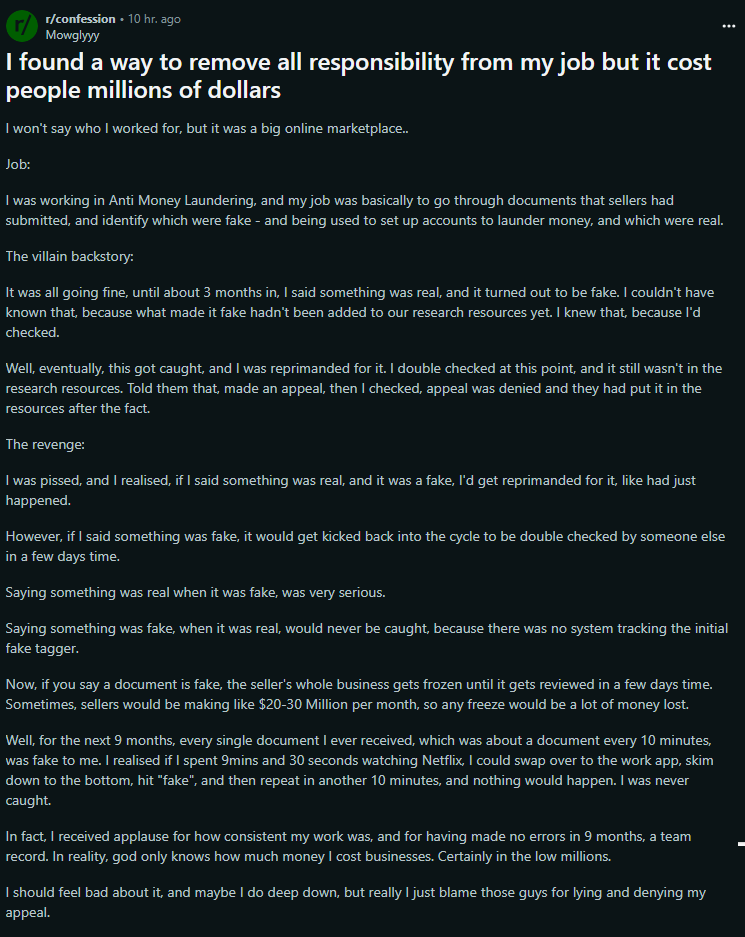
This 100% sounds like something that would happen inside Amazon. Comments say the largest seller he dealt with was $250m / month with printer ink. Not many platforms can drive that much revenue.
Makes sense why sellers would get the run around from seller support on appeals.
I've had multiple conversations over the past two years with "regular people" about Amazon FBA
Almost every one ended with the person wanting to start
You know how many reached out after our covo to actually start?
None
Just starting gets you ahead of 90% of people
@liquiditypaysme@iamkenblue Is that just the times that have worked best for u and what kind of price action ur used to, or u think there’s an overall reason why it’s easier/better in that range
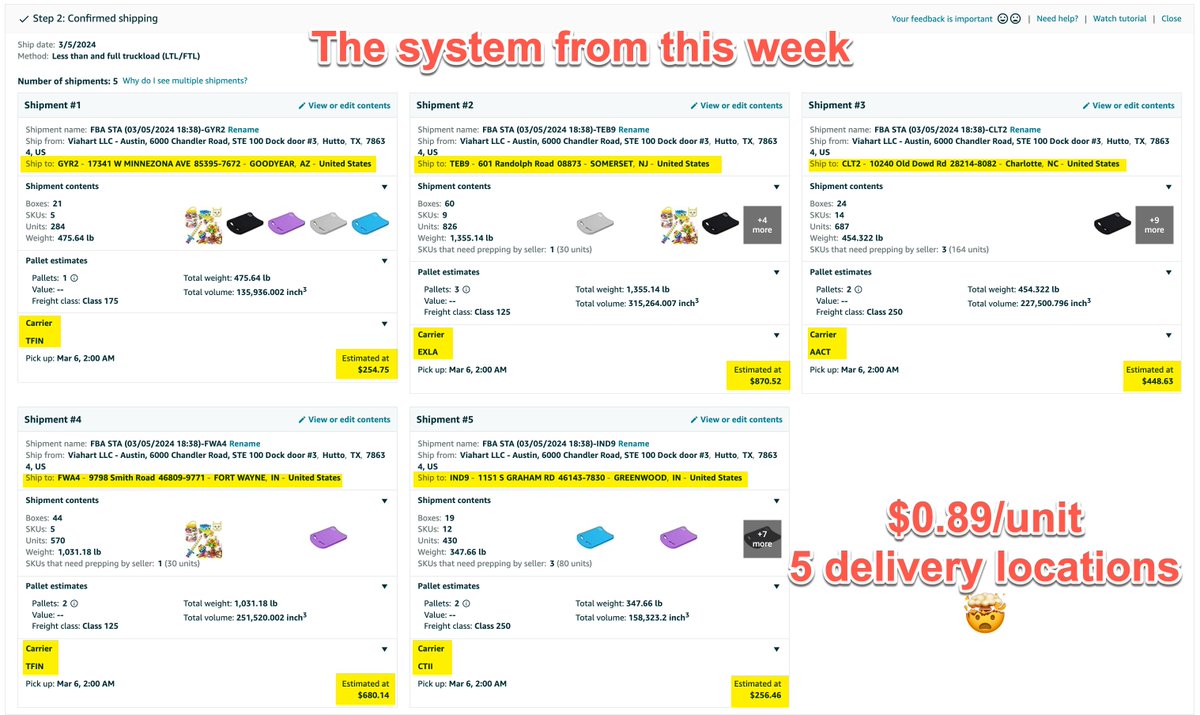
Amazon just dropped a secret price increase by pushing logistics costs and work to its small business sellers
Here's why it's a disaster for everyone involved (Consumers, Sellers, Amazon):
1. It's going to raise prices on the Amazon platform.
Last week we shipped our inventory to Amazon for $0.17/unit. This week, between their "placement fee" and the additional shipping charges from shipping to multiple and faraway fulfillment centers, we are seeing costs of around $1.00/unit. Since Amazon takes 15% of any price increase we do, we'll need to increase our prices by at least $1 per unit (if not more), increasing our prices on average around 6%. We cannot afford to eat this cost. We're not Amazon. Our sales and profits are down in a very tough market. At $0.83 additional costs per unit and around 400,000 units sold, we will have to absorb around $300,000 of extra costs per year.
2. It's not "Climate Pledge Friendly".
Amazon prides itself in what it does to reduce its burden on the environment; they even named an arena in seattle "Climate Pledge Arena" because of their work on this issue. By having sellers ship to 5 faraway fulfillment centers instead of shipping to one nearby fulfillment center, by relying on sellers' weak, mostly non-robotic, un-scaled operations, they are increasing CO2 emissions and logistics costs. Last week we had one Amazon pick-up, by making 5 shipments the lowest cost, we will have 5 trucks come to our warehouse, each belching emissions into the air. It's not efficient or good for the environment.
3. It greatly increases the amount of labor needed to do the same job.
Amazon is quoting lower prices for "small parcel" (think UPS and FedEx) than it is for palletized shipments. When you're shipping 150 boxes, it just doesn't make sense to pay people to load each box one by one, instead of using pallets, but by charging less for this, that is what Amazon is encouraging us to do. The increased workload from this, multiple pickups (because UPS can't pickup 150 large boxes with a single pickup), and the additional labelling and tracking costs adds further costs to sellers and doesn't even make Amazon's operations more efficient.
4. It's a massive increase in complexity.
Last week we created a shipment in Texas and were given a warehouse in Texas to deliver to. This week, we created a shipment and were given the following options to optimize for:
A. Small parcel or pallets or mixed small parcels and pallets
B. Ship to 1, 3, or 5 warehouses
C. Ship from the inbound region of east, west, or central
Each of these options could be combined and was given a different placement fee and shipping cost.
We have to keep our costs low so we tried to check them all.
The problem is that, there are 2*5*3 = 30 different combinations of how to do this, each with their own price and each with totally different workflows. How many pallets do we need? How many picklists? How many labels. It's all different.
Even worse, each location has its own delivery speed so how can we forecast when our inventory will arrive so we stay in stock?
What's the bottom line?
Amazon needs to get its inventory distributed around the country, but if they're going to push this work to sellers, then lower your fees so sellers don't have to increase their prices.
If Amazon wants to charge more for this, don't introduce a secret fee that is impossible to explain to people who don't live and die supply chain. Just keep it real and increase the storage fees or the fulfillment fees.