🚨 Anthropic just showed a 25-minute workshop on how to actually use Claude properly
Taught by the people who built it
Free. No registration. No paywall
I've seen $300 courses that don't cover what they teach in the first 8 minutes
Watch it and bookmark it now
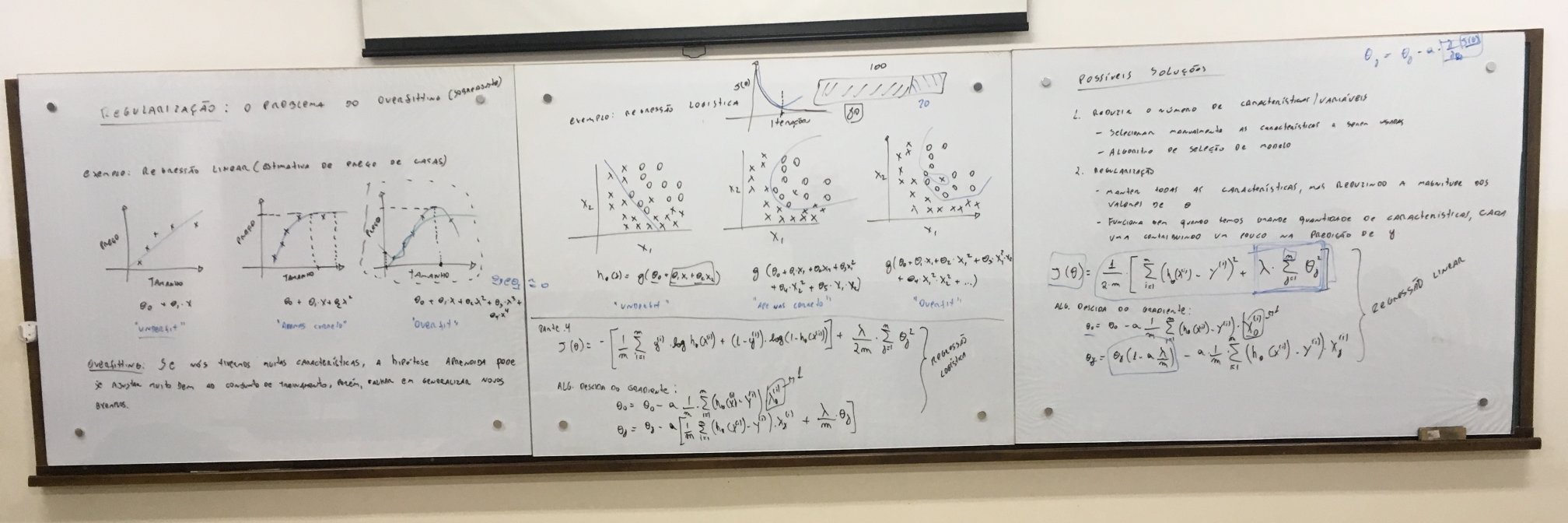
Einops simplifies and clarifies array/tensor manipulation. 👍
You really have to try it out, you'll love it: https://t.co/XzbSunPj4S
Plus it supports NumPy, TensorFlow, PyTorch, and more.
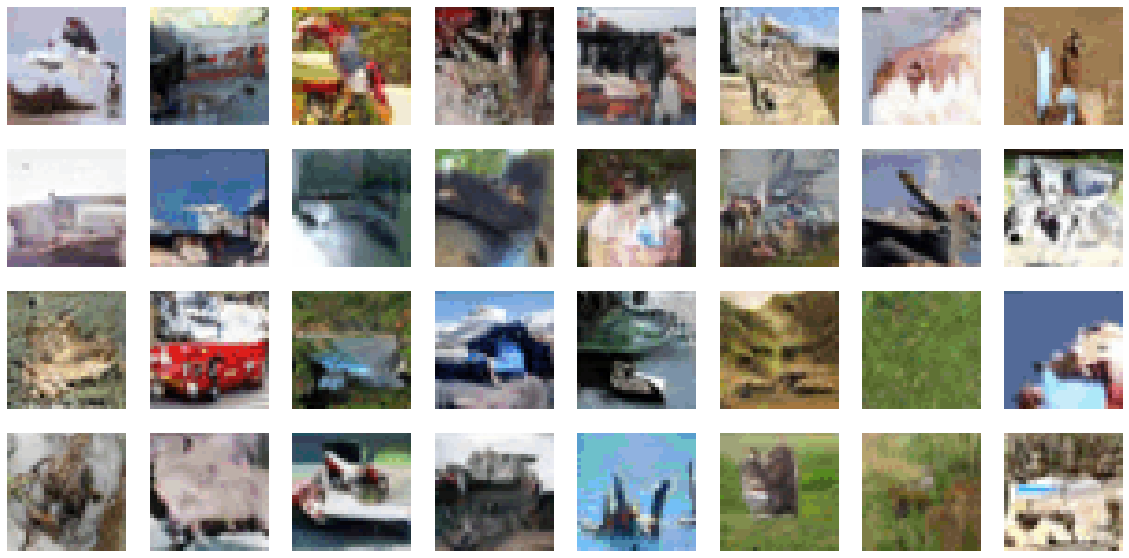
Added a new demo to minGPT that trains a GPT on pixels of CIFAR-10 images instead of text. Quite powerful that one can run the same training code/model on both domains. Notebook: https://t.co/nAt9VWXnrG . Produced reasonable samples after ~only 30 minutes on an 8-GPU V100 node:
I wrote a minimal/educational GPT training library in PyTorch, am calling it minGPT as it is only around ~300 lines of code: https://t.co/79S9lShJRN +demos for addition and character-level language model. (quick weekend project, may contain sharp edges)
An in depth @FastCompany article with @schrep and @ylecun about @facebookai’s progress using self supervised learning to identify hate speech https://t.co/e0Cfoa2DJl
Gated Linear Networks (GLNs) are backpropagation-free neural nets designed for efficient online learning via local convex optimisation. We show their performance, interpretability & robustness to catastrophic forgetting on classification tasks - read here: https://t.co/8NTNDkXZDT
Super happy to receive my author copy of 2nd ed of my High Performance Python, blog post with details will follow. Now available online/print. Please RT :-) Inc Pandas, GPUs, more profiling, async and more
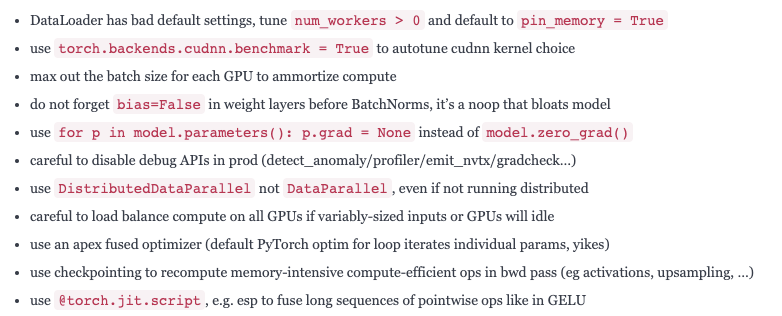
Batch normalization is a technique that normalizes layer outputs to accelerate neural network training. But new research shows it has other important effects too. Its trainable parameters alone can account for much of a network's accuracy: https://t.co/ufE5vpbf9z
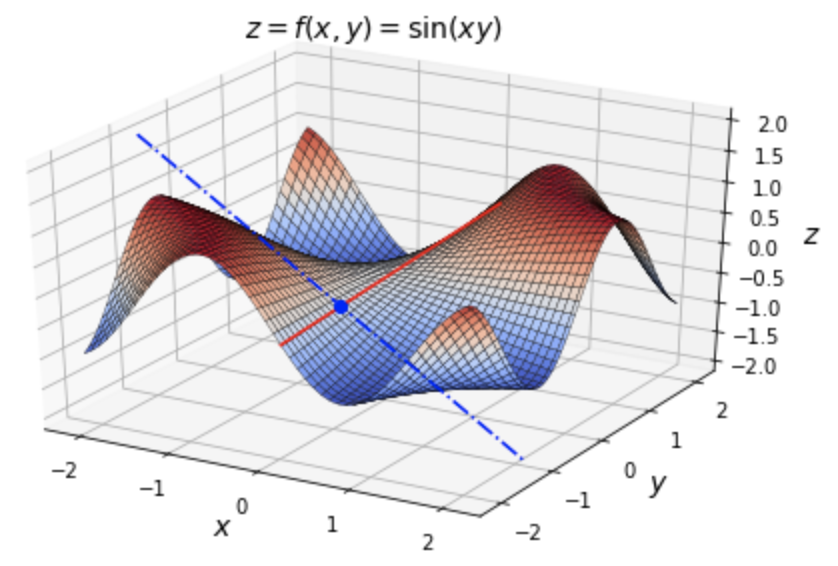
I wrote a Matplotlib tutorial notebook:
https://t.co/v9H3peLDmh
You'll learn how to make beautiful plots and animations, including, most importantly, XKCD-style plots:
iResNet: Improved Residual Networks for Image and Video Recognition in #PyTorch
- improving ResNet performance w/o increasing parameters & computation
- more effective in training very deep models: >400 layers (on ImageNet) & >3000 layers (on CIFAR-10/100)
https://t.co/mFqHKFUGcZ
Captum is a library for model interpretability. Its algorithms include integrated gradients, conductance, SmoothGrad and VarGrad, and DeepLift. Learn more: https://t.co/IVdye9smGi
New post: Augmented Reality 😎
- What hardware and algorithms do we use to precisely track position
- How do we do light estimation and object occlusion
- What are the biggest challenges and where it all goes
- ARKit vs ARCore holywar is also there
https://t.co/zsd5Ljqp1R
This is awesome! To be as explicit as possible: working through the examples and problems in this text is probably a strict superset of the training received in the grad-level intro to classical ML sequence at any top-caliber university.