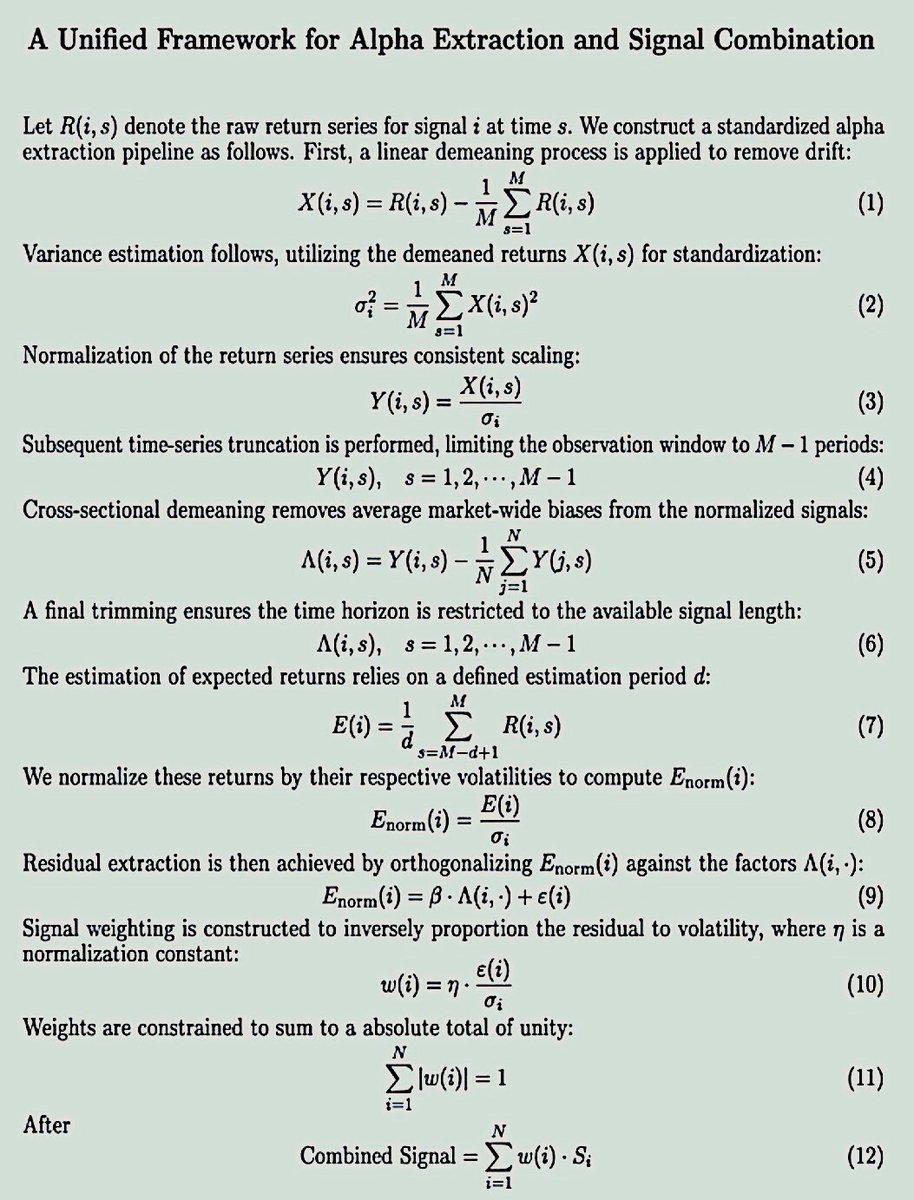
this quant paper is f*cking insane
it's basically the 12-step checklist hedge funds run through before they ever pull the trigger on a trade.
every step, every formula, full Python code, all of it laid out.
drop it into Claude and you'll have a working trading system by tonight.
the crazy part is most people are trading blind while this entire framework has been sitting out in the open the whole time.
full breakdown in the article below.
bookmark it before this thread gets buried.
A mathematician spent seventy-three minutes explaining why the models Wall
Street runs on are the wrong shape. The talk was not published until six years
after he died. It has 34,000 views.
The industry never argued with him. It just kept using the models.
His name was Benoit Mandelbrot, and his complaint was narrow. The mathematics
finance was built on assumes price moves cluster around an average and that
extreme moves are rare enough to ignore. He had been saying since the 1960s that
cotton prices did not behave that way, that no market did, and that the tails
were far heavier than the theory allowed.
Watch any minute of it and you get the same frame. A heavy old man in a
short-sleeved shirt and a loose tie, standing at a lectern, talking with his
hands.
There is not a single slide in the entire recording. No chart, no equation on a
screen, nothing to screenshot. The man who told finance its picture of the world
was the wrong shape gave seventy-three minutes without one picture.
That is why almost nobody finishes it. There is no way to skim a lecture with no
visuals. You either sit down and listen to him or you get nothing at all, and
most people chose nothing.
The talk is called The (Mis)Behavior of Markets: A Fractal View of Risk, Ruin
and Return. Note which word sits in the middle of that title.
Pareto counted and could not explain. Mandelbrot explained and was filed under
interesting. Both are still free, and the profession went on pricing risk as
though the bell curve were true.
THE GUY WHO WON ANTHROPIC'S HACKATHON JUST GAVE AWAY HIS ENTIRE CLAUDE CODE PLAYBOOK FOR FREE. 10 MONTHS OF WORK, ALL PUBLIC
Affaan Mustafa won the Anthropic x Forum Ventures hackathon by building a full startup in 8 hours with Claude Code. Then he open-sourced the exact setup that did it. It's called Everything Claude Code, and it turns Claude from one assistant into an entire engineering team
Repo: affaan-m/ecc
This isn't a prompt pack. It's a system he refined over 10+ months of daily use shipping real products
What's inside:
A huge library of skills, dozens of specialized subagents, and ready-made commands, all working together. Each piece does one job. One subagent reviews security against OWASP standards. One optimizes memory so Claude stops forgetting earlier decisions around hour three. One learns from your past sessions and projects so the setup gets smarter the more you use it. Others handle planning, test-driven development, and language-specific code review
Instead of one assistant writing code, you get an orchestrated team. A main session delegates to the right specialist when the task calls for it, the way a real dev team splits work
The best part: it's not locked to one tool. It runs in Claude Code, Cursor, Codex and OpenCode, across Windows, Mac and Linux. Free, MIT licensed
This is the difference between using Claude like a search box and running it like a team that ships. The guy spent 10 months figuring out what actually works so you don't have to
Bookmark this
🚨Anthropic just showed a 24-minute workshop on how to actually do prompts for Claude.
Taught by the people who built it.
Free. No registration. No paywall.
I've seen $300 courses that don't cover what they teach in the first 8 minutes.
Watch it and bookmark it now!
Claude opus 4.8 dropped and Anthropic released Boris Cherny's prompt workshop
One of the people actually building claude explains how to use it properly
Free
No signup
No paywall
The first 8 minutes are better than most $300 ai courses
Context
Task structure
Cleaner outputs
Fewer wasted prompts
Watch it and bookmark it before this gets sold back to you as a course
Everyone keeps saying AI gives them garbage. Anthropic just proved the problem is you, not the model.
This 24 minute video rebuilds one prompt from useless to flawless. Save it for the evening with tea - now that Opus 4.8 is here, getting this is everything.
COMPLETE VOLUME PROFILE TUTORIAL
0:30 - foundations
0:55 - tick size
2:14 - profile components
2:42 - volume gaps
2:57 - high volume nodes
4:12 - visible range tool
4:57 - fixed range tool
5:38 - trending moves
6:53 - reading the profile
8:49 - ranges
9:20 - selecting a range
10:38 - reading a range
11:51 - line in the sand levels
12:43 - balance vs imbalance
13:39 - prior areas of balance
14:52 - high conviction plays
16:33 - other tools
@RajaBadar011@pmlndigitalpk 1-48 hours for locked account and 5-10 days for hacked account and as per naseem account was hacked 🤔
I hope things won't get worse for him from here on.
STEP BY STEP TUTORIAL ON HOW TO READ THE DOM
0:11 - layout overview
0:52 - dom basics
2:30 - tick sizes
3:21 - slippage
4:27 - pulling & stacking
5:53 - aggregated data
6:54 - iceberg orders
9:58 - footprint with dom
This is insane 😳
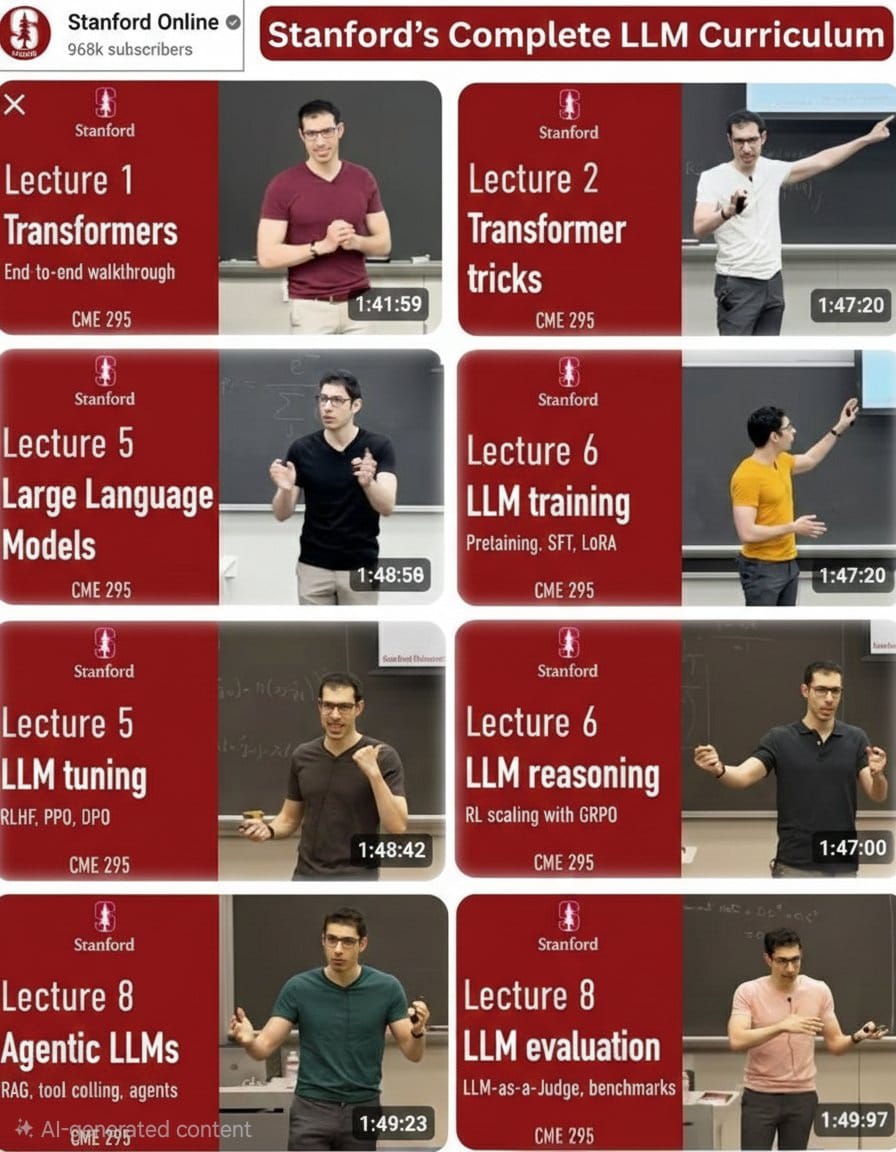
Most people are just using AI tools
Very few actually understand how they work
So I collected Stanford’s complete LLM curriculum
and turned it into a step-by-step learning path
Worth over $500
Giving it away free for the first 4,500 people
Transformers → Training → Alignment → Agents → Evaluation
Study this once and you’ll stop guessing with prompts
and start thinking like a real AI engineer
How to get it:
Follow must (so i can dm you)
Rt and comment 'LLM'
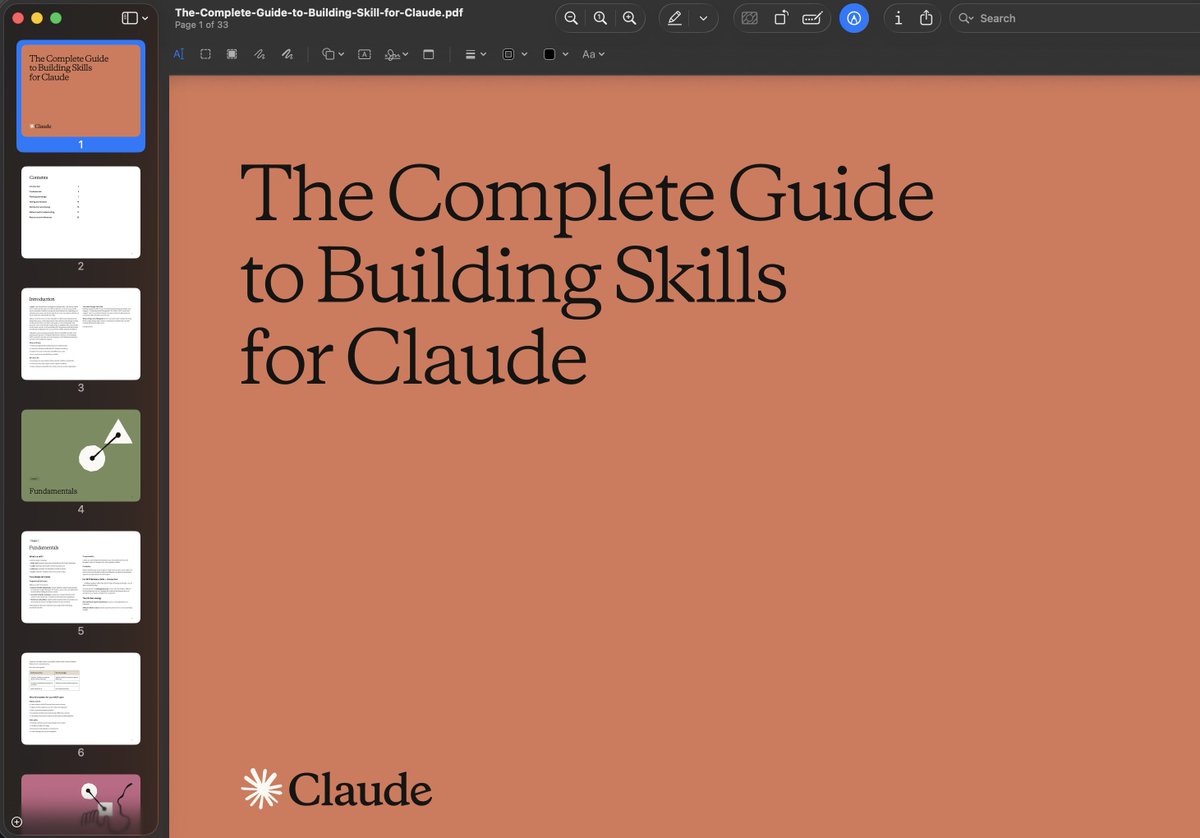
Anthropic released 32-page guide on building Claude Skills
here's the Full Breakdown ( in <350 words )
1/ Claude Skills
> A skill is a folder with instructions that teaches Claude how to handle specific tasks once, then benefit forever.
> Think of it like this: MCP gives Claude access to your tools (Notion, Linear, Figma).
> Skills teach Claude how to use those tools the way your team actually works.
The guide breaks down into 3 core use cases:
1/ Document Creation
Create consistent output (presentations, code, designs) following your exact standards without re-explaining style guides every time.
2/ Workflow Automation
Multi-step processes that need consistent methodology. Example: sprint planning that fetches project status, analyzes velocity, suggests priorities, creates tasks automatically.
3/ MCP Enhancement
Layer expertise onto tool access. Your skill knows the workflows, catches errors, applies domain knowledge your team has built over years.
The technical setup is simpler than you'd think:
1/Required: One https://t.co/pt5Pefzhdy file with YAML frontmatter
Optional: Scripts, reference docs, templates
2/The YAML frontmatter is critical. It tells Claude when to load your skill without burning tokens on irrelevant context.
Two fields matter most:
- name (kebab-case, no spaces)
- description (what it does + when to trigger)
Get the description wrong and your skill never loads. Get it right and Claude knows exactly when you need it.
The guide includes 5 proven patterns:
1/ Sequential Workflow:
> Step-by-step processes in specific order (onboarding, deployment, compliance checks)
2/ Multi-MCP Coordination:
> Workflows spanning multiple services (design handoff from Figma to Linear to Slack)
3/ Iterative Refinement:
> Output that improves through validation loops (report generation with quality checks)
4/ Context-Aware Selection:
> Same outcome, different tools based on file type, size, or context
5/ Domain Intelligence:
> Embedded expertise beyond tool access (financial compliance rules, security protocols)
Common mistakes to avoid:
>. Vague descriptions that never trigger
> Instructions buried in verbose content
> Missing error handling for MCP calls
> Trying to do too much in one skill
The underlying insight:
> AI doesn't need to be general-purpose every conversation.
> Give it specialized knowledge for your specific workflows and it becomes genuinely useful for work.