🚨 Elon Musk says SpaceX is going public because the company is entering a major investment phase
Speaking at J.P. Morgan, he highlighted plans for 100,000+ next-generation Starlink satellites, AI data centers in space, and continued development of Starship, which he believes can dramatically lower the cost of reaching orbit.
Musk says these projects could open the door to entirely new industries in space. 🚀 $SPCX
00:00 Welcome to JPMorgan
02:45 Why SpaceX Goes Public
03:28 Starlink V3 and Space Energy
07:46 Moon to Mars Roadmap
10:18 Starship Reusability Breakthrough
12:06 Next Gen Starlink Plans
13:54 AI Data Centers in Orbit
15:07 Terafab and US Chip Supply
16:35 AI Strategy and Grok
18:38 Culture and Building the Bench
Happy 24th Birthday @SpaceX! 🚀
Exactly 24 years ago today - March 14, 2002 - Elon founded SpaceX.
It only makes sense to now IPO the world’s most innovative company so any human can own a piece of this multiplanetary future!
Ad Astra!
Many talented people over the past few years were declined an offer or even an interview @xAI. My apologies.
@BarisAkis and I are going through the company interview history and reaching back out to promising candidates.
Yes, this is scary and terrifying knowing it could absolutely be misused in the wrong hands. But selfies and photos have always been unsafe when shared on social media. Our eyes and brain have been able to identify a location based on a photo since 1826 when Joseph Nicéphore Niépce invented heliography and made the photo of "View from the Window at Le Gras" No AI, no metadata, no EXIF data, just light-sensitive chemistry and cognitive recognition. This is biology and science. Although, I wouldn't have easily known the details without AI ;-)
https://t.co/3Y6oDSvrrG
@forallcurious Are you suggesting that our known universe is in a gigantic egg that’s going to hatch? Wonder what we will be? Does this mean the egg did come first?
The math on this project should mass-humble every AI lab on the planet.
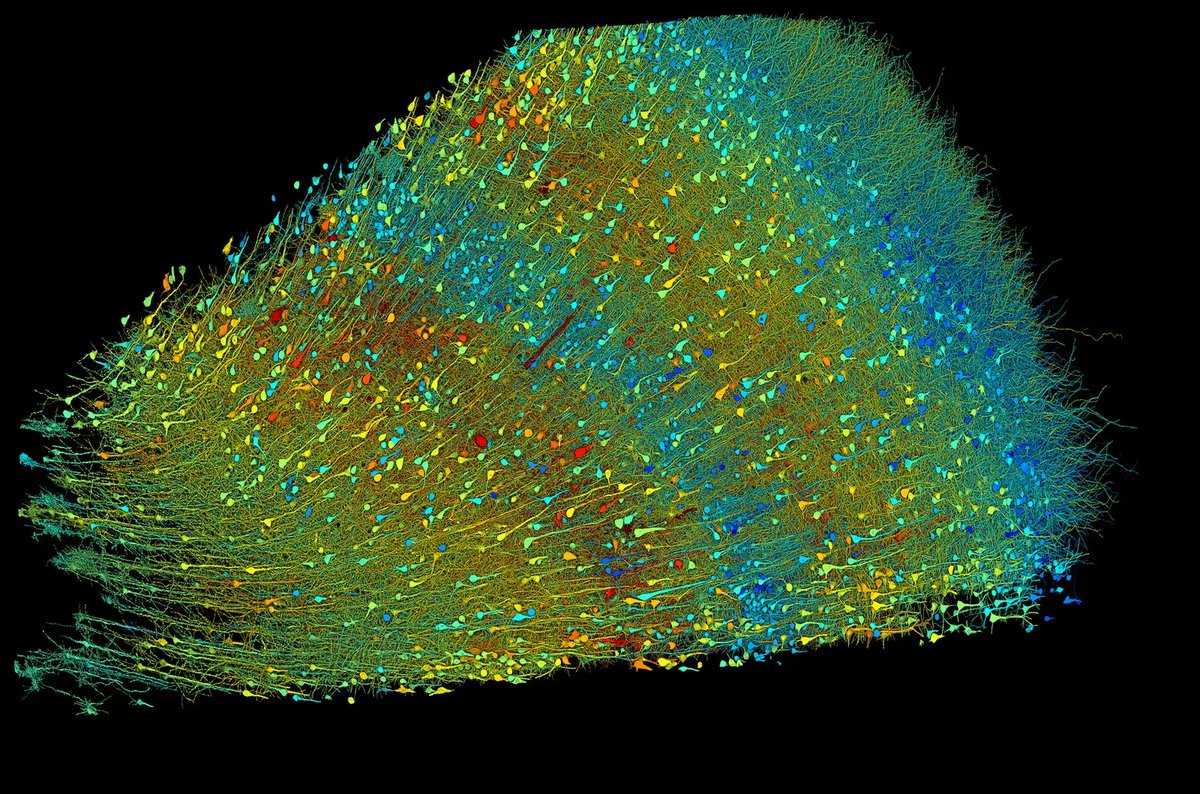
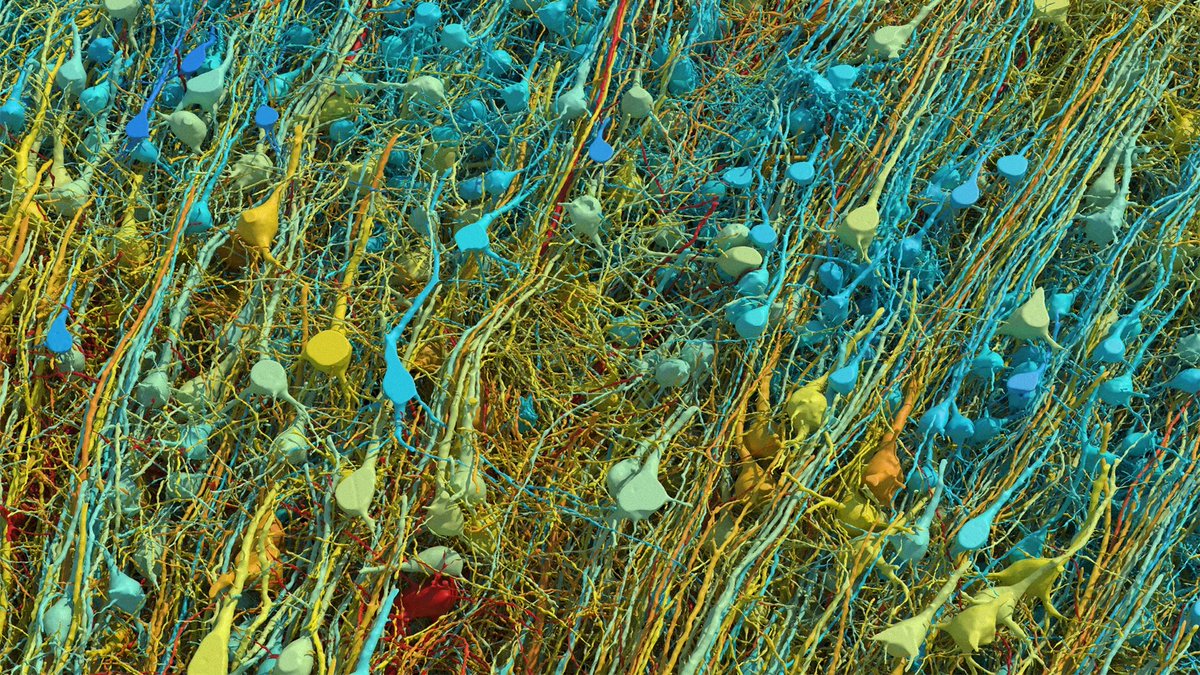
1 cubic millimeter. One-millionth of a human brain. Harvard and Google spent 10 years mapping it. The imaging alone took 326 days. They sliced the tissue into 5,000 wafers each 30 nanometers thick, ran them through a $6 million electron microscope, then needed Google’s ML models to stitch the 3D reconstruction because no human team could process the output.
The result: 57,000 cells, 150 million synapses, 230 millimeters of blood vessels, compressed into 1.4 petabytes of raw data. For context, 1.4 petabytes is roughly 1.4 million gigabytes. From a speck smaller than a grain of rice.
Now scale that. The full human brain is one million times larger. Mapping the whole thing at this resolution would produce approximately 1.4 zettabytes of data. That’s roughly equal to all the data generated on Earth in a single year. The storage alone would cost an estimated $50 billion and require a 140-acre data center, which would make it the largest on the planet.
And they found things textbooks don’t contain. One neuron had over 5,000 connection points. Some axons had coiled themselves into tight whorls for completely unknown reasons. Pairs of cell clusters grew in mirror images of each other. Jeff Lichtman, the Harvard lead, said there’s “a chasm between what we already know and what we need to know.”
This is why the next step isn’t a human brain. It’s a mouse hippocampus, 10 cubic millimeters, over the next five years. Because even a mouse brain is 1,000x larger than what they just mapped, and the full mouse connectome is the proof of concept before anyone attempts the human one.
We’re building AI systems that loosely mimic neural networks while still unable to fully read the wiring diagram of a single cubic millimeter of the thing we’re trying to imitate. The original is 1.4 petabytes per millionth of its volume. Every AI model on Earth fits in a fraction of that.
The brain runs on 20 watts and fits in your skull. The data center required to merely describe one-millionth of it would span 140 acres.
Matthew McConaughey predicts to Timothée Chalamet that AI actors will crash the Oscars.
“It’s damn sure going to infiltrate our category.”
“Will we, in five years, have Best AI Actor? Maybe. It’s going to be in front of us in ways we don’t even see.”