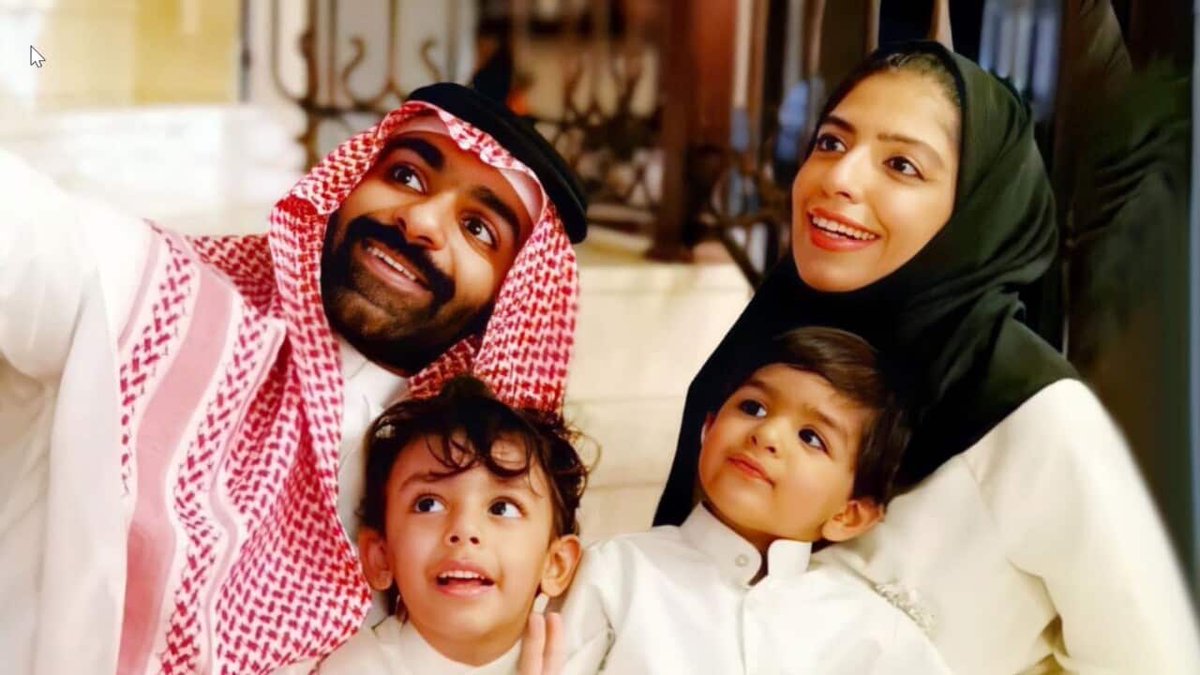
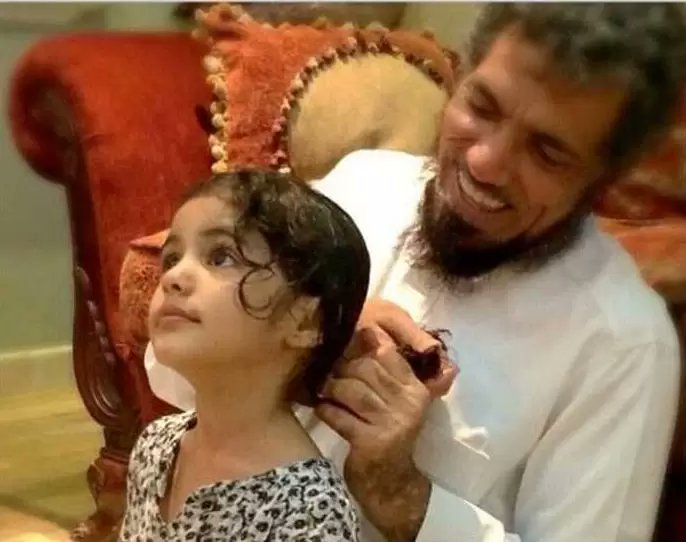
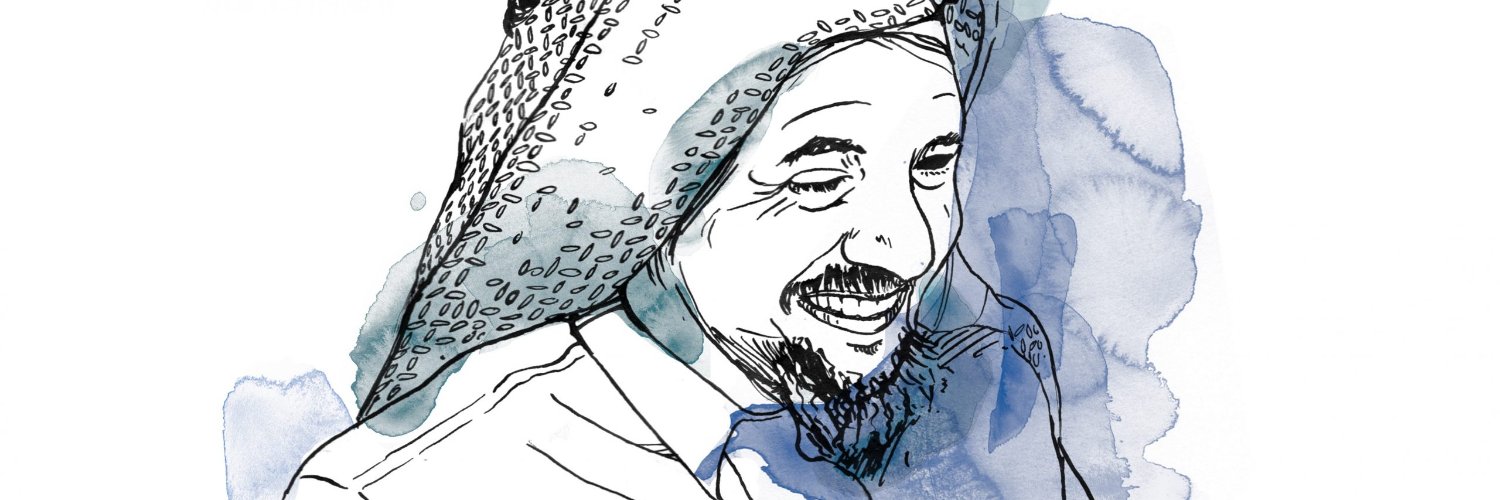
Thinking today of the thousands of political prisoners unable to be with their families on this day.
People like Salman al-Odah, Abdulhadi al-Khawaja, Salma al-Shehab, Ahmed Mansoor and so many others who have been unjustly imprisoned. #FreeThemAll#EidAlFitr
CPJ is deeply alarmed by reports that Palestinian journalist Mujahed Bani Moflh, who was released from Israeli custody this year, is facing life-altering health consequences. Bani Moflh was reportedly subjected to serious abuse and medical neglect during his detention, including the denial of care for a pre-existing condition. His family attributes his current condition to his mistreatment in custody. His failing health reflects a broader issue: no journalist should ever leave prison only to face a prolonged hospitalization.
Can't stop thinking about the fact that there's a Pakistani Panjabi movie from 1986 where Hitler survives WW2, runs off to Panjab, settles down with a local wife and raises a son named Hitlar who grows up to be a gangster in rural Panjab.
Here is the text of the Israel-Lebanon Framework Agreement signed yesterday in Washington. https://t.co/GUFtmgkcIs
There are several takeaways from the agreement:
(1) The agreement strains to assert Lebanese sovereignty, but the reality is that Lebanon's sovereignty is one only in name. The fact that Hassan Fadlallah reacted to the agreement by saying it violated the U.S. agreement reached with Iran—an agreement to which neither Israel nor Lebanon is a party—showed what Lebanon is up against: a Hezbollah whose sole compass remains Iran, which therefore refuses to recognize Lebanon and its government as legitimate, independent entities.
(2) The agreement places the burden of implementation on Lebanon, making Israeli steps conditional on prior Lebanese measures. There is little real reciprocity here, and no commitment that Israel will withdraw from Lebanon if the conditions it has imposed are not met. The most that the Israelis say is that "pursuant to the above [conditions], the Government of Israel declares that it has no territorial ambitions in Lebanon." This is a vague phrase offering no commitments on returning occupied territory.
(3) The most troublesome passage is this one: "The Government of Lebanon will rebuild the State's monopoly on the use of force, achieve the complete and verified disarmament of all non-state armed groups, and ensure that such groups will have no military or security role and no armed capabilities anywhere in Lebanon. The Government of Lebanon herewith requests the support of international and particularly Arab partners, under the leadership of the United States, to achieve this outcome."
This suggests that, in the absence of a consensual disarmament of Hezbollah, the agreement compels the Lebanese state to enter into a confrontation, perhaps a military confrontation, with Hezbollah. There are no guarantees it may prevail in such a case, and it's no surprise that Israeli commentators have described the agreement as one that may provoke a civil war in Lebanon, which the Israelis would very likely welcome, frankly. But since neither the army nor Hezbollah wants to enter a civil war, therefore will hesitate to enter into armed conflict with each other, Israel has an excuse to stay in Lebanon indefinitely.
(3) On the so-called "pilot zones," the parties agreed to two such zones, and while news reports have suggested that one of these is located south of the Litani, nothing in the agreement specifies where these zones are located. The agreement also speaks of a Security Annex, in which the components of the process of disarmament, the restoration of state sovereignty, and Israel's withdrawals "will be" detailed. The wording suggests it is still a work in progress. That is not particularly reassuring.
(4) The agreement reiterates that either side can continue to exercise "their inherent right to defend themselves, as recognized in the Charter of the United Nations and consistent with applicable international law." This means that the Israelis will continue to engage in military action in Lebanon, much as they did after the November 2024 agreement, and claim that it is in "self-defense." However, the accord also reaffirms that no third party may exercise that right of self-defense on the parties' behalf, which effectively delegitimizes Hezbollah's latitude to defend itself in the event of Israeli actions.
(5) The agreement fails to mention specifically a number of prior Lebanese demands, namely the release of Lebanese held in Israeli prisons and the process of border demarcation—a key component of Israeli recognition of Lebanon's international borders.
(6) The agreement also betrays heavy reliance on the United States, especially in this passage: "The Government of Lebanon welcomes the readiness of the United States to support such efforts, recognizing that any new U.S. assistance will be strictly conditioned on verifiable milestones, full transparency, demonstrated results, and ongoing oversight. This effort will enable the safe and orderly re-establishment of Lebanese sovereignty, also contributing to the broader stability and security of the entire Middle East." Too much reliance on the Americans is never a good idea. What this outlines, furthermore, is that Lebanon will have to constantly satisfy the United States with "verifiable milestones," which shows just how limited is Lebanon's sovereignty in reality.
Overall, this is quite a bad agreement for Lebanon, but also one that is a logical consequence of the fact that the state has no cards to play. This has led some enthusiasts to say that Hezbollah is that card. I beg to differ. Hezbollah is the primary cause of the state's weakness, and let's get over the illusion the party has mounted decisive "resistance" to the Israelis, who have leveled most Shiite villages south of the Litani, and are now destroying villages north of it. With more resistance like this, not much will be left of Lebanon.
I have much more to say about the agreement, but for now these are my preliminary thoughts.
Israeli forces arrested a prominent 71-year-old Palestinian physician known as the “doctor of the poor” in a pre-dawn raid on his home in the occupied West Bank, prompting widespread condemnation. https://t.co/SHJV20udOo
To every New Yorker with family in Venezuela: we are holding you close.
The devastating earthquakes this week have claimed hundreds of lives and left thousands more searching for loved ones.
If you're able, here's how you can support relief efforts: https://t.co/n7dTWcItqp
“The occupiers want the land without its people.”
The Palestinian village of Taybeh is one of the oldest Christian communities in the world. Israeli settlers set it on fire.
Young Saudi dissident Youssef al-Manasef is at imminent risk of execution for protesting as a child.
As @PIF_en's @NUFC ownership nears five years, the authorities' rights record continues to worsen.
Take action:
➡️ https://t.co/gbIBlV3iEV
#السعودية_الرأس_الأخضر
On this day 44 years ago, two of the greatest sci-fi films ever made hit theaters on the very same day: BLADE RUNNER and THE THING.
Both underperformed on release, but time has transformed them into undisputed genre classics.
"The hardest decision we had to make in completing this report was.. not to name the Palestinian children, whose deaths, injuries & suffering we describe.. we didn't name them because we feared the consequences for their families"
He means Israel would go after them too.
This is just vile. Imagine having every privilege and opportunity in the world and choosing to dedicate your platform to spreading hatred about vulnerable people.
Hope you find whatever humanity you’re missing, Megyn.
On April 28, Human Rights Watch warned that 65 #Ethiopian migrants were at imminent risk of execution in #SaudiArabia. Since then, 7 out of that 65 have been executed for drug related offences.
Five were executed today, June 23rd.
https://t.co/1qtY2BPHqk