Who Are The Top Diamond NV-Centre Quantum Computing Companies in 2026?
Most quantum computing discussions focus on superconducting chips or ion traps. Diamond NV centres are a different story. The qubit is a defect in a carbon crystal. It runs at room temperature. It fits in your hand. And in 2026, it is already shipping products to hospitals and semiconductor factories.
Read the full list below.
https://t.co/EGd0uFKdBy
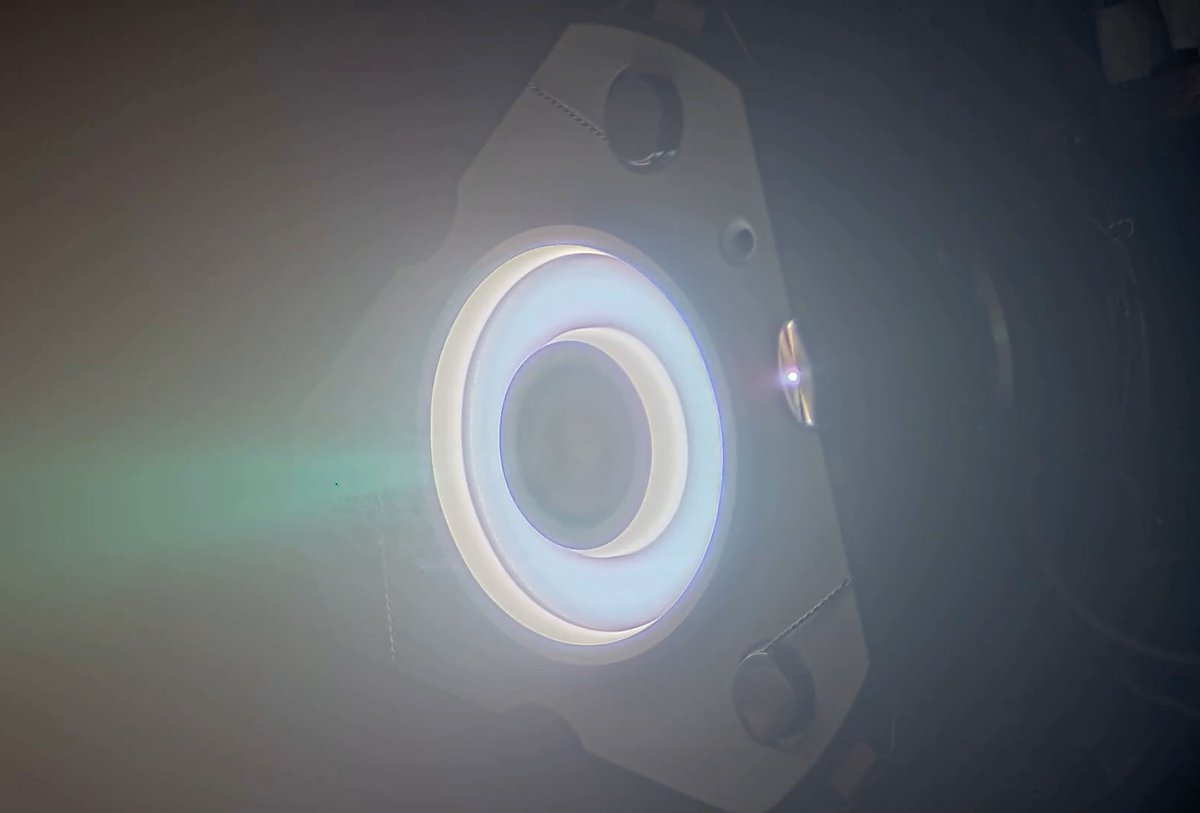
Full test success!
Our team verified nominal operation of the thruster with our avionics and flight hardware at all planned power levels. We also successfully fired the thruster while gimbaling. Thanks to the @AerospaceCorp EP lab for hosting us for this test campaign.
TRG035 is an experimental monoclonal antibody drug developed by Toregem Biopharma, a Kyoto University spin-off, designed to enable humans to regrow lost teeth by targeting the USAG-1 protein, which naturally suppresses tooth development. By inhibiting USAG-1, the drug activates bone morphogenetic proteins (BMPs) that stimulate dormant tooth buds—latent structures present in the jaw—to form new teeth, potentially allowing a "third set" beyond baby and adult teeth.
Mechanism: Injected as a liquid into the gums near the missing tooth site, it promotes the growth of functional enamel and dentin from stem cells over several months, without needing implants or bridges.
Target Conditions: Primarily congenital tooth agenesis (missing teeth from birth), but also potential for teeth lost to injury, decay, or disease.
Development History:
2018: Proven effective in mice.
2021: Successful in ferrets.
2023: Funding raised for human trials.
Trial Status (as of October 2025):
Phase I safety trials began in October 2024 at Kyoto University Hospital with healthy adults to assess side effects from single doses.
Trials for children aged 2–6 with congenital tooth agenesis started in 2025, focusing on efficacy with one dose per child.
Expected Availability: Commercial launch targeted for 2030, pending successful trials.
This breakthrough could impact millions worldwide, though it's still in early stages with no guaranteed outcomes yet. Ongoing research by Dr. Katsu Takahashi and his team at Kitano Hospital continues to refine the drug.
Biosplice Therapeutics, Inc., a biotechnology company developing therapeutics based on small-molecule inhibition of DYRK/CLK kinases, entered a collaboration with @novonordisk to develop drug candidates for the treatment of #diabetes.
https://t.co/tHv2UYZJkj
The round considered the Classic McEliece, BIKE, HQC, and the broken SIKE scheme. NIST notes that HQC will not replace the ML-KEM standard, but will be used as a fallback in case ML-KEM is vulnerable.
QUANTUMResistant $cell
On March 11, 2025, Round 4 of the NIST Challenge to Standardize Post-Quantum Cryptographic Key Encapsulation Mechanisms concluded. The only scheme recommended for standardization was the HQC (Hamming Quasi-Cyclic) scheme, based on error-correcting codes.
The post-quantum age is unfolding not only in hardware innovation, but also in mathematics!
Jintai Ding, Dean of Maths @XJTLU - whom @naeper recently interviewed in Hong Kong - just set a new record in the International Open Darmstadt SVP Challenge, stress-testing lattice-based cryptography for the quantum future:
https://t.co/nwMvgRhpdg
Shout out to @NannaSignan for the link!
China is taking significant steps in the realm of cybersecurity by initiating a global call for post-quantum cryptographic algorithms.
https://t.co/p7XKGe16ch
China is taking significant steps in the realm of cybersecurity by initiating a global call for post-quantum cryptographic algorithms.
https://t.co/p7XKGe16ch
Showing @SEALSQcorp $LAES postquantum chip from @Nasdaq to the world . 🚀 Future-Proof Security with SEALSQ Post-Quantum Chips! 🔐💡
SEALSQ’s Post-Quantum Chips protect against quantum cyber threats by using next-gen cryptography (CRYSTALS-Kyber & Dilithium).