Pulled out all stops for this basilar aneurysm: rapid ventricular pacing to soften aneurysm; tandem curved clipping to reduce its girth; tentorium disassembly to increase transsylvian exposure for proximal control lateral to trochlear n.; aneurysm clipping thru 3 triangles: optic-carotid, carotid-oculomotor, oculomotor-tentorium…
Did not expect a question that starts out 'Do you think before you speak?' to go so well. A+ question from Charlotte Harpur A++ response from Eileen Gu.
These local news interviews from the 2010s basically built the internet as we know it.
Not AI, no script, no filter — and we still quote them daily. The originals. 👑😂
Communication expert Jefferson Fisher showed me something I won’t forget...
He calls it the string theory.
When two people are talking, there’s an invisible string between them.
If you check your phone, the string goes slack. Even just having it on the table breaks the connection.
Here’s how he explained it 👇🏾
Flashback to July 2022: Elon Musk showing Everyday Astronaut the massive leap from messy Raptor 1 (‘Christmas tree’ vibes 😂) to clean Raptor 2 – 230 tons thrust at 300 bar, tons of parts deleted!
Fast-forward to 2026: We’re already on Raptor 3 – 280+ tons thrust, even simpler design, no external pipes, in production (100+ built!), testing like crazy, set for Starship V3 flights soon. Insane progress in ~3.5 years!
“Most people don’t want be pushed that hard. They want to be pushed to their level of comfort. You need coaches that push you outside your comfort zone because that’s how you grow and that’s how you develop self confidence and self esteem. They push you to deal with failure,” Tom Brady
🎥 @dc_mma
Always remember the first one.
In 2015, SpaceX landed Falcon 9’s first stage back on Earth.
Mission control went silent for a beat, then everyone exploded like kids:
shouting, jumping, hugging. Elon just stared, then cracked a huge grin: pure relief + “we actually did it.”
You don’t need to be into metal to get chills from this.
Margarita Sipatova turns Nothing Else Matters into something so raw and beautiful on piano. Still gives me goosebumps every time. 🖤
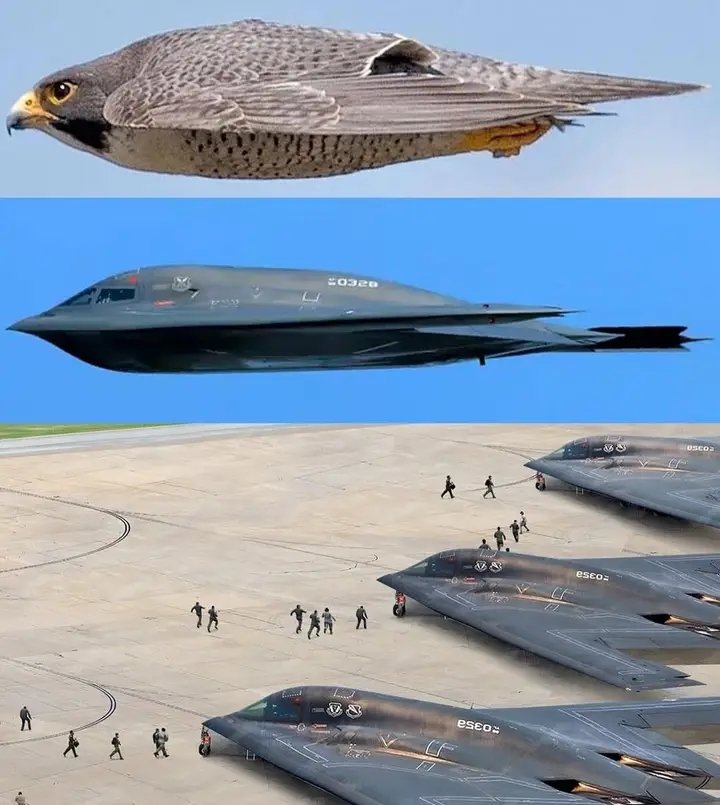
When a peregrine falcon dives for prey, it becomes the fastest animal on Earth, reaching speeds over 400 km/h. At such velocity, rushing air should overwhelm its lungs. But it doesn’t.
The secret lies in tiny bony structures inside its nostrils called tubercles. They regulate and slow incoming airflow during high-speed dives, protecting the lungs and allowing the falcon to breathe and stay in control under extreme aerodynamic stress.
Everything about the falcon is built for the dive: tapered wings to reduce drag, a rigid streamlined body to minimize turbulence, and powerful talons that strike with precision at terminal speed. Every feather is positioned for stability.
Engineers have long studied this design. Principles seen in birds of prey airflow control, wing shaping, and stability during steep dives have influenced aerospace research and high-speed aircraft design. Nature often solves engineering problems long before humans do.
One small bone in a bird’s nose.
One of the fastest dives on Earth.
And lessons that continue to shape human innovation.
Nature engineered it first.