12 of the Major Consulting Reports on Agentic AI
__________
Your board is reading these reports.
Your strategy team is summarizing them.
Your execution team needs something they do not contain.
This curation lists 12 of the major consulting reports on agentic AI from the last six months. Read them all and you will hear the same story told in different vocabularies.
The wave is here. Data and governance are the foundation. Org design is the bottleneck. The opportunity is real.
Eight major firms reaching the same conclusion in different vocabularies is not market noise. It is the strongest signal you will get this year.
None of these reports will tell you what to do on Monday.
The reports are excellent at the what. They are silent on the how. The companies that read these as strategy will build decks. The companies that read them as a brief will build agents.
I have watched Fortune 500 leadership teams read all twelve and still produce the same pattern. A great strategy deck. A confident board update. A pilot that quietly never scales.
The reports keep arriving. The architecture is still missing. That gap is the AI Execution Gap at enterprise scale.
The reading list, in the order I would walk it.
The current state
1/ The State of AI in 2025 (McKinsey) → https://t.co/fX1c8TP2HP
2/ AI Radar 2026 (BCG) → https://t.co/3G4ghQfQMm
3/ State of AI in the Enterprise 2026 (Deloitte) → https://t.co/fYzVaVm5rm
The opportunity scale
4/ Seizing the Agentic AI Advantage (McKinsey) → https://t.co/2VuYe4LpTQ
5/ 2026 AI Business Predictions (PwC) → https://t.co/2shSAEo16I
The foundation
6/ Technology Report 2025 (Bain) → https://t.co/SfjaiKRvSl
7/ Global AI Pulse Q1 2026 (KPMG) → https://t.co/ERIT7HwCh6
The oversight gap
8/ AI Pulse Survey Wave 3 (EY) → https://t.co/57UICZTU6P
9/ AI Agents in Action (WEF x Capgemini) → https://t.co/XhMkFvcQDF
The org rewire
10/ The AI Transformation Manifesto (McKinsey) → https://t.co/pTibHm889q
The 2028 horizon
11/ Agentic Enterprise 2028 (Deloitte) → https://t.co/nn0YhPxnBZ
12/ The $200B Agentic AI Opportunity (BCG) → https://t.co/mLvmPuE1k3
Pick the report that names the gap inside your company most directly. The one that makes you wince when you reach the conclusion. That is your diagnostic. Start there.
💾 Save this as your agentic AI reading list for the quarter.
1. Follow @coder_surya
2. Save the post.
3. Repost to your network.
4. Join AI Community: https://t.co/ioQEJKhR1q
____________________________
#ai #future #innovation #education #Creativity
Preparing for agentic AI isn’t just an AI challenge — it’s a data leadership challenge.
The teams gaining momentum aren’t doing everything at once. They're focused, modernize architecture step by step and build real discipline around data quality. https://t.co/LTXeZaS0vU
First Google, then Microsoft, and now AWS!
It seems like every week one of the tech giants is integrating with the same protocol.
If you haven’t been following - I’m talking about AG-UI
AG-UI (the Agent-User Interaction protocol) connects any agentic backend to the frontend.
It is a general-purpose, bi-directional connection between a user-facing application and any agentic backend.
AG-UI has first party integrations & partnerships with Google’s ADK, Microsoft’s Agent Framework, AWS Strands, LangGraph, CrewAI, PydanticAI, Mastra, LlamaIndex, and more.
And CopilotKit, the company behind AG-UI, provides developers with powerful building blocks on top of the protocol, which handle all the mess of connecting your agent to the frontend.
I’ve shared about this in the past, but I’ve been keeping my eye on it.
Recently, CopilotKit and AG-UI collectively passed 200,000 weekly downloads and 35k stars on GitHub, and momentum is only accelerating.
It makes sense why every agent framework is integrating with AG-UI.
Out-of-the-box, you instantly get:
1./ Real-time shared state between your frontend and agent
2./ UI components that stream reasoning + tool calls (pre-built or fully headless)
3./ Native A2A + MCP support
4./ A full framework to build "Cursor for X" apps
AND NOW:
5./ A set of new internal primitives built specifically around AG-UI
6./ A new useAgent() React hook that lets you connect any AG-UI agent to your frontend with a single line
This is quickly becoming the connective tissue of the agentic stack.
And with the upcoming CopilotKit v1.50 release, the entire developer experience gets drastically cleaner and more powerful.
If you want to build more than just an agent, but a real full stack agentic application, the AG-UI ecosystem is the place to go.
Resources to get started:
👉 AG-UI Repo: https://t.co/nZMtjrEwxA
👉 CopilotKit Quickstart: https://t.co/o0bZies8kW🪁
NeurIPS received 21,575 paper submissions this year. Our Agentic Reviewer, released last week, just surpassed this in number of papers submitted and reviewed. It's clear agentic paper reviewing is here to stay and will be impactful!
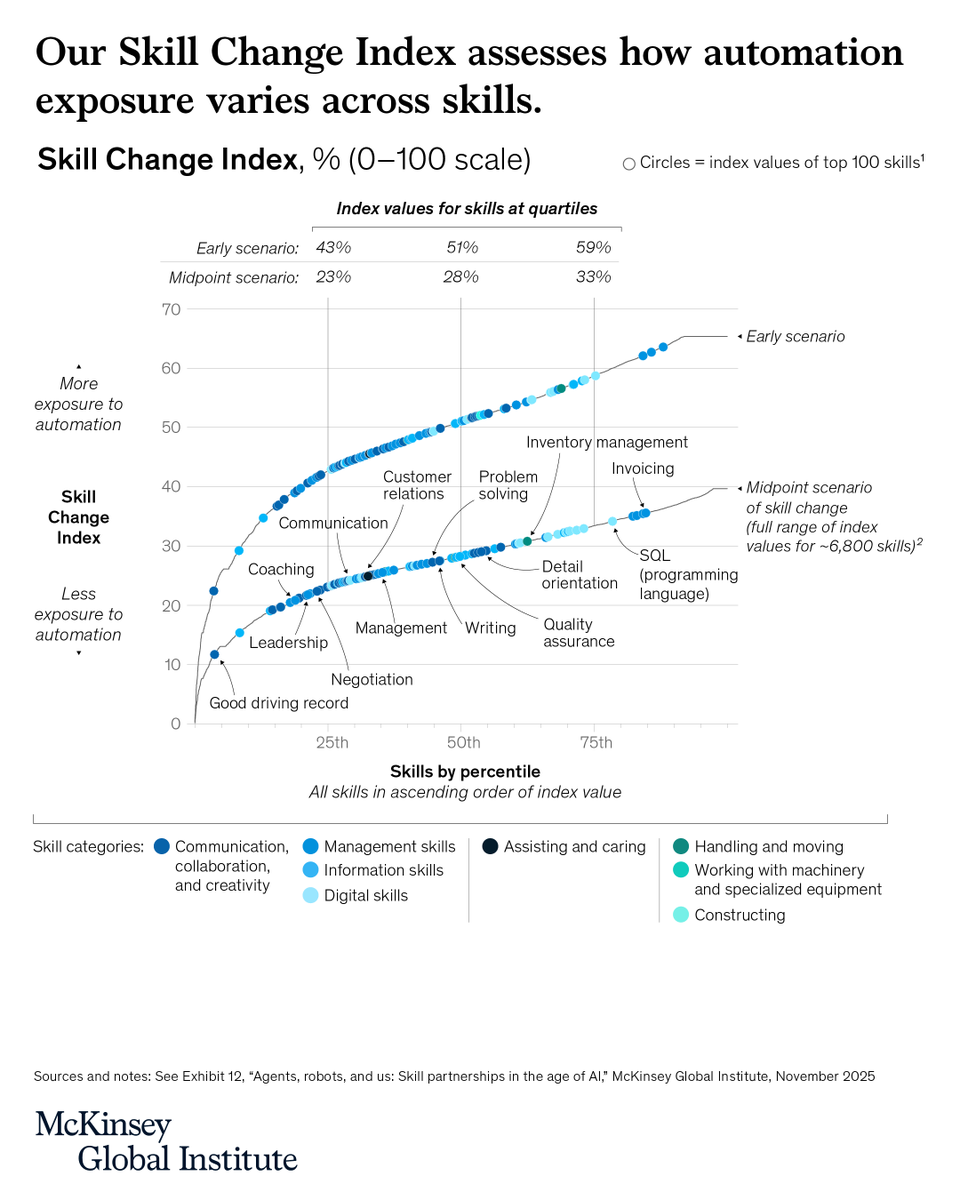
AI won’t make most human skills obsolete, but it will change how they’re used.
Negotiation, problem solving, and leadership will matter more than ever as people work alongside agents and robots.
Explore MGI’s new Skill Change Index: https://t.co/h1K56uPqPo
IBM just released small swiss army knife for the document models: granite-docling-258M 🔥
not only a document converter but also can do document question answering, understand multiple languages 🤯
with Apache 2.0 license 👏
There is significant unmet demand for developers who understand AI. At the same time, because most universities have not yet adapted their curricula to the new reality of programming jobs being much more productive with AI tools, there is also an uptick in unemployment of recent CS graduates.
When I interview AI engineers — people skilled at building AI applications — I look for people who can:
- Use AI assistance to rapidly engineer software systems
- Use AI building blocks like prompting, RAG, evals, agentic workflows, and machine learning to build applications
- Prototype and iterate rapidly
Someone with these skills can get a massively greater amount done than someone who writes code the way we did in 2022, before the advent of Generative AI. I talk to large businesses every week that would love to hire hundreds or more people with these skills, as well as startups that have great ideas but not enough engineers to build them. As more businesses adopt AI, I expect this talent shortage only to grow! At the same time, recent CS graduates face an increased unemployment rate, though the underemployment rate — of graduates doing work that doesn’t require a degree — is still lower than for most other majors. This is why we hear simultaneously anecdotes of unemployed CS graduates and also of rising salaries for in-demand AI engineers.
When programming evolved from punchcards to keyboard and terminal, employers continued to hire punchcard programmers for a while. But eventually, all developers had to switch to the new way of coding. AI engineering is similarly creating a huge wave of change.
There is a stereotype of “AI Native” fresh college graduates who outperform experienced developers. There is some truth to this. Multiple times, I have hired, for full-stack software engineering, a new grad who really knows AI over an experienced developer who still works 2022-style. But the best developers I know aren’t recent graduates (no offense to the fresh grads!). They are experienced developers who have been on top of changes in AI. The most productive programmers today deeply understand computers, how to architect software, and how to make complex tradeoffs — and who additionally are familiar with cutting-edge AI tools.
Sure, some skills from 2022 are becoming obsolete. For example, a lot of coding syntax that we had to memorize back then is no longer important, since we no longer need to code by hand as much. But even if, say, 30% of CS knowledge is obsolete, the remaining 70% — complemented with modern AI knowledge — is what makes really productive developers. (Even after punch cards became obsolete, a fundamental understanding of programming was very helpful for typing code into a keyboard.)
Without understanding how computers work, you can’t just “vibe code” your way to greatness. Fundamentals are still important, and for those who additionally understand AI, job opportunities are numerous!
[Original text: https://t.co/nqzPC6eUpR ]
🚨BREAKING: OpenAI just got left behind.
Claude can now control your computer and iPhone.
Here're 11 powerful Claude features you'll wish you knew sooner:
Eric Schmidt says intelligence is about to decouple from us.
“The computers are now doing self-improvement.. They don’t have to listen to us anymore.”
Within six years: a mind smarter than the sum of humans -- scaled, recursive, free. We have no language for what’s coming.
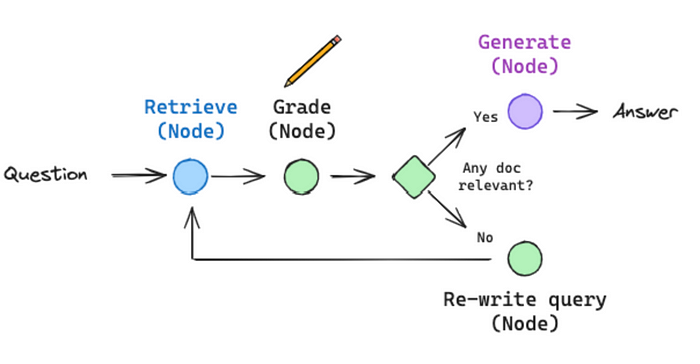
🤖 Build AI Agents Tutorial
Learn to create AI agents and chatbots with LangGraph. This hands-on guide covers essential concepts like Nodes, States, and Edges, featuring code examples and a full GitHub repository.
Start building your AI agents today 👉 https://t.co/2h9IiYo96V
this is.. holy sh*t..
text to app AI agent is here
Rork now can build apps with one click in mins, and publish on TestFlight directly. no code needed. fully functional
10 example:
1. build an Airbnb clone app (you can test the app, link in comment )
What a crazy week in AI 🤯
- OpenAI Agents
- Stargate Project
- Claude Citations
- Freepik Imagen 3
- DeepSeek-R1 model
- Perplexity AI Assistant
- Gemini 2.0 Flash Thinking
- Tendent 3D Asset Creation
- ByteDance Reasoning Agent
Here’s everything you need to know:
A GitHub repository offering tutorials, real-world applications, and examples for LLMs, RAGs, and AI agents, open for contributions under the MIT License
CISO Assistant: an open-source tool for managing Governance, Risk, and Compliance (GRC) across over 70 frameworks, including NIST CSF, ISO 27001, and SOC2, with features for risk assessment, audit management, and compliance tracking












![AndrewYNg's tweet photo. There is significant unmet demand for developers who understand AI. At the same time, because most universities have not yet adapted their curricula to the new reality of programming jobs being much more productive with AI tools, there is also an uptick in unemployment of recent CS graduates.
When I interview AI engineers — people skilled at building AI applications — I look for people who can:
- Use AI assistance to rapidly engineer software systems
- Use AI building blocks like prompting, RAG, evals, agentic workflows, and machine learning to build applications
- Prototype and iterate rapidly
Someone with these skills can get a massively greater amount done than someone who writes code the way we did in 2022, before the advent of Generative AI. I talk to large businesses every week that would love to hire hundreds or more people with these skills, as well as startups that have great ideas but not enough engineers to build them. As more businesses adopt AI, I expect this talent shortage only to grow! At the same time, recent CS graduates face an increased unemployment rate, though the underemployment rate — of graduates doing work that doesn’t require a degree — is still lower than for most other majors. This is why we hear simultaneously anecdotes of unemployed CS graduates and also of rising salaries for in-demand AI engineers.
When programming evolved from punchcards to keyboard and terminal, employers continued to hire punchcard programmers for a while. But eventually, all developers had to switch to the new way of coding. AI engineering is similarly creating a huge wave of change.
There is a stereotype of “AI Native” fresh college graduates who outperform experienced developers. There is some truth to this. Multiple times, I have hired, for full-stack software engineering, a new grad who really knows AI over an experienced developer who still works 2022-style. But the best developers I know aren’t recent graduates (no offense to the fresh grads!). They are experienced developers who have been on top of changes in AI. The most productive programmers today deeply understand computers, how to architect software, and how to make complex tradeoffs — and who additionally are familiar with cutting-edge AI tools.
Sure, some skills from 2022 are becoming obsolete. For example, a lot of coding syntax that we had to memorize back then is no longer important, since we no longer need to code by hand as much. But even if, say, 30% of CS knowledge is obsolete, the remaining 70% — complemented with modern AI knowledge — is what makes really productive developers. (Even after punch cards became obsolete, a fundamental understanding of programming was very helpful for typing code into a keyboard.)
Without understanding how computers work, you can’t just “vibe code” your way to greatness. Fundamentals are still important, and for those who additionally understand AI, job opportunities are numerous!
[Original text: https://t.co/nqzPC6eUpR ]](https://pbs.twimg.com/media/G0A4amDbAAAXsq7.jpg)