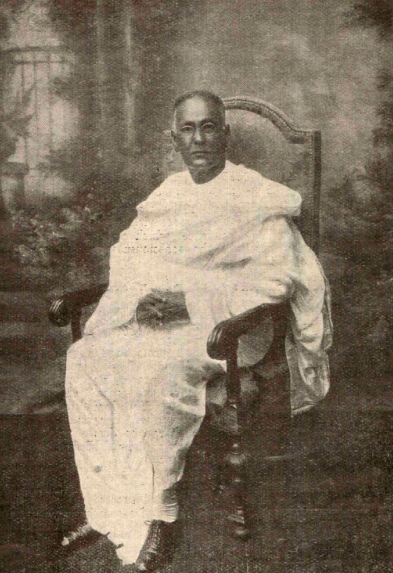
Ask any Indian on the street who gave us our national cry, ‘Jai Hind!’, & 9 out of 10 will say Subhash Chandra Bose. But decades before Netaji marched with the INA, 2 simple, electrifying words were uttered in the cold streets of Berlin by a teenage fugitive from Kerala.
A man who fled British spies, forged an alliance with the German Kaiser, commanded a warship that set colonial Madras ablaze & stood up to Adolf Hitler himself.
Born in 1891 in Trivandrum, Chempakaraman Pillai grew up under the heavy shadow of the British Raj. While other children played, young Pillai was already organizing schoolboys, printing anti colonial pamphlets & leading secret meetings under the banner of the Dharma Poshani Assembly.
By 1908, he was just 17 yrs old & his name was circled in red on British Intelligence watchlists. Colonial officers were closing in to arrest the young rebel.
In a plot straight out of an espionage thriller, a friendly foreign traveler named Sir Walter Strickland smuggled Pillai out of India disguised as a servant. Pursued across international waters, Pillai made it to Europe, eventually settling in Zurich & later Berlin.
He enrolled at the ETH Zurich in Switzerland, studied engineering, chemistry & economics, all while running an underground anti-imperial network.
When World War I broke out in 1914, Pillai saw his window. He established the International Pro-India Committee in Berlin & walked straight into the offices of the German High Command.
He convinced Kaiser Wilhelm II that Britain’s weakness lay in its colonies & that Germany should back an Indian revolution.
On the night of 22nd Sep, 1914, a sleek German light cruiser, the SMS Emden, stealthed through the pitch-black waters of the Bay of Bengal, creeping within range of the Madras coast.
In a lightning naval strike, the Emden opened fire on the massive fuel reserves of the Burmah Oil Company.
Towering walls of orange flame roared into the night sky, destroying 340000+ gallons of oil & sending shockwaves of panic through the British administration. It was the only time during World War I that enemy fire struck the mainland of British India & an Indian revolutionary was at the helm.
During those intense years in Berlin, coordinating b/w Indian activists, German military officers & global revolutionaries, Pillai grew tired of formal, colonial greetings. He needed a battle cry that transcended regional languages and religious lines.
In 1907, he had already coined 2 words: "Jai Hind" (Victory to India).
It became the official greeting of his Berlin committee. Decades later, when Netaji Subhash Chandra Bose visited Germany to form the Indian Legion, he heard Pillai's battle cry, embraced it & made it the formal salute of the Indian National Army.
Pillai’s fierce independence did not end with the British. In the late 1920s & early 1930s, as Adolf Hitler rose to power in Germany, Hitler made derogatory remarks about Indians in a public speech, claiming Indians were meant to be ruled by superior races.
Pillai did not flinch. He wrote a sharp, uncompromising letter directly to Hitler, demanding a written apology. Shockingly, the pressure worked, Hitler was forced to issue a written apology to Pillai.
Standing up to the Nazi regime came at a deadly cost. Soon after the confrontation, Pillai fell mysteriously, violently ill, symptoms consistent with slow poison. On 26th May, 1934, far away from the homeland he fought his entire life to liberate, Chempakaraman Pillai closed his eyes forever at the age of 42.
Before he died, he left behind 1 final wish: that his ashes be brought back to a free India & scattered over the fields of his native Kerala.
It took 30+ yrs after his death, in 1966, for his widow, Lakshmi Bai, to finally bring his ashes home on an Indian Navy warship, fulfilling the final promise to a ghost hero.
The Next Time You Say "Jai Hind"...Remember that those 2 words were not written by a comfortable politician in a quiet office.. They were forged in the fires of World War I, carried on the decks of warships & spoken by a fearless Indian rebel who made emperors and dictators bow.
There you go, i added one more clip GSH-23 cannon test carried out at Nasik facility back in 2015 where you can see the smoke and flash also the target, their are few more clips but regret i have just two of the clips as in 2026. 🇮🇳🔥
Mesopotamia was never the cradle of civilisation. India was.
I spent forty years in international shipping, not academia. When I began researching the history of maritime trade, I had no orthodoxy to defend. I followed the evidence, and it kept arriving in the same place: the Indian subcontinent.
Nineteenth century archaeologists dug in Mesopotamia because the climate preserved artefacts, the biblical sources pointed them there, and the Ottomans allowed the excavations. That is the entire basis for the myth of Mesopotamia as "the cradle of civilisation."
Nobody applied the same rigour to India. Mohenjo-daro was not discovered until 1922. By then the narrative had already hardened.
What was actually there was the largest civilisation of the ancient world. Three hundred cities. Fifty thousand people in each, by 2600 BC. Two thirds of them stood on the banks of the Sarasvati, the central and greatest of the seven rivers described in the Rig Veda, flowing down from the Himalayas before the river vanished entirely by 1900 BC. The Vedic kings claimed territory stretching "sea to sea," from Afghanistan to Maharashtra, some 1.5 million square miles, against Egypt's 13,000. A dock at Lothal built to handle thirty ships of sixty tons, unmatched in Europe for four thousand years. When it was first excavated, it was recorded as a bathing pool.
When the scale became impossible to dismiss, the theory was not corrected. It was replaced with a story of pale-skinned nomads from the steppe who supposedly arrived around 1500 BC and brought civilisation with them. There is no evidence. The chronology doesn't work. The Vedas describe no invasion.
In 2019 a Harvard-led genetic study revived the claim, and the press reported it as confirmation. It was not. The same study found the builders of these cities were indigenous. The Sarasvati river that the Rig Veda described had already dried up before these newcomers arrived. What the study also found is that a small group of men, arriving after the Sarasvati had already dried up, interbred with the existing population and left a genetic signature. That is all.
So, where they chose to dig was mostly an accident of climate and access. The Aryan invasion theory was constructed because an Indian civilisation that owed nothing to Caucasians was a fact the late nineteenth century could not accommodate.
Link to full Substack essay with sources in the comments below.
Kargil, 1999.
Rare original footage of the media briefing by the Commanding Officer of 13 JAK RIF from the summit of Point 4875, shortly after its capture.
A powerful reminder of the courage, leadership, and sacrifice that turned the tide in the Kargil War.
@YkJoshi5@Vedmalik1
Like i said, you cannot reason nor can blame them but here he is gone too far making fun and unaware that he is also making fun of people who were in line of fire at Kargil 1999, men of Army aviation knows the price they paid to do the job.
Bringing back some old memories of the Tibetan soldiers of SPECIAL FRONTIER FORCE/SFF (elite, highly secretive covert paramilitary force in India) 👍
Archieve video of 2000 Tibetans being trained in Nepal's Mustang by CIA and India in early 1960's
👇👇👇
Old BSF encounter footage from the operation that brought down Ghazi Baba, the Jaish chief in Kashmir, after a decade-long manhunt.
The alleged mastermind of the Parliament attack, J&K Assembly attack, and multiple suicide strikes on Army camps.
CC: AP Archive combat footage.
In 1913, 3 boys sat in a classroom at Presidency College, Calcutta, competing to top their mathematics exams. Today, the 1st boy is celebrated globally for creating "Bose-Einstein Statistics." The 2nd boy is a household name for mapping the temperature of stars (the Saha Ionization Equation). But the 3rd boy, the 1 who actually beat them both to top the postgrad exams, traveled straight into the heart of Berlin, stood before Albert Einstein's closest circle & became the 1st Indian to mathematically unlock general relativity. Yet, while his classmates became immortal legends, he became a ghost whose foundational blueprints built India’s modern defense and aerospace tech from the shadows.
Born in Dhaka in 1894, Nikhil Ranjan Sen grew up as a quiet prodigy. When he entered Presidency College, he found himself surrounded by giants: Satyendra Nath Bose & Meghnad Saha were his daily desk-mates & Jagadish Chandra Bose was his teacher. In this clash of titanic minds, Nikhil did not just survive; he shattered the 1916 MSc Mixed Mathematics exam, topping the entire university ahead of his peers.
But while Bose & Saha focused on light & quantum states, Nikhil’s mind was locked onto the fabric of the universe itself: gravity. In 1921, he caught a ship to Germany, arriving at the Humboldt University of Berlin. This was the golden age of physics & Nikhil’s PhD advisor was none other than Nobel Laureate Max von Laue, Einstein’s most trusted confidant.
Nikhil threw himself into a mathematical nightmare that even the greatest European minds were avoiding: What happens to Einstein’s smooth eqns of spacetime when matter suddenly stops/breaks/collapses at a boundary?
His 1923 doctoral thesis solved the boundary conditions for gravitational fields at surfaces of discontinuity. He had mathematically proven how Einstein's laws held true even when cosmic space cracked/hit a hard wall of matter. He was the very 1st Indian to secure a doctorate in relativity, validated in the elite rooms of Berlin.
When Nikhil returned to India in 1924 as the Ghosh Professor of Applied Mathematics at Calcutta University, he did not seek personal fame. He chose to build. He founded the Calcutta School of Relativity Theory.
If we look at the greatest breakthroughs of Indian physics in the mid-20th century, we will find Nikhil Ranjan Sen's invisible fingerprints everywhere.
When his student, A.K. Raychaudhuri, created the world-famous Raychaudhuri Equation (which Stephen Hawking & Roger Penrose later used to mathematically prove the existence of Black Holes), he was using the exact mathematical foundations laid by Prof. Sen.
When India needed to understand how fluids rip apart at high speeds, Sen built the nation's very 1st Fluid Dynamics Lab.
When the newly independent nation secretly needed to calculate how missiles cut through air & how explosives detonate, Sen pioneered the study of military ballistics.
He was a mathematical polymath who could map the internal pressure of a burning star, model the expansion of the entire universe w/o Einstein's cosmological constant & calculate the trajectory of a missile, all with a fountain pen.
So why is his name missing from our text-books?
Nikhil Ranjan Sen suffered from the unique curse of the "Applied Mathematician." In the hierarchy of science, the world awards its ultimate glory to pure theoretical physicists who discover a single, catchy particle/an elegant cosmic law. Sen, however, was the builder. He was the man who took the messy, impossible theories of geniuses & forged them into practical, mathematical tools that institutions, engineers & defense labs could actually use.
He did not market himself. While his contemporaries traveled the world giving high-profile lectures, Prof. Sen spent his late yrs writing astronomy books like Soura Jagat (Solar World) in native Bengali, desperately trying to make complex astrophysics accessible to poor rural schoolchildren.
He passed away quietly on 13th Jan, 1963. Today, every time an Indian missile launches safely into the upper atmosphere/a physicist calculates a fluid pipeline's turbulence, they are using the mathematical math-models carved out by this 1 man.
His classmates' names are permanently etched into the stars & the quantum universe, but the man who taught India how to mathematically calculate the heavens died in absolute silence. We built an entire nation's aerospace & defense matrix on his back, but we left Nikhil Ranjan Sen to remain a ghost standing at the boundary line of his own eqns.
In the late 1880s, the engineering boardrooms of Calcutta were exclusively white, fiercely guarded fortresses. The British administration confidently declared that no native mind possessed the structural genius/mathematical discipline required to anchor heavy masonry into the shifting, treacherous silt of the Ganga delta, until a penniless, orphaned village boy stepped forward to reverse-engineer their water systems, acquire their oldest engineering firms & build the monumental marble core of the city.
In colonial India, civil engineering was treated as a tool of sovereign dominance. The British built the bridges, the waterworks & the grand municipal palaces to project permanent imperial stability. While wealthy Indian landlords bought land, the technical design of heavy steel foundations & massive hydraulic systems was strictly reserved for British engineers imported from London. Native students were expected to merely serve as surveyors/low-level overseers.
The man who shattered this glass ceiling was Rajendra Nath Mookerjee. Born in 1854 in a small village in Bengal, Rajendra Nath lost his father at the age of 6. Raised entirely by his mother in deep poverty, he managed to secure entry into Presidency College to study engineering. However, severe illness & a total lack of funds forced him to drop out before completing his formal degree. Armed with nothing but grit & a brilliant instinctive comprehension of physics, he entered the cut-throat world of public works as a small-time independent contractor.
Mookerjee’s life changed forever when he met Bradford Leslie, the Chief Engineer of the Calcutta Corporation. Leslie noticed that this young Indian could solve complex hydraulic formulas on site that were baffling foreign specialists. In 1892, breaking every racial code of the era, Mookerjee partnered with an Englishman, Thomas Acquin Martin, to establish Martin & Co.. It was a partnership of absolute equals.
When his British partner passed away, Mookerjee executed the ultimate corporate move: he aggressively acquired old, established British firms like Burn & Company & Jessop, merging them into the industrial giant Martin Burn. He placed no personal mention of his own name on the masthead. Mookerjee went on to build the structural spine of eastern India. When the iconic British architect William Emerson was struggling to lay the foundation for the massive Victoria Memorial on the swampy, shifting mud of the Maidan, he handed the entire construction contract to Mookerjee.
But he did not stop at monuments. He co-founded the Indian Iron & Steel Company (IISCO) at Burnpur, building heavy blast furnaces to compete with European iron cartels. He pioneered the Martin’s Light Railways, a private network of lightweight, highly affordable narrow-gauge trains that bypassed the rigid colonial railway systems to connect remote, impoverished rural districts across Bihar & Bengal. He engineered the Palta waterworks, designed the structural concept for the cantilever Howrah Bridge & built the Hooghly Dockyards.
He could walk into the Viceroy’s palace dressed in pristine European attire, demanding equal respect, while secretly funding national institutions like the Indian Statistical Institute. Yet today, as millions walk over the Howrah Bridge/take pictures outside the Victoria Memorial, the name of the orphaned village boy who structurally anchored those dreams into the earth is completely unknown.
The modern world continues to marvel at iconic landmarks, celebrating the names of Western architects & imperial designers etched into historic plaques, yet every single time the fierce monsoon currents of the Ganga slam against the foundations of Calcutta & the city refuses to sink, the silent, unyielding skeleton of Rajendra Nath Mookerjee holds the ground, proving that while an empire can sign the blueprint, it takes the absolute, raw genius of a native son to bury the pillars that can never be broken.
In the heavy, rain-drenched monsoon of 1898, inside a cramped, suffocating laboratory in Calcutta, a young Indian scientist was hunching over a brass microscope, peerlessly dissecting the stomach wall of an Anopheles mosquito. The history books loudly claim that Ronald Ross single-handedly unlocked the global mystery of malaria transmission, a feat that won him the 1902 Nobel Prize but history completely deleted the name of the lone Bengali partner who actually executed the dangerous fieldwork, navigated the native languages & mapped out the killer’s lifecycle.
At the turn of the 20th century, Malaria was an absolute, undisputed global slaughterer. It was hollowing out the British Empire's forces, decimating entire tropical coastlines & killing millions of citizens annually. The Western world knew the disease existed, but they had absolutely no idea how it traveled. The leading theory was that it was contracted by breathing in "foul marsh air" (hence mal-aria).
Ronald Ross, a British military doctor stationed in India, was trying to prove a radical counter-theory: that mosquitoes were carrying the parasite. But Ross hit an absolute wall. He was culturally isolated, could not effectively communicate with the local populations to trace outbreak maps & desperately lacked the precision-dissection skills needed to harvest wild mosquito vectors w/o destroying the microscopic evidence.
Enter Kishori Mohan Bandyopadhyay. Born in 1877 into a modest family of educators, Kishori Mohan graduated in science from Presidency College with flying colors. Driven by a fierce, silent desire to save his country from the pestilence, he joined Ross in 1898 as his primary research partner & lab assistant.
Kishori Mohan was the true mechanical engine of the operation. While Ross conceptualized, Kishori Mohan took to the mud-slicked, malaria-infested paths of Bengal. Armed with nothing but glass tubes & raw courage, he manually trapped live mosquito specimens from contaminated drains, swamps & stagnant ponds. Back in the lab, it was Kishori Mohan’s steady, artistic hands that mastered the hyper-delicate art of dissecting the insect’s microscopic midgut under primitive lenses.
In a breathtaking breakthrough, he successfully isolated the malarial oocysts maturing inside the stomach wall of the Anopheles mosquito. He proved the transmission cycle. He handed the British establishment the definitive proof that changed global public health forever.
When the 1902 Nobel Prize in Physiology/Medicine was announced, Ronald Ross was awarded the singular glory, becoming an international icon. Kishori Mohan’s name was completely omitted from the global prize registry. While the British Viceroy, Lord Curzon, sheepishly acknowledged the oversight by awarding him King Edward VII's Gold Medal in 1903, the global historical ledger effectively wiped Kishori Mohan from the canvas.
Undeterred by the institutional betrayal, he spent the rest of his life building the Anti-Malaria Cooperative Society, manually clearing drains & distributing mosquito nets to poor villages. Today, his descendants have scattered across generations, completely unaware that the blood of the man who literally helped map out the defense against the world’s deadliest parasite flows in their veins.
The grand halls of Stockholm still echo with the names of the imperial pioneers who claimed the treasures of science & the medals they wore have turned into cold museum exhibits, yet every single time a modern physician prescribes a life-saving antimalarial tablet, the silent ghost of Kishori Mohan Bandyopadhyay still guides the prescription, proving that while an empire can steal the medal, they can never pocket the blood, the sweat & the soil that actually conquered the plague.
1987. A room in New Delhi is thick with the smell of old files & cold tea. The United States has just delivered a stinging slap to the face of the Indian Republic. They have officially refused to sell India the 'Cray X-MP' Supercomputer, the most powerful machine on Earth, claiming that India would use it for nuclear weapons.
The American officials mockingly suggest that India does not even have the electricity to keep such a machine running. In the middle of this national humiliation, a young, soft-spoken engineer named Vijay Bhatkar is asked by then Prime Minister Rajiv Gandhi: "Can we build our own?" Bhatkar does not hesitate. He looks at the No of the West & says: "We will not just build it; we will build it faster than you can ship it."
The Americans did not just stop at refusing the sale; they actively lobbied other nations to ensure India remained digitally blind. They believed that w/o their Logic Gates, India would remain a 3rd world backwater.
Bhatkar realized he could not replicate the Single-Processor behemoth of the Cray. Instead, he turned to Parallel Processing. He decided to stitch together 1000s of low-cost, off-the-shelf microprocessors. It was like building a giant's brain out of the neurons of ants.
In 1991, while the West was still celebrating its monopoly, Bhatkar unveiled the PARAM 8000. It was not just a computer; it was a Gigaflop monster.
To prove the PARAM was real, Bhatkar ran a standard global benchmark test. The results were sent to an international conference in Zurich. The PARAM 8000 was ranked as the 2nd most powerful supercomputer in the world, behind only the American machines. But there was a twist: the PARAM cost a fraction of the Cray, performed better in tropical heat, & was built in just 3 years.
When the PARAM 8000 was 1st turned on, the team did not have a high-tech cooling system like the Americans. They used industrial-grade desert coolers & adjusted the airflow manually. It was the ultimate Jugaad that defeated the most sophisticated tech embargo in history.
A major US newspaper ran a story with the headline: "Denied supercomputer, Angry India does it!" The ghost of the Native Engineer had officially entered the silicon temple. Vijay Bhatkar’s history is the story of how India became the IT Capital of the world.
Bhatkar founded the Centre for Development of Advanced Computing (C-DAC). He did not just build a machine; he built an ecosystem. Every software engineer in India today stands on the shoulders of the man who proved we did not need the West's permission to compute. Bhatkar was the 1 who realized that if computers only spoke English, 90% of India would be left behind. He led the development of GIST (Graphics & Intelligence Based Script Technology), allowing computers to work in Indian languages. He gave the Machine a local tongue.
Today, Bhatkar is a Padma Bhushan awardee, but he lives a life of deep spirituality & simplicity. He vanished from the corporate headlines to become a philosopher of the digital age.
The West thought they could freeze India’s future by withholding a single machine. They forgot that the Indian mind does not need a 'Cray' to think; it only needs a 'No' to ignite. Forget building a supercomputer; Bhatkar built a mirror, & for the 1st time, the West had to look into it & see that the primitive colony had become the master of the code.
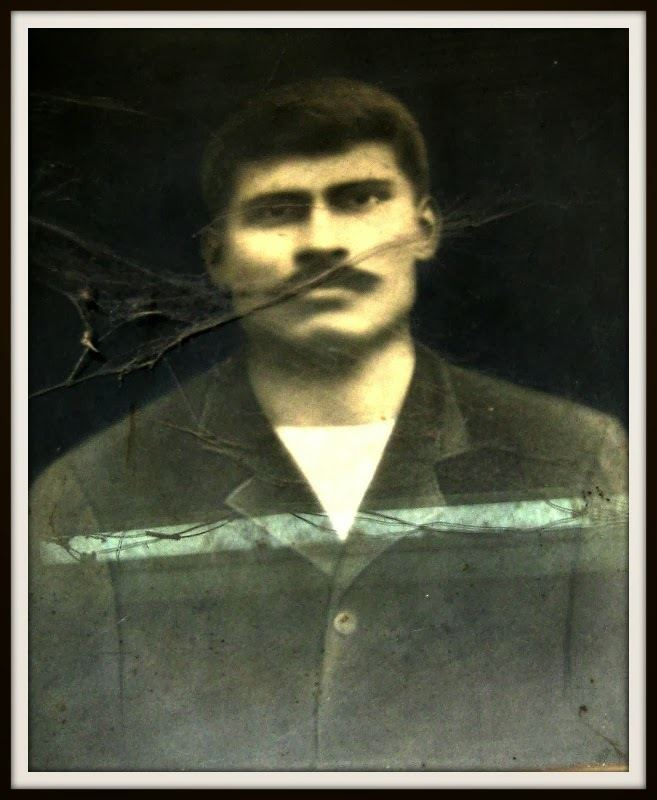
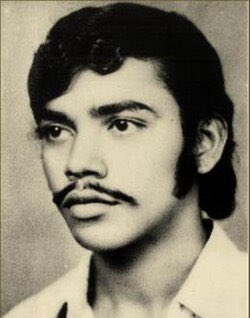
His name was Rajan.
He was a final year engineering student at the Regional Engineering College in Calicut, Kerala. His father, T V Eachara Varier, was a Hindi professor at the Government Arts and Science College in the same city.
On the morning of March 1 1976 the police came to the college campus and took Rajan away.
India was under Emergency. Civil liberties were suspended. Courts had effectively turned away.
His father found out the next day from the college principal.
He went to every police station in the district. No one admitted to having his son.
He met the Home Minister of Kerala, K Karunakaran, directly.
He sent petitions to the Home Secretary of the Government of Kerala three times. Not a single reply or acknowledgement came.
He wrote to the President of India and the Home Minister of the central government, with copies to every Member of Parliament from Kerala.
Nothing.
What Eachara Varier did not know at the time was that his son had been taken to an illegal police interrogation camp at Kakkayam.
He was tortured.
A practice called uruttal was used, where a heavy wooden log is rolled over the body of the victim.
Rajan died from his injuries. His body was disposed of by the police and was never found.
When the Emergency ended in 1977 Eachara Varier filed a habeas corpus petition in the Kerala High Court.
It was the first such petition filed in Kerala after the Emergency.
He did it without legal training, without political backing, without money.
He had spent everything searching for his son.
The court case slowly unravelled the truth.
It forced K Karunakaran to resign as Chief Minister of Kerala in 1978 when the adverse judgment came.
Rajan’s mother became mentally unstable from the grief. She died in 2000 still not knowing where her son was.
Eachara Varier wrote his memoir, Memories of a Father, which won the Kerala Sahitya Akademi Award in 2004.
In its final lines he wrote, “I don’t close the door. Let the rain lash inside and drench me. Let at least my invisible son know that his father never shut the door.”
He died on April 13 2006. He never found his son’s body.
Rajan was picked up from his college campus on a March morning in 1976. He was never seen again.
Repost this. Some stories must not be allowed to disappear.
Operation Sindoor: PAF Jets Downed by Indian S-400 and MRSAM – Confirmed Crash Sites at Kotli, Dinga, Sialkot, Narowal, Kohat and Beyond
https://t.co/qUlNLsmjPz
From Bangladesh : Indian Paratroopers in Dhaka clearing out Pakistani regular forces, Pakistani Army troops exhausted seen retreating outside of Dhaka on trucks. 🇮🇳⚔️🇵🇰
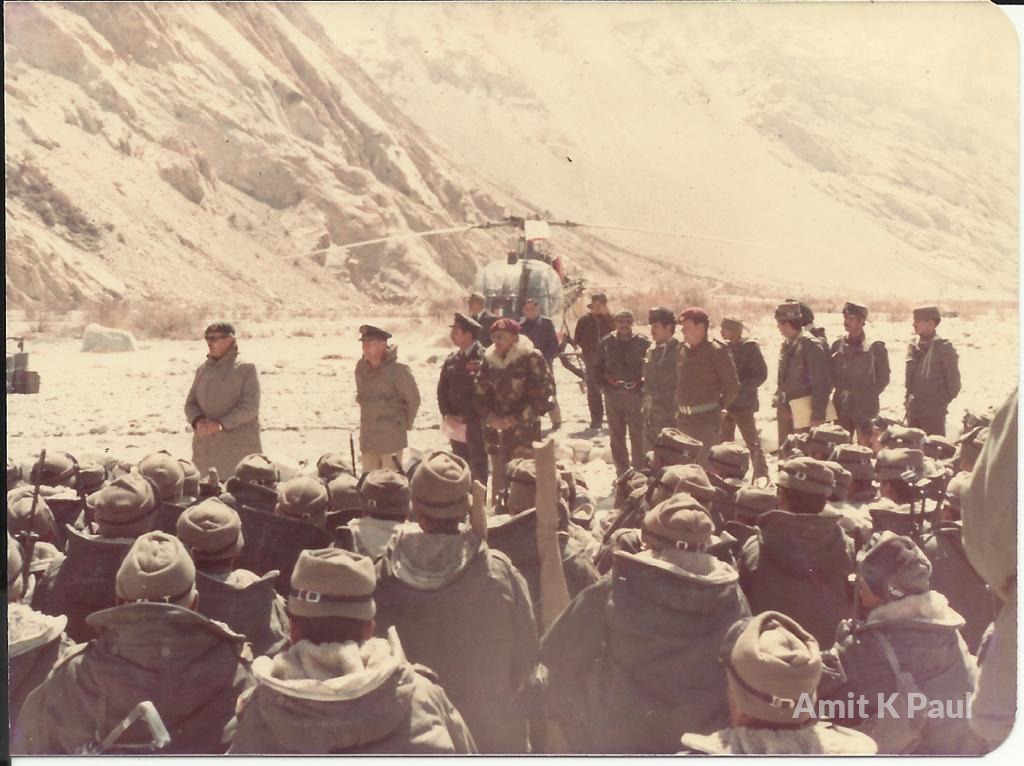
A rare picture of the final briefing before the launch of #OperationMeghdoot on 13 April 1984 and India's mission to #Siachen. Lt Gen Hoon is adressing the men. AVM Dalaya can be seen. Can you guess the other's?
📽️📽️ 2 minutes
"CSAR" - Combat Search And Rescue demonstration by the Indian Air Force - Iron Fist 2013.
But it's Indian, so nobody knows, remembers, or cares.
4 April 1964 was a turning point in the IAF’s radar story.
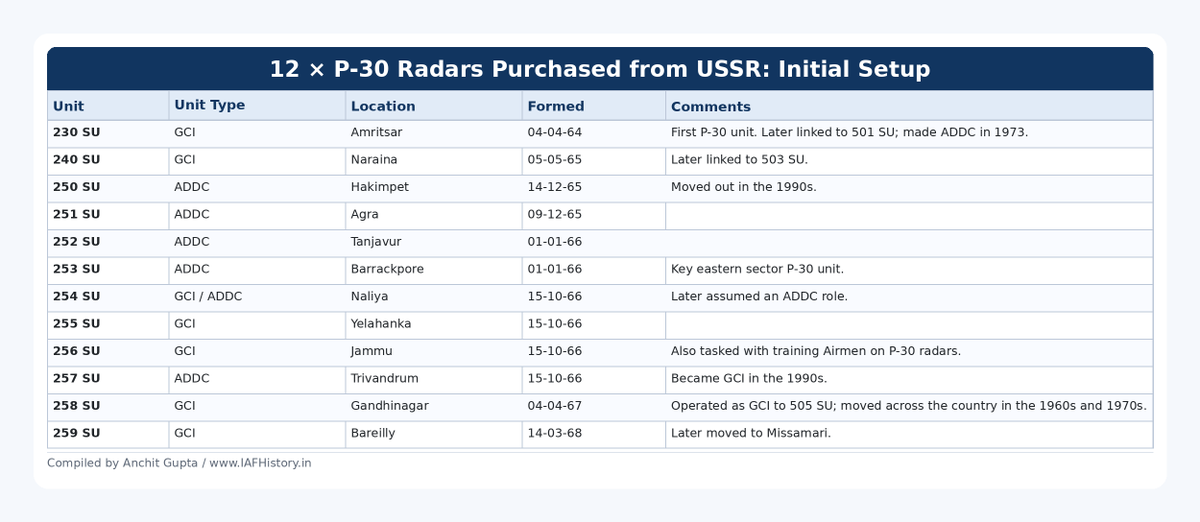
On that day, 230 Signal Unit was raised as the Indian Air Force’s first P-30(M) radar unit. It marked a major leap in capability, doctrine and network planning.
That induction carried weight because the IAF’s radar arm already had a long and difficult prehistory. After Independence, it had been built painstakingly from salvaged wartime British sets. Throughout the 1950s, the IAF added Marconi sector operations centres, GCI units and early-warning radars, but the network remained thin, with poor defence in depth and only patchy warning coverage over vital areas.
The urgency sharpened after 1962. In Ex Shiksha in Nov 1963, with RAF, RAAF and USAF participation, the need for stronger radar cover was plain. It was in this wider setting that the induction of six American Star Sapphire units and twelve Soviet P-30 units was approved. The raising of 230 SU on 4 April 1964 therefore marked more than the birth of one unit. It marked the entry of the first major Soviet surveillance radar into Indian service.
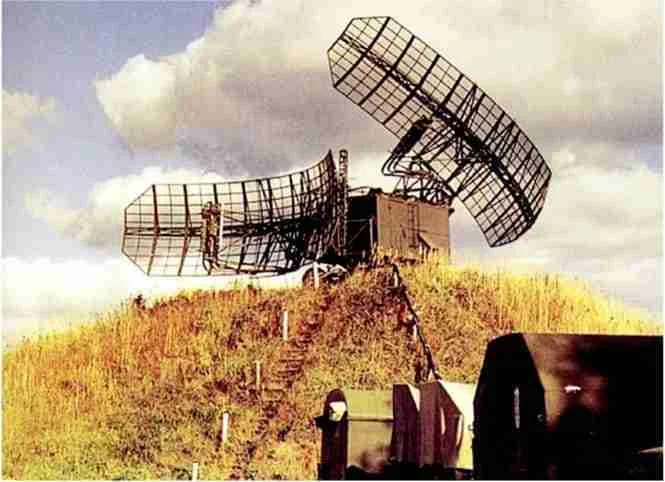
The P-30 was a serious step up. A semi-mobile 2D surveillance radar, known in Soviet service as Khrustal and in NATO terminology as Big Mesh, it was built for aircraft detection and air-defence control. In Indian conditions, that meant extending the radar picture, improving warning time, and strengthening the control chain in a system that badly needed all three.
Its value was tested quickly. Despite the acquisition drive after the China war, when the 1965 war broke out the IAF had operationalised only two P-30s and one Star Sapphire. One of those P-30s was 230 SU at Amritsar. Nicknamed “Fish Oil”, it could look deep into Pakistani airspace, became a major PAF target, survived repeated attacks, and still helped sustain the radar picture in one of the most contested sectors of the western front. In a sparse and vulnerable air-defence network, that was no small contribution.
By 1971, the P-30 system had become part of a far more mature air-defence environment. The IAF then had twelve P-30 units: 230 SU, 240 SU and 250 to 259 SU. The Battle of Boyra, with 253 SU playing a key part, was perhaps the P-30 system’s finest vindication in Indian service, showing what radar surveillance, control and fighters could achieve when they worked in concert.
In later years, the P-30 gave way to newer and more capable systems. But its legacy ran well beyond the unit raised in 1964. It helped define the Soviet chapter in the IAF’s radar domain, shaped the radar-control environment of two wars, and laid part of the foundation for the air-defence architecture that followed.
#IAFHistory @IAF_MCC