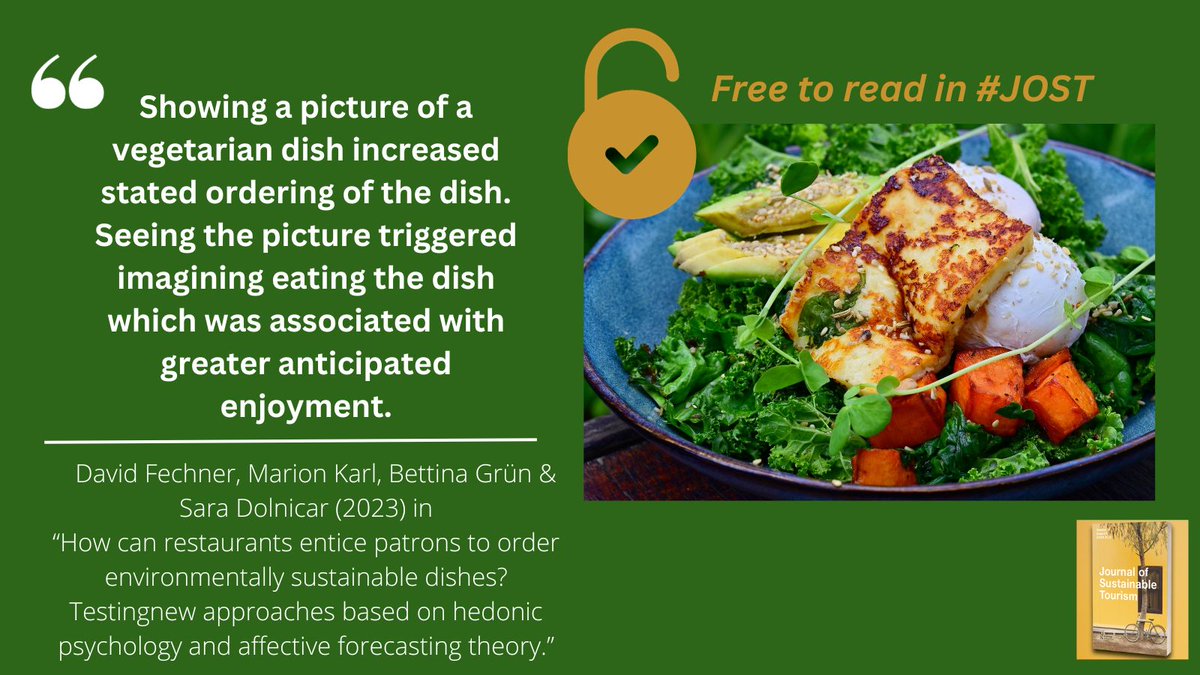
Showing a picture of a vegetarian dish on the menu is a simple and cost-effective way to make environmentally sustainable dishes more appealing because it triggers consumers' imagination of eating the dish.
@SMGriffith1@gift_griffith
🆕#OpenACCESS in #JOST
"How can restaurants entice patrons to order environmentally sustainable dishes? Testing new approaches based on hedonic psychology and affective forecasting theory." By @DavidFechner2@MarionKarl5@SaraDolnicar
🔗to article and video abstract below
#Factoryfarms are the perfect breeding ground for #diseases. #Restaurants can support the transition to farming practices that priorities animal welfare by using #plantbased meats instead of meat to cook #delicious meals this Christmas. #H5N1#birdflu
https://t.co/yET7XFFY5g
Inviting everyone who lives in #Australia and is older than 18 years to share their thoughts on #plantbased meats in restaurants.
Takes only 10min, you get the chance to win a $50 voucher and I heard it is fun. 😃 TIA
https://t.co/EF8Y4421BG
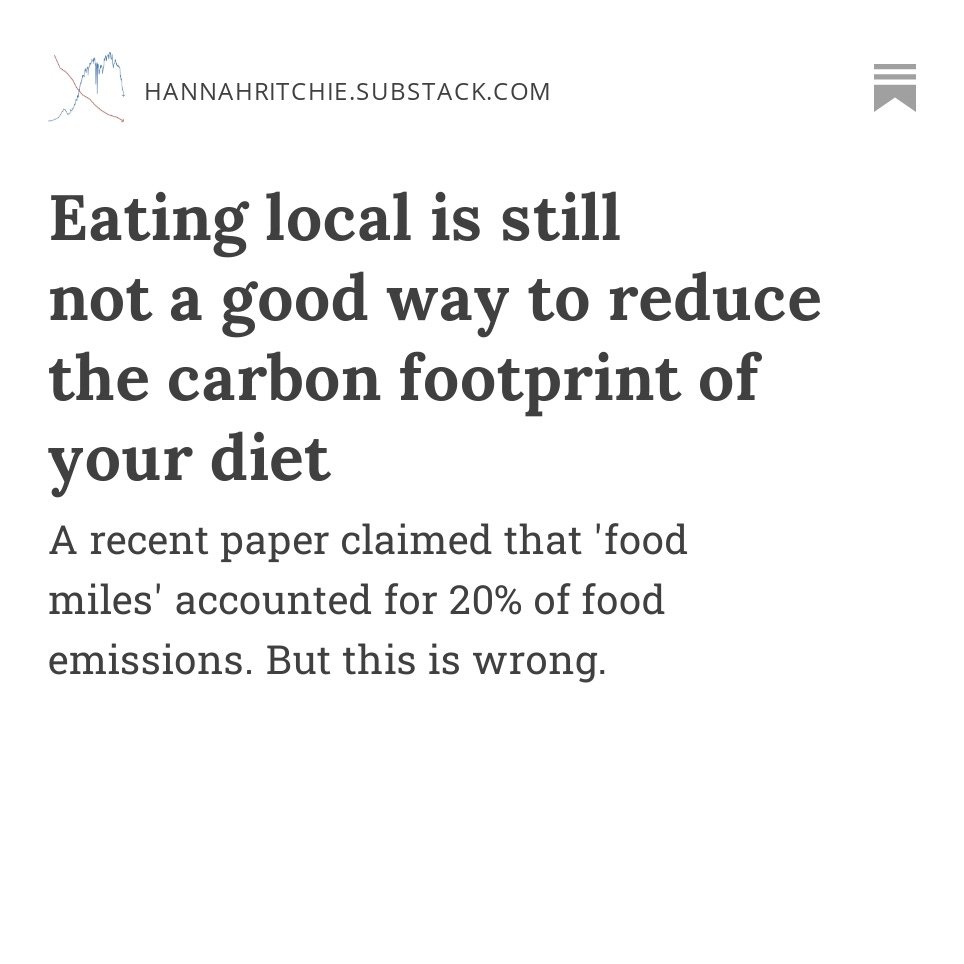
Eating locally is not an effective way to reduce the carbon footprint of your diet.
This is despite a recent paper in @NatureFoodJnl claiming that 'food miles' make up 20% of food emissions.
In my latest Substack post I explain why this is wrong: https://t.co/5iFGl8CMFX
“The infectious disease trap of animal agriculture” is out in Science Advances. Outbreaks of “zoonotic” diseases that spillover from animals to humans are likely to increase, unless we can reduce demand for animal-based foods. 🧵 1/ https://t.co/mNO9i3yhP1
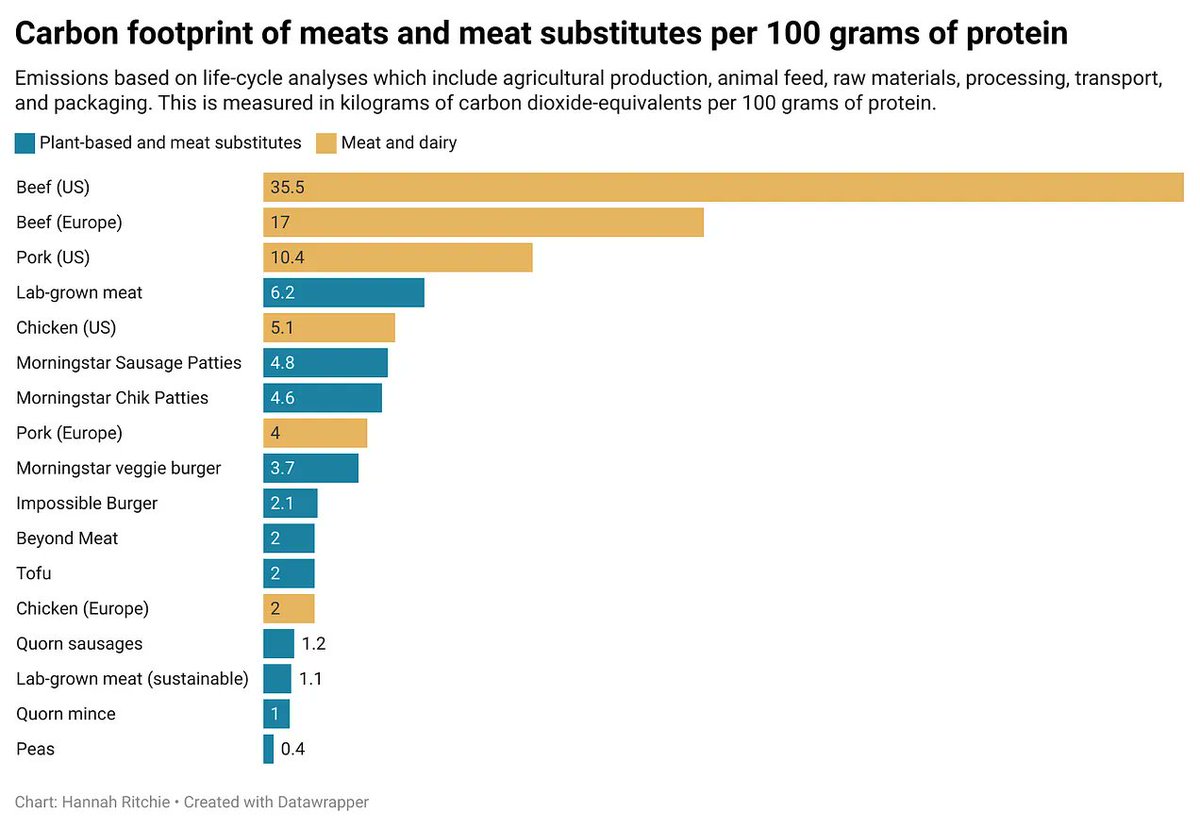
To produce 100g of protein from beef, we need ~27x as much land as the @BeyondMeat. Chicken & pork need ~6x as much cropland for animal feed.
It doesn't make sense that this land hasn't been better accounted for in national GHG estimates.
https://t.co/o1Jh9SVvLP @_HannahRitchie
Omw to Dallas, behind this chicken transport truck. It's cold. They're confined in tiny cages as their feathers are scatterings in the cold wind.
I'm in my warm car omw to see my best friend. They're in cold air on their way to be killed.
We'll look back at this with shame.
*New paper out* 🍃 Plant-based diets would help food security.
If Europe moved to plant-based diets it would compensate for the food shock of Russia's invasion of Ukraine (and reduce environmental impacts)...🧵
https://t.co/9CKmy5seXR @NatureFoodJnl@CarbonBrief
COP27—the annual UN climate change conference—started on Sunday. Government leaders from across the globe are meeting to discuss issues related to climate change. One of the biggest issues, however, is rarely discussed by world leaders: animal agriculture’s climate impact.
(1/5)
“There are just two actions needed to prevent catastrophic climate breakdown: leave fossil fuels in the ground and stop farming animals. But, thanks to the power of the two industries, both aims are officially unmentionable.” https://t.co/sxlWXQUddC
Revealed: How the livestock industry funds the ‘greenhouse gas guru’. Mitloehner is a pro-meat scientist, funded by the livestock industry, whose downplaying of livestock’s role in climate change has been very influential in Ireland.
https://t.co/XiNCUKRQLN via @UE
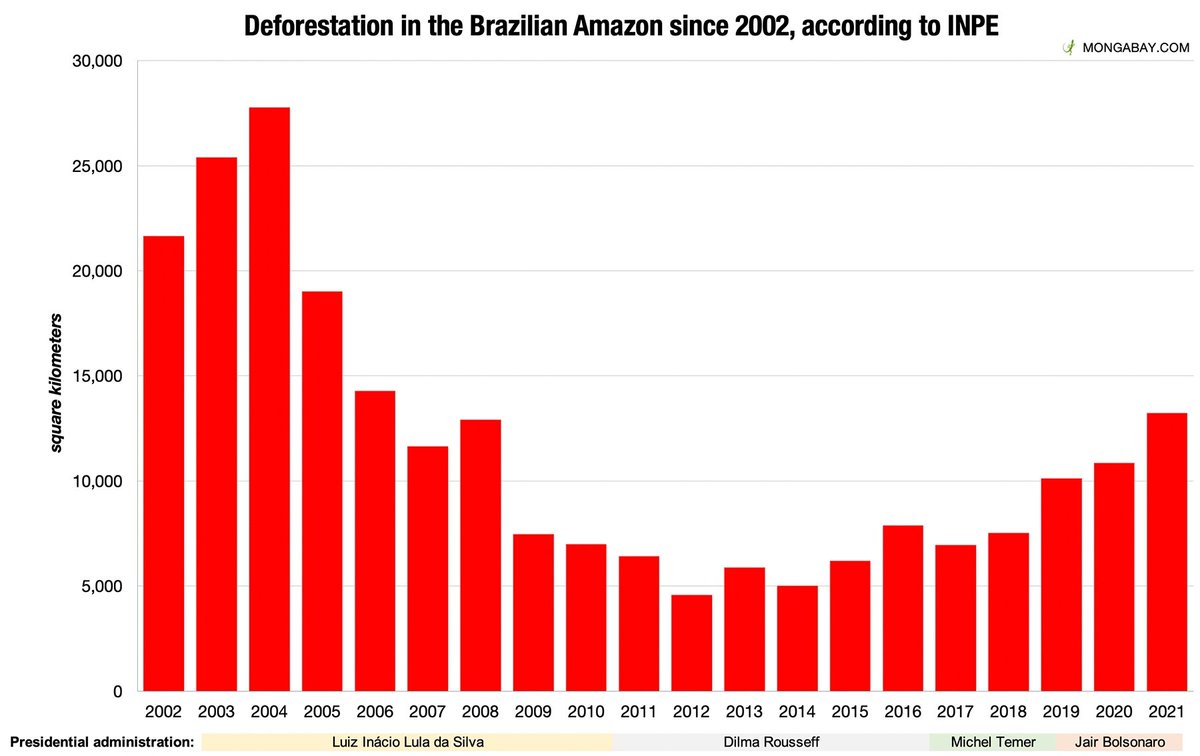
“Let’s fight for zero deforestation,” Lula says in first speech as president-elect. “Brazil is ready to resume its leading role in the fight against the climate crisis, protecting all our biomes, especially the Amazon Forest.”
A glimmer of hope for the Amazon rainforest 🌳
Lula da Silva wins the Brazilian election.
In Silva's previous terms in office (2003 - 2010), deforestation fell from 25,000 km² to almost 5,000 km².
Since then, progress was reversed but it can turn again.
We partnered with @LinkedIn and @SodexoGroup's @TheGoodEatingCo on a groundbreaking pilot of plant-based defaults in LinkedIn's San Francisco office. Spoiler alert: it was a huge success!