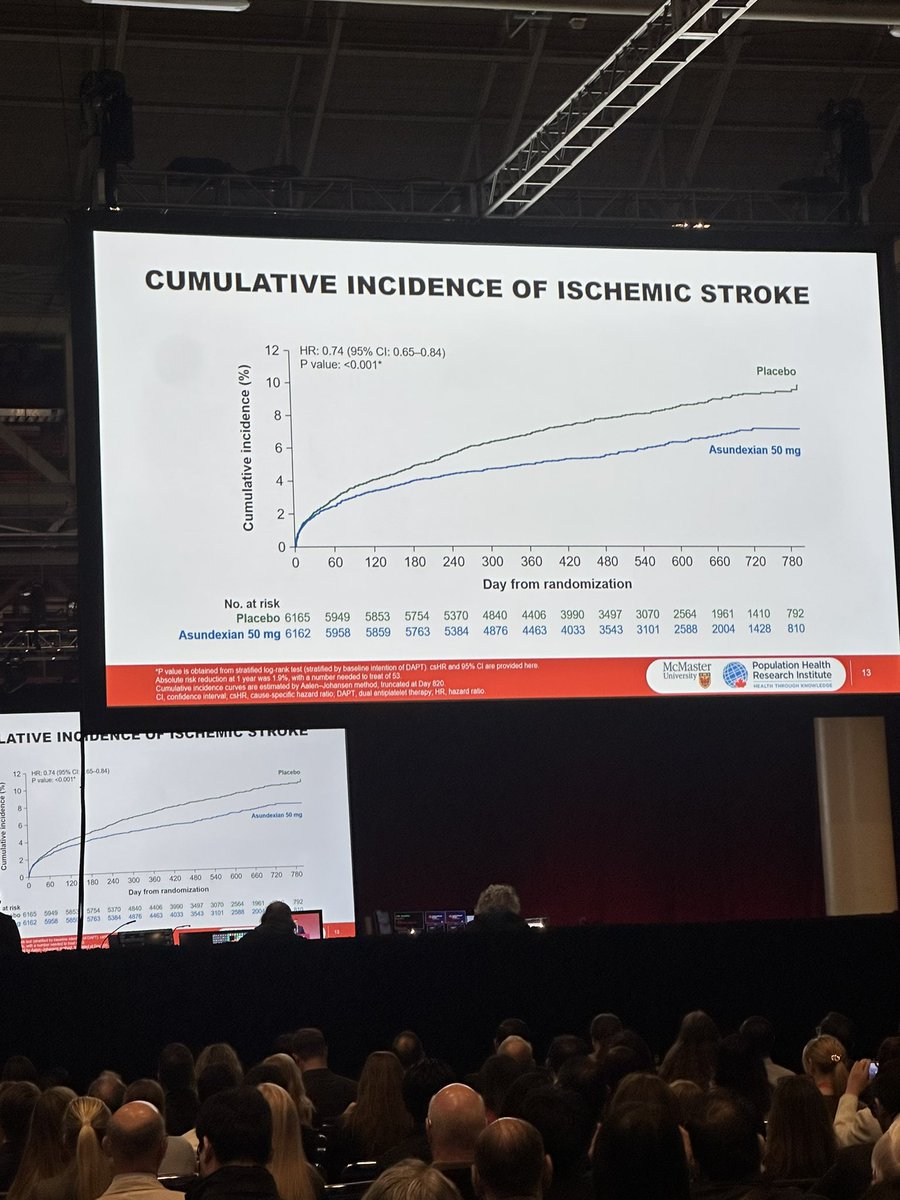
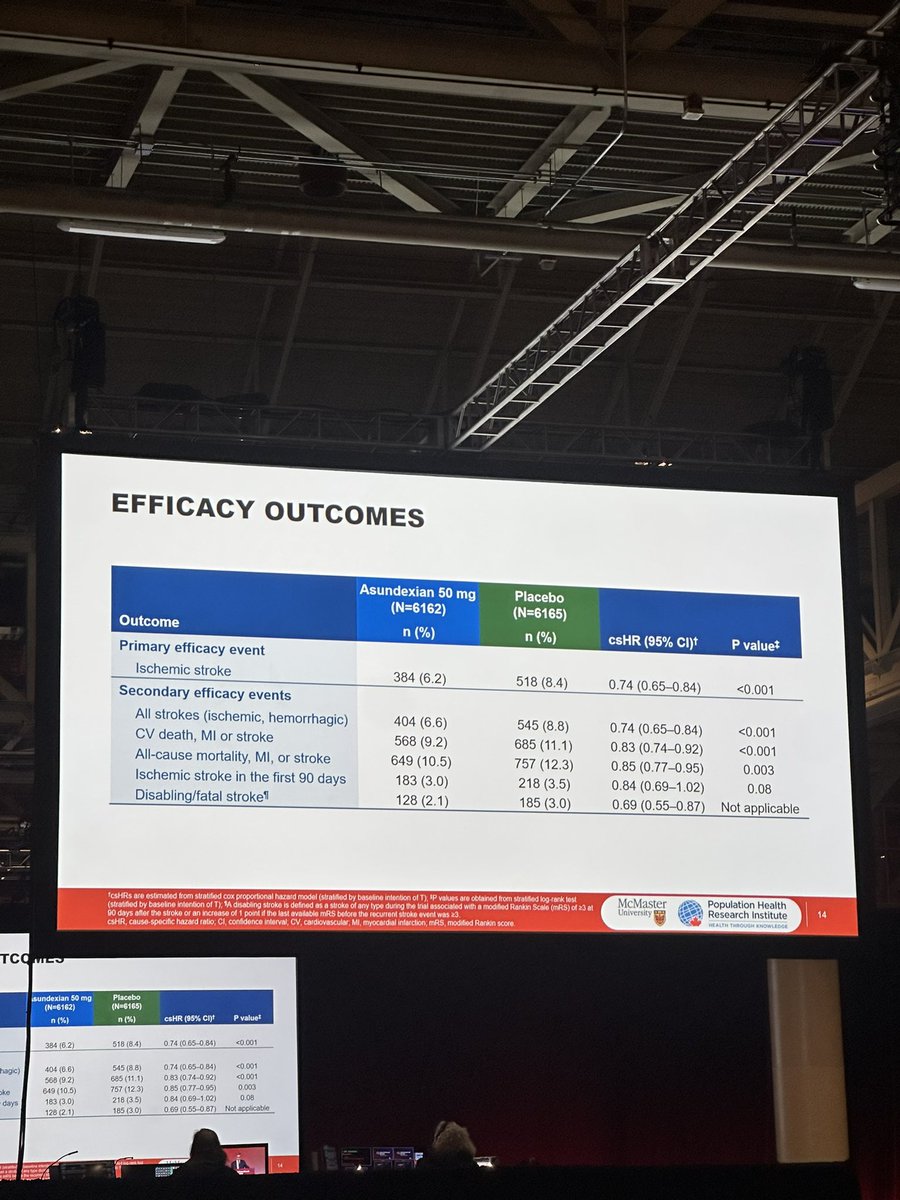
A breakthrough in secondary prevention. Asundexian reduced ischemic stroke risk without increased bleeding. Congratulations to Mike Sharma and @Ash_Shoamanesh and the OCEANIC-STROKE team. Well done 👏 #ISC26
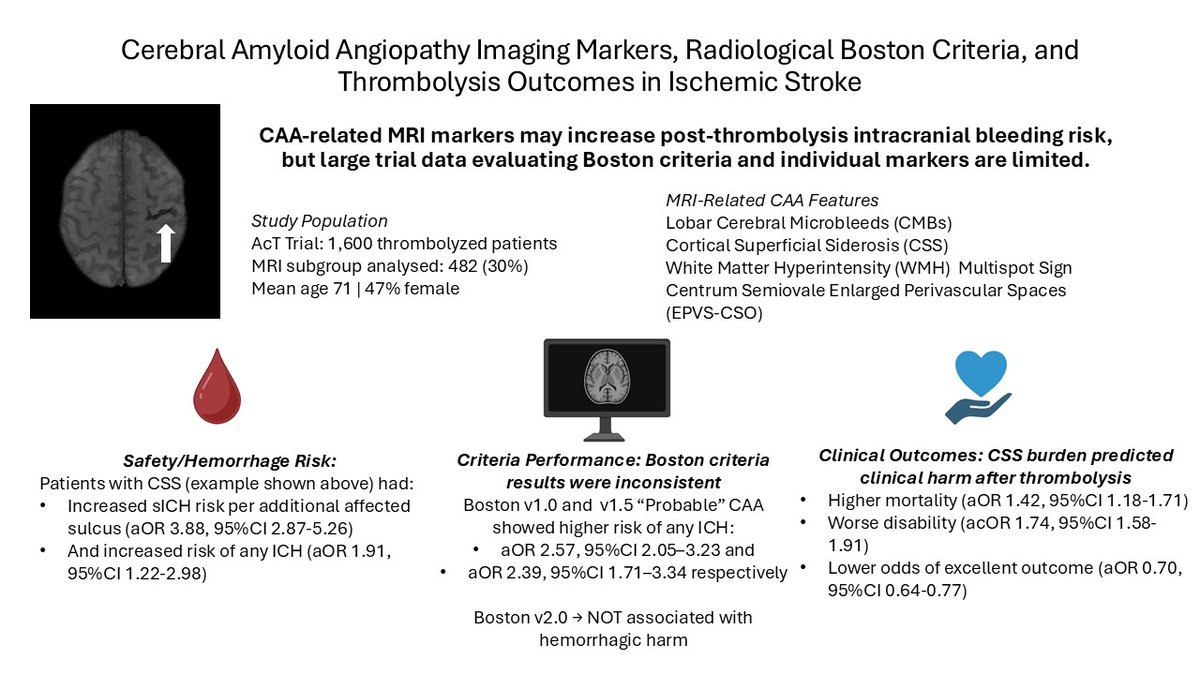
Simultaneous publication at #ISC26🔴: Cortical superficial siderosis burden is one of the strongest predictors of post-thrombolysis hemorrhage, disability, and mortality. Radiological Boston CAA criteria v1.0–1.5 increased ICH risk, while v2.0 did not. https://t.co/wuDu9NKy6s
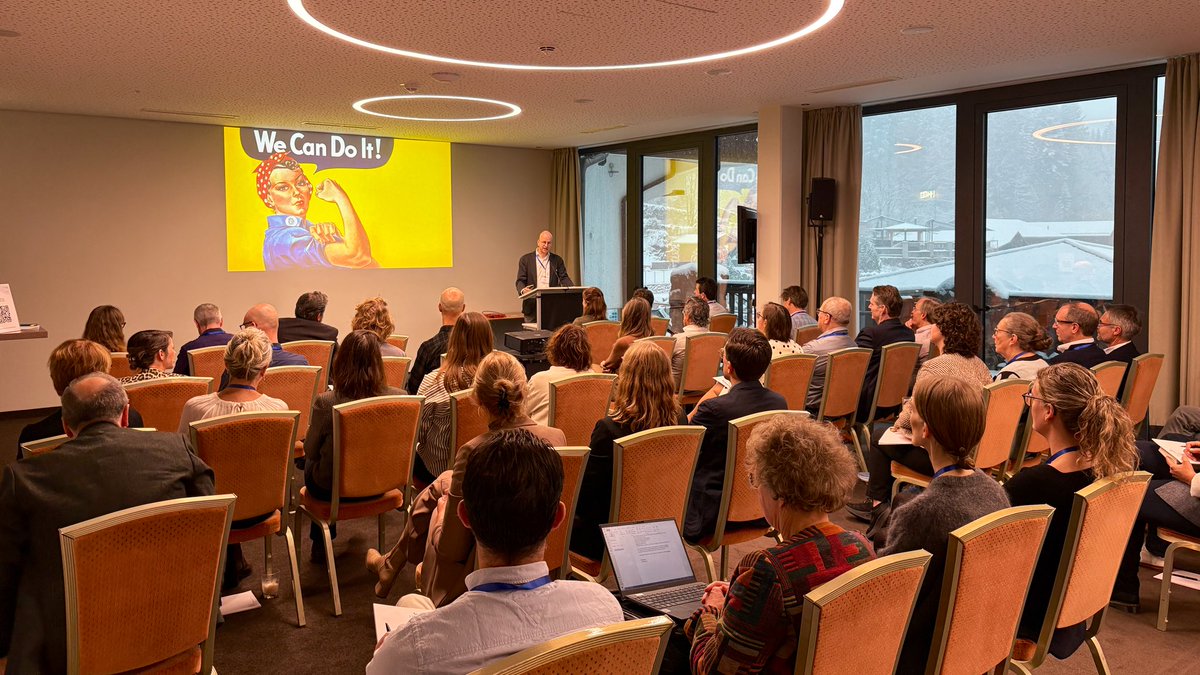
What an engaging way to start the European Stroke Science Workshop - with a keynote debate about IAT following MT or not and voting.
We are looking forward to two days of exchange, discussions and networking.
#ESSW@FishingNeurons#strokeeducation#stroketwitter
This #NeurologyRF case highlights the diagnostic approach and importance of thorough clinical evaluation of young patients with intracerebral hemorrhages: https://t.co/6YXEYgwx8C
EURECA: New data on recurrent ICH: every second recurrence is adjacent to index ICH. Those bleedings occur early and are strongly associated with CAA. Great collaboration lead by @mbgoeldlin@StrokeBern
Author interview podcast: https://t.co/wMxa6qUunG
https://t.co/OYyJ91A5rO
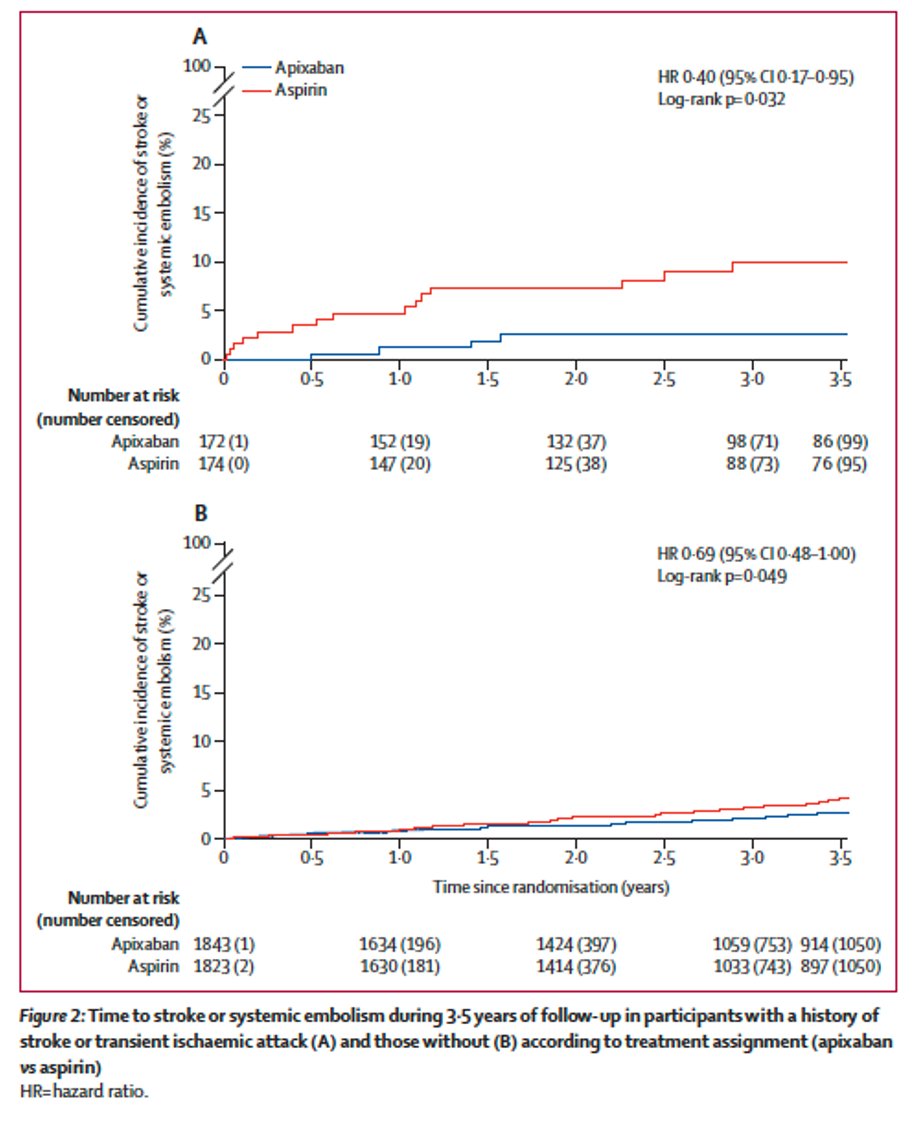
Should patients with #stroke and device-detected subclinical #AFib (SCAF) receive OAC?
Our subgroup analyses of the @Artesia_RCT published in @TheLancetNeuro provide novel insights indicating that they indeed should in the right setting.
https://t.co/lDwfDPaSsh
#CardioTwitter
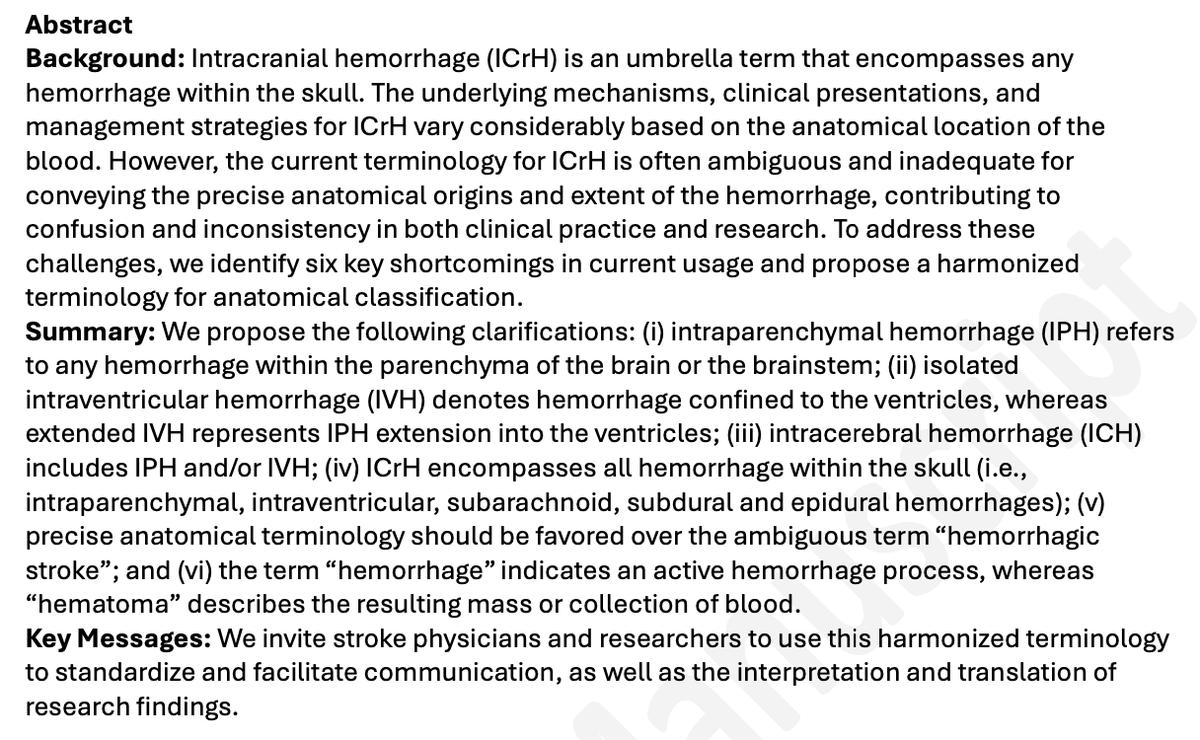
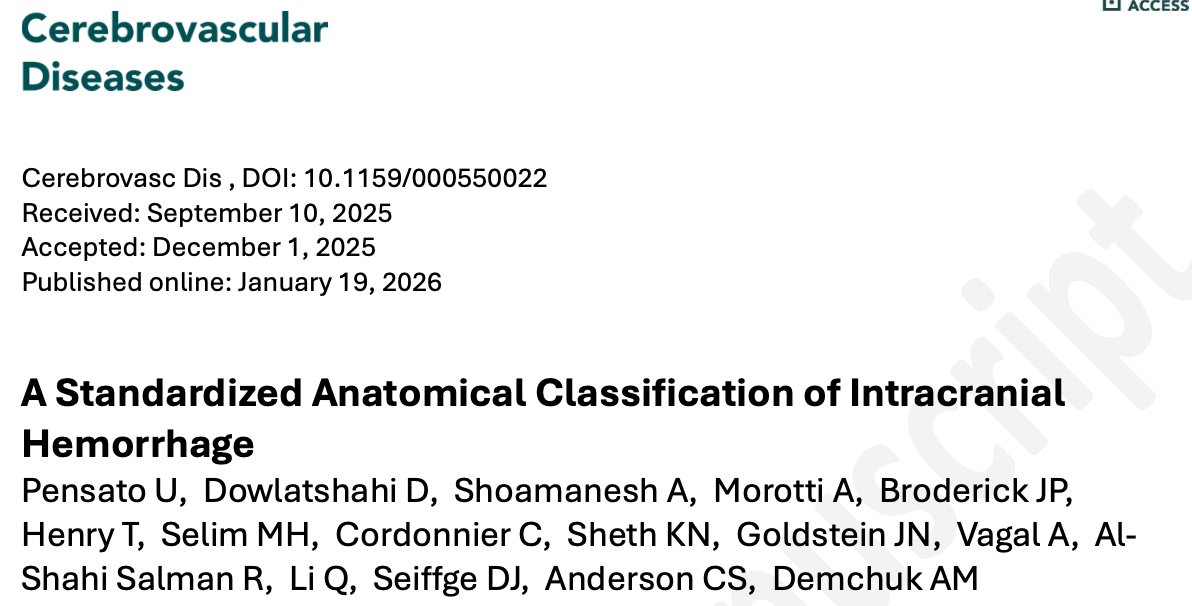
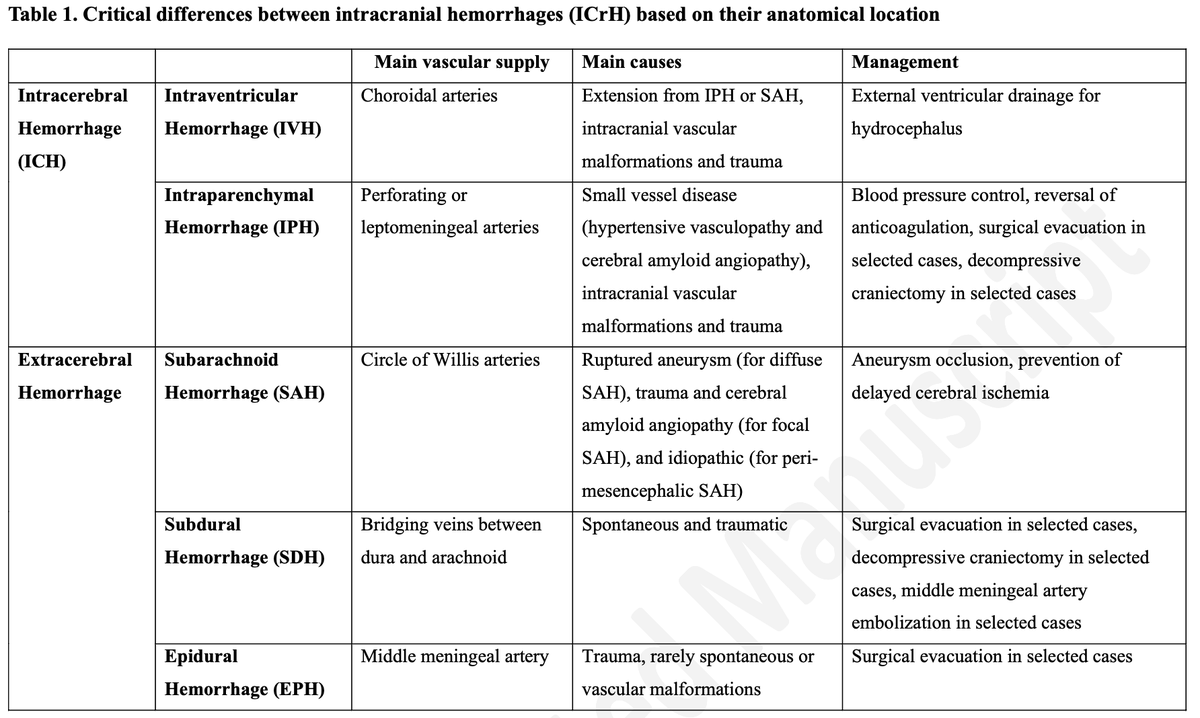
Globally, intracerebral haemorrhage causes more loss of healthy life years than ischaemic stroke. We must prioritise ICH to reduce its burden through public health interventions, research, and improved healthcare.
See our open access @WorldStrokeOrg factsheet 👇🏻
Calling all experts in #intracranial#hemorrhage! 🧠✨ Share your insights, discoveries, and research at #WICH2025. Don’t miss this chance to present among peers and contribute to advancements in the field—submit your abstract today! 📑
https://t.co/WGtsS0sJAc
Risk of Ischemic Stroke After Patent Foramen Ovale Closure | Journal of the American College of Cardiology https://t.co/SowXYCKUrA
The risk of ischemic stroke after PFO closure is reduced, but remains high. 6-fold higher over 4 years!
🫀Cohort study of recurrent ischemic stroke/TIA after patent foramen ovale closure
🧑🤝🧑Study of 310 patients
➡️At follow up: 8 had recurrent stroke/TIA, other adverse outcomes were uncommon
🩸🩺Recurrent stroke/TIA was more frequent in those with: hypertension, hematologic conditions involving hypercoagulability
https://t.co/8BZfT8zd68 @clauszsimonsen
Intriguing findings! We need to better understand what is really going on in the brain before it bleeds, beyond risk factors! Then, we might be able to treat and prevent (recurrent) ICH. That might become our EURECA one day! Well done!
We followed >8000 Danes with atrial fibrillation who had a stroke and started/restarted DOAC. For incidence rates of stroke recurrence, association of recurrence with DOAC discontinuation & more, see our article in #JAMA Neurology: https://t.co/DU2RZgBcBf
Left atrial appendage closure in patients with atrial fibrillation and acute ischaemic stroke despite anticoagulation @alvindasMD@guroledip
https://t.co/LJzhz83FA5