Very excited to announce that next month I'll be presenting a new working-paper--The Law of Legislative Power--at the @NDLaw Legal History Colloquium in Chicago!
Here's the abstract:
In “Habeas Corpus and Void Judgments,” @DavidHKinnaird presents a fresh look at the history and origin of habeas corpus, arguing that the jurisprudence in this area has lost its way and offering a path back.
https://t.co/2UBRovgWyn
We’re gearing up to welcome our impressive line-up of scholars for Professor Ilan Wurman’s book workshop on his important forthcoming work, The Constitution of 1789: A New Introduction. @shbarclay
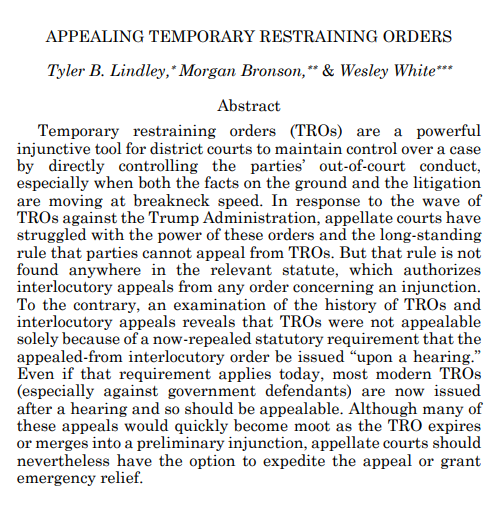
"Appealing Temporary Restraining Orders" is now live in the @FloridaLawRev! Thanks to the editors for such a quick turnaround.
https://t.co/MR19cNN7xS
https://t.co/IObhZIUJv2
@IJSanders Plus there is no meaningful check on malfeasance in office when the malfeasance is ordered by the President. I don’t necessarily see constitutional problems with a universal injxn-like remedy that only runs against government officials or making quo warranto available qui tam.
@IJSanders The problem really is that there are no consequences for executive officials repeatedly and flagrantly exceeding their authority and violating the law. It seems to me that universal injunctions are filling a void created by the various (made up) immunity doctrines.
@IJSanders For incompatibility, maybe certain causes of action sound more in ecclesiastical jdx than common law jdx? I’d have to think about it more. But universal injxns seem to run up to, if not exceed, limits on the judicial power, not just equity. That makes them an easier case imo. 3/3
@IJSanders I think that would be a matter of trying to distill factors that are either (a) necessarily “common law” or (b) incompatible with “common law.” To me, it seems like most penal actions are exclusively common law. … 2/
@IJSanders Congress could certainly authorize a remedy like universal injunctions against federal officers, but I am skeptical that it would be a proper remedy against private civilians.
@IJSanders The big problems to me are the lack of mutuality and the imposition of imprisonment as a punishment for breach of a duty that wasn’t previously punishable by imprisonment. That strikes me as more legislative in nature than judicial.
@invcondemnation Source checking is the biggest value add. It’s a huge amount of work, and I’m not sure how else it could be done other than having students do it.
"Highly Recommended. Download it while it's hot!" @lsolum's blog is an incredible service to the academy, I'm grateful for the recommendation on my new article, "Reconstructing Section 1983," forthcoming in the @NotreDameLRev. Link👇
https://t.co/duNYn3QHXs
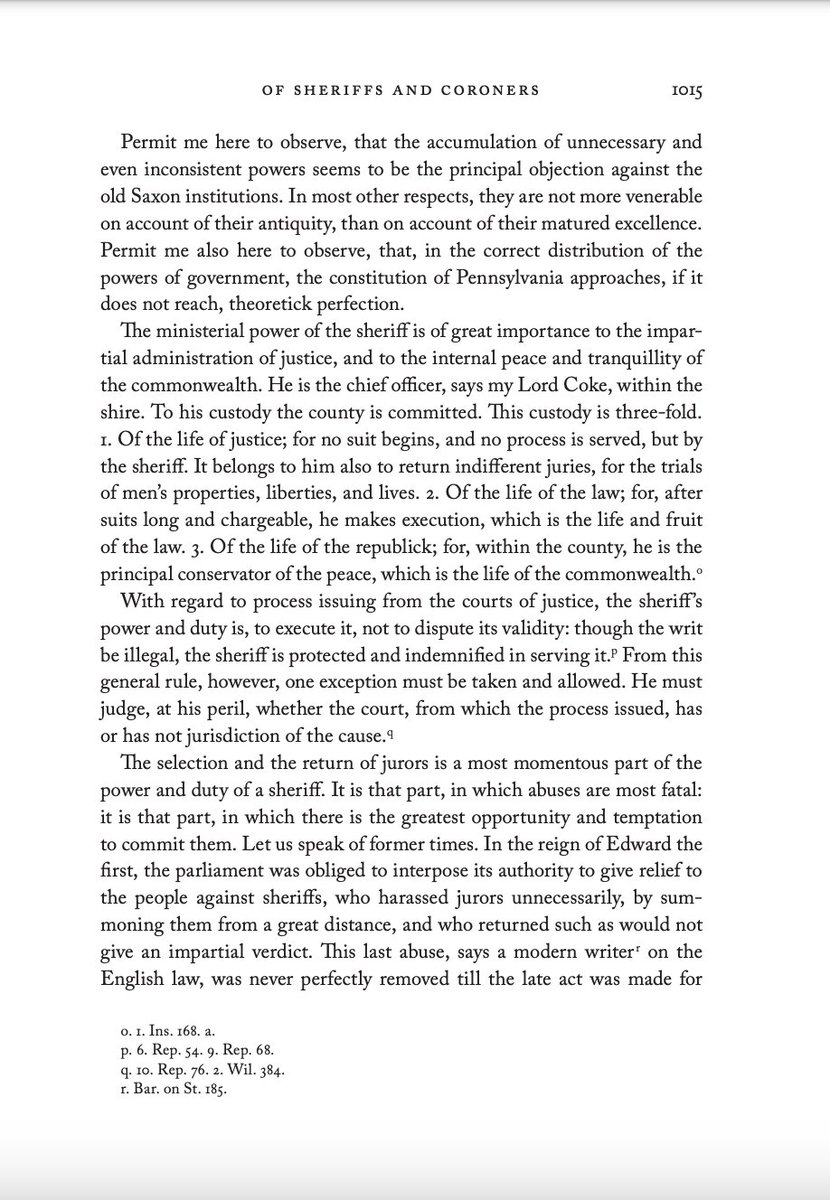
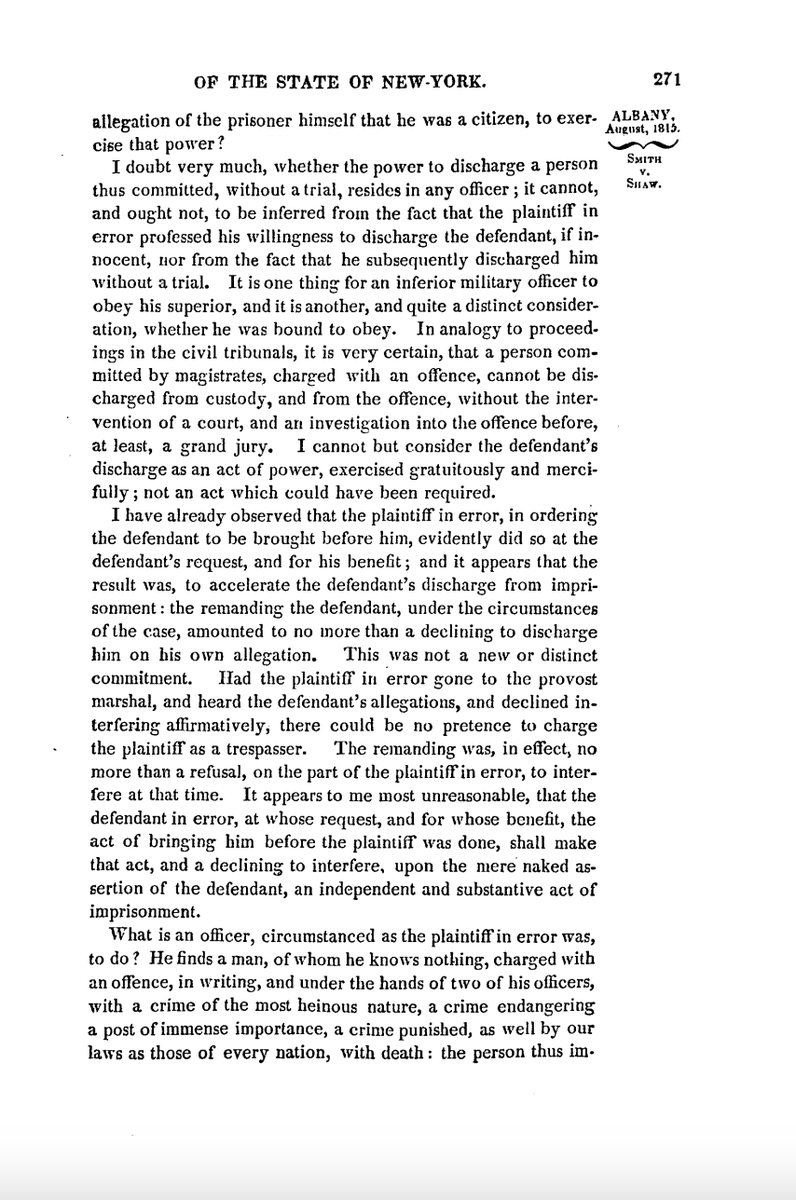
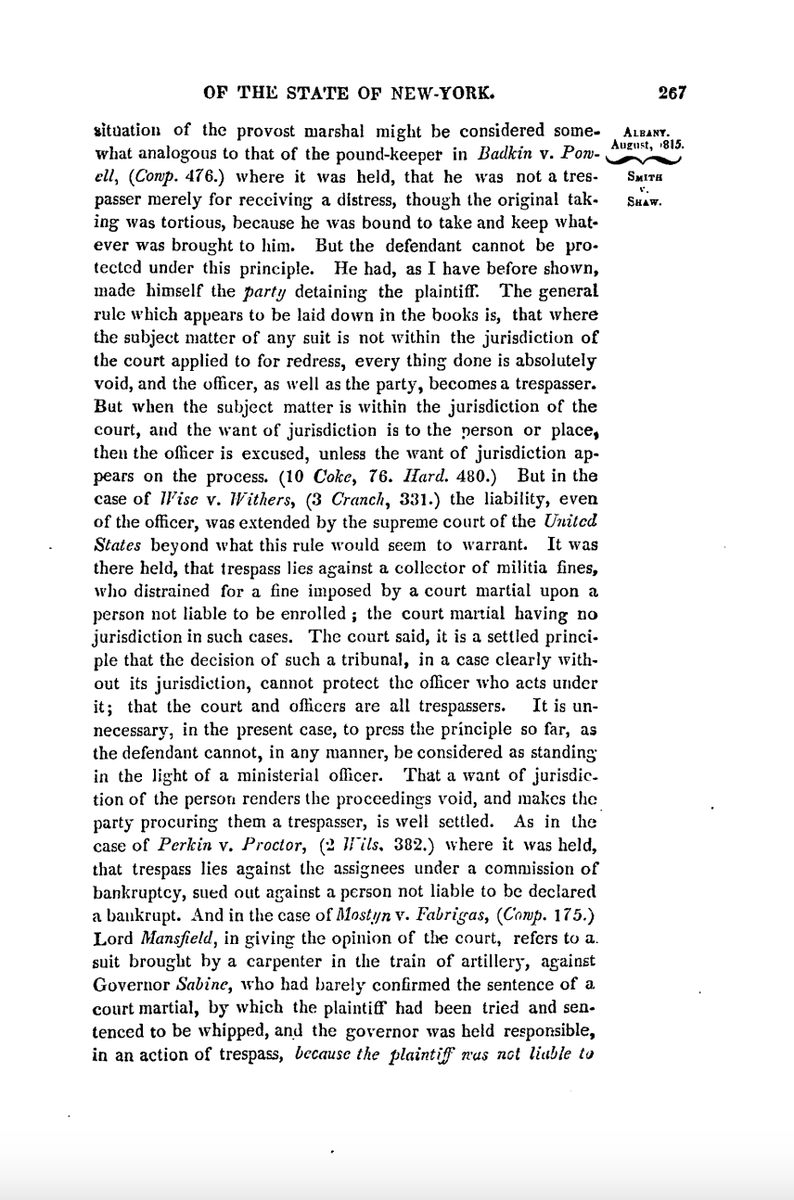
Note that there was some dispute over the extent of this principle, as seen in the dissent in Shaw, at 271-73 (disputing principle altogether), and in James Wilson's Lectures on Law: Of Sheriffs and Coroners, in 2 Collected Works 1015 (limiting principle to jdx of the cause).
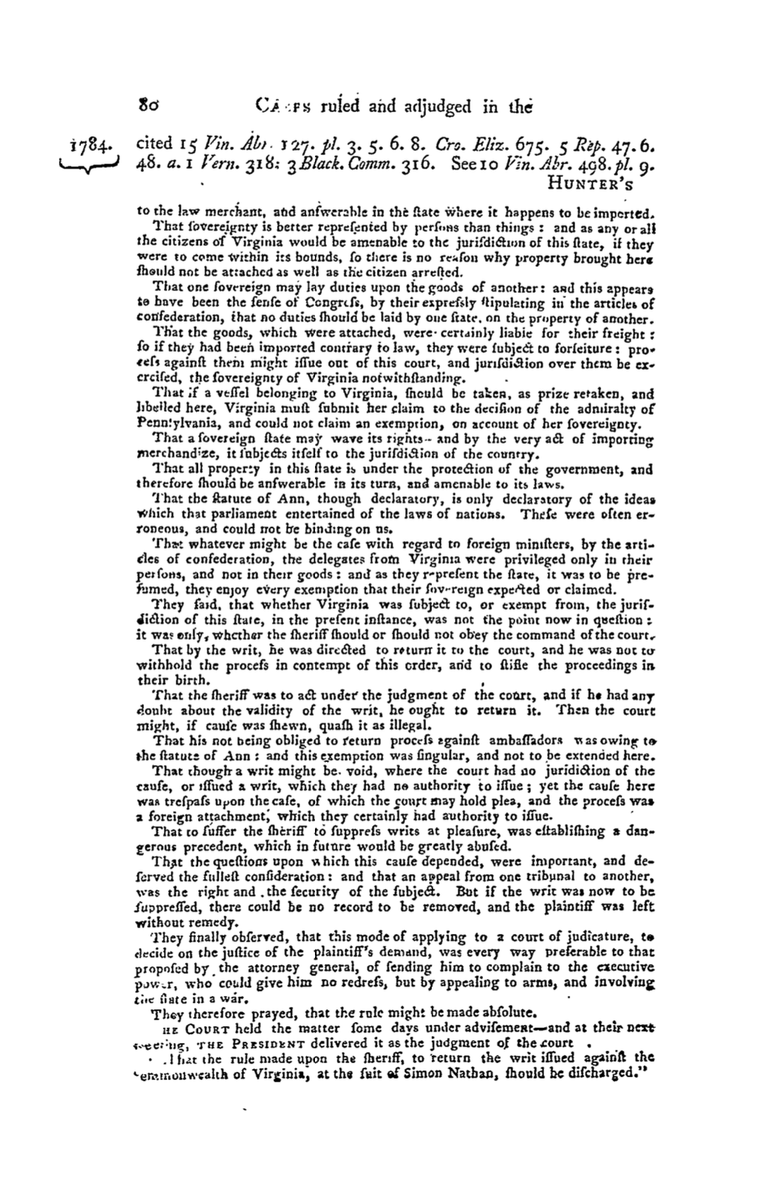
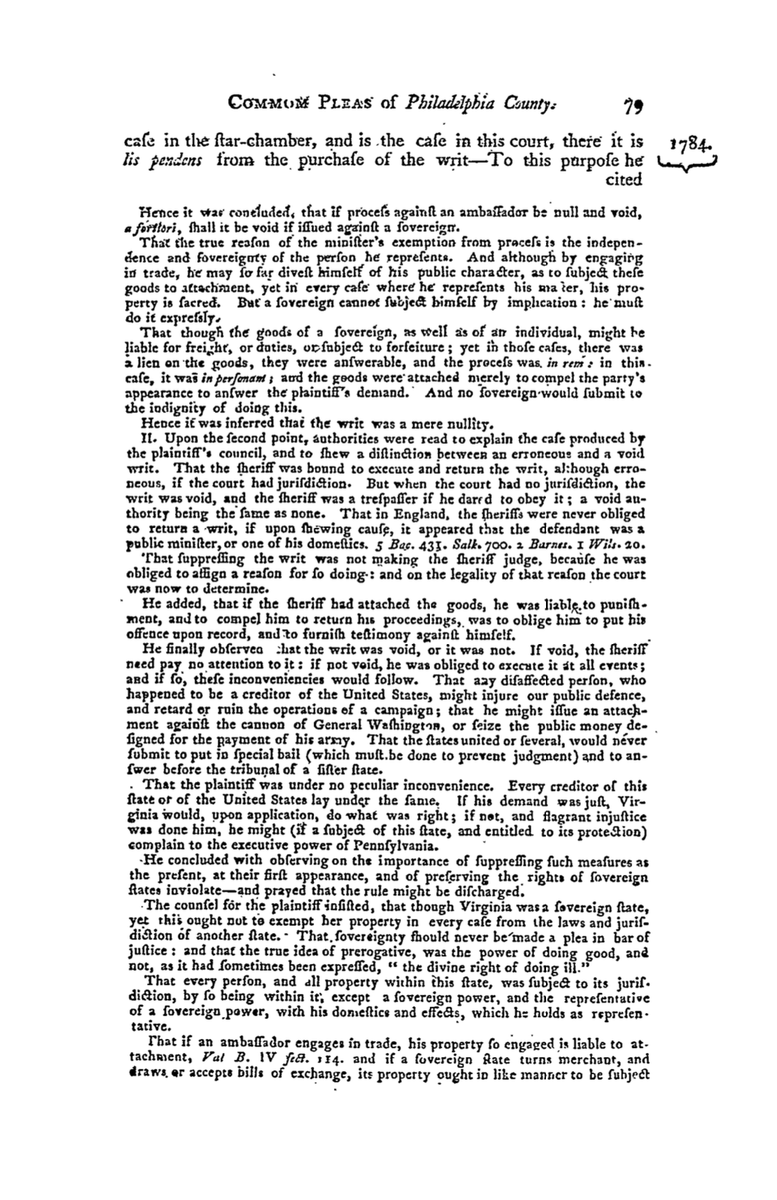
A case illustrative of a broader principle: an officer is bound to execute a valid writ, even if erroneous; but if the writ is void, the officer would be "a trespasser if he dared to obey it; a void authority being the same as none." Nathan v. Virginia, 1 Dall. 77, 79 (Pa. 1781).
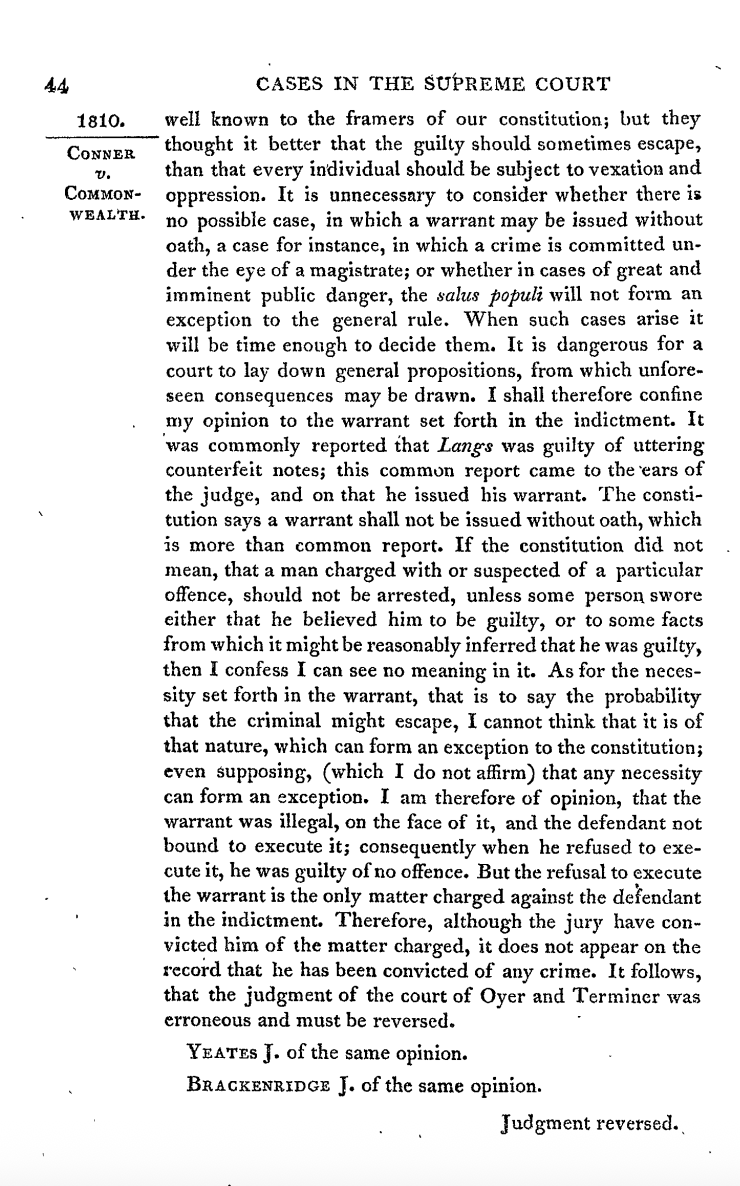
Interesting early warrant case: Connor v. Comm., 3 Binn. 38 (Pa. 1810), holding a constable could not be prosecuted for failure to execute an arrest warrant here b/c the warrant was unlawful: The judge issued it on a rumor, not an affiant's oath.
https://t.co/HzxF8mtGvQ
The officer's duty to judge the writ for lawfulness, however, is limited to defects in the issuing court's jurisdiction over the cause and any jurisdictional defects that appeared on the face of the writ. Smith v. Shaw, 12 Johns. 257, 267 (N.Y. 1815).