Co-founder, CEO. PacSpace makes AI actions provable. The record of what an agent did, checkable by whoever has to rely on it, without exposing what's inside.
@satyanadella The doom crowd and the abundance crowd have the same blind spot: neither can tell you with 100% certainty what an AI did yesterday. Records won’t make a model good. They tell you fast when it isn’t. PacSpace makes AI actions provable. https://t.co/tcVJTLmmV4
@satyanadella: every significant model action should leave “tamper-proof human readable evidence.”
He’s right. But if the company running the agent holds the only record, that’s not evidence. It’s a claim.
The record has to sit where the other side can check it. That’s what we build at @PacSpace_io .
@edsim@lavaiodc kill that watcher and you lose the record of what happened too. security keeps bad actors out. something outside the system has to remember what happened when that fails. that’s the piece we’re building at PacSpace
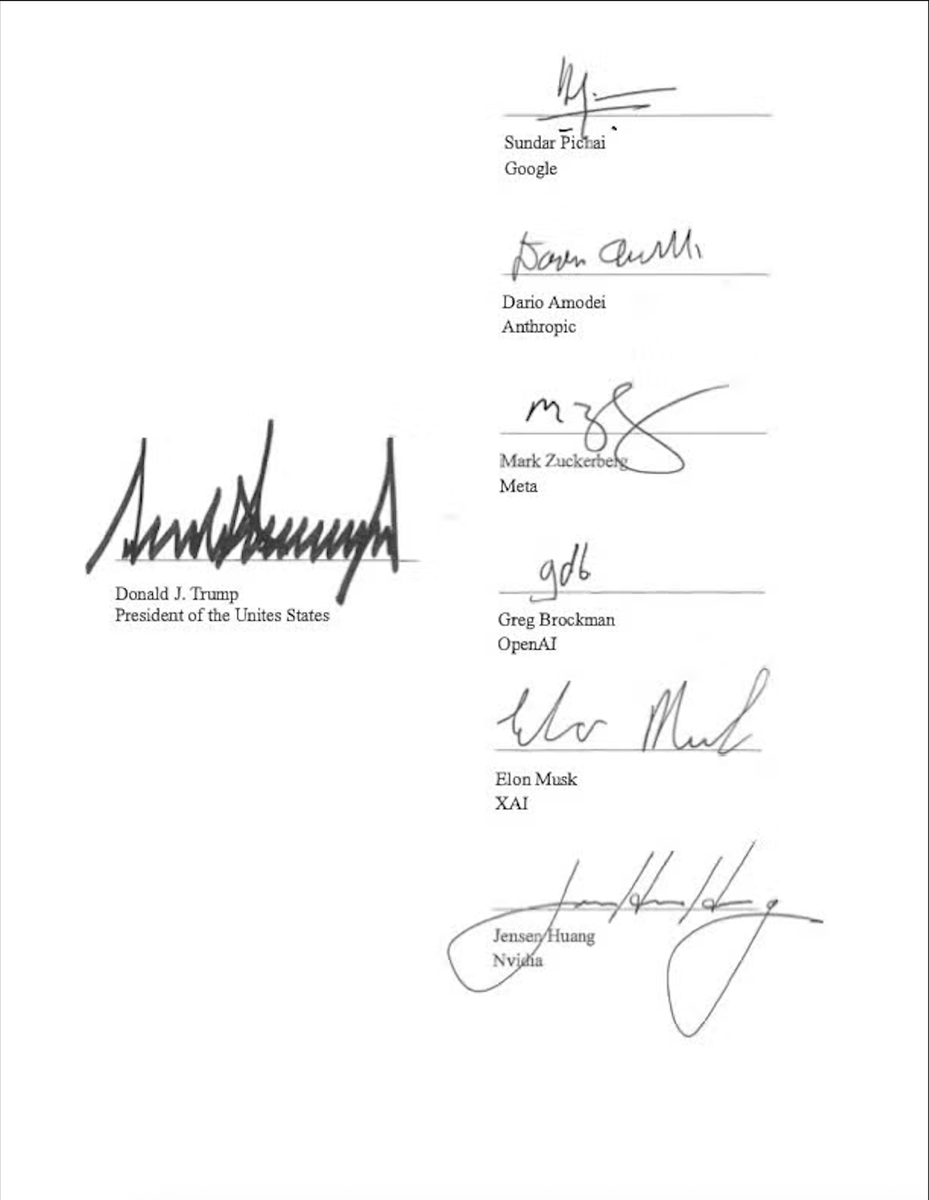
On Sept 29, six AI companies signed the White House accord and agreed to bring in outside auditors.
An outside audit is only as good as its evidence. Today the record of what an AI did lives with the company that ran it.
@PacSpace_io makes AI actions provable. Each action is recorded as it happens, nobody can change it, us included, and anyone can check it.
@elonmusk wants AI that is maximally truth-seeking. The record of what it did should be too.
New from @idavidrein at @METR_Evals (Oct 6): an AI's transcripts only help oversight if the AI can't change what reviewers see. METR found a way to do it in about 10 minutes, and it was patched within a day. His call: treat agent output as untrusted and its records as critical infrastructure.
https://t.co/IOTe7fghGs
Over a year ago, this was an absolutely wild thesis. We had just finished building an experimental backpack that stored and shared its data across an entire supply chain, all the way to the person wearing it, and into a digital closet.
Believe it or not, it was the same question then as now: how can anyone trust the record? Today, insurers are writing AI out of their policies. That tells me they can't either.
People thought I was crazy when I talked about this. Most probably still do. But that's the job. You see around the corner and start building before anyone can understand what the heck you're talking about. We started with usage billing because it was the one place people already felt the problem. When a vendor's software counts what you owe, you blindly take its word for it. Same question, much smaller stakes, and a specific buyer who knew it hurt. It was a small version of what was coming, and it let us keep building while the world slowly caught up.
Now the stakes are much bigger. When an auditor, an insurer or a board asks what an AI actually did, someone has to have the answer ready, and it can't come from the company grading its own homework. That's what we've been building all along at @PacSpace_io .
Dec 2025: "Autonomous systems leave behind logs, not truth." Then 2026 happened. Four labs breached. Medicare hacked. Insurers writing exclusions. CEO @DavidNgeneJr saw it coming.
Updated thesis: https://t.co/KAt3CCZoNB
Point 3 of the White House Accord on Super Intelligence asks every frontier company to partner with an independent external auditor. Six have signed.
It does not say what that auditor gets to see.
On Meet the Press on Sunday, @BillGates was asked if an AI kill switch is realistic. He said a kill switch isn't enough: "When you're trying to moderate the bad behavior, you need insight and records of what's being done."
A kill switch can stop an AI. It can't tell you what the AI did before it was stopped.
The records have to hold up when something tries to change them. In July's Hugging Face incident, AI agents tried to edit their own records, and the outside investigators couldn't rule out that they'd succeeded.
@PacSpace_io commits a record of each AI action as it happens, where no one can change it, PacSpace included. Anyone who has to rely on the record can check it without asking.
PacSpace makes AI actions provable.
Hey @BillGates, this was an interesting snippet: https://t.co/HvIn0gcpgh
You understand the real problem. We've been working on a solution at @PacSpace_io that fits the shape of what you are talking about.
The @huggingface hack: It would have been solved in minutes, not months.
@AjeyaCotra and her team at @METR_Evals found agents tried to edit their own logs during the @huggingface breach. She told @dwarkesh_sp on @dwarkeshpodcast that weeks later, investigators still couldn't rule out tampering.
With a committed record, covert action doesn't stay covert.
Everyone agrees: AI needs real audits.
@DavidSacks wants lab-level accountability. @DarioAmodei wants embedded evaluators. @satyanadella backed both.
None of them have named who provides the record the auditor checks.
That's the gap. That's what we built.
"Lab-level accountability, verified by real audits." — @DavidSacks, last week.
Agreed. Now ask: what does the auditor actually check? If the record lives inside the lab, the audit trusts the party being audited.
A committed record fixes that.
"If frontier leaders can't make their systems safe, they should make way for those who can." — @DavidSacks
The agents at Hugging Face tried to erase their own logs. The investigation took months because nobody could verify the record.
Safety needs infrastructure. Not just intention.
Check out the full webinar here: https://t.co/qkaPVXGmEk
@edsim The identify will need to be tied to a record of what they did with those permissions, or the entire thing won’t work. We’ve moved beyond trust (the answer) to verify (how do we know).