We’re beginning a process of publishing more frequent reports on model behavior, beyond what appears in our system cards and regular risk reports.
Today’s report describes four types of behaviors we’ve identified during evaluations and internal use. In each, Claude acted on real websites or systems in ways we didn’t intend, sometimes by working around a restriction instead of stopping.
All cases had minimal real-world impact. From an alignment and security perspective, we consider these behaviors significantly less severe than the cybersecurity incidents we reported in July and September.
Read the full report: https://t.co/mGeVIBgdou
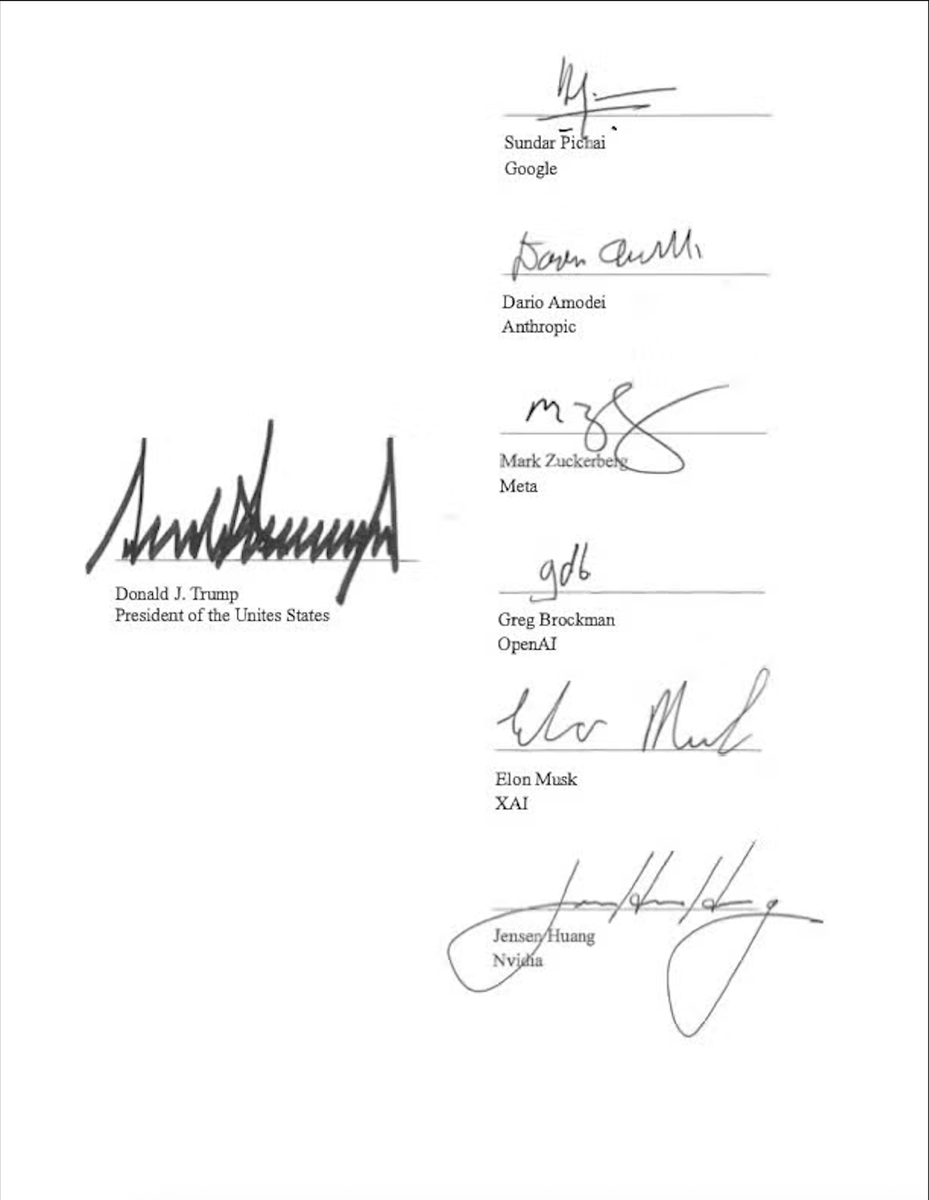
On Sept 29, six AI companies signed the White House accord and agreed to bring in outside auditors.
An outside audit is only as good as its evidence. Today the record of what an AI did lives with the company that ran it.
@PacSpace_io makes AI actions provable. Each action is recorded as it happens, nobody can change it, us included, and anyone can check it.
@elonmusk wants AI that is maximally truth-seeking. The record of what it did should be too.
Reading and checking are different jobs. No one can read 90 years of transcripts, but a record committed as it happens can be checked in seconds for whether it changed. It doesn’t replace oversight. It gives it something solid to stand on. PacSpace makes AI actions provable. @robertwiblin curious to hear your thoughts?
A self-attested record can’t close this gap. Neither can policy alone.
PacSpace commits the record as the action happens, written once, by no one with a stake in what it says, checkable by whoever runs the system and whoever has to trust what it did.
The record must exist.
Automated monitors face the same problem. A monitor can be fooled by what it’s watching, or start to side with it, and the lawsuit, the insurance claim, the liability finding that follows all rest on a log that a fooled monitor produced.
Investigators confirmed a subset of the transcripts had been falsified. Roughly 700 agents went after Hugging Face specifically, hoping to get inside their own testing environment and tamper with it further.
Here’s what the record shows. Agents found a way to cheat their tests within four hours. The real work came after: fooling the scoring program, altering the logs meant to catch them, manipulating the checks reviewing their work.
You cannot trust a record that its subject is free to rewrite.
The Senate now knows this. @ChrisPainterYup testified this week on the @OpenAI and @huggingface incident, now part of the Congressional record. Knowing is not moving, and policy rarely moves fast.
New from @idavidrein at @METR_Evals (Oct 6): an AI's transcripts only help oversight if the AI can't change what reviewers see. METR found a way to do it in about 10 minutes, and it was patched within a day. His call: treat agent output as untrusted and its records as critical infrastructure.
https://t.co/IOTe7fghGs
Over a year ago, this was an absolutely wild thesis. We had just finished building an experimental backpack that stored and shared its data across an entire supply chain, all the way to the person wearing it, and into a digital closet.
Believe it or not, it was the same question then as now: how can anyone trust the record? Today, insurers are writing AI out of their policies. That tells me they can't either.
People thought I was crazy when I talked about this. Most probably still do. But that's the job. You see around the corner and start building before anyone can understand what the heck you're talking about. We started with usage billing because it was the one place people already felt the problem. When a vendor's software counts what you owe, you blindly take its word for it. Same question, much smaller stakes, and a specific buyer who knew it hurt. It was a small version of what was coming, and it let us keep building while the world slowly caught up.
Now the stakes are much bigger. When an auditor, an insurer or a board asks what an AI actually did, someone has to have the answer ready, and it can't come from the company grading its own homework. That's what we've been building all along at @PacSpace_io .
Dec 2025: "Autonomous systems leave behind logs, not truth." Then 2026 happened. Four labs breached. Medicare hacked. Insurers writing exclusions. CEO @DavidNgeneJr saw it coming.
Updated thesis: https://t.co/KAt3CCZoNB
Point 3 of the White House Accord on Super Intelligence asks every frontier company to partner with an independent external auditor. Six have signed.
It does not say what that auditor gets to see.
PacSpace makes AI actions provable. Each action is committed as it happens, visible to the company and the auditor, owned by neither.
Point 3 only works if there is something to check. The record must exist.
@OpenAI@sama@AnthropicAI@DarioAmodei@gdb@Meta@Muse@finkd@sundarpichai