All this week the House is in a District work period.
It’s the perfect opportunity to contact your representatives while they are back in their home district.
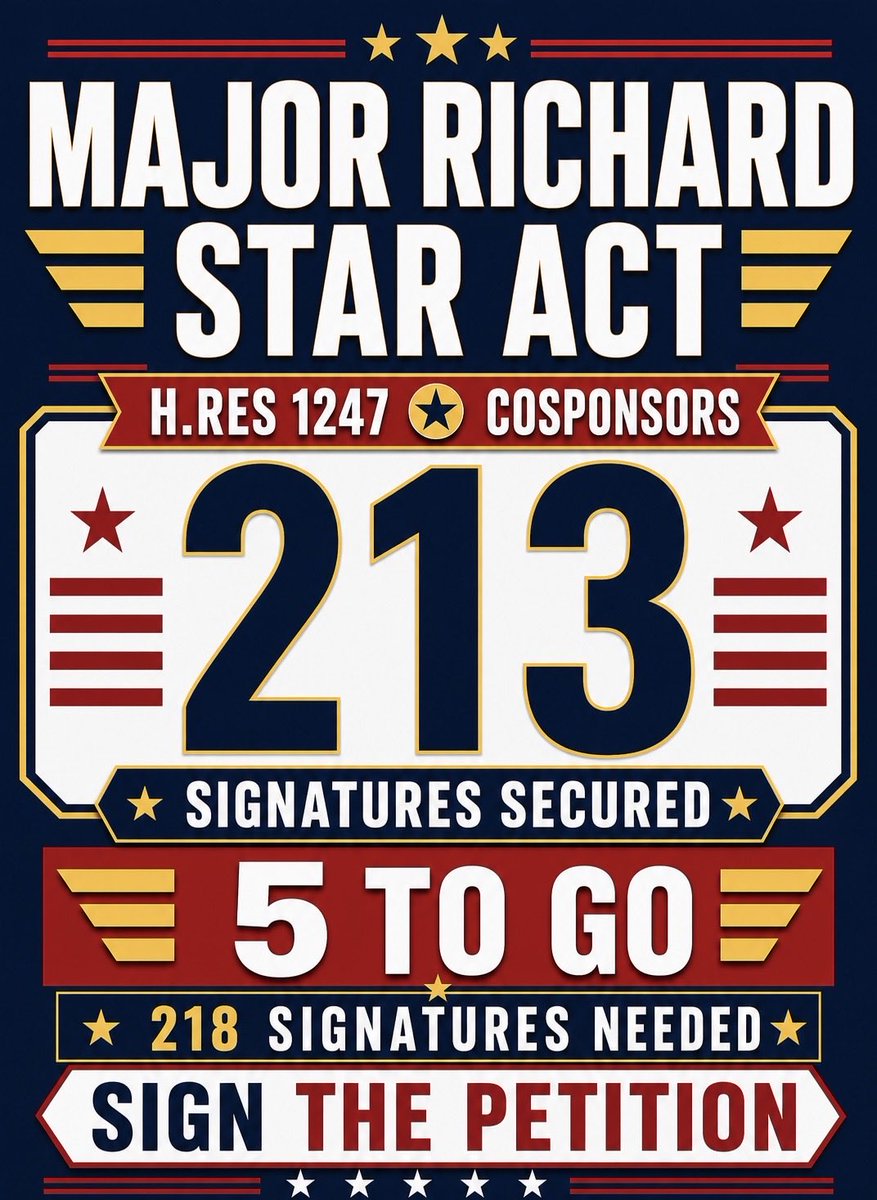
Urge them to sign the H.Res 1247 discharge petition.
#MajorRichardStarAct#Veterans
This multi-part thread masquerades as a myth-busting piece but is actually a paid promotion for a bill that, while containing many excellent provisions, represents one of the largest cuts to veterans' benefits in history. Until the House Committee on Veterans Affairs and @ConcernedVets for America address the problematic issues with sections #101 and #108 of this proposed legislation, their analyses cannot be taken seriously.
The act is pitting the nation’s largest veterans groups against one another over its proposal to pay for billions of dollars in new benefits for seriously ill and injured veterans by taking away future compensation from other disabled veterans.
https://t.co/4sW7gInKAt
https://t.co/AfHRb89Ltd
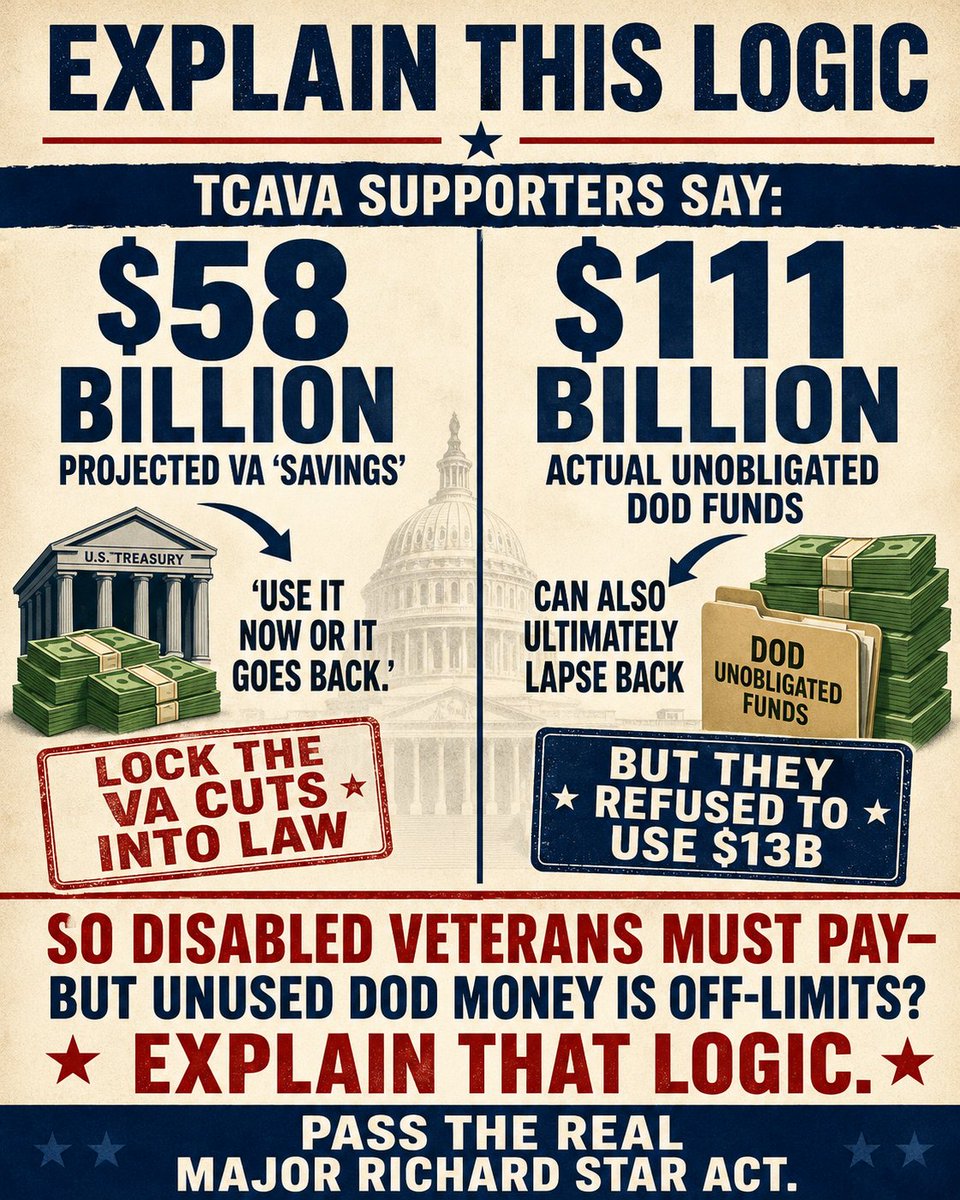
TCAVA supporters say Congress must lock projected VA savings into law because the money could otherwise return to the Treasury. So instead of fighting VSOs / Orgs like WWP, The American Legion, MOAA folded.
But Senator Blumenthal offered a clean alternative: use $13 billion from $111 billion in actual unobligated Department of Defense funds—money that could also ultimately lapse back to the Treasury.
Senator Thom Tillis blocked it.
So unused Defense money is protected, but disabled veterans are expected to finance the bill?
That is not fiscal responsibility. That is choosing wounded veterans as the pay-for.
No 50% cap.
No VA cuts.
No “lesser of.”
No wounded veterans paying for wounded veterans.
Pass the real Major Richard Star Act.
Send your notice now:
https://t.co/AfHRb89Ltd
Congresswoman @RepNancyMace@NancyMace, You’ve been an original cosponsor of the Major Richard Star Act (H.R. 2102) since March 2025.
Yet, your public accounts have only mentioned it twice—most recently in March around the VSO hearings. Meanwhile, your office has received multiple inquiries from constituents like me asking where you stand on recent updates.
Since the introduction of the Take Care of America’s Veterans Act (H.R. 9237) in June, constituents need to know your position on:
• H.Res. 1247 (Discharge Petition)
• H.R. 2102 (Major Richard Star Act)
• H.R. 9237 (TCAVA) Section 108
• H.Res. 1377 (The Closed Rule)
Veterans deserve to know where their Representative stands before these issues are decided—not afterward.
Will you publicly share your position on these four items?
#MajorRichardStarAct #TCAVA #Veterans #SC01
Americans stood firm and Republicans blinked. They knew they couldn’t push through a bill to water down and strip benefits from millions of veterans, and backed down. We need real solutions, like the Major Richard Star Act, to give them what they’re owed! https://t.co/wmUhf6QHgI
The Take Care of America’s Veterans Act is pitting the nation’s largest veterans groups against one another over its proposal to pay for new benefits for seriously ill and injured veterans by taking away future compensation from other disabled veterans.
https://t.co/4sW7gIncKV
@Militarydotcom, @DavidWarrenVet makes some excellent points concerning the types of questions that need to be asked about the Take Care of America's Veterans Act.
Your 7/3 published article did a good job presenting Senator Jerry Moran's one-sided talking points, as if his comments would "finally set the record straight."
However, questions like "What really happened to the Major Richard Star Act?" and "What would really be the actual consequences for veterans if section 108 were to be implemented?" still remain and need to be addressed.
In addition to politicians with an interest in this legislation, please take the time to interview actual veterans and veterans' service groups who speak for the people who will be affected by it.
A good place to start would be: @54KVeterans, @VFWHQ, @DAVHQ, and @iava.
🚨 WE NEED YOUR HELP 🚨
Make sure your Members of Congress know the true impacts of this hurtful bill and tell them to VOTE NO on H.R. 9237 / S. 4744 when it comes to the Floor
Take action: https://t.co/DTdmab7ykv
#IAVA
Two veterans. Same injuries. Different compensation. Simply because one served later.
That's the principle at stake.
The VFW supports improving benefits for veterans, service members, retirees, caregivers and survivors. They also support updating the VA rating schedule through the normal regulatory process.
What they don't support is asking one generation of veterans to pay for another's benefits.
A grateful nation keeps its promises.
Two veterans. Same injuries. Different compensation. Simply because one served later.
That's the principle at stake.
The VFW supports improving benefits for veterans, service members, retirees, caregivers and survivors. We also support updating the VA rating schedule through the normal regulatory process.
What we don't support is asking one generation of veterans to pay for another's benefits.
A grateful nation keeps its promises. https://t.co/CeC7052N42 #HonorTheContract #VFW #KeepThePromise @VFW_OfficeDC
THE QUESTION CONGRESS STILL HASN’T ANSWERED
If you believe the Major Richard Star Act deserves to become law, why not let the House vote on it as a standalone bill?
The Major Richard Star Act (H.R. 2102) has attracted 337 House cosponsors—an overwhelming bipartisan majority.
Yet only 213 Members signed H.Res. 1247, the discharge petition that would force the bill to the House floor.
That leaves one obvious question:
If you publicly support the bill, why not sign the petition that would allow it to be voted on?
WHAT CHANGED?
As the discharge petition gained momentum and came within five signatures of success, Congress shifted its attention to the Take Care of America’s Veterans Act (H.R. 9237).
Instead of allowing a clean vote on the Major Richard Star Act, it was incorporated into a 554-page omnibus that also includes Section 108, which would codify revised disability rating criteria for future sleep apnea and tinnitus claims as part of the package’s offsets.
For many VSOs and veterans, that changed the conversation entirely.
THE SENATE ARGUMENT
One of the most common arguments against completing the discharge petition is that a clean House bill would simply stall in the Senate.
But consider the numbers.
The Senate version of the Major Richard Star Act already has 79 bipartisan cosponsors.
Those Senators represent 44 states and approximately 304.5 million Americans.
That does not guarantee passage.
It does demonstrate broad bipartisan support.
The challenge has not been the number of supporters—it has been getting the legislation scheduled for a vote.
A House-passed standalone bill would significantly increase the pressure for the Senate to address the legislation.
THIS IS ABOUT ACTION
Cosponsoring a bill tells veterans you support it.
Signing a discharge petition demonstrates you’re willing to act when the normal legislative process has stalled.
Those are not the same thing.
Veterans are not asking Members to choose between veterans.
We support the many bipartisan provisions contained in TCAVA.
But many veterans also believe the Major Richard Star Act deserves to stand or fall on its own merits—not be tied to a larger package that includes Section 108.
The House is just five signatures away from allowing that to happen.
If you have already cosponsored the Major Richard Star Act but have not yet signed H.Res. 1247, veterans are asking one simple question:
If not now, when?
#MajorRichardStarAct #Veterans #TCAVA
@RepMikeLawler@ZachNunn@RepMackenzie@repgabeevans@CongressmanKean
Myth: The only way to balance the VA budget is by cutting benefits from future veterans. Call the U.S. Capitol Switchboard at 202-224-3121 and tell your Member of Congress to not sign the Take Care of America's Veterans Act until cuts to earned benefits are removed.
"A grateful nation pays its debts. It does not send veterans the bill." Craig Romanovich, the Executive Director of the @unionveterans, spoke out against the Take Benefits from America's Veterans Act. Veterans like Craig shouldn't have to fight for the benefits they are owed.
The package contains many bipartisan provisions VSOs and veterans support.
@JerryMoran Could you also explain why Section 108, which would codify revised disability rating criteria for future sleep apnea and tinnitus claims, was included as part of the funding mechanism?
Many VSOs and veterans remain concerned about that provision.