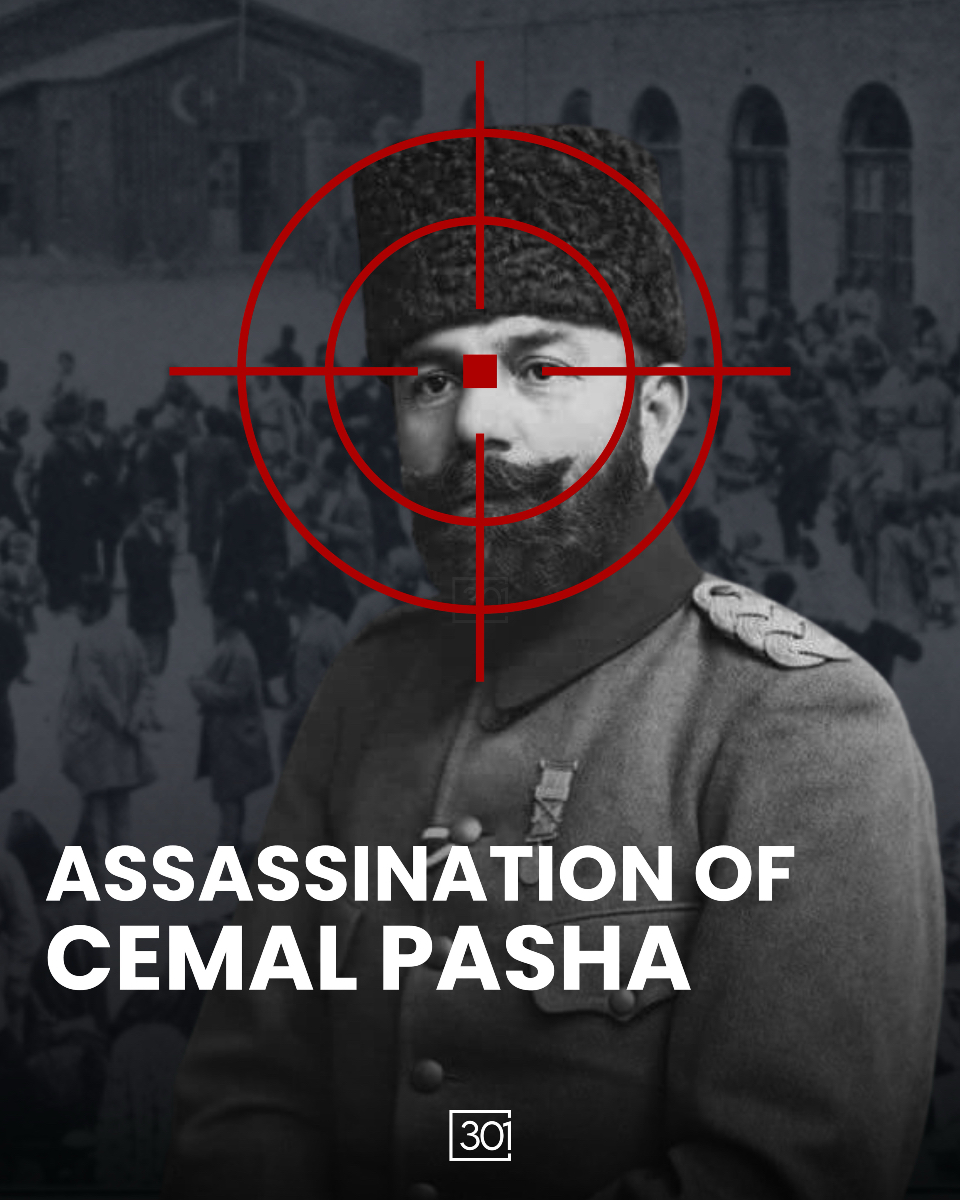
In 1922, as part of the ARF’s Operation Nemesis, Armenian avengers Stepan Dzaghigian, Artashes Kevorkian, and Bedros Der Boghosian assassinated Cemal Pasha in Tbilisi. Cemal, a former Ottoman naval minister, was one of the masterminds of the Armenian Genocide. While some hailed him as the “Lion of Islam,” Armenians knew him only as “the butcher” for his central role in the mass extermination of their people.
Despite the strong Armenian presence in Tbilisi, Cemal Pasha risked a stop there during his travels in July 1922. Artashes and Bedros—both survivors of the Khotorjur self-defense battles—were in the city and had sworn to exact justice, a promise made as early as 1919 in Batum.
The assassination sparked mass arrests throughout Tbilisi, many targeting innocent civilians. Though Artashes and Bedros initially escaped, they were arrested in 1936 on fabricated charges claiming they posed a threat to Stalin. A year later, both were executed at the height of the Stalinist purges.
Only in the late 1950s did a Soviet court posthumously acquit them, admitting to the injustice decades after their deaths.
”Israel is supplying the arms to murder Christians in Armenia, the oldest Christian country in the world.
And all Christians watching this need to realize that the time is now to start speaking up”, Candace Owens @UN#AzerbaijanCommittedGenocide
Azerbaijani Forces Open Fire on Armenian Village in Syunik, Target & Damage Home in Cross-Border Attack—No Casualties
➖➖➖
On March 31, Azerbaijani armed forces opened fire on the Armenian village of Khnatsakh in the Syunik Province, damaging a residential home, Armenia’s Defense Ministry reported. No injuries were recorded.
Photographs released by the ministry show bullet holes puncturing the window and walls of the house.
The Armenian Defense Ministry denied accusations from Azerbaijan, which claimed that Armenian forces had fired on Azerbaijani positions between March 30 and March 31.
“The statement issued by the Ministry of Defence of Azerbaijan, alleging that Armenian forces opened fire on Azerbaijani positions, does not correspond to reality,” the Armenian Defense Ministry said. Instead, it accused Azerbaijan of initiating the attack on Khnatsakh at around 12:50 a.m. on March 31.
The ministry also recalled Armenia’s earlier proposal to establish a joint investigation mechanism for ceasefire violations, which Azerbaijan has not yet responded to.
"We reaffirm our readiness to investigate Azerbaijan’s claims should they provide evidence. At the same time, we urge Azerbaijan to investigate the shelling of the residential building in Khnatsakh and provide public clarifications,” the statement added.
Despite ongoing negotiations over a potential peace deal between Armenia and Azerbaijan, Azerbaijani forces continue to open fire on Armenian border villages, raising concerns over Baku’s commitment to the peace process.
BREAKING: Starlink Launches in Armenia, Bringing High-Speed Satellite Internet Nationwide 🇦🇲🛰️
➖➖➖
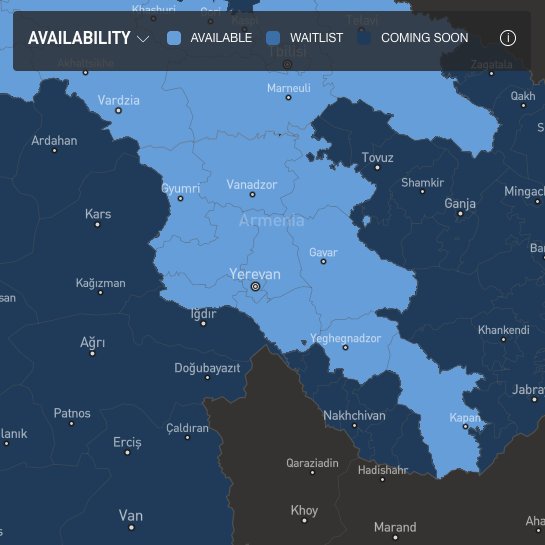
Starlink has officially launched in Armenia, making it the 130th country to access the high-speed, low-latency internet service.
Thanks to months of close collaboration between Starlink, Armenia’s Ministry of High-Tech Industry, and key national authorities, this milestone brings transformative internet access to communities across the country—from cities to the most remote villages.
With speeds reaching up to 220 Mbps, Starlink is set to revolutionize online education, remote work, entrepreneurship, and secure communications—especially in mountainous and underserved regions.
This launch is a major step toward digital inclusion and a connected future for all Armenians.
Starlink is now live in Armenia, marking the 130th country, territory or market around the world where Starlink’s high-speed internet service is available 🛰️🇦🇲❤️ → https://t.co/V4WCpqEuAq
CNN Türk Airs Anti-Armenian Report, Falsely Claiming Yerevan’s Persian Blue Mosque As ‘Historically Turkish’ After Armenian Gov’t-Sponsored Visit
➖➖➖
CNN Türk’s news director, Idris Arkan, has come under criticism for describing Yerevan’s Blue Mosque and the Armenian capital as "historically Turkish" in a recent report following his visit to Armenia. Arkan was among a group of Turkish journalists who traveled to Yerevan last week at the invitation of the Armenian government, with all expenses of the visit covered by the Armenian side.
The visit was part of an Armenian government initiative to engage with Turkish media representatives and provide firsthand insight into the country’s policies and regional stance. Arkan and several other Turkish journalists were given the opportunity to tour Yerevan and speak with Armenian officials, including Pashinyan.
However, following his return, CNN Türk aired a segment in which Arkan claimed that the Persian-built Blue Mosque, one of Yerevan’s key historical landmarks, and the city itself were "historically Turkish." The claim sparked outrage, particularly among Armenian and international historians, as well as journalists who accused the report of distorting historical facts.
American journalist Lindsey Snell was among those who highlighted the issue, calling out the falsification of history.
Gor Tsarukyan, director of the Public Relations Center and one of the organizers of the media tour, responded on social media, clarifying that CNN Türk’s original report was relatively neutral. However, he claimed that a second, more biased segment—including the controversial claim about the mosque—was filmed under Azerbaijani pressure. While this version was later removed from YouTube, it remains available on CNN Türk’s official website.
The Blue Mosque was built in 1766 under the rule of Hoseyn Ali Khan, the Persian governor of the Erivan Province. It served as one of the region’s most significant Shia Islamic centers during Persian rule.
Today, the mosque is an important cultural and historical site and serves as a place of worship, mainly for Yerevan’s small Iranian community.
Armenia’s decision to invite Turkish journalists, including Arkan, was aimed at fostering dialogue between the two nations, which have a historically tense relationship. However, the controversy surrounding CNN Türk’s report underscores the challenges of ensuring accurate media representation, especially when dealing with sensitive historical narratives.
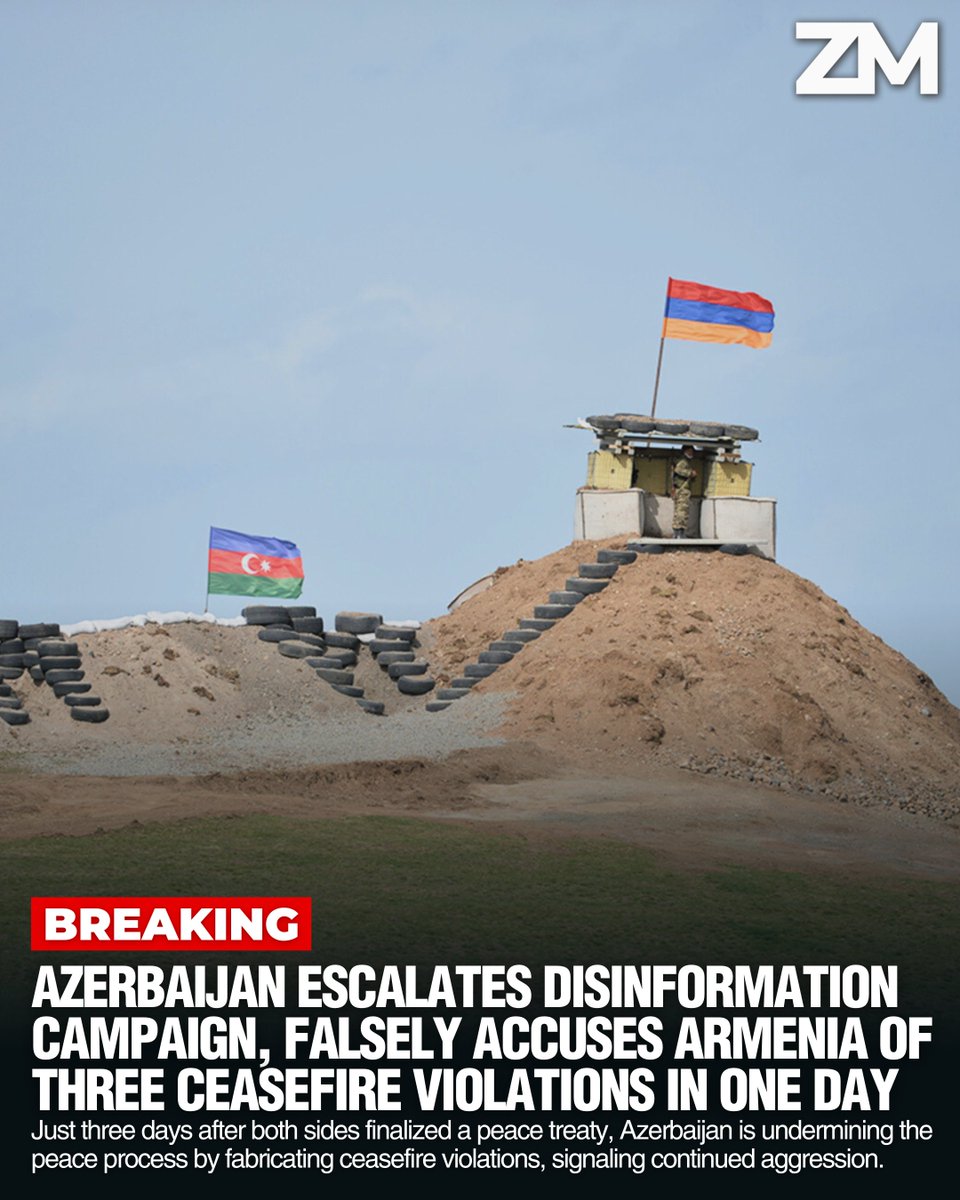
BREAKING: Azerbaijan Escalates Disinformation Campaign, Falsely Accuses Armenia of Three Ceasefire Violations in One Day
➖➖➖
Azerbaijan’s Defense Ministry (MoD) has escalated its disinformation campaign, spreading three false claims today, on March 16, alleging that Armenian Armed Forces opened fire on Azerbaijani positions along the southeastern border—claims that Armenia’s Defense Ministry has categorically denied as entirely false.
Azerbaijan’s MoD claims the alleged incidents occurred on March 16 at 9:45 a.m., 6:35 p.m., and between 8:10-8:45 p.m. However, Armenia’s MoD has categorically rejected these accusations, stating they do not correspond to reality.
Azerbaijan has repeatedly used disinformation to lay the groundwork for a false narrative, creating a pretext for potential aggression against Armenia by fabricating claims of ceasefire violations to justify its actions.
To note, the Office of the Prime Minister of Armenia has proposed the establishment of a joint Armenia-Azerbaijan mechanism for investigating ceasefire violations and related incidents. However, Azerbaijan has yet to respond to this initiative.
Just three days ago, on March 13, as previously reported, Armenia’s Foreign Ministry confirmed that peace treaty negotiations with Azerbaijan had been finalized. Armenia had formally accepted Azerbaijan’s proposals on the two outstanding articles of the draft Agreement on the Establishment of Peace and Interstate Relations and proposed issuing a joint statement to confirm the completion of negotiations. However, Baku chose to issue a unilateral statement instead. Armenia also announced its readiness to sign the agreement and begin consultations with Azerbaijan on the date and location for the signing.
Azerbaijani Foreign Minister Jeyhun Bayramov publicly acknowledged the finalization of the treaty, stating that the remaining issues had been resolved and that the agreement was ready.
Given this, today’s false accusations by Azerbaijan’s MoD directly contradict the peace process and raise questions about Baku’s intentions just days after both sides finalized negotiations.
BREAKING: Ruben Vardanyan’s Health Further Worsens in Azerbaijani Detention as His Hunger Strike Reaches Day 21
➖➖➖
Ruben Vardanyan remains in extremely critical condition as his hunger strike enters its 21st day, with his health rapidly deteriorating in Azerbaijani detention. Yet, Azerbaijan continues to forcibly take him to court, escalating concerns over his life-or-death situation, reports Zartonk Media.
Despite the severity of his state—marked by severe weight loss and continued denial of independent medical evaluation—Ruben Vardanyan refuses to back down in the face of injustice and the sham trials he is being subjected to. This hunger strike is his last means of resistance, a desperate alarm to the international community.
He has not given up—neither should we.
📢 How much longer will the world stay silent?
Fight alongside him. Demand his release. Contact your political leaders. Reach out to your country’s ambassador in Azerbaijan. Spread his story. Stand for justice.
Wave of Violence in Syria Claims Two Armenian Lives Amid Mass Executions, the Evacuation of Armenians from Syria Deemed Impossible
➖➖➖
A surge of deadly violence in Syria has left two Armenians dead, as the conflict in the country’s coastal regions escalates. According to Nairi Karapetyan, a journalist for the Syrian-based Gandzasar newspaper, a father and son—Antoine and Fati—were killed in the suburbs of Latakia after coming under fire. The killings come as part of a broader wave of unrest that has gripped the region since March 6.
Reports from the Syrian Observatory for Human Rights (SOHR) indicate that at least 340 civilians, including women and children, have been executed in Latakia and its surrounding mountainous areas in recent days. The killings are believed to be acts of collective revenge, raising alarm among human rights organizations.
The escalating violence has also led to infrastructure breakdowns. Karapetyan noted that Latakia has been without electricity since March 8, further worsening the humanitarian situation in the region.
SOHR has urged the international community to take immediate action, calling for the deployment of investigative teams to document human rights violations and hold perpetrators accountable. The organization has also appealed to Syrian authorities in Damascus to investigate security officials allegedly involved in extrajudicial executions.
Human rights groups warn that ongoing impunity could fuel further atrocities, posing a severe threat to Syria’s political and social stability. As the violence continues, civilians remain trapped in an increasingly dangerous and uncertain situation.
The Ministry of Foreign Affairs of the Republic of Armenia is closely monitoring the developments in Syria, the ministry's spokesperson told Armenpress on March 10, noting that "there are no Armenian citizens among the victims."
"The Consul General of the Republic of Armenia in Aleppo is in contact with local authorities and community structures. In recent days, there have been no changes in the nature of the applications addressed to the consulate by Armenian citizens. These applications generally concern ongoing consular issues," the spokesperson said.
On March 10, Nelly Ghoulyan, spokesperson for the Office of the High Commissioner for Diaspora Affairs of Armenia, told Armenpress that "the Office considers the evacuation of Armenians from Syria currently impossible due to security conditions". Ghoulyan said that the compatriots in Syria have not raised the issue of their evacuation. She noted that the office is in constant contact with their colleagues at the Ministry of Foreign Affairs.
“In the event the situation calms down and our compatriots express a desire to relocate, we will support them in every way possible,” the spokesperson added.
On December 3, 2024, Dr. Sarah Babaian, International Negotiation Expert and Legal Advisor on International Criminal Law matters, delivered a powerful speech on behalf of CFTJ and IPHR at the ICC Assembly of States Parties, addressing the crimes against humanity, war crimes, and the brutal blockade imposed by Azerbaijan President Aliyev's regime.
The address calls for urgent attention to secure justice for the Armenian people and accountability for the atrocities committed by Azerbaijan. Her remarks highlighted the power and importance of advocating for justice at high-level forums like the ICC, where international accountability begins.
CFTJ remains steadfast in amplifying the voices of victims and seeking justice for war crimes and crimes against humanity.
#ICC #HumanRights
BREAKING: Former Congresswoman Tulsi Gabbard will be appointed the Director of National Intelligence in the Trump administration.
Tulsi Gabbard is renowned for her strong pro-Armenian views. During her congress years, she visited Armenia and had a trip to independent Artsakh. She was an advocate for the recognition of the Armenian genocide and condemned Azerbaijan’s aggression.