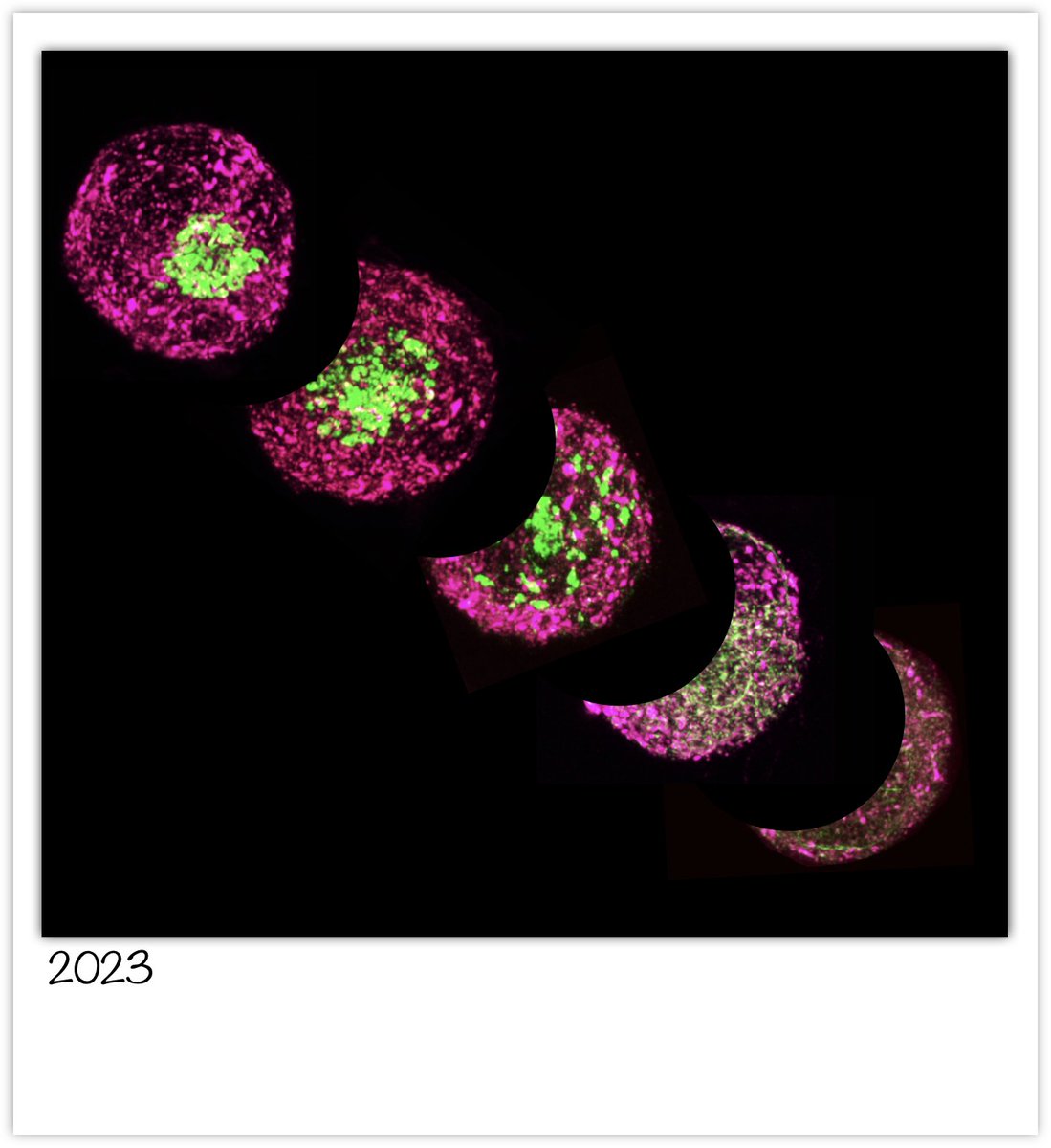
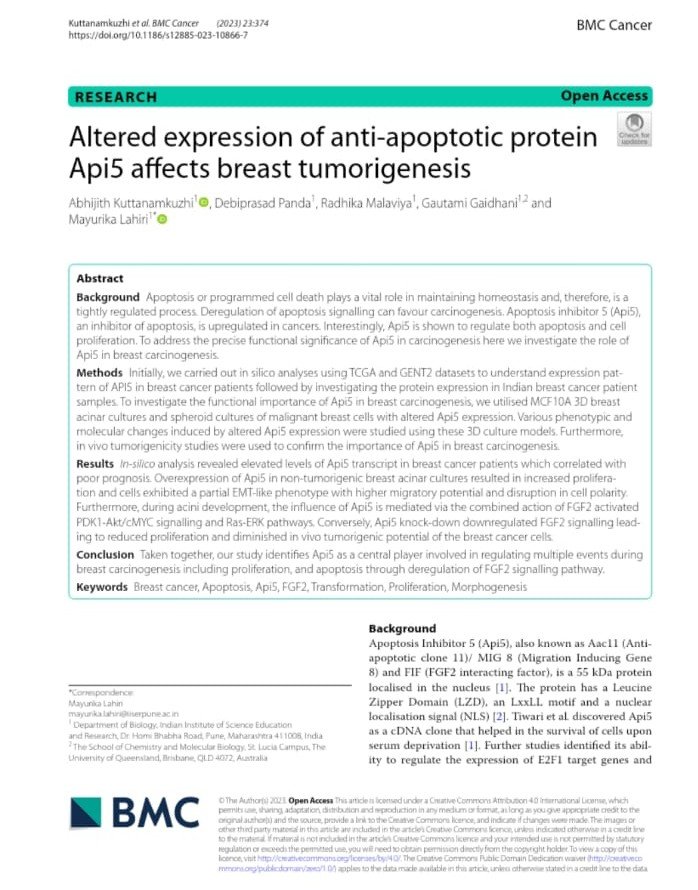
My latest research on the role of anti-apoptotic protein, Api5 in breast tumorigenesis has been published with @SpringerNature in BMC Cancer. Thanks to my coauthors @Abhijith__K, Radhika, Gautami from @MayurikaLahiri lab. Read here: https://t.co/mAErcBXws8.
The AXL-Golgi story...
has two parts, both of which are now published.
1) AXL receptor tyrosine kinase regulates Golgi organization and function via an adhesion-Arf1 signaling axis in breast and lung cancer cell lines
https://t.co/EN0RNV1BJY @BiologyOpen
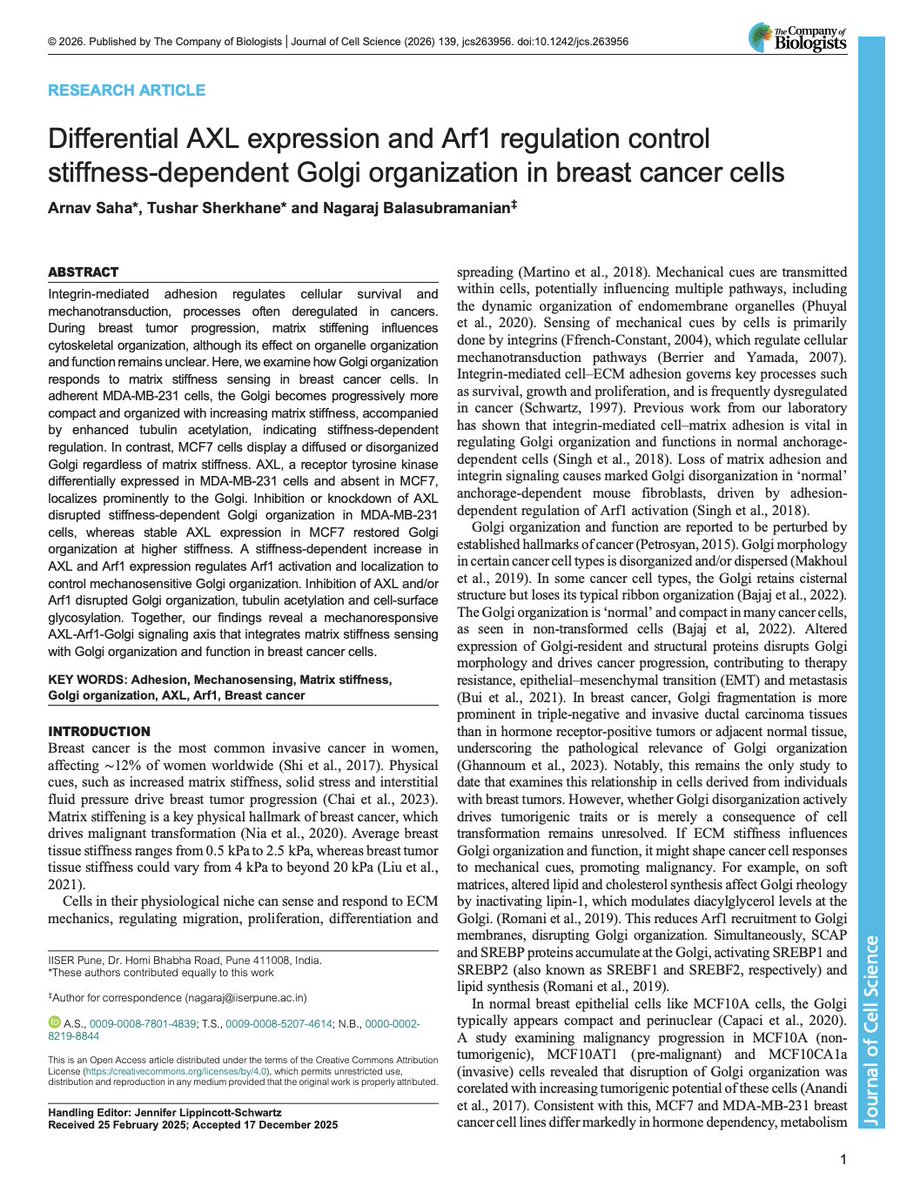
2) Differential AXL expression and Arf1 regulation control stiffness-dependent Golgi organization in breast cancer cells
https://t.co/DrlvS4293x @J_Cell_Sci
Together, they make for a comprehensive story identifying the role of AXL in controlling Golgi organization and its regulation by mechanosensory cues (matrix stiffness).
Work started as a simple screen by Prachi to pick AXL as a gene of interest, taken forward by @ArnavSaha19 and @Tush96rkhane. Supported ably by many others. It's also nice to be able to use data from Vibhas's @SVibha1 studies in this paper, as she identified the adhesion-Golgi connection many years ago.
Congratulations to all involved in this study, which was challenging and exciting in equal measure.
Back to back MS from the lab.
MS1-Novel Adhesion-AXL-Arf1-Golgi pathway that affects its function in cancers.
'Receptor tyrosine kinase AXL regulates Golgi organization and function through an adhesion-Arf1 signaling axis in breast and lung cancers'
https://t.co/7TcGhFjDDK
MS2-The Adhesion-AXL-Arf1-Golgi pathway in breast cancer cells makes Golgi organisation mechanoresponsive.
'Differential AXL expression and regulation of Arf1 controls matrix stiffness-dependent Golgi organization and function in breast cancer cells'
https://t.co/UYlq7WBpAB
🎉 Congratulations to Prachi Joshi, @aashishsatya, @DebiprasadP97, BR Rajeshwari, @thattai & @AdhesionLab for their latest @biorxivpreprint exploring the role of glycans in extra-cellular signalling!
🔗: https://t.co/c3d6KHDi7V
More details in this thread by Aashish 👇🏽
Preprint alert (1/n)
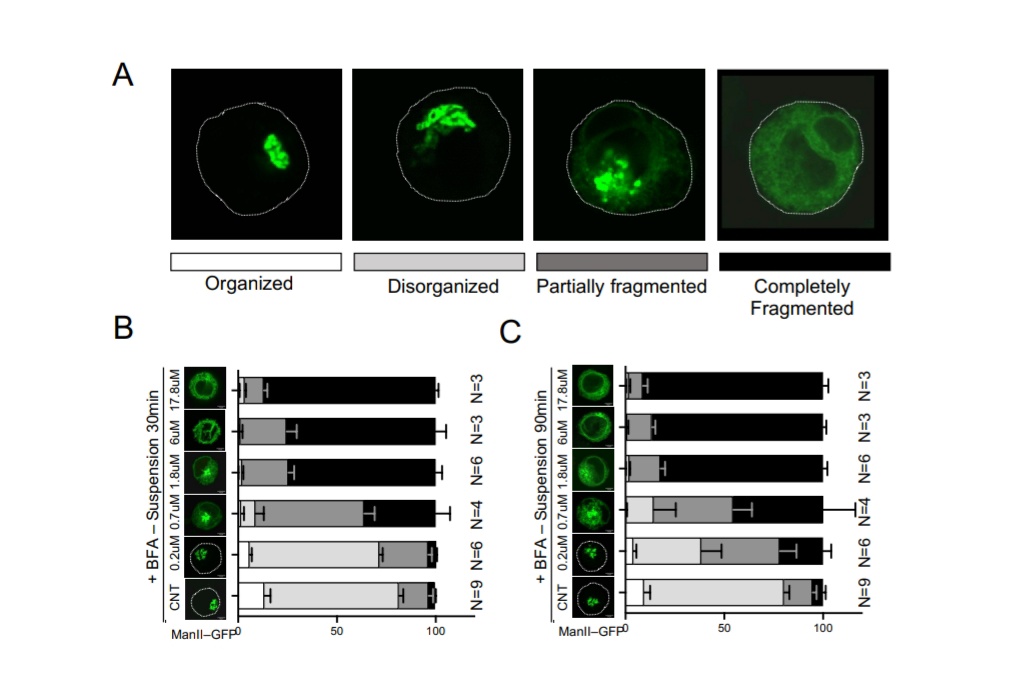
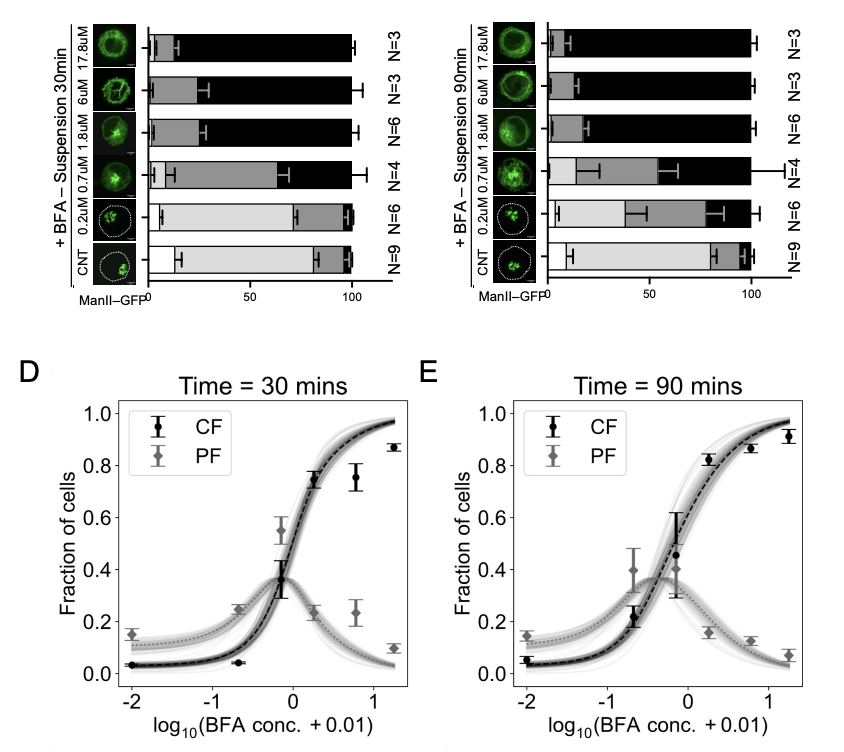
This study uses loss-of-adhesion-driven Golgi disorganization to generate a highly reproducible gradient of Golgi phenotypes and measure cell-surface glycans in single cells using two fluorescently tagged lectin probes (ConA and WGA).
https://t.co/xVbPrWbafS
The Seminar series on World Cancer Research Day (WCRD) jointly conducted by Indian Association for Cancer Research (IACR) and St. Xavier’s College, Mumbai on the 23rd of September, 2023 is open to teachers and students of local Mumbai colleges.
Register : https://t.co/w8M6WY7iDI
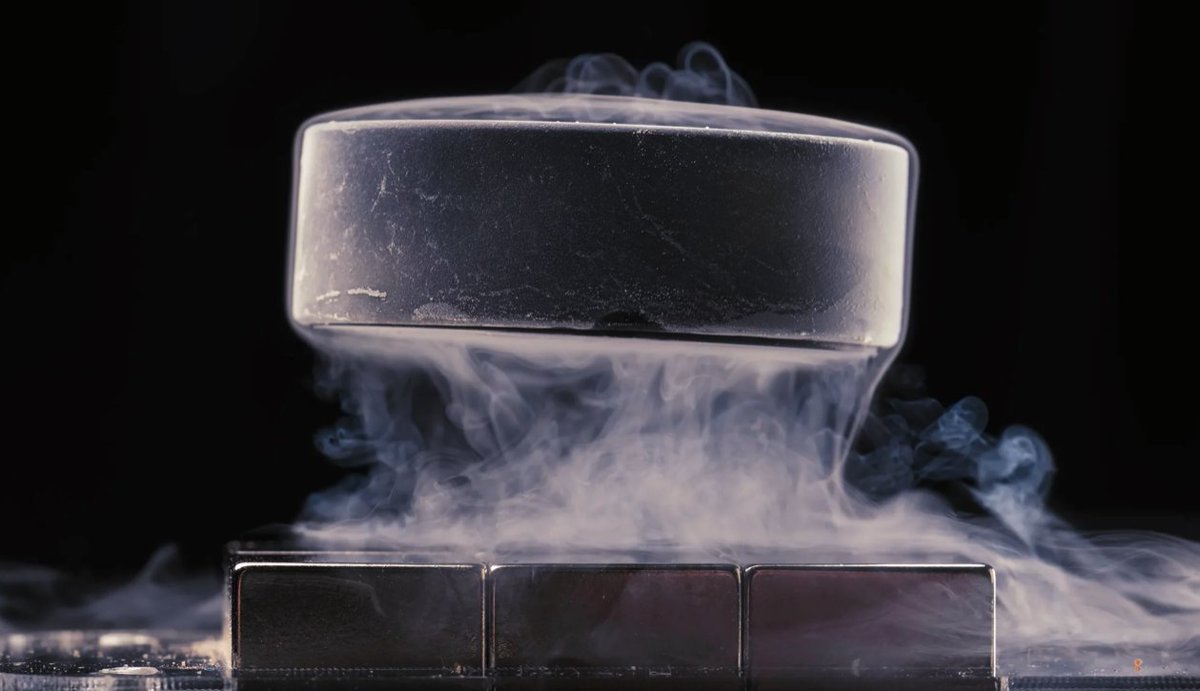
This week, scientists have been STUNNED by the possible discovery of room-temperature superconductivity.
IF it is true, humanity might have passed a HUGE milestone.
The impact will be WAY bigger than the combined impact by ChatGPT, artificial AI and anything else you’ve heard of.
In #science, this discovery is much bigger than any graphene, Li-ion batteries, observation of black holes, and even Higgs boson.
▫️
In a long run, the consequences can be bigger than the outcome of industrial revolution and discovery of nuclear reactions and energy. It will deeply transform the humanity.
▫️
I’m putting a list of things that come to my mind. However, there are many more points in reality. Some changes will be so "core" that we can't even foresee them today.
1⃣ Electric vehicles and levitating high-speed trains will benefit immensely. We will see a drastic increase in energy efficiency. Putting it together with high-efficiency superconducting motors, I wonder - "Gas stations will become obsolete?".
2⃣ Energy Storage and Transmission. First, we will see the emergence of LOSSLESS electrical grids with extremely long distance of electricity transmission. Second, a RT superconducting coil is a “perfect battery”. It can store and release a lot of energy with 100% cycling stability and ulta-slow “self-discharge”. It will change everything, from power grids to space shuttles.
3⃣ Computers!!! We will see the emergence of ultrafast, low-energy-consuming computing devices. Stable quantum computing at RT may become a perfectly feasible thing. Overall, this will revolutionize the ways we build computers and devices.
4⃣ Extraordinary sensors in everyday life. Currently, regular superconducting sensors (e.g. near-IR single-photon detectors, or magnetic field sensors) need very low temperatures and are used in very specific/expensive domains. RT superconductors will bring them to our houses, changing the technologies around us forever.
5⃣ Super-cheap MRI machines for medical diagnostics. MRI relies on superconductors, but they can operate at very low temperatures, making the instruments super-expensive. With RT superconductors, they will become compact and cheap. New era for accessible medical diagnostics!
6⃣ High-efficiency and powerful motors. When conventional electric motors incorporate superconducting materials, it will make them a LOT more efficient. Reduced energy consumption + smaller size will revolutionize the industrial machinery and appliances. I am sure that airplanes with electric propulsion will finally become possible.
7⃣ Nuclear fusion may become viable (and controllable) because superconductors are one of the key ingredient.
As you see, such a discovery will change the world as we know it.
▫️
Now, the key question is - can someone reproduce these results?
As far as I see, many groups have jumped into this topic.
Let’s wait for the outcome!
#AcademicTwitter #Engineering
Junior Research Fellow position (@serbonline funded), to study Golgi organisation in cancers.
Details of position and eligibility : https://t.co/d2s9Trwfo6
Application form to be filled :
https://t.co/k1ziMYRuDC
Last date of submission 20.07.2023.
Kindly RT
Whether dealing with natural disasters like cyclones or tragedies like train accidents, #Odisha serves as the best for state-centre coordination. let's extend our helping hand to the needy.
#DonatetoCMRFOdisha🙏
https://t.co/PGu5sQXZqh
@drdeepak81@bisoyisujit87@CMRF_Odisha
We are in a dire need of blood at hospitals of Bhubaneswar, Balasore, Cuttack. Your small help can save a persons life. Please come forward, and help the victims of #TrainMishap#CoromandelTrainTragedy
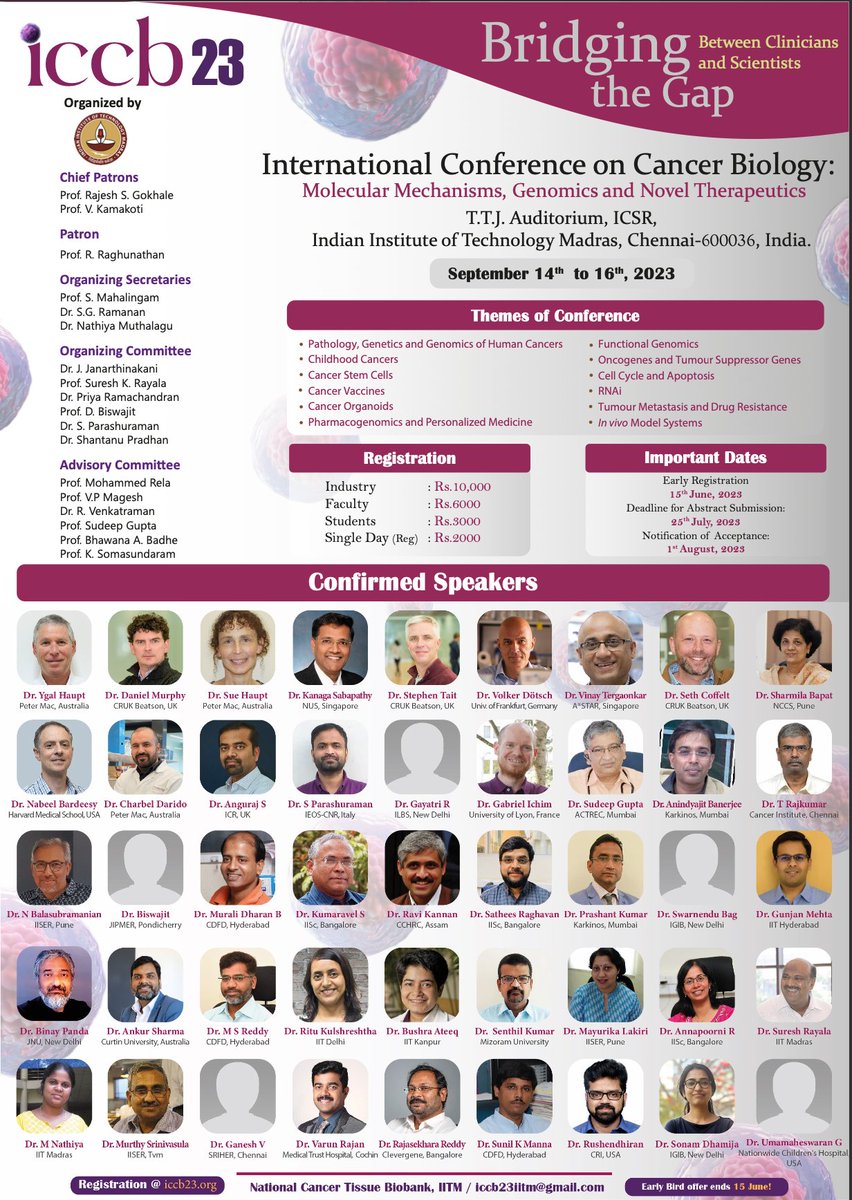
A very interesting conference happening at @iitmadras in the core sections of cancer biology. Many eminent scientists from India and abroad are joining together at this conference. Glad to see my mentors @AdhesionLab@MayurikaLahiri from @IISERPune are giving talks as well.
ICCB23 - Sep 14-16th, 2023 at @iitmadras. Promises to be an interesting meeting. Do check out website for more details if you would be interested.
https://t.co/RcvRVceK5o
Check out our recent exciting work on understanding the role of #Api5 in #Breast#Cancer published in @BioMedCentral https://t.co/UjbaR8sEQm.
We identified the various nodes that Api5 regulates and promotes breast carcinogenesis.
My latest research on the role of anti-apoptotic protein, Api5 in breast tumorigenesis has been published with @SpringerNature in BMC Cancer. Thanks to my coauthors @Abhijith__K, Radhika, Gautami from @MayurikaLahiri lab. Read here: https://t.co/mAErcBXws8.
Read our latest research on the role of Api5 in breast tumorigenesis, published in @SpringerNature in BMC Cancer. Thank you @Abhijith__K and others.
https://t.co/JC5b1d0vYZ
Many congratulations @DebiprasadP97 (my younger brother) for your first research publication (IF: 4.4) on #CancerResearch.
All the best for your future endeavour. 🎉💐👍👌🤞
@BioMedCentral
https://t.co/VvJ3WmQkQS