Exploring ancient history | Posting content from books, museums & sites I’ve visited | Pinned thread for book recommendations and highlights for deeper dives👇
Official recommended reading thread 🧵
This is worth a bookmark if you are an avid reader. I'll keep adding books that I think are worthy of your hard earned money and most importantly your time. In complete transparency, these are Amazon affiliate links so I will earn a commission if you purchase any.
I will only recommend books that I've personally read.
1/5 Carved three and a half millennia ago from a piece of black steatite, this bull-head rhyton is today one of the symbols of the Minoan civilization. It's an image replicated in books and souvenirs everywhere.
Let's see this marvel of ancient art in 8 close-up📸.
1/ The Spartans were not the indigenous inhabitants of the Eurotas valley, but were a component of the Dorian migrations that took place during the 11th century BC, when population groups living on the periphery of the former Mycenaean world set out from their original cradles 👉
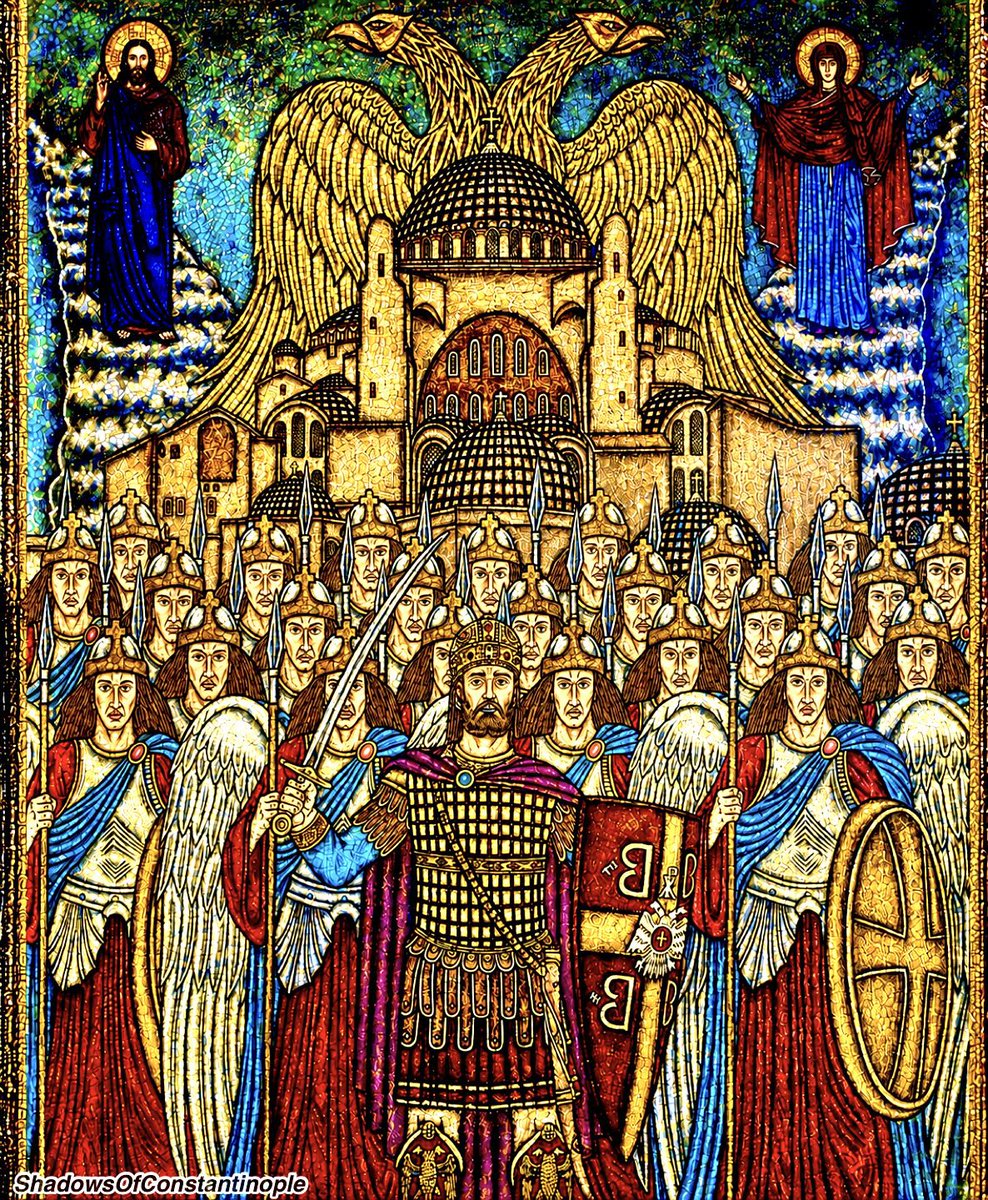
Today we remember the Fall Of Constantinople!
It was no ordinary city - it was New Rome, the city of Constantine, the Queen of Cities. It was the center of an ancient civilization, the capital, and the beacon of the Roman world!
On May 29, 1453 it fell, conquered by the Turks!
The "almond-shaped eyes, face-framing ringlets, and faint smile" reveal Greek Archaic period influence. Similarly, the curly beard and bulky hair over the neck recall Assyrian royal iconography, as in this bas-relief of Ashurnasirpal II (883-859 BC) at the Brooklyn Museum.
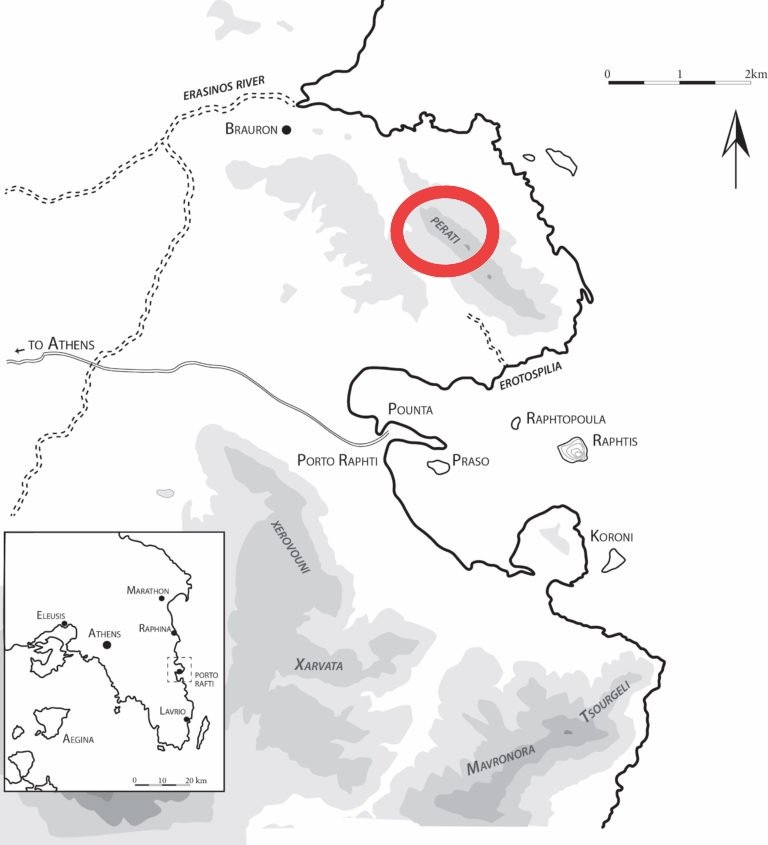
1️⃣ Perati was founded during the period of the fall of the Mycenaean palaces (1190 BC) by people associated with the old regime who arrived there as refugees looking for a safe place near the sea (it is believed that they came from the Peloponnese and Attica).
1/ During the 8th century BC, the Assyrians, under the leadership of powerful kings, expanded their rule in Syro-Palestine, seeking direct access to the harbors of the Mediterranean and mainly control of the rich Phoenician cities (access to precious metals, timber, fabrics).
"As men of reason we scoff at it; as men of business we fear it; as men of religion and good will we loathe it; and as artists we love it... Our response to the sudden fact of war is a response of thrilled emotion, an aesthetic delight, a self-yielding to some dark allurement more powerful than all reason and contemptuous of all expediency... At last, at last we are living deep... It is not the ape and tiger in us that leap to the call of war, but the poet." Ernest Raymond
1/ During the Mycenaean era, Epidaurus was an important agricultural and trade center (harbour), integrated into the network of influence of Mycenae and constituting a sea gateway of the Argolic palatial centers towards the Argosaronic Gulf and more broadly towards the Aegean.
Restoration work has begun at the Ziggurat of Ur in Iraq's Dhi Qar province, as archaeologists race to protect the ancient Sumerian site from climate-linked erosion https://t.co/bNGb64AtRE
This comparison between the ancient Roman and Sumerian columns made me think of Ennigaldi-Nanna (547 – 500 BC).
She was the high priestess of the moon-God Sin in the Mesopotamian city of Ur and the daughter of Nabonidus, the last king of the Neo-Babylonian empire, making her also a princess. But there were many princesses and queens in the ancient world. That's not why she is special. She was, perhaps, the first museum curator in the world.
Yes, two thousand five hundred years ago, Ennigaldi-Nanna founded a museum with artifacts from almost two thousand years before her. Mesopotamia is indeed an ancient land. Among those objects was, for example, a statuette of Shulgi,* the second king of the Third Dynasty of Ur (2094–2046 BC), and a Kassite boundary stele (kudurru). The objects had labels in three languages describing their History. Same as with a modern museum. It is even possible that Ennigaldi-Nanna led the excavations and research of these items.
Imagine what the British archaeologist Leonard Woolley thought in the 1920s when he discovered among the ruins of Ur that someone ancient was discovering something even more ancient.
📸 by me. Made of copper alloy, this statuette of Shulgi (c. 2094-2046 BC) was excavated by the Oriental Institute of Chicago (now ISAC) in the 50s and is on display there. It was part of the foundation deposit boxes of the temple of Innana in the city of Nippur. Shulgi, here shown as a builder, carries a basket. A tablet with a text in Sumerian read: "For the goddess Inanna, his lady, Shulgi, mighty man, king of Ur, king of the lands of Sumer and Akkad, built the Eduranki (House of the Bond of Heaven and Earth) for her."
🚨 BREAKING: WE FOUND THE SECOND SPHINX – AND THIS TIME IT’S 100% REAL! 📷Folks, we have done it! Using a full series of high-resolution radar tomographies, we have located the Second Sphinx with millimeter precision. We know exactly where to dig. 📷 Attached is the satellite image showing the exact position and orientation – perfectly symmetrical to the first Sphinx and the Pyramid of Cheops. Tremendous symmetry! We are now running advanced facial recognition algorithms on the scans to identify which Pharaoh this majestic head belongs to… or if it’s an entirely new, never-before-seen face. On the existence of the Second Sphinx? We are raising the probability to 105%! 📷📷 The full revelation with all the stunning images and data will drop on June 21, 2026 at the “Giza – The Hidden City – Final Act” conference in Bologna with Prof. Corrado Malanga and Dr. Nicole Ciccolo. We can’t wait to see you there! 📷 Conference Tickets & Info
https://t.co/0w3XcOoOsJ
#SecondSphinx #Giza #HiddenCity #MakeArchaeologyGreatAgain #KhafreProject #TruthForFiona
https://t.co/0w3XcOoOsJ
Veritas vos liberabit.
Ad Majora!
Taking a moment to admire the 14-foot gilded bronze equestrian statue of the emperor Marcus Aurelius, born on this day in 121 AD. A truly miraculous survival from ancient Rome, the statue has been preserved inside the Capitoline Museums since 1981 with a reproduction taking its place outside in Piazza del Campidoglio. Catalogues of Rome’s standing monuments compiled in the age of Constantine suggest that at least 22 of these ‘great horses’ (equi magni) – some many times bigger than this statue of Marcus – could be seen around the ancient city by the 4th century. The equestrian statue is not only the last of these remaining, it is the only complete equestrian bronze statue of an emperor to survive from the entire Roman world, spared from being melted down due to the mistaken belief that it depicted Constantine, the first ruler to convert to Christianity.
1/3 Here we have the Apkallu, meaning a genie or sage. These protective winged beings sometimes appeared with a human, a fish, or an eagle's head. Also known as the Seven Sages, the gods themselves bestowed exceptional wisdom upon the Apkallu. They helped humans gain knowledge of arts and crafts and even laid the foundations of much older cities such as Uruk. These figures flanked the entrances to or corners of the royal palace to protect the king and his entourage from evil spirits.
Ashurnasirpal II (883 - 859 BC) holds a bowl used for offering libations and a hunter’s bow that may refer to a hunting ritual. These two Apkallu hold in one hand a pail or bucket (banduddu in Akkadian), which contains the sacred water they would sprinkle to purify those in their presence.
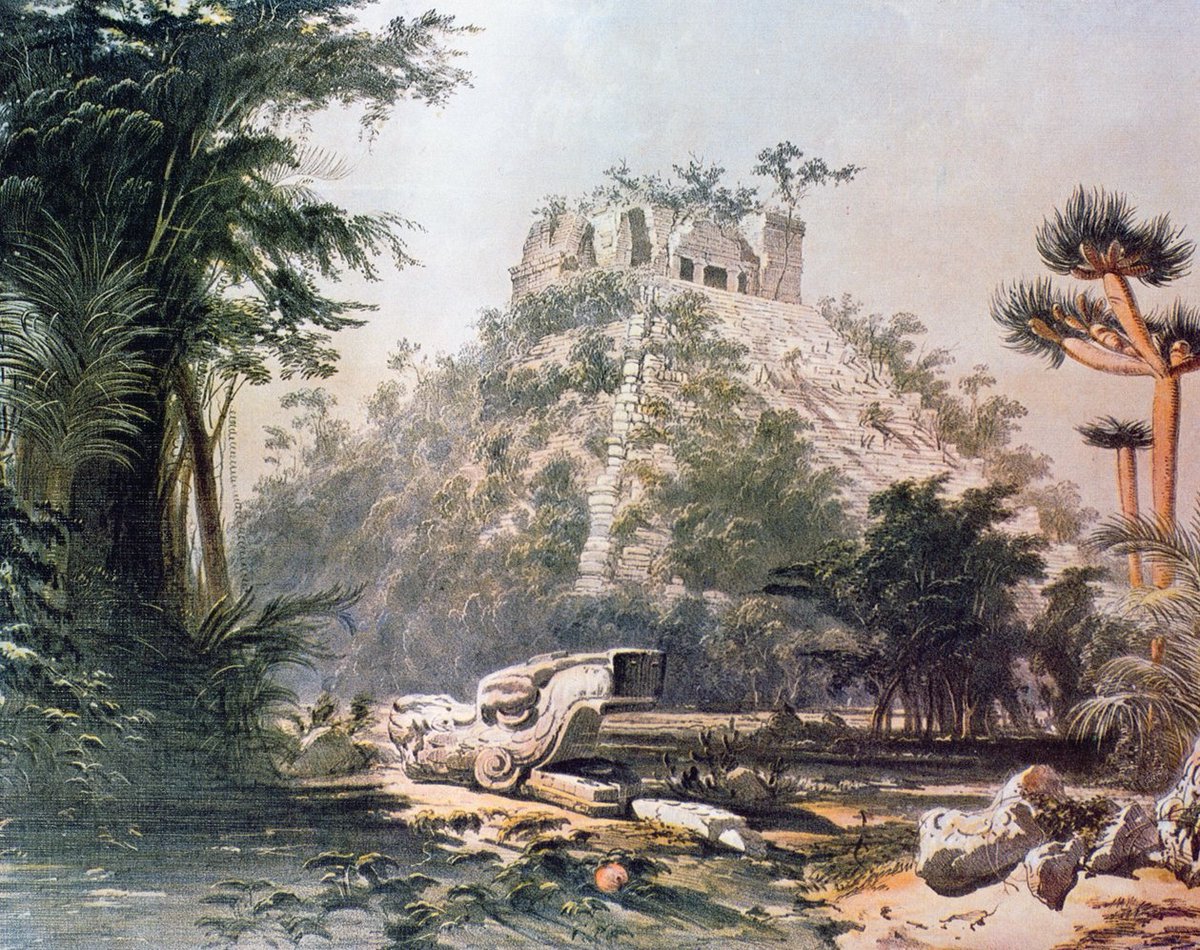
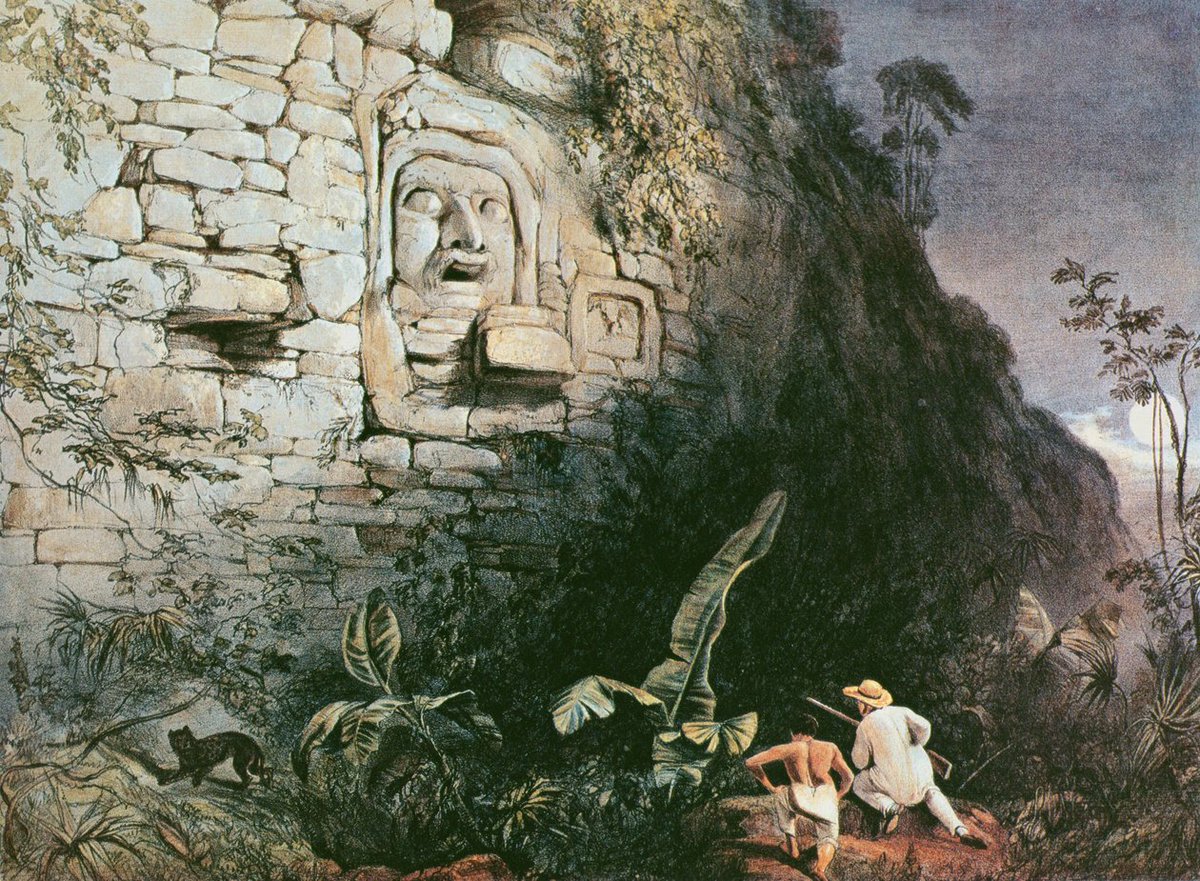
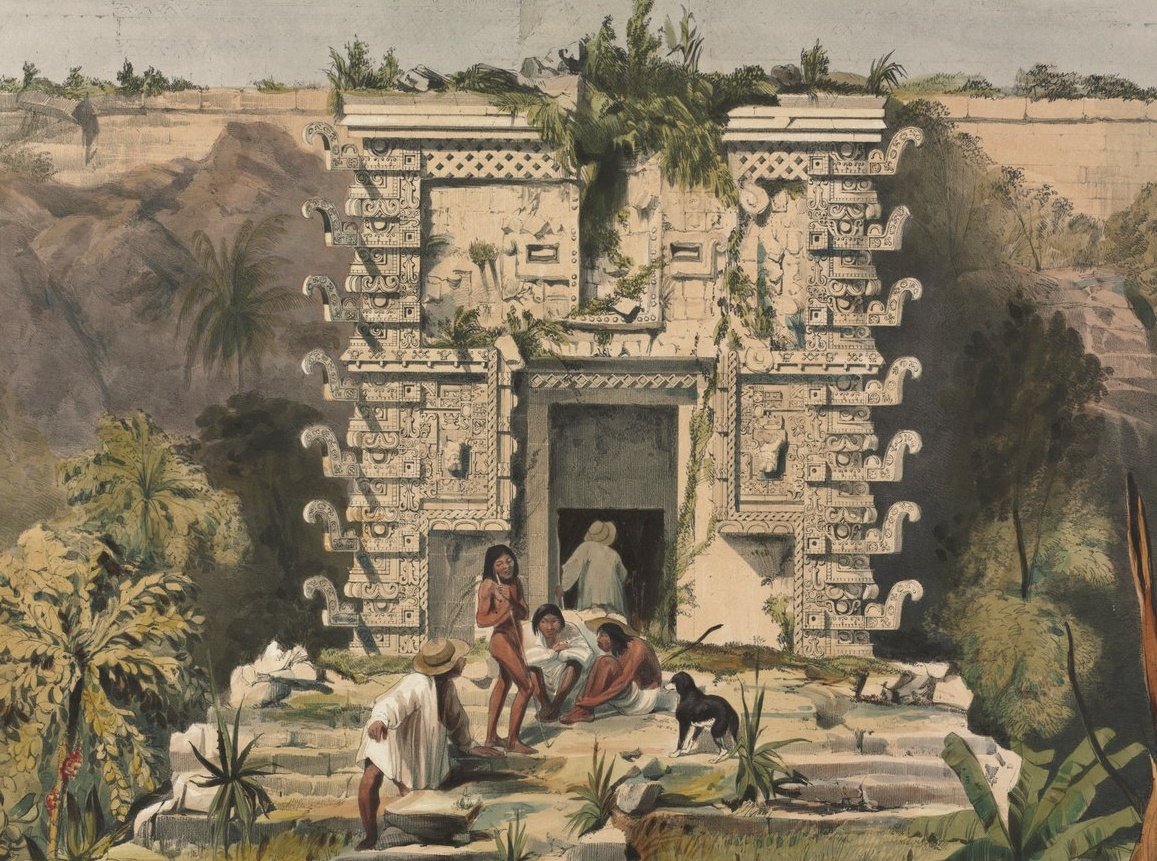
The Ancient Maya world captured brilliantly in the works of English explorer Frederick Catherwood
Catherwood and his American counterpart John Lloyd Stephens travelled through Mesoamerica in the 1830s and 40s.
They documented dozens of lost sites and are credited with the "rediscovery" of the Maya Civilisation
Gladiator 2 might be the most unnecessary sequel ever made.
The plot is uninteresting, the tone is nothing like the original, and Paul Mescal simply doesn’t fit.
Russell Crowe said:
“It is example of people in that engine room not understanding what made first one special.”
Made in Pompeii in the early 1st century BC, this magnificent mosaic of marine life measures 34.6 x 34.6 in (88 x 88 cm) and is on display in the National Archaeological Museum of Naples.
More than 20 species of fish and mollusks from the Mediterranean Sea adorn this piece. At the center of the scene, an octopus fights a lobster surrounded by a nursehound (a species of catshark), a dogfish (also known as dog sharks), a torpedo ray, a moray eel, and many others.
It was found in August 1890 in the shallow basin of the triclinium (the indoor dining room) of the House of the Geometric Mosaics, and it is not to be confused with a similar mosaic found in the House of the Faun. Both pieces are on display in the National Archaeological Museum of Naples.
The technique of this mosaic is opus vermiculatum, meaning “worm-like work.” The opus vermiculatum used small, relatively uniform tesserae, some as small as 1 to 4 millimeters (0.04 to 0.16 in) square, that together formed the chosen design, as in our piece today. Another technique used in Roman mosaics was opus sectile, in which materials such as marble, shell, mother-of-pearl, and even glass were cut and polished into shapes corresponding to the chosen design.
📸 by me at the National Archaeological Museum of Naples. Hope you enjoyed this post. If so, please Share and Follow for more!