Microsoft [MSFT -1.16%] CEO Satya Nadella warned at the World Economic Forum in Davos that “companies risk “leaking” enterprise value to outside AI developers if they fail to embed proprietary knowledge in models they control, calling firm sovereignty the most underdiscussed topic of the year.”
https://t.co/pwLqg7vJtG
Full Guide to the AI-native SOC workflows in this clip:
https://t.co/NqA3h2BBMc
See how detection flows directly into automated containment, identity lockdown, network blocking, verification, and a complete remediation trail in one governed terminal.
This is AI-native containment and response. Detection, remediation, and verification, running in the same AI-native workflow.
This video shows Kindo’s SOC agent detecting malware in CrowdStrike Falcon, isolating the endpoint, blocking the C2 IP in Cisco Firepower, disabling the compromised user in Microsoft Entra ID, verifying each action, and logging the full containment workflow with an auto-created Jira ticket.
Full Guide in the comments.
#KindoAI #SOC #SecOps #AgenticAI
This isn’t “AI-assisted” pen testing. Deep Hat produces attacker-grade findings that flow directly into execution inside @KindoAI, where they’re fixed and verified without dilution.
#DeepHatAI#RedTeam#PenTesting#OffensiveSecurity
Monitoring tells you what happened. Investigation tells you what’s happening.
This post walks through:
-Why AI-driven attackers hide where tools can’t see
-How long-dwell threats evade anomaly detection
-Why runbooks, not dashboards, are the real scaling unit
-What changes when agents execute security work end to end
Read the full post here: https://t.co/5Rq8brYNns
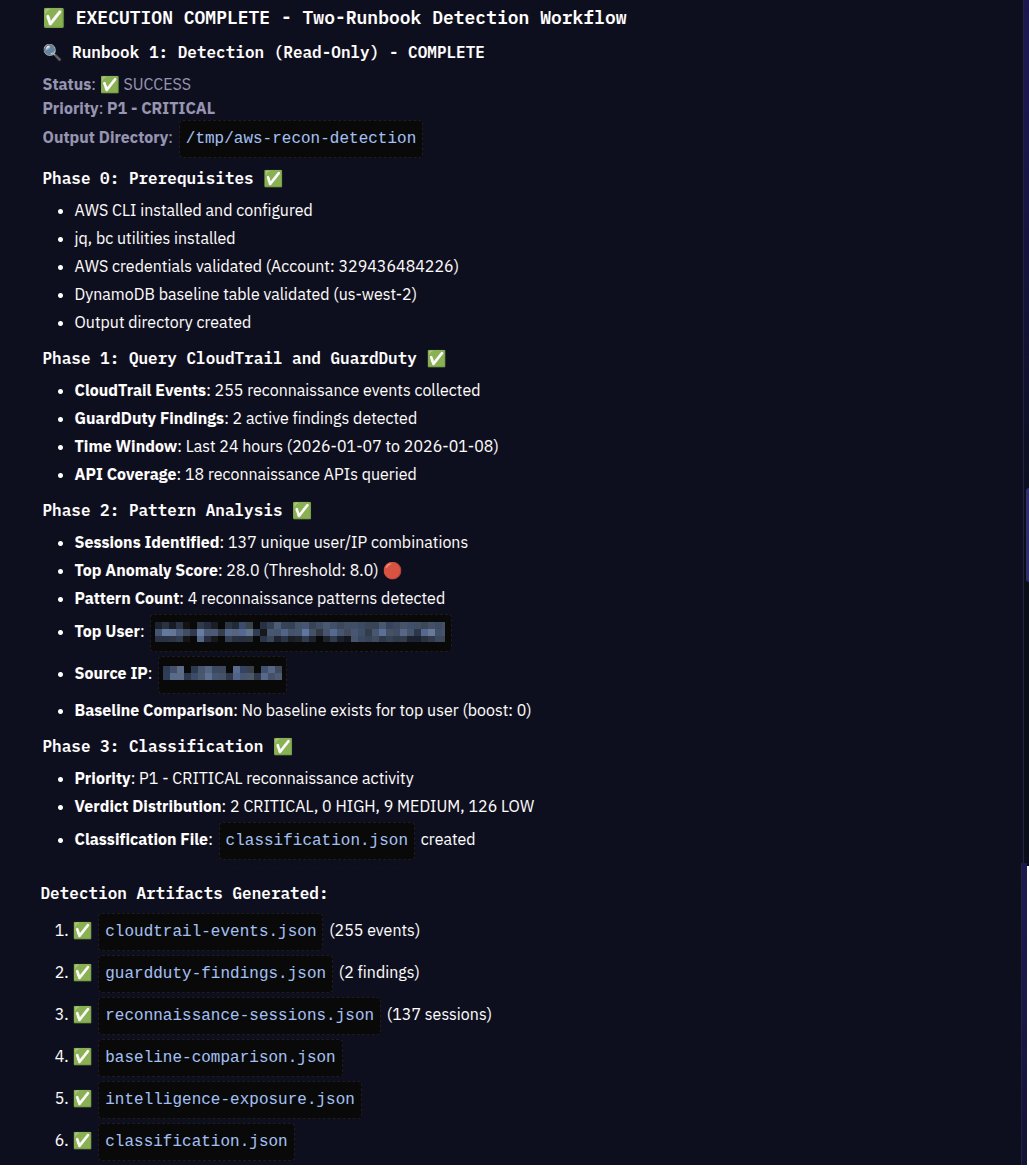
This isn’t a dashboard. It’s the outcome. An AI agent investigated cloud activity, applied runbook logic, classified CRITICAL risk, and delivered actions in minutes.
No alerts to triage, queries to write, or waiting required.
Monitoring can’t see everything. Agents can investigate.
Read more ↓
This is what a real pen test looks like in 2026. Red team findings don’t stop at a report. They flow straight into execution.
Vulnerabilities are validated, traced to impact, and fixed inside the same AI-native terminal.
No handoffs. No context loss.
Real security work, end to end.
This is AI-native technical operations.
#PenetrationTesting #RedTeamOps #SecOps #AISecurity
Most IAM programs fail for one reason:
They stop at visibility.
AI-driven attacks abuse identity at machine speed. Governance that lives in reviews, tickets, and CSVs can’t keep up.
This is why we built AI-native IAM workflows in Kindo. 👇🧵
In a swarm-based attack model, no single surface defines the perimeter. Modern attacks don’t show up as a single alert or a clean sequence anymore. They show up as coordinated pressure across identity, cloud, SaaS, and infrastructure at the same time.
Human-only defense breaks down when attackers operate at machine speed. AI-native execution changes what defense can actually do in real environments.
AI-native security has to defend the way attackers operate: as a swarm, not a campaign. Today’s blog breaks down real-world examples of how these attacks unfold and what actually changes when defense runs at machine speed.
Link in the comments 👇
#CyberSecurity #CISO #AISecurity #AgenticAI #SecurityOperations #CloudSecurity #EnterpriseSecurity #KindoAI
Modern attacks apply coordinated pressure across identity, cloud, SaaS, and infrastructure at the same time. This piece breaks down what AI-enabled attack swarms actually look like in practice, why human-only defense can’t keep up, and how AI-native execution changes the defensive equation.
Read it here 👇
https://t.co/z194uZt7aM
Full blog: Modern attacks don’t follow campaigns. They operate as coordinated AI swarms across identity, cloud, SaaS, and infrastructure. This piece breaks down what that actually looks like.
Read it here 👇
https://t.co/MMstJVQis7
Offense sets the rules.
Modern attacks operate as AI swarms, not campaigns.
Deep Hat simulates how real attackers move today.
Full breakdown in the comments 👇
Andrej Karpathy literally built the neural networks running inside coding assistants.
He taught the world deep learning at Stanford. He ran AI at Tesla.
If he feels “dramatically behind” as a programmer… that tells you everything about where we are.
The confession here is that raw intelligence and deep technical knowledge no longer guarantee mastery. The new stack isn’t about understanding transformers or writing elegant algorithms. It’s about orchestrating a zoo of stochastic systems that nobody fully controls.
Karpathy’s list is revealing: agents, subagents, prompts, contexts, memory, modes, permissions, tools, plugins, skills, hooks, MCP, LSP, slash commands, workflows, IDE integrations. That’s 15+ new primitives that didn’t exist 18 months ago. Each one evolving weekly.
The mental model problem is real. Traditional engineering gives you deterministic systems. You write code, it does exactly what you wrote. Now you’re managing entities that are “fundamentally stochastic, fallible, unintelligible and changing.”
His “alien tool with no manual” framing is exactly right. We’re all reverse-engineering capabilities in real-time. The documentation is always out of date. The best practices from 3 months ago are already wrong.
The magnitude 9 earthquake isn’t coming. It already hit. The aftershocks are the new normal.
I was inspired by this so I wanted to see if Claude Code can get into my Lutron home automation system.
- it found my Lutron controllers on the local wifi network
- checked for open ports, connected, got some metadata and identified the devices and their firmware
- searched the internet, found the pdf for my system
- instructed me on what button to press to pair and get the certificates
- it connected to the system and found all the home devices (lights, shades, HVAC temperature control, motion sensors etc.)
- it turned on and off my kitchen lights to check that things are working (lol!)
I am now vibe coding the home automation master command center, the potential is 🔥.And I'm throwing away the crappy, janky, slow Lutron iOS app I've been using so far. Insanely fun :D :D
I've never felt this much behind as a programmer. The profession is being dramatically refactored as the bits contributed by the programmer are increasingly sparse and between. I have a sense that I could be 10X more powerful if I just properly string together what has become available over the last ~year and a failure to claim the boost feels decidedly like skill issue. There's a new programmable layer of abstraction to master (in addition to the usual layers below) involving agents, subagents, their prompts, contexts, memory, modes, permissions, tools, plugins, skills, hooks, MCP, LSP, slash commands, workflows, IDE integrations, and a need to build an all-encompassing mental model for strengths and pitfalls of fundamentally stochastic, fallible, unintelligible and changing entities suddenly intermingled with what used to be good old fashioned engineering. Clearly some powerful alien tool was handed around except it comes with no manual and everyone has to figure out how to hold it and operate it, while the resulting magnitude 9 earthquake is rocking the profession. Roll up your sleeves to not fall behind.
Open LLMs shape both offense and defense. Ron Williams digs into the practical criteria that matter most for threat modeling in 2026 ➤ https://t.co/7tqK6Zf8iX
#Infosec#ThreatIntel