@ChandrakanthMv Food for thought ! Pembrolizumab is 400 mg every 6 weeks for 15 cycles in maintenance phase. Effectively the treatment is for two years from initiation.
✅ R - Ruminococcaceae ✅ A - Akkermansia (balanced levels) ✅ B - Bifidobacterium ✅ B - Bacteroides ✅ F - Faecalibacterium prausnitzii ✅ R - Roseburia ✅ C - Coprococcus eutactus ✅ A - Agathobaculum butyriciproducens ✅ D - Dorea ✅ E - Enterococcus hirae ✅ B - Barnesiella
Mnemonic to remember the Beneficial Gut Microbiota Associated with Improved Cancer Outcomes "Really Amazing Bacteria Bring Fantastic Relief, Creating A Delightfully Efficient Biome"
50 years of progress in NSCLC! The dramatic evolution from limited understanding to molecular profiling, advanced screening, and diverse therapies. #NSCLC#LungCancer #Oncologyhttps://www.jto.org/article/S1556-0864%2825%2900819-6/fulltext
Lazertinib Versus Osimertinib in untreated EGFR-mutant advanced NSCLC, per MARIPOSA study Exploratory Analysis. Similar Efficacy. Lazertinib had lower rates of cardiotoxicity—making it a strong option for patients with cardiac risk. #LungCancer#Oncology https://t.co/jdg7bZf5KL
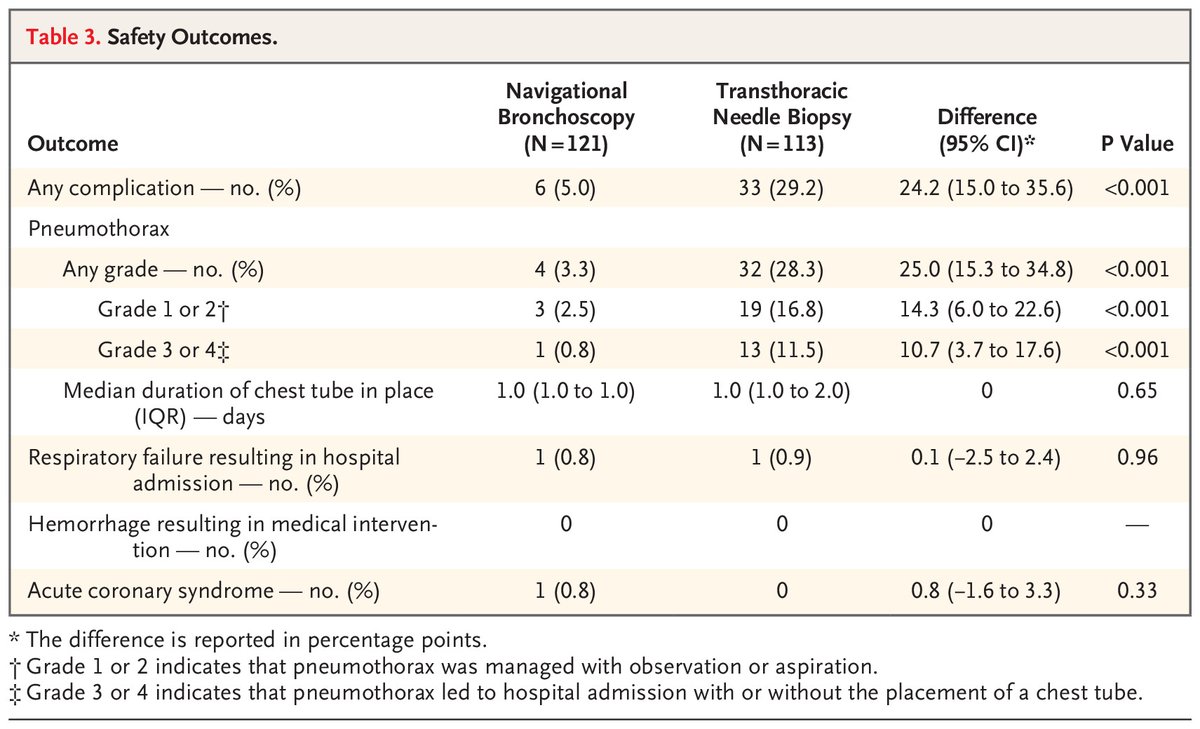
Bronchoscopy performance (79%) consistent with previous studies (77-83%)
Needle biopsy performance lower than in some previous reports
Limitations: performed by experienced pulmonologists, rapid onsite cytologic evaluation used more in bronchoscopy 95.8% vs 7.2% Transthoracic grp
Trastuzumab rezetecan, a HER2-directed ADC, in patients with advanced HER2-mutant NSCLC (HORIZON-Lung): ph 2 results from a multicentre, single-arm study - The Lancet Oncology https://t.co/fo9qqUTnYs
Updates in AACR.
Beamion LUNG-1 vs HORIZON-Lung
🚨 BREAKING at #AACR25: Big news for #HER2-mutant #NSCLC!
💥 Trastuzumab rezetecan shows: 🔹 ORR 74.5%
🔹 Median PFS 11.5 mo
🔹 88% alive at 1 year
🌟 Responses seen across HER2 mutations, even with brain mets!
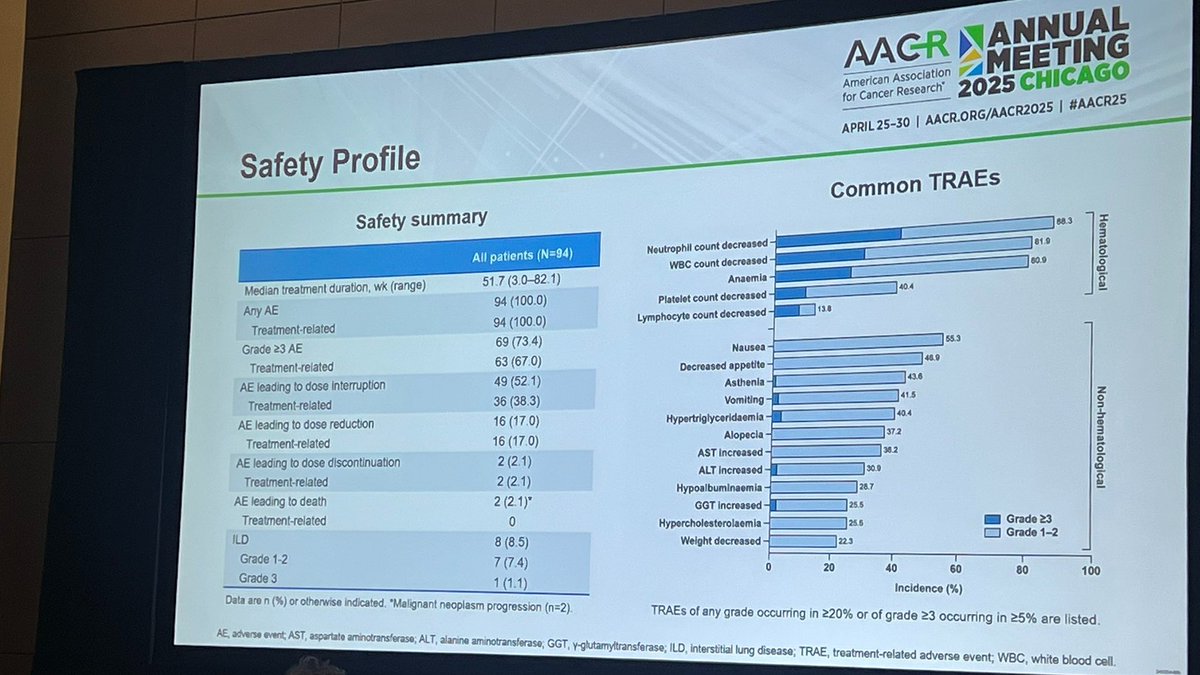
✅ Manageable safety profile.
🛫 Phase 3 trial already underway!
Hope rising for HER2+ lung cancer.
#LCSM #CancerResearch
(📊: 74.5% ORR, 9.8 mo DoR, 88% 1-yr OS | manageable AEs led by ↓ counts & GI)
Zongertinib highly effective for HER2-mutant NSCLC. 71% ORR in patients with TK domain mutations, 48% RR in ADC pre-treated patients, and 30% RR in non-TK domain mutations. Median response duration: 14.1 mths. . Safety profile promising with low Gr 3 AE . https://t.co/BBYX3wnBeq
Negative impact of TP53 co-mutations on survival rates in NSCLC patients with EGFRL858R mutations only. Patients with these co-mutations showed significantly worse progression-free survival, with EGFR-TKIs monotherapy #NSCLC#EGFR#CancerResearch https://t.co/7ja78kGgsf
TDxD+Pertuzumab showed significant improvement in progression-free survival vs THP as 1st-line therapy for HER2+ metastatic breast cancer. What magnitude of benefit would make you change practice to use TDxD+Pertuzumab upfront? #oncology#breastcancer" https://t.co/U8VVcuq9vY
While Denmark uses intensive surveillance (CECT every 3mo for 2yrs, then 6mo until 5yrs), optimal strategy remains contentious due to lack of high-quality evidence.
I do surveillance CECT at 6monthly intervals.
What is your practise??
🚨 New RCT (SUPE_R) in NSCLC 🚨
In 750 patients post-curative treatment, FDG PET/CT showed no benefit over contrast-enhanced CT for: 🔹 Curative treatment of recurrences 🔹 Time to recurrence 🔹 Overall survival
Routine PET/CT surveillance not supported.https://t.co/pIJQXq7PRA
@SuyogCancer@OncoAlert@OncBrothers Firmonertinib is another promising 3rd generation drug in this space with great activity in PACC mutations with good intracranial control
@SuyogCancer@OncoAlert@OncBrothers It’s better to Choose drugs for uncommon EGFR mutations based on the structural classifications of the EGFR mutations. Second generation drugs work best for PACC mutations and osimeritinib works best for classical and T790m like mutations. https://t.co/6MawMbWkUX
Tarlatamab Shows Significant OS Improvement in Post-Platinum SCLC. First drug to show OS benefit in second line setting. Eagerly waiting for the publication . https://t.co/gfPshHUXTL via @targetedonc
5. Contrary to common belief, coronary artery disease—not hypertrophic cardiomyopathy—was the most common cause of cardiac arrest
6. Quick CPR response time and ventricular tachyarrhythmia as the initial rhythm were associated with better outcomes. Every second counts
Cardiac Arrests During Long-Distance Running: What’s Changed?
Follow-up study from RACER consortium:
Study tracked 176 cardiac arrests across 29.3 million race finishers—highlighting how rare these events are. https://t.co/CKe1GyIJ7X
3. Men experience higher cardiac arrest rates (1.12 per 100,000) compared to women (0.19 per 100,000) during long-distance races
4. Full marathons have higher cardiac arrest rates (1.04 per 100,000) than half-marathons (0.47 per 100,000).