Hard times create strong men. Strong men create good times. Good times create weak men. And, weak men create hard times.
G. Michael Hopf, Those Who Remain (The New World #7)
vertical AI and rollups are the two hottest strategies in tech investing right now.
every major VC fund is doing some version of this. worth looking at whats actually working and what isnt
vertical AI startups are putting up real numbers:
Harvey went from $0 to $100M ARR in three years. now valued at $8 billion after raising $750 million in 2025 alone. three funding rounds in one year.
Abridge hit $117M ARR and is worth $5.3 billion. deployed in 150+ health systems including Mayo Clinic, Duke, and Johns Hopkins.
EvenUp crossed $2 billion valuation serving 2000+ personal injury law firms.
OpenEvidence claims 40% of US doctors use their platform and just raised at a $6 billion valuation
investors have slightly different thesis but it points 2 main things:
1. vertical AI is solving what traditional SaaS couldnt. multimodal, language-heavy, service-heavy workflows that were too complex for the old generation of software
2. vertical AI can target $11 trillion in US labor spend versus $450 billion in traditional enterprise software. pricing on outcomes instead of seats changes what markets are venture scale
overall, the TAM has expanded massively.
the rollup strategy is more complicated:
- General Catalyst has $1.5 billion allocated to their Creation Fund for AI-enabled rollups.
- Thrive Capital is backing Long Lake (18 HOA management acquisitions, $600M raised) and Crete (targeting $500M in accounting firm acquisitions). Khosla is in on similar plays; they recently announced a partnership with OpennAI to work with their companies
the idea is to buy traditional service businesses, integrate AI, expand margins.
General Catalyst incubated Crescendo which acquired PartnerHero and hit ~$90M in revenue by May 2025
but venture-backed rollups have historically struggled. Thrasio collapsed into Chapter 11 in 2024 after raising billions to roll up Amazon sellers. debt load became unsustainable. Perch and the other aggregators mostly didnt work either.
Harvard Business Review found two thirds of rollups are value-neutral or worse.
the AI angle is supposed to change this. but 42% of enterprise AI initiatives were discontinued in 2024 according to S&P Market Intelligence, up from 17% in 2023. theres still a gap between AI capability and enterprise adoption
what separates the winners
the vertical AI companies that are working have deep workflow integration, not surface-level features
Abridge isnt just transcribing conversations. theyre embedded in Epic workflows, generating billing codes, handling prior authorization. their Contextual Reasoning Engine handles the full documentation stack. switching cost is real
Harvey is training on firm-specific data, customizing to internal processes. 235 customers in 42 countries including most of the top 10 US law firms. Bloomberg notes traditional SaaS companies trade at 10x ARR. Harvey is at 50x
Toast and Procore show the long-term vertical SaaS pattern. Procore took 10+ years to get to $10M ARR but less than 10 more to hit $1B. they still have <2% of US construction companies. Toast has 13% of US restaurants after more than a decade. these businesses compound slowly but the terminal value is significant
the common thread: they become operating systems for their industries. payments, scheduling, compliance, financial services layered on top of core workflow software. Toast does lending now. Procore added payments in 2023
what isnt working
wrapper startups are struggling. Jasper raised $100M+, hit ~$90M ARR, then had to pivot after ChatGPT launched similar capabilities. valuation cuts, executive turnover. still alive but a different company now
~90% of AI startups fail within five years by most estimates. 2024 saw 966 US startup shutdowns versus 769 in 2023, a 25.6% increase. https://t.co/ZUld9UK51Z filed for bankruptcy in 2025 after burning $445 million when it turned out their "AI" was actually hundreds of offshore developers
companies without proprietary data or deep workflow integration are exposed every time OpenAI or Anthropic ships a new feature
on the rollup side, PolyAI spent six months in 2019 exploring contact center acquisitions and walked away.
their conclusion per a Fortune piece: "Business Process Outsourcing firms are not trusted to innovate, not rewarded for innovating, and not allowed to innovate." Concentrix gets cited as a BPO transformation success story but their EV/EBITDA multiple is still in low single digits despite AI products deployed to 1000+ customers
where this goes
vertical AI companies that own full workflows, have proprietary training data, and price on outcomes will likely do well. Abridge has 1.5M+ medical encounters training their models. thats hard to replicate
the rollup thesis requires PE-level operational expertise.
General Catalyst might have it given theyre hiring real operators and avoiding debt in early stages. but running M&A playbooks isnt a natural VC skill.
Alpine Investors 2024 scorecard shows the deal volume and integration discipline required. most funds dont have that infrastructure
the established vertical SaaS companies are actually well positioned. Procore, Toast, ServiceTitan have the customer relationships and workflow depth. AI makes them better. the question is whether new entrants can build AI-native platforms fast enough to displace them
most vertical AI startups will fail like most startups fail. but the ones that work will be worth more than the horizontal SaaS winners from the last cycle. theyre going after bigger budgets with stickier products. Harvey and Abridge are in a different category than the average AI startup. the rollup strategy will mostly produce mediocre returns outside of a few well-resourced operators who actually know how to run these plays
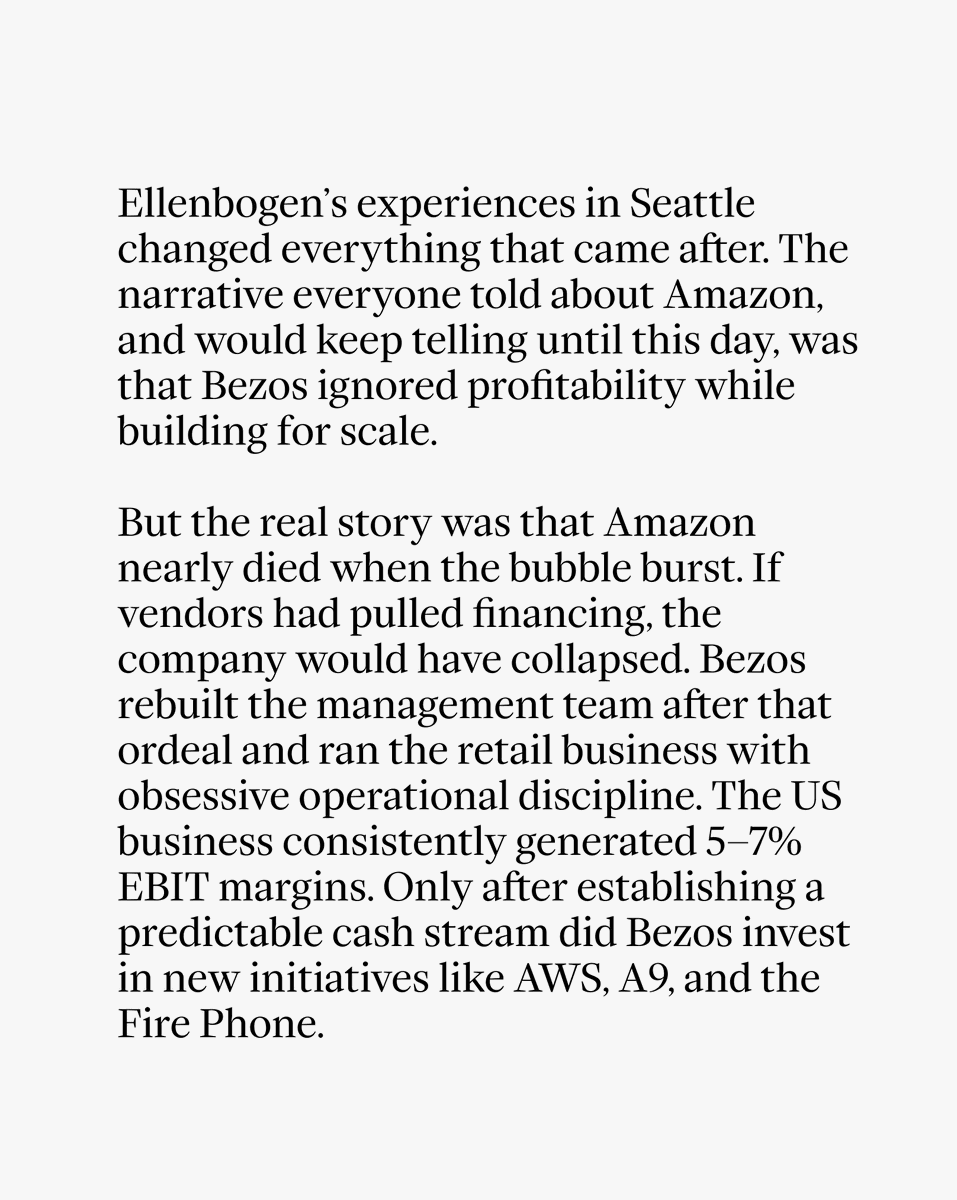
The real story of Amazon.
“I used to have lunch with Jeff Bezos twice a year,” Ellenbogen said. “I learned so much from those meetings. But no-one would come with me.”
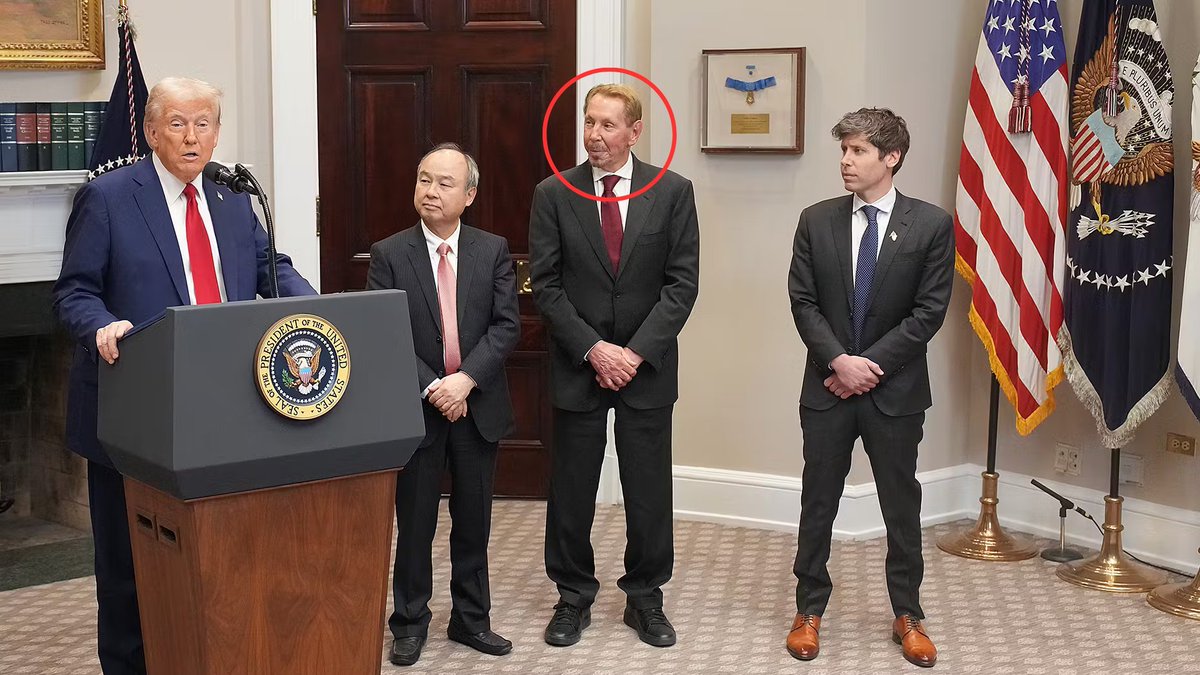
The Pirate of Silicon Valley.
Larry Ellison:
• Inspired Steve Jobs and Elon Musk
• Hired spies to take down Microsoft
• Lives on his private Hawaiian island
Here’s the story of how he crushed IBM and built Oracle into a $400B empire: