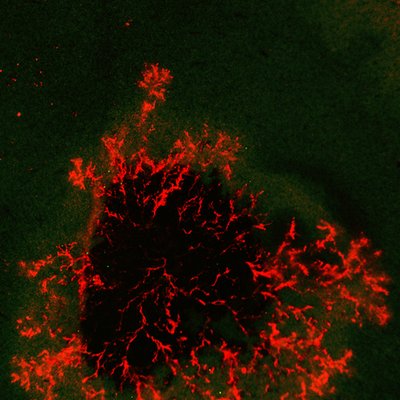
How does a cell remodel the ER membrane into a lipid droplet?
Excited to share our new preprint. We find that regulated opening of the seipin ring defines a functional ER–lipid droplet interface — and identify SMLR1 as a regulator of this transition.
https://t.co/eZEo2Oovmz
Thanks for your critique, Janet. We actually tried a couple of episodes where House (Hugh Laurie) (please put the brackets in the right place) gets it right first time, but they were only 6 minutes long. NBC weren’t happy. Then we tried some where House never gets it right and the patient dies. The audience wasn’t happy.
One could apply your trenchant analysis to other art forms: JS Bach wrote 30 Goldberg variations on the same chord structure; Frida Kahlo painted 50 portraits of herself; Henry Moore, what??
The point is, or was, variations on a theme; if all you see is hospital, medical blah blah, then it wasn’t meant for you.
Nonetheless, I look forward to your first novel!
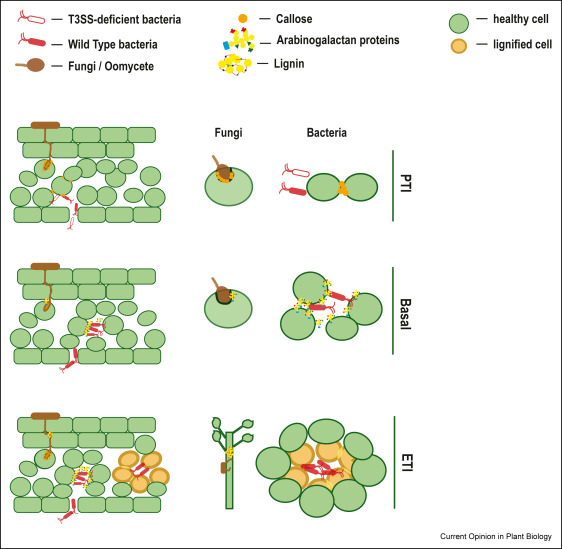
My favorite idea from this work is that the CW is not just the first thing a pathogen encounters. It may be one of the first places where the plant decides what kind of immune response is needed.
#PlantPathology#PlantCellWall
7/7
What do plants do when they cannot run from danger? They build better borders. In our new review @msubrandizzilab , we discuss how plants remodel their cell walls during pathogen attack, turning a structural boundary into an active immune interface.
https://t.co/mwflZEhlhm
1/n
If we want crops that resist disease without major growth penalties, we need to understand how plants remodel walls with precision. Where do they reinforce, when do they stay flexible, and when do they seal the battlefield? #PlantScience#PlantImmunity
6/n
So proud to share our latest publication @CellCellPress! Yue Rui reveals that the same enzyme that makes the wall, cellulose synthase complex (CESA), also tethers the plasma membrane to the wall during water-deficit stress, providing resilience. https://t.co/53DUFaVxjt
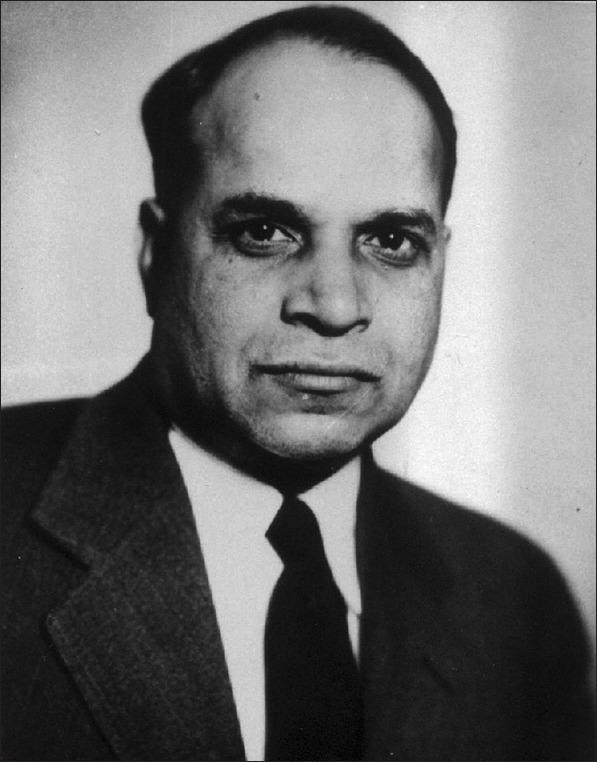
A man who was denied his medical degree for wearing Swadeshi Khadi, forcing him to flee to America where he worked as a night-janitor scrubbing hospital bedpans. Yet, he co-discovered the absolute energy source of all living cells (ATP), synthesized the world's 1st effective cancer chemotherapy drug, & led the wartime research team that discovered the 1st broad-spectrum antibiotic, only to be denied tenure by his university, & completely overlooked by the Nobel Committee.
This is the story of the ultimate invisible colossus: Dr. Yellapragada Subbarao (1895-1948).
To understand the complete, crushing silo Subbarao worked in, we have to look at his early days at the Madras Medical College in the 1920s. Subbarow was a fierce, uncompromising Indian nationalist. He routinely wore hand-spun Khadi surgical scrubs to class to mock the British profs.
Furious at his defiance, his British supervisor, Dr. Bradfield, deliberately failed him in his final medical exams, refusing to grant him an M.B.B.S. degree. Instead, they handed him a humiliating, 2nd-class "L.M.S." certificate, legally banning him from practicing major medicine/holding a research position anywhere in British India.
Subbarao did not break. Backed by charity funds, he boarded a ship to America, landing at Harvard Medical School in 1923. Because his Indian degree was treated like garbage by the West, Harvard refused to give him a research fellowship.
To survive, Subbarao entered a state of brutal, claustrophobic isolation. For yrs, he worked as a night-shift janitor at the Peter Brent Brigham Hospital in Boston, manually scrubbing vomit & blood off hospital pans for pennies, & then spending his dawn hours hidden in the basement laboratories, teaching himself advanced biochemistry in complete anonymity.
In that dark basement silo, Subbarao partnered with a scientist named Cyrus Fiske. The scientific world at the time was facing a massive, wall-like mystery: How does the human body actually store & spend energy? When we move a muscle/blink an eye, what is the literal fuel burning inside the cell?
Operating in a completely isolated lab with self-made chemical filters, Subbarao discovered a highly volatile, ephemeral molecule containing phosphorus. He realized this molecule was the universal energy currency of every single living cell on the planet.
He discovered Adenosine Triphosphate (ATP) & Phosphocreatine. It was a discovery so monumental it rewrote biology textbooks forever. It was the literal software code of biological energy. But because Subbarao was an introverted Indian alien working on a janitor's schedule, his supervisor Cyrus Fiske received the lion's share of the academic credit. Subbarao did not care about the fame; he immediately walked away from the glory of ATP to go deeper into the dark.
Subbarao left Harvard (after getting his PhD) & joined Lederle Labs (now part of Pfizer), a small pharmaceutical firm. There, the introvert Subbarao demanded half of the annual salary, which was offered at $14K/yr, under the condition that a new research building be erected for him at Pearl river.
He locked himself inside a private research silo, working up to 18 hrs a day, sleeping on a canvas cot right next to his chemical vats. From this complete isolation, his mind generated a relentless, devastating series of global breakthroughs:
- Subbarao was fascinated by folic acid. Working with a doctor named Sidney Farber, he engineered a chemical compound called Methotrexate. It was the world's 1st ever effective cancer chemotherapy drug, directly destroying leukemia cells in children. Modern oncology was literally born from his hands.
- He synthesized Diethylcarbamazine (Hetrazan), which became the global standard cure for filariasis, saving millions of poor agricultural laborers across Asia & Africa from elephantiasis.
- He guided the discovery of Aureomycin (Chlortetracycline), the world's 1st true tetracycline antibiotic, which was far more powerful than Alexander Fleming’s penicillin & cured deadly outbreaks of typhus & plague across postwar Europe.
He was a pure, unadulterated research machine who utterly loathed self-promotion. He never signed his name 1st on academic papers, frequently giving his junior American assistants the lead author credit. He routinely refused to do press interviews, stepping into the back corners during corporate photo-ops.
When he died suddenly in his lab in 1948 at the young age of 52 while working on a polio drug known as Darvisul, he possessed absolutely nothing but a few books & his lab glass rods. Because he worked behind the closed corporate curtain of Lederle Labs rather than the loud, public arenas of university politics, & because the American establishment in the 1940s was quietly prone to burying the contributions of non-white immigrants, his name vanished into total oblivion.
Despite discovering the engine of cellular life (ATP), inventing the baseline of cancer treatment (Methotrexate), & synthesizing the antibiotics that saved millions of lives, he was never awarded the Nobel Prize. When his death was announced, Doron Antrim, a reporter for Argosy magazine wrote: "You probably never heard of Dr. Yellapragada Subbarao... but because he lived, you may live longer."
The next time we hear about a breakthrough in cancer treatment/open a biology textbook to read about the energy of a living cell, remember that night-janitor at Harvard; for India's ultimate ghost scientist proved that we do not need an imperial crown/public applause to sustain humanity, we can quietly change the destiny of the entire human race from a dark basement, & then vanish into the night w/o leaving a single trace of vanity behind.
Microtubules were discovered and named by looking at plants through an electron microscope. The pair behind it: Myron Ledbetter, a plant biologist, and Keith Porter, co-founder of cellular biology. 🌱 🔬
Porter was the giant. Harvard PhD 1938. From 1939 at the Rockefeller Institute, he and Albert Claude invented biological electron microscopy — first EM image of an intact cell in 1944, named the endoplasmic reticulum, co-invented the Porter-Blum ultramicrotome that made the whole field possible, co-founded the American Society for Cell Biology and the Journal of Cell Biology.
Ledbetter was the plant person — Berkeley Master’s, Columbia PhD in botany, then came to Rockefeller to learn EM under Porter and followed him to Harvard.
Their motivation was a long-standing botanical question. Plant cells lay down cellulose in highly patterned arrangements — circumferential, helical, and random — and these patterns determine cell shape. What in the cytoplasm tells the cellulose where to go?
Porter argued in the 1950s the endoplasmic reticulum was the patterning agent, but too floppy and sparse for the job. Something else was orienting it — a structural element no one had yet resolved.
The opportunity came from chemistry. In 1962, David Sabatini at Yale introduced glutaraldehyde as an EM fixative. Porter heard about it immediately and pushed Ledbetter to try it on plants.
The plants… Three species, all with root tips full of wall-building cells. Phleum pratense (timothy grass) does most of the work and supplies every cortex image. Spirodela oligorrhiza (duckweed) catches a cell mid-division and gives them the spindle. Juniperus chinensis (Chinese juniper) provides the clinching image — tubes running parallel to cellulose fibers across the membrane, as if guiding their deposition. Two flowering plants and one conifer — enough phylogenetic spread to claim universality.
The instrument… A standard 100 kV transmission electron microscope — fires electrons through tissue and builds an image from how they scatter off heavy-metal-stained structures. Far better resolution than light microscopy, but the sample is killed, dehydrated, embedded in plastic, and sliced thinner than a light wavelength. Whether your prep preserved anything real is the whole game. Osmium tetroxide alone shredded the delicate plant cortex. Glutaraldehyde locks proteins in place in seconds. They ran it on root tips, looked at the cortex, and the tubes were just there, waiting.
What they saw… Hollow cylinders, ~250 Å across, with a clear central lumen and a wall suggesting smaller subunits packed side by side. Lengths indeterminate — traceable for several microns without finding an end. Each tube sat in a clear “halo” excluding ribosomes and everything else. In the cortex they ran parallel to the surface, wrapped like hoops on a barrel, up to three layers deep. In dividing cells, 500+ packed the mitotic spindle, oriented along its long axis, converging on the chromosomes.
Before this paper, the cytoplasm was a messy soup with organelles floating around. A few people had glimpsed tubular profiles in odd places — Roth / Daniels in an amoeba a year earlier, Slautterback in Hydra in the JCB issue just prior. But Slautterback called them phospholipid membranes for ion transport… Wrong!
Ledbetter and Porter predicted one kind of protein tube, of repeating subunits, present everywhere — plants and animals, cortices and spindles, cilia and flagella — doing the cell’s structural work.
What’s amazing is how much they got right from so little! The subunit composition was correct — tubulin wouldn’t be isolated until 1968. The identity with cilia and flagella was also correct. The claim about spindle birefringence was correct. Plant cells forming spindles without centrioles anticipated decades of work on acentrosomal nucleation. And the alignment hypothesis, born from the juniper image, drove cell biology for the next fifty years.
https://t.co/awhawqF4wD
Je veux présenter mes excuses, au nom des Français, pour avoir enfanté la French Theory (qui a enfanté la pire des merdes idéologiques : le wokisme).
Nous avons donné au monde Descartes, Pascal, Tocqueville. Et puis, dans les ruines intellectuelles de l'après-68, nous avons donné Foucault, Derrida, Deleuze. Trois hommes brillants qui ont fabriqué, dans l'élégance de notre langue, l'arme idéologique qui paralyse aujourd'hui l'Occident.
Il faut comprendre ce qu'ils ont fait. Foucault a enseigné que la vérité n'existe pas, qu'il n'y a que des rapports de pouvoir déguisés en savoir. Que la science, la raison, la justice, l'institution médicale, l'école, la prison, la sexualité, tout n'est qu'une mise en scène de la domination. Derrida a enseigné que les textes n'ont pas de sens stable, que tout signifiant glisse, que toute lecture est une trahison, que l'auteur est mort et que le lecteur règne. Deleuze a enseigné qu'il fallait préférer le rhizome à l'arbre, le nomade au sédentaire, le désir à la loi, le devenir à l'être, la différence à l'identité.
Pris isolément, ce sont des thèses discutables. Combinées, exportées, vulgarisées, elles forment un système. Et ce système est un poison.
Car voici ce qui s'est passé. Ces textes, illisibles en France, ont traversé l'Atlantique. Les départements de Yale, de Berkeley, de Columbia les ont absorbés dans les années 80. Ils y ont trouvé un terreau qui n'existait pas chez nous : le puritanisme américain, sa culpabilité raciale, son obsession identitaire. La French Theory s'est mariée à ce substrat, et l'enfant de ce mariage s'appelle le wokisme.
Judith Butler lit Foucault et invente le genre performatif. Edward Said lit Foucault et invente le post-colonialisme académique. Kimberlé Crenshaw hérite du cadre et invente l'intersectionnalité. À chaque étape, la matrice est française : il n'y a pas de vérité, il n'y a que du pouvoir, donc toute hiérarchie est suspecte, toute institution est oppressive, toute norme est violence, toute identité est construite donc négociable, toute majorité est coupable.
Voilà comment trois philosophes parisiens, qui n'ont probablement jamais imaginé leurs conséquences pratiques, ont fourni le logiciel d'exploitation à une génération entière d'activistes, de bureaucrates universitaires, de DRH, de journalistes, de législateurs. Voilà comment on a obtenu une civilisation qui ne sait plus dire si une femme est une femme, si sa propre histoire mérite d'être défendue, si le mérite existe, si la vérité se distingue de l'opinion.
C'est de la merde pour une raison simple, et il faut la dire calmement. Une civilisation se tient debout sur trois piliers : la croyance qu'il existe une vérité accessible à la raison, la croyance qu'il existe un bien distinct du mal, la croyance qu'il existe un héritage à transmettre. La French Theory a entrepris de dynamiter les trois. Pas par méchanceté. Par jeu intellectuel, par fascination du soupçon, par haine de la bourgeoisie qui les avait nourris. Mais le résultat est là. Une génération entière a appris à déconstruire et n'a jamais appris à construire. Une génération entière sait soupçonner et ne sait plus admirer. Une génération entière voit le pouvoir partout et la beauté nulle part.
Je m'excuse parce que nous, Français, avons une responsabilité particulière. C'est notre langue, nos universités, nos éditeurs, notre prestige qui ont donné à ce nihilisme son emballage chic. Sans la légitimité de la Sorbonne et de Vincennes, ces idées n'auraient jamais traversé l'océan. Nous avons exporté le doute comme d'autres exportent des armes.
Ce qui se construit maintenant, en silicon valley, dans les labos d'IA, dans les startups, dans les ateliers, dans tous les lieux où des gens fabriquent encore des choses au lieu de les déconstruire, c'est la réponse. Une civilisation se reconstruit par les bâtisseurs, pas par les commentateurs. Par ceux qui croient que la vérité existe et qu'elle vaut qu'on s'y consacre. Par ceux qui assument une hiérarchie du beau, du vrai, du bon, et qui n'ont pas honte de la transmettre.
Alors pardon. Et au travail.
.@GLBioenergy research is helping ensure U.S. leadership in the global bioeconomy.
@UWMadison's Tim Donohue and @MSUDOEPlantLab's Federica Brandizzi met with WI and MI House and Senate staff to discuss GLBRC breakthroughs, biotechnology, AI, and energy security.
Be part of OMGN! Open to all researchers with an interest in oomycetes, from molecular genetics & genomics to biology, population biology, and ecology, at either an experimental or a computational level. Investigators new to the field are always welcome https://t.co/8ihV348OKc
📢 The next @MPMIjournal Focus Issue is now open for submissions: "Plant Immune Receptors in the Spotlight" 🌱🔬
Edited by @sardineboy_DING@ClemMarchal@MariSchuster@WilsonLab and yours truly!
Deadline: Oct 31, 2026 Submit your best work! 👇 https://t.co/As0i2pbyWS