Happy to share our paper based on our learnings from using paradata as a tool to monitor survey quality,
written with @Deepti_Econ
https://t.co/yLmV57Tmhh
Just signed this petition demanding railway safety after the tragic Bagmati Express train accident: 20 injured. Join me in demanding action: https://t.co/WBNrrHIVMs
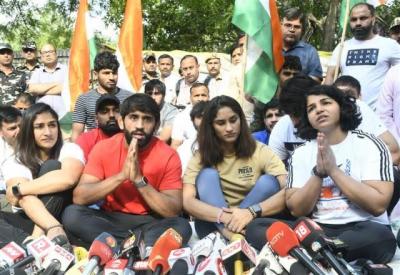
Said this before. Saying this again! In this fast moving 'viral' world, where today an issue is 'cool' and tomorrow another issue is 'hot', the less-visible people's movements for basic justice, simply fall between the cracks of the 'system' and 'solidarity' !😇 @NarmadaBachao ✊🏽
On the streets of Calcutta, you will find these electrical transformers ( I think that's what it is?) with a photo of an eminent person & a little blurb about the person. Here's PC Mahalonobis, instrumental in setting up the great Indian statistical system when Nehru was the PM.
It's truly remarkable to see that integrity, courage, commitment & the zeal of @s_kanth has been so well recognised by the people of Tiruvallur. Here is wishing you all the best and much much more.
An elegant example demonstrates what @mathbabedotorg describes as 'algorithms are opinions embedded in code'. Shows how such tech reproduces our archived biases. Not to throw the baby with the bathwater but be cautious. Can't change our biased archives but we can choose wisely
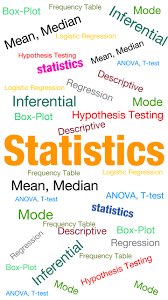
A Simple Roadmap to Mastering Statistics
1/ Welcome to this thread on how to properly learn statistics! Statistics is essential for making informed decisions in various fields, from business to medicine. Here's a roadmap to help you master this crucial subject.
2/ Start with the Basics: Understanding the fundamentals is key. Begin with descriptive statistics, which includes mean, median, mode, variance, and standard deviation. This will give you a strong foundation for more advanced concepts.
3/ Learn Probability: Understanding probability is essential as it forms the base for inferential statistics. Focus on concepts like conditional probability, Bayes' theorem, and probability distributions.
4/ Master Inferential Statistics: This involves making inferences about populations based on samples. Key concepts include hypothesis testing, p-values, confidence intervals, and t-tests.
5/ Get Hands-On Experience: Practice is essential. Use statistical software like R or Python to analyze real-world data sets. Try to replicate the results of published studies or conduct your own analysis.
6/ Understand Regression Analysis: Regression analysis is used to understand relationships between variables. Start with simple linear regression and then move on to multiple regression and logistic regression.
7/ Study Experimental Design: Understanding how to design experiments is crucial for collecting meaningful data. Learn about randomized controlled trials, observational studies, and the principles of experimental design.
8/ Explore Advanced Topics: Once you have a strong foundation, you can explore advanced topics like multivariate analysis, time series analysis, and Bayesian statistics.
9/ Stay Updated: The field of statistics is always evolving. Stay updated by reading journals, attending webinars, and participating in online forums.
10/ Practice, Practice, Practice: The more you practice, the better you'll get. Keep challenging yourself with new problems and data sets.
11/ Seek Feedback: Don’t hesitate to ask for help or feedback from peers, online communities, or mentors. It’s a great way to learn and improve.
Remember, mastering statistics is a journey, not a destination. Keep learning and practicing, and you'll become more proficient over time. Good luck!
#Statistics #DataScience
@arjun_jayadev Wish you all the best Naveen. Enjoy the trip and hope you continue to cross many such milestones in ultimate frisbee and your other expertise, data and data science. All the very best.
To register for the interactive session with faculty and know more about our program, please scan the QR code shown in the poster and then click on the registration link.