⏳ The countdown is on!
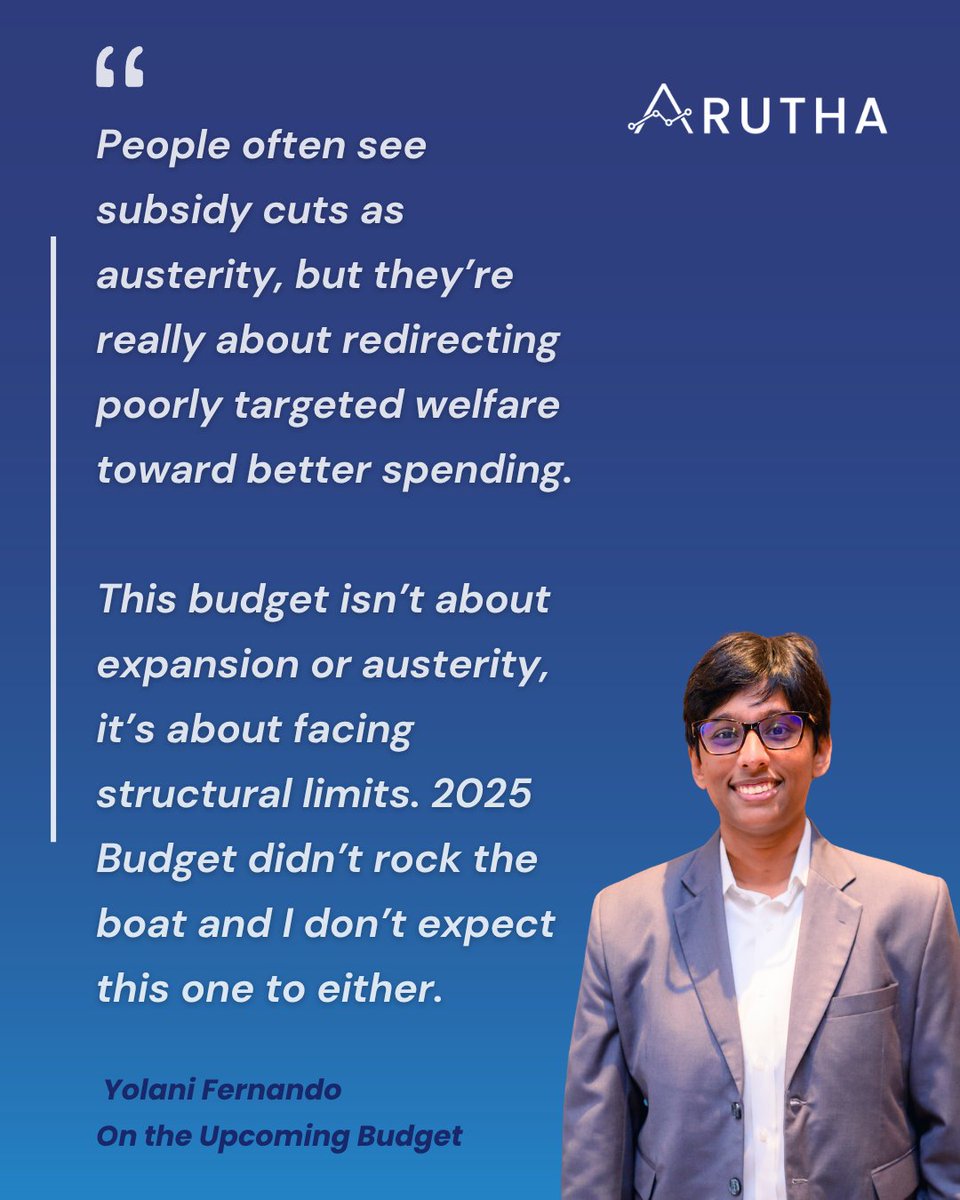
With the #LKA Budget less than 24 hours away, our Directors @yolanifernando and @RegularReh are calling for allocations that'll help improve tax administration.
What do you want to see in the Budget?
Share your thoughts in the comments section!
#SriLanka #Budget2026 #BudgetLK
Widening Sri Lanka's tax net would increase the number of taxpayers contributing to tax revenue - not increase tax rates or introduce new taxes. 🇱🇰
It will bridge the gap between tax payers and tax evaders. The government can increase tax revenue from those who have continuously remained outside of the tax system.
An estimated revenue target of Rs 4.6 trillion has been set for SL Customs, Inland Revenue Department and Excise Department for this measure, a Rs 600 billion year-on-year increase.
This links with an increase in tax payer registrations by one million between 2022 and 2025 April. The expansion reflects broader tax compliance and administrative efficiency.
#lka #SriLanka #Budget2026
With less than a week to go until Budget Day, Team Arutha reached out to the public to hear what you hope to see in this year’s budget! 🗣️
What would you like the budget to focus on?
Share your thoughts in the comments below! 👇
#lka#SriLanka#budget2026
🎙️ Team Arutha joined @Neonmedialk with @indikasak , ahead of #Budget2026, to unpack what this year’s budget must focus on 👇
💡 Why it’s time for structural reforms, not just targets
💰 Strengthening tax administration without raising taxes
🏛️ Rebuilding the IRD with skills, systems and incentives
🎧 Watch the full podcast: https://t.co/q0A2fLnD20
#lka #srilanka #Budget2026 #economy
💰 பட்ஜெட் 2026 இன்னும் சில நாட்களில்!
இந்த பட்ஜெட்டில் இருந்து என்ன எதிர்பார்க்கலாம் என்பது குறித்து @RodrigoSavithri மற்றும் @yolanifernando ஆகியோரின் உரையாடல்.
மேலும் படிக்க: https://t.co/0WPxzzwr3U
#lka#Budget2026
Arutha Advisor delivered a public lecture on meaningful property tax reforms in the context of Sri Lanka's latest fiscal challenges. 🇱🇰
The lecture was organized by Professor @samarajiva at @LIRNEasia#lka#SriLanka
📢 We are updating this decode based on new information.
The SCL on big onions was reported by COPF as an increase from Rs 40 to Rs 50, but the original SCL prevailing was Rs 10. The graphs and the decode have been updated in line with this.
Imported big onions are 13% cheaper and imported potatoes are 35% cheaper than locally produced big onions and potatoes despite the special commodity levy (SCL) on imports. The SCL which is meant to protect local farmers comes at the cost of the Sri Lankan consumer who pays higher prices for imported alternatives which are more affordable than locally produced big onions and potatoes.
The Committee of Public Finance (COPF) recently approved the increased of the SCL on imported big onions by Rs. 40 (from Rs.10 to Rs. 50), and on imported potatoes by Rs. 20, (from Rs. 60 to Rs. 80), effective from 26th August 2025. With the increase in SCL, imported potatoes will still be cheaper than locally produced potatoes while imported potatoes will be pushed up to be more expensive than the locally produced big onions.
The low productivity and competitiveness of locally produced agricultural products has long since being an issue. Outdated farming practices, limited adoption of modern technologies, the effects of climate change, small-scale farms handholding’s, post-harvest losses, poor storage infrastructure and market inaccessibility contribute to this. In addition to this, the continuous use of para-tariffs like SCL have distorted resource allocations towards unproductive and uncompetitive crops.
Note: SCL does not apply to locally produced items
With Budget Day just around the corner, @AruthaResearch 's Directors share their thoughts on what really matters - meaningful SOE reforms!
*Mahapola Scholarships, university bursaries and other contributions 💰
#lka#SriLanka#Budget2026
Team @AruthaResearch met with the Parliamentary Committee on Public Finance (COPF) today to advocate for property tax reforms in Sri Lanka. 🇱🇰
@AruthaResearch Advisor Professor Mick Moore led the discussion with a presentation on potential pathways for implementing effective property tax reform in Sri Lanka's context.
#lka #SriLanka
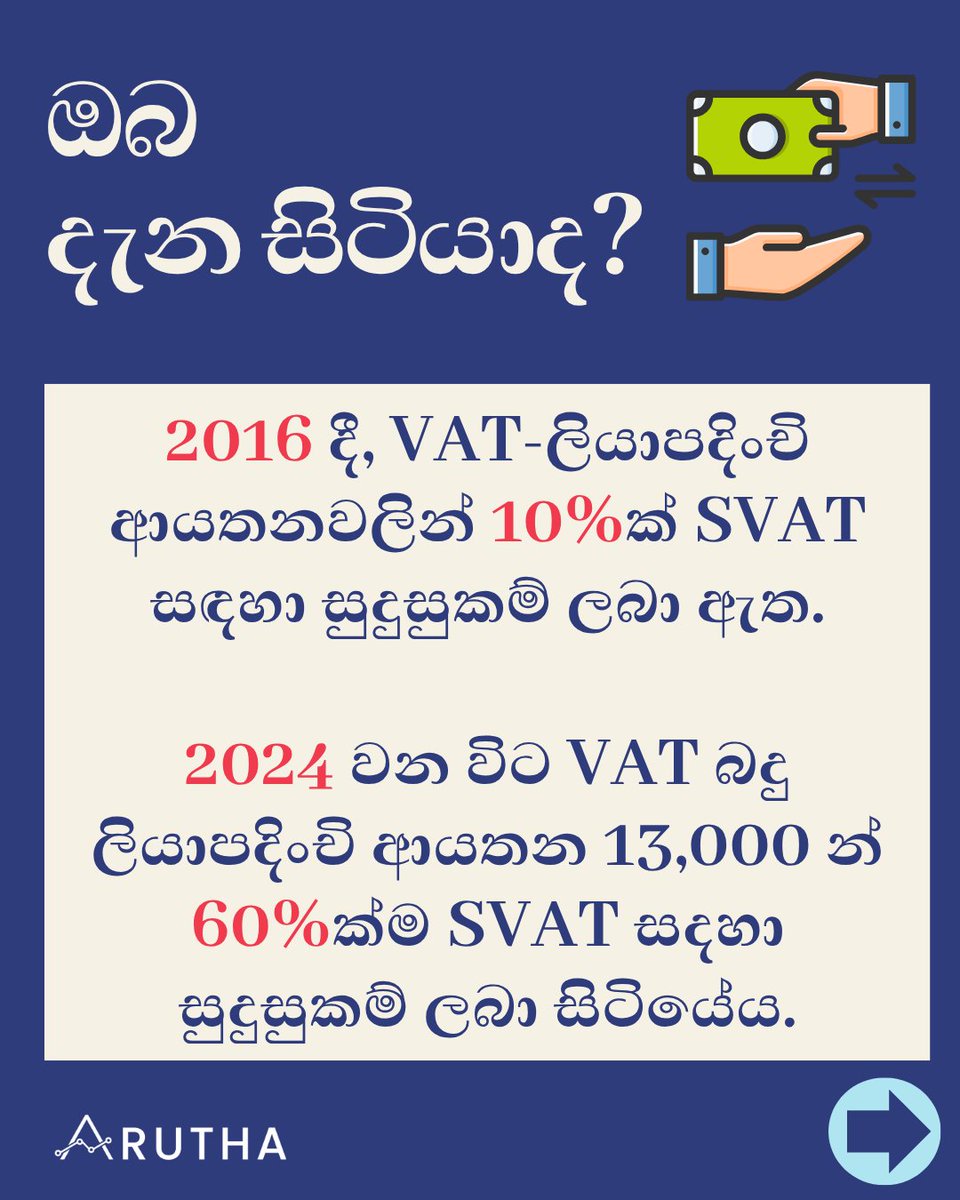
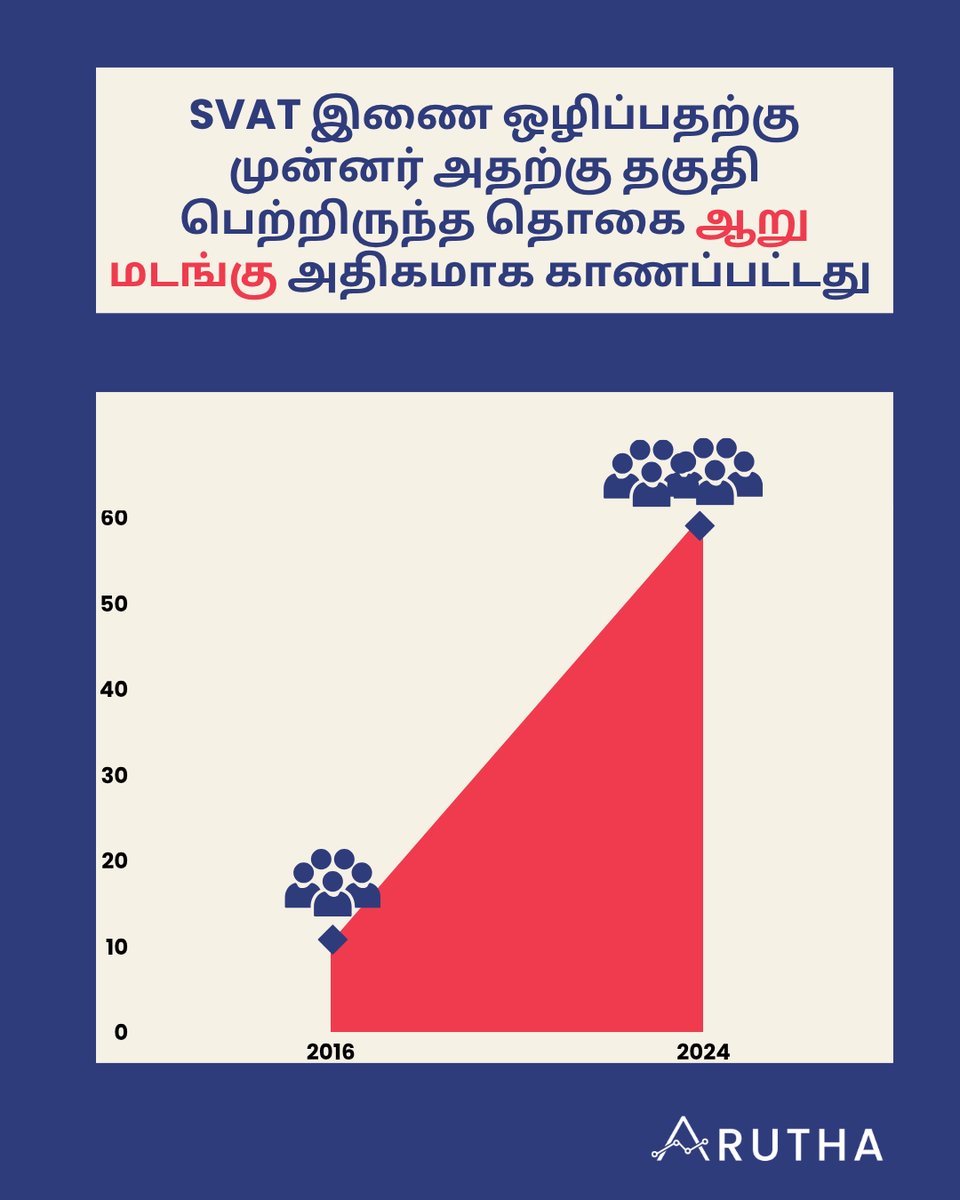
🚨 SVAT eligibility increased six times before it was abolished!
Read more in @AruthaResearch 's latest brief:
🔗 https://t.co/mqM115zUbP
#lka#SriLanka#SVAT
🚨SVAT இணை ஒழிப்பதற்கு முன்னர் அதற்கு தகுதி பெற்றிருந்த தொகை ஆறு மடங்காக அதிகரித்து இருந்தது !
மேலும் வாசிக்க :
https://t.co/mqM115zUbP
#lka#SriLanka#SVAT
We often talk about Budget day, but the process doesn’t start or end there! 💰
Join @yolanifernando as she explains Sri Lanka’s year-round budget cycle - and why it matters for all of us!
#lka#SriLanka#Budget2026
Imported big onions are 13% cheaper and imported potatoes are 35% cheaper than locally produced big onions and potatoes despite the special commodity levy (SCL) on imports. The SCL which is meant to protect local farmers comes at the cost of the Sri Lankan consumer who pays higher prices for imported alternatives which are more affordable than locally produced big onions and potatoes.
The Committee of Public Finance (COPF) recently approved the increased of the Special Commodity Levy (SCL) on imported big onions by Rs. 10 (from Rs.40 to Rs. 50), and on imported potatoes by Rs. 20, (from Rs. 60 to Rs. 80), effective from 26th August 2025. Even with the increase in SCL, imported big onions and potatoes will still be cheaper than locally produced big onions and potatoes.
The low productivity and competitiveness of locally produced agricultural products has long since being an issue. Outdated farming practices, limited adoption of modern technologies, the effects of climate change, small-scale farms handholding’s, post-harvest losses, poor storage infrastructure and market inaccessibility contribute to this. In addition to this, the continuous use of para-tariffs like SCL have distorted resource allocations towards unproductive and uncompetitive crops.
Note: SCL does not apply to locally produced items
#lka #SriLanka