A Japanese immunologist spent 20 years proving that the chemicals trees release into the air walk into your bloodstream, hunt down your stress hormones, and arm your immune system in ways no therapist or pharmaceutical has ever matched, and most of the data has been sitting in Japanese medical journals for two decades waiting to be translated.
His name is Qing Li.
He is a clinical professor at Nippon Medical School in Tokyo and the president of the Japanese Society of Forest Medicine. The Japanese government has been funding his research since 2004, and the body of work he has produced is the reason forest bathing is now an officially prescribed clinical therapy in Japan and Korea.
The story actually starts in 1982, when the Japanese Ministry of Agriculture, Forestry and Fisheries coined the term shinrin-yoku to describe the practice of slow, mindful walking in a forest. They did it for a practical reason.
Japan was urbanizing fast, stress-related illness was climbing, and the country had thousands of square kilometers of forest sitting unused. The idea was to give people a reason to walk into the trees... They had no idea what was actually happening to the human body during those walks until Qing Li ran the first proper experiment in 2005.
He took twelve healthy adult men on a three-day, two-night trip to a forest park. They walked for a few hours each day. Nothing strenuous. No prescribed routes or breathing exercises. They simply walked slowly through the trees, breathing the air, looking at the forest.
Li drew blood and urine samples before the trip, on the second day, on the third day, on day seven after returning home, and again on day thirty.
The numbers that came back from the lab were not what anyone expected.
The activity of a specific type of immune cell called the natural killer cell, which is the cell your body uses to hunt down cancer cells and virus-infected cells before they can spread, had jumped by roughly 50 percent during the forest trip. The actual number of natural killer cells circulating in the bloodstream had increased significantly.
Three different anti-cancer proteins that those cells produce, called perforin, granzymes, and granulysin, had all risen sharply. And the effect did not disappear when the men went home. The immune boost was still measurable on day seven and was still partially present on day thirty.
Two hours a day in a forest had upgraded the immune system for a full month.
Li ran the same experiment with women a year later and found nearly identical results. Then he ran it with a control group who took a three-day trip through an urban area with the same amount of walking, the same hotel quality, and the same diet.
The urban group showed no measurable change in natural killer cell activity at all. The forest was doing the work, not the vacation.
The mechanism turned out to be a class of airborne molecules called phytoncides. Trees produce these compounds to defend themselves against insects, bacteria, and fungi. Pine, cedar, oak, and cypress trees release them in particularly large amounts, especially in warmer weather and after rainfall.
When you walk through a forest, you are inhaling those molecules into your lungs and absorbing them through your skin, and once inside your body they appear to directly stimulate the production and activity of the very immune cells Li was measuring in his lab.
Roughly 50 percent of the health benefit of a forest walk, according to Li's data, comes from the chemistry of the air itself. The other half comes from what the forest is doing to your nervous system.
This is where it stops being only about the immune system and starts being about stress.
A separate Japanese research team measured cortisol, the body's main stress hormone, in 84 participants across 35 different forest sites. They drew samples before and after a 30-minute walk in each forest and compared them to control walks in matched urban environments. The cortisol levels of the people who walked in the forest were lower than the cortisol levels of the people who walked in the city by a significant margin. Their heart rates were lower. Their blood pressure was lower.
The activity of their parasympathetic nervous system, which is the part responsible for rest and recovery, had gone up. The activity of their sympathetic nervous system, which is the part that drives fight or flight, had gone down.
Then a researcher at the University of Michigan named MaryCarol Hunter ran the cleanest version of this experiment ever done. She recruited participants from a city and told them to take a nature pill three times a week for eight weeks.
They were free to choose the time, the place, and the duration of the nature experience, as long as it was outside, in daylight, and free of phones, conversations, and aerobic exercise. They sent her saliva samples before and after each session so she could measure cortisol changes accurately and rule out the normal daily drop in stress hormones that happens to everyone.
The result was that participants experienced a 21.3 percent drop in cortisol per hour spent in nature, with the biggest payoff happening between minutes 20 and 30 of the walk.
After that, the cortisol kept dropping, but more slowly. The threshold dose for measurable stress relief was just 20 minutes outside in something that looked and felt like nature.
What none of this means is that nature is a substitute for therapy or for medication when someone genuinely needs them. Therapy treats different things than a walk does, and Li himself has been careful in interviews to call forest bathing a complementary intervention rather than a replacement for clinical care.
But what the research has settled is that the human body has a physiological response to being among trees that operates on the same biological systems modern medicine is trying to reach with drugs and clinical protocols, and that response is fast, measurable, and free.
The strangest part of Li's work is the implication he keeps repeating in interviews. The average person now spends more than 90 percent of their life indoors. Their cortisol stays elevated. Their natural killer cells stay sluggish.
Their parasympathetic nervous system rarely gets a chance to take over. The system that was tuned by millions of years of life under a canopy of trees is being asked to run permanently inside a box made of drywall and screens.
Your body has not forgotten what it is supposed to do in a forest. It is waiting for you to walk into one.
Yes. This is why I keep claiming that every disease will be treated within a decade and that soon after, aging will be reversed. This is not science fiction anymore. The enormous impact of AI on health and medicine will become apparent in a few years.
I'm fascinated by Urolithin A.
It's a compound that stimulates mitophagy (mitochondrial autophagy), helping clear out and replace damaged or dysfunctional mitochondria.
Recent studies show that urolithin A improves endurance performance and even keeps immune cells "younger" with age.
The data are early and emerging, but promising enough that I've started to supplement with it, as I discussed with @hubermanlab when I appeared on his podcast recently.
David Sinclair's lab just discovered that the same technology that reverses aging also kills cancer cells.
His team has been using epigenetic reprogramming to reset old cells back to a younger state. It works. Old cells become young again.
But when they tried it on cancer cells, something unexpected happened.
The cancer cells didn't get younger. They killed themselves.
Sinclair (@davidasinclair) explained why. Cancer cells survive by ignoring the DNA damage inside them. They're filled with it. But they've shut down the part of the cell that would normally detect it and trigger self-destruction.
Epigenetic reprogramming wakes that system back up.
Sinclair put it this way: the cancer cell wakes up from its zombie-like state, looks at its own chromosomes, realizes they're destroyed, and says "I better kill myself." And it does.
A normal cell gets reprogrammed and becomes young again. A cancer cell gets reprogrammed and destroys itself.
Same technology. Two opposite outcomes. Both exactly what you'd want.
His team has shown this works across many types of cancer.
Side note:
David Sinclair is speaking on May 6th at SynBioBeta this year - discussing the science of slowing and reversing aging.
If longevity is the world you're in, the investors, partners, and scientists who matter in this space will be in the room.
Link for tickets below.
David Sinclair's proven every disease is reversible, starting with blindness in mice:
"We could cure blindness. But we didn't choose the eye because it would work well. We chose the eye because we wanted to test if we could cure blindness."
Since then, he tested that we can also treat diseases such as Alzheimer's disease in the brain of mice, multiple sclerosis, ALS, kidney disease and liver disease.
“It's not just the eye that can get reversed and cured of diseases. It's seemingly every part of the body.”
He confirmed this also worked in monkeys.
Now humans are next. The FDA just cleared the first age-reversal trial. Life Biosciences raised $80 million to make it happen.
As he put it: "The eye is just the beginning. We believe we can treat every tissue — a whole body reset."
— @davidasinclair
A Harvard professor who's studied aging for 30 years says one of the most powerful longevity tools on Earth is free.
Fasting.
David Sinclair explained what happens at the cellular level when you stop eating food for long periods of time:
Your body has proteins called sirtuins. They're the conductors of your cellular orchestra - telling each gene when to turn on and off, keeping every cell's identity intact.
But sirtuins need fuel called NAD to function. By age 50, your NAD levels drop by HALF. Your conductors are running on empty. Your cells start losing their identity.
Fasting raises NAD back up. It reactivates the sirtuins and preserves the epigenome.
Sinclair mentions it's only useful if you're already meeting nutrient and micronutrient intake as well.
He himself skips breakfast daily and tries to go until late afternoon before eating.
Once a month, he fasts for 3 full days because deep cellular recycling - called chaperone-mediated autophagy - only kicks in after about 2 and a half to 3 days.
He called three meals a day "craziness" and said the idea that breakfast is the most important meal of the day was "marketing from the early 20th century" by cereal companies.
Fasting is just one of the strategies he uses for optimal health.
— @davidasinclair
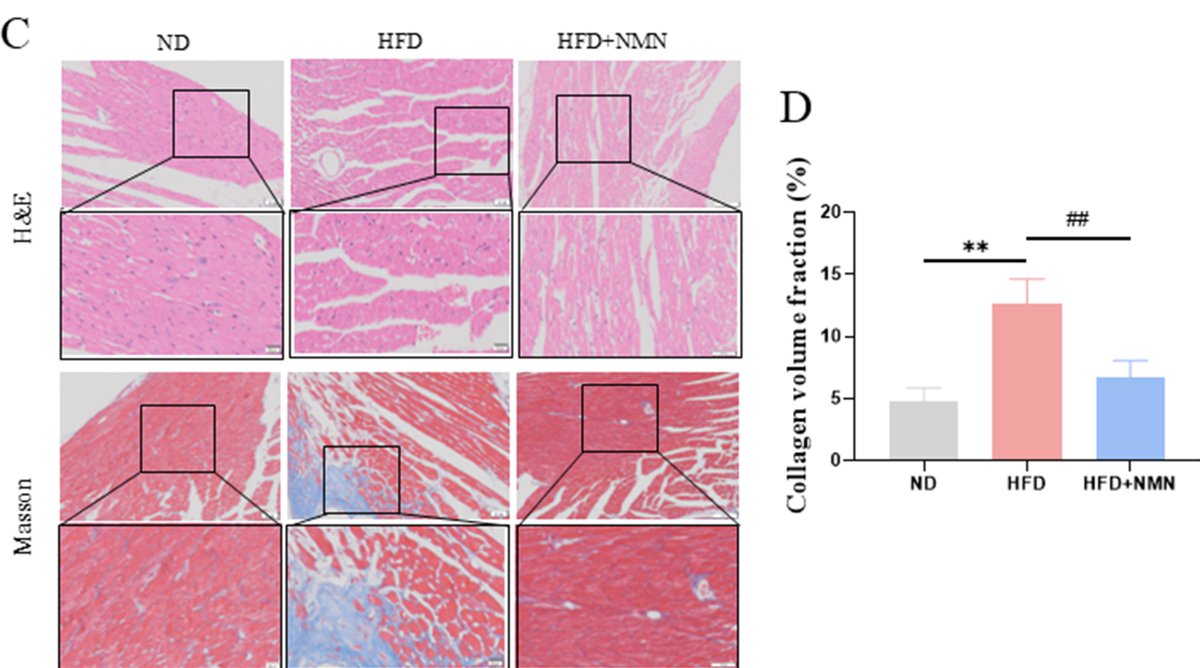
According to ITOA, NAD declines with age, causing epigenetic changes & disease susceptibility
In 2010, we showed NAD-dependent enzyme, SIRT3, protects the heart 🐁
New study says NAD precursor NMN protects the heart via SIRT3 in mice fed a Western diet
Why's that important? 🧵
All the celebs now getting that retrutatide look. If you want to know what will be massive on legal RX market 2 years ahead in the fat loss, muscle, vitality space… it always goes from bodybuilding (GH, TRT, GLPs, Retra.) to Hollywood to mainstream. EVERY TIME. Since the 80s.
Recent reports show Hollywood celebs mentioning NMN or NAD+ (its key product) for anti-aging:
- Jennifer Aniston: Calls weekly NAD IVs "the future" (2024).
- Hailey Bieber: Says she'll do NAD "for the rest of my life" to not age (2024).
- Kim Kardashian: Uses nootropics with NMN precursors (2025).
- Joe Rogan: Takes NMN daily for energy (2024).
- Matt Damon, Kevin Hart: Invested in longevity tech (2024).
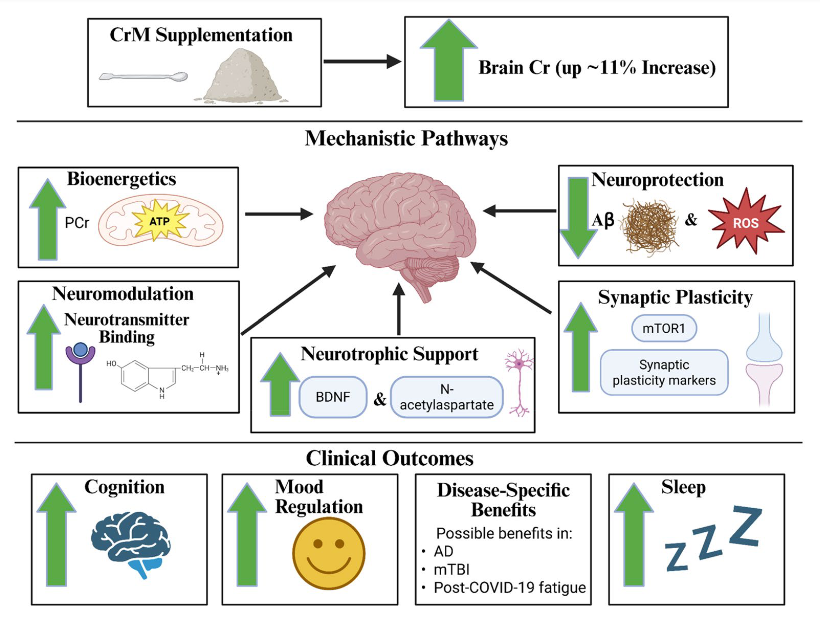
We just published the largest review of creatine for brain health.
Increased brain creatine levels may function as a buffer to metabolic stress leading to neurological benefits.
Doses >5g/day are likely required for brain benefits.
We just published the largest review of creatine for brain health.
Increased brain creatine levels may function as a buffer to metabolic stress leading to neurological benefits.
Doses >5g/day are likely required for brain benefits.