#NowAvailable: Web of Lies – Pakistan's Propaganda Push During Operation Sindoor
The South Asian Centre for Strategic Studies (@DelhiSacss) is proud to announce the release of its latest publication, Web of Lies – Pakistan's Propaganda Push During Operation Sindoor, authored by Idrees Aftab.
This book offers a forensic analysis of one of the most consequential information battles in recent South Asian history. Following the 22 April 2025 terrorist attack in Pahalgam, Jammu & Kashmir, and India’s subsequent military response through #OperationSindoor, the conflict expanded beyond the battlefield into the digital domain.
Drawing on extensive research, the study examines how propaganda, disinformation, and strategic communication were employed to shape perceptions, contest narratives, and influence international discourse during the crisis. It explores the role of state-linked information networks, coordinated messaging campaigns, and digital influence operations in the broader context of contemporary hybrid warfare.
Published in June 2026, #WebOfLies stands as both a detailed case study and a strategic warning about the weaponisation of perception in 21st‑century conflict.
Download the book here: https://t.co/om0WslIcSE
#WebOfLies #OperationSindoor #InformationWarfare #StrategicStudies #Disinformation #HybridWarfare #StrategicCommunication #Geopolitics #SouthAsia #SecurityStudies #InformationOperations #DigitalWarfare #Research #bookpublishing #academia #Books #India #Pakistan
Many Pakistani troops who lost their lives during the conflict have received limited official recognition in Pakistan.Records and accounts from former military personnel indicate that several Pakistani soldiers, including officers, were buried with full military respect by Indian forces. Some remains were later returned through military and diplomatic channels, while others continue to remain at locations where they fell during combat.
#Kargil #KargilWar #KargilVijayDiwas
#Geopolitics
https://t.co/Tn05R3er6j
As India prepares to host the 2026 BRICS Summit in Delhi, it aims to steer the bloc toward resilience, innovation, and inclusive cooperation. The expanded BRICS—now including new members like Iran, UAE, and Indonesia—faces internal divisions, notably over the recent US-Israel strikes on Iran. India balances its ties with all parties while advocating dialogue and diplomacy. Despite challenges like trade imbalances and differing views on de-dollarisation, BRICS continues to grow as a Global South platform. India’s chairmanship emphasizes people-centric development, institutional reform, and sustainable solutions, positioning BRICS as a constructive force in a turbulent multilateral order.
https://t.co/4IKLoHV8qa
Between 4 and 8 July 2026, Balochistan suffered a wave of coordinated insurgent attacks by the TTP and BLA, killing approximately 42 people. The assaults targeted civilians near Quetta, a police checkpoint at the Mangi Dam, and a logistics convoy on the N-25 highway. These incidents exposed severe counter-insurgency deficiencies, including limited territorial reach, slow response times in difficult terrain, and an inability to defend critical economic infrastructure vital for CPEC projects. While the military responded kinetically with Operation Shaban, killing over 100 militants, this reactive posturing highlights deeper systemic challenges. Ultimately, the failure of this offensive-coercive approach stems not from structural weaknesses constraining the security apparatus's capacity to deploy force alone, but rather from the state's persistent incapacity to evolve a sustainable political solution rooted in meaningful dialogue and consociational concession.
https://t.co/IEtlumymQe
The July 2026 Balochistan Attacks Expose the Limits of Coercive Approach in Pakistan | Centre for Peace Studies. Mohammed Shoaib Raza
https://t.co/0QC7BY6GGC
RECOMMENDED READ:
Narratives can shape wars as decisively as weapons.
'Web of Lies' examines the Pahalgam terror attack, Operation Sindoor, Pakistan-sponsored terrorism, and the battle for narrative dominance in modern conflict.
It also explores information warfare and hybrid warfare, making it a compelling read for anyone interested in India's evolving security challenges.
#OperationSindoor #InformationWarfare
#فضلو_معافی_مانگو
#TheOdyssey
@DelhiSacss The book calls the bluff sold by #Pakistan & #PakistaniMilitary to the world. They lost the war and now, the face. As the author says, #Pakistani leadership have long been caught in 'web of lies' & mentality of denial. Somehow, they get away easily too. Sign of a failed stage
Is the United States Preparing for a Ground Invasion of #Iran?
🔹The escalating pattern of U.S. strikes against southern Iran in recent days – particularly over the past several hours – may point to a gradual strategy aimed at preparing the ground for a potential deployment of ground forces. Such an operation, if it were to materialize, could be intended to seize control of Iran’s southern coastal belt in order to remove Iranian control over the Strait of Hormuz.
🔹Reports indicate that recent U.S. strikes have targeted several bridges and railway links in southern Iran. At the same time, there have been reports of attacks on airports. These actions may have been intended to disrupt the logistics and mobility of Iranian military forces in the south. Additional reports also suggest strikes against fuel tankers in Bandar Abbas.
🔹Meanwhile, attacks in Sistan and Baluchestan in southeastern Iran targeted the Iranian Army’s 88th Armored Division, alongside similar strikes against positions of the 92nd Armored Division in Khuzestan in the southwest. Some analysts interpret these operations as an effort to degrade Iran’s military capabilities along its principal southern axes, aimed at reducing the risks associated with any future ground deployment.
🔹At the same time, in what appears to be a recurring pattern, U.S. strikes have continued to target Iranian military, missile, drone, and radar installations, as well as IRGC Navy facilities along Iran’s southern coastline on the Persian Gulf.
🔹Taken together, these developments increasingly suggest a gradual but persistent U.S. movement toward a possible ground operation in southern Iran. In other words, the campaign may extend beyond simply degrading Iran’s ability to threaten shipping in the Strait of Hormuz. It could instead indicate that Washington views control of Iran’s southern coastal strip as the only definitive solution to the Strait of Hormuz challenge.
🔹If such an approach exists, it would go well beyond earlier ideas centered on seizing Kharg Island to cut off Iran’s oil exports or occupying islands overlooking the Strait to secure maritime traffic. However, given the length of Iran’s southern coastline – roughly 1,800 kilometers – and the country’s considerable strategic depth, establishing comprehensive control would likely require hundreds of thousands of troops. Moreover, even capturing these areas would not necessarily translate into the ability to sustain long-term control.
🔹In any event, current indicators suggest that we may be approaching the most significant escalation in the U.S.-Iran confrontation since February, driven by Washington’s failure to achieve its strategic objectives. On the other hand, as noted previously, Iran’s actions thus far have also failed to present a meaningful obstacle to this gradual trajectory. One alternative for Tehran could be to shift toward targeting regional economic infrastructure – a move that would significantly broaden the scope of the conflict and lead to a region-wide catastrophe.
Agreement signed to establish China backed World Artificial Intelligence Cooperation Organization (WAICO). 29 countries including Pakistan sign the agreement in Shanghai.
"In view of the heightened security situation in the Gulf region, the Directorate General of Maritime Administration (DGMA), through DGMA Circular No. 36 of 2026, has directed Ship Owners, Ship Managers and RPSL Companies to avoid deploying Indian seafarers on vessels undertaking voyages through the Strait of Hormuz until further orders."
Advisory for Indian Maritime Stakeholders
In view of the heightened security situation in the Gulf region, the Directorate General of Maritime Administration (DGMA), through DGMA Circular No. 36 of 2026, has directed Ship Owners, Ship Managers and RPSL Companies to avoid deploying Indian seafarers on vessels undertaking voyages through the Strait of Hormuz until further orders.
Key precautionary measures:
- No deployment of Indian seafarers on vessels undertaking voyages involving passage through the Strait of Hormuz until further orders.
- Heightened security vigilance in the Persian Gulf, Strait of Hormuz and adjoining waters.
- Continuous monitoring of navigational warnings and security advisories, with strict implementation of the ISPS Code.
- Immediate reporting and assistance through the IFC-IOR and DG Communication Centre (MMDAC) in case of emergencies.
DGMA continues to closely monitor the evolving security situation and remains committed to safeguarding the safety, security and welfare of Indian seafarers.
#DGMA #IndianSeafarers #MaritimeSafety #MaritimeSecurity #Shipping #SeafarerSafety #StraitOfHormuz
Baloch nationalist leaders, have declared independence from Pakistan, announcing independent "Republic of Balochistan". The statement asserts that freedom fighting forces control 85% of the province of Balochistan, claim ownership of local natural resources, and feature a new national flag, anthem, and currency.
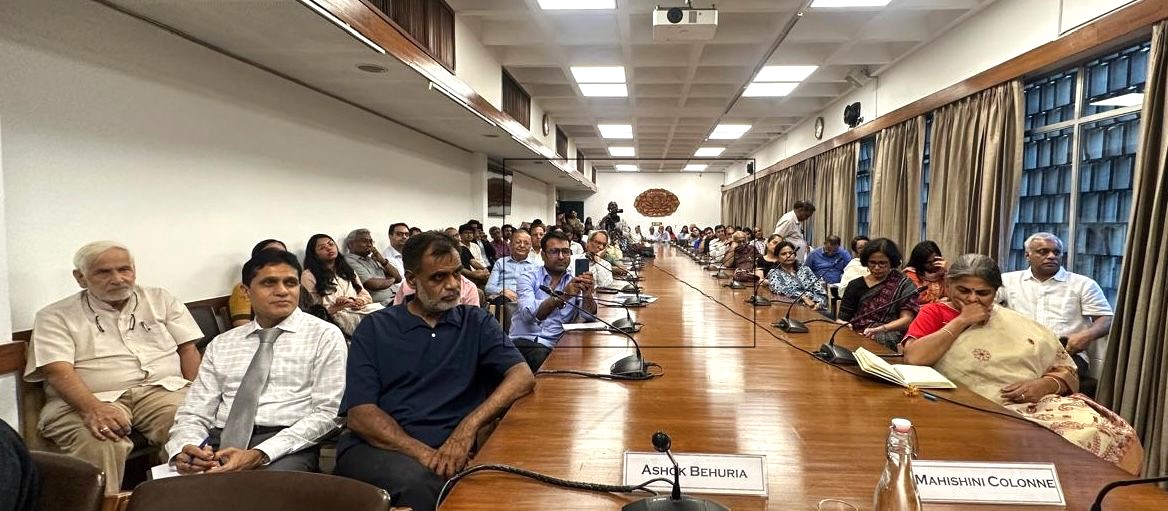
@ICPS_Official launches its "Peace Dialogue" initiative with a special talk by H.E. @Mahishini, High Commissioner of Sri Lanka to India, on 10 July 2026 in New Delhi. The talk was organised in collaboration with IIC, New Delhi.
@MFA_SriLanka@MEAIndia@PIB_India
1/5
During the 1965 India-Pakistan war, Indonesia, under President Sukarno, briefly entertained an extraordinary idea: that the Andaman and Nicobar Islands were a natural extension of Sumatra and could be wrested from India.
2/5
Indonesia's threat sent shockwaves through India's diplomatic and military establishment. At the height of the war, New Delhi feared that a China-Pakistan-Indonesia nexus could open a second maritime front in the Bay of Bengal.
3/5
Indonesia had once stood shoulder to shoulder with India. Yet less than two decades later, it had firmly backed Pakistan in the middle of a war. "Down with India" and "Kill Shastri" echoed through the streets of Jakarta.
4/5
Was this a sudden rupture that caught India by surprise? Or the culmination of a series of developments that had steadily worsened India-Indonesia ties? And how real was Indonesia's threat to seize the Andaman and Nicobar Islands?
5/5
Read ThePrint #PastForward by Manya Gupta on the forgotten Andaman crisis—when Sukarno's Indonesia turned against India during the 1965 war.
https://t.co/iP8bWnQU5q
Watch:
https://t.co/1gqiozZhgJ
Fragmented command and control has limited the strategic employment of India’s Special Forces. @KasturiBhashyam argues that streamlined leadership and clearer institutional structures are essential to maximise their effectiveness in war and near-war scenarios. https://t.co/HNQnoRAMJB
A must-read for anyone interested in terrorism, information warfare, and modern conflict. In this new book, Idrees Aftab and the South Asian Centre for Strategic Studies examine the Pahalgam terrorist attack, Operation Sindoor, and the battle for narrative dominance in contemporary warfare.
Key themes:
• Hybrid warfare & cognitive conflict.
• The Pahalgam attack, evidence, and its human cost.
• Pakistan's alleged information warfare ecosystem.
• Operation Sindoor as a case study in narrative competition.
• Why strategic communication and perception now shape military success as much as battlefield outcomes.
A timely and thought-provoking contribution to the study of security, strategic affairs, and the information domain.
Download: https://t.co/2rUjgMlJBE
#OperationSindoor #InformationWarfare #StrategicStudies #SouthAsia
Pakistan says 42 security personnel killed in Balochistan attacks | Reuters
Massive loss of face for Asim Munir.
1. 42 Pak SF killed in Balochistan.
2. PoK is burning with mass rebellion.
3. Pak West Asia Mediation Fails
4. Outrage over Mahrang Baloch. https://t.co/KoFus2ws3S