We’ve been covering this in-depth for several weeks now in our daily reports.
AUM in these funds, specifically $SOXL, means the notional MOC imbalances has entered unprecedented territory. More importantly, it’s the swaps that count more than the fund itself.
BoA (Hartnett): since Warsh’s term started on May 22nd [through Thursday's close], US Treasuries up 3.2%, stocks (SPX) -1.6%;
early days and nouveau-hawkish Fed yet to convince any investor to abandon core “Anything But Bonds” allocation,
but Warsh thus far mirroring "lower yield" Fed chairs (Eccles, Volcker, Greenspan, Bernanke – Table), and long the long-end remains most contrarian secular trade in markets.
Non-monetary inflation is not only a headache for the Fed this year, but also a key driver of rising funding costs — across borrowing, hedging, and portfolio repositioning alike.
https://t.co/sBpGs1MkHm
On Opex, we mostly talk about flows from a delta-hedging perspective and are dealers short gamma or long gamma, etc.
I think a different question to also ask after Opex is where will freed up capital move towards to harvest premium.
Many people STO June 18th exp long dated cash covered puts or wrote covered calls and with this expiration they will have freed up capital to short vol in some form somewhere. (My guess is the newly public rocket co.)
Seems like more retail capital in the “sell options for income” group +covered calls ETFs these days, so this question is more relevant now.
From the Week Ahead (https://t.co/5Rq36hvazs):
Put buying (which adds incremental downside pressure to indices) continued its jump which has seen the 10-DMA of the put/call ratio shoot higher from the least since April 2022 hit at the start of June, although still just the middle of the range since the start of 2025.
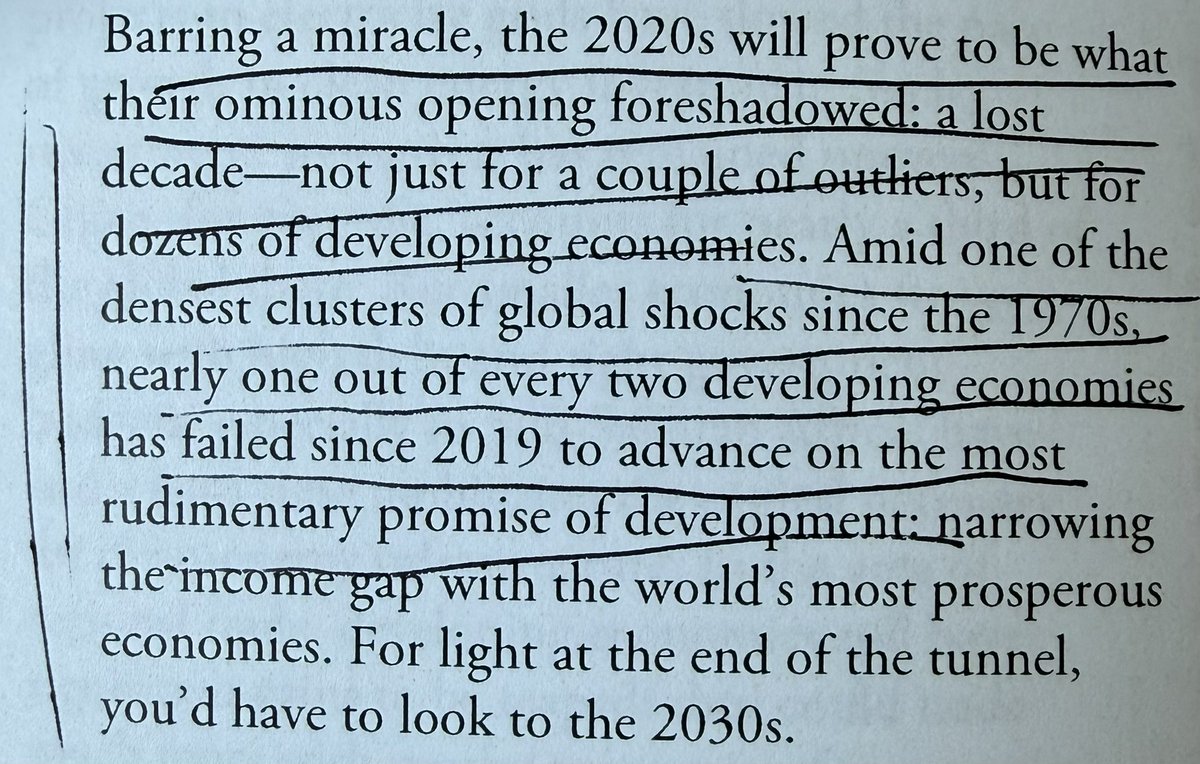
The World Bank offers this sobering scenario for developing economies in its latest global outlook report.
(Apologies for the unsteady underlining. Bumpy train!)
#economy#markets#developingcountries@WorldBankGroup
If a record-breaking Samurai bond is what it takes to fund one year of capex for one of five hyperscalers — the dislocation this is creating in global debt markets may be massively underpriced by consensus.
https://t.co/uvxR9So2iI
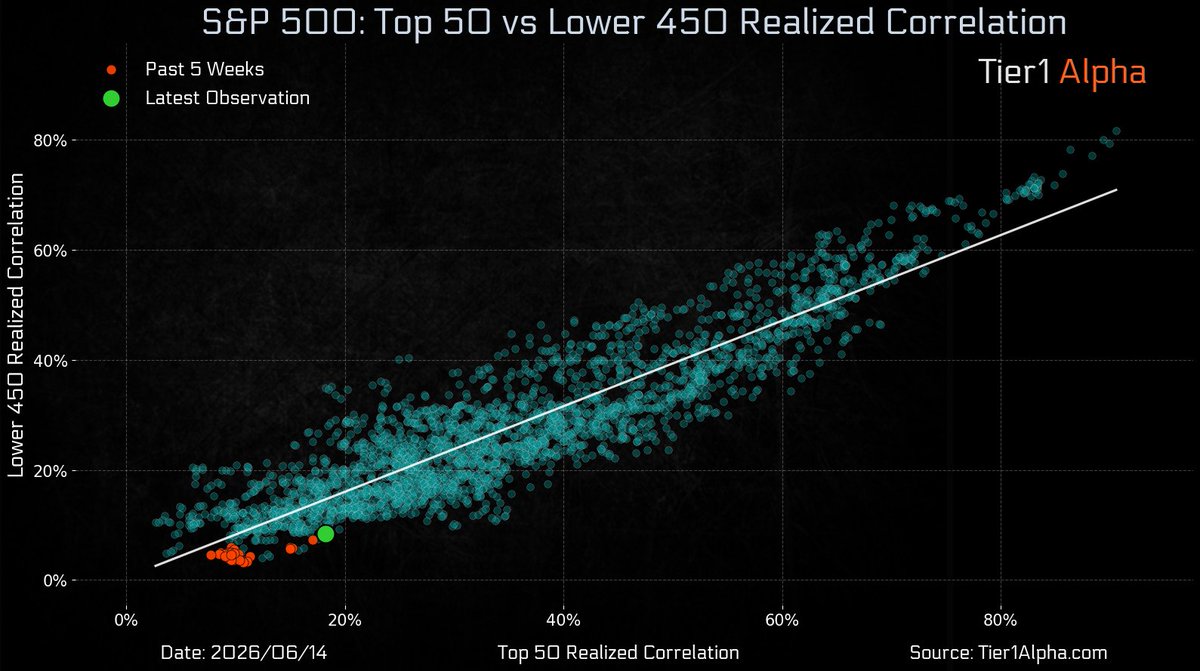
I don't think people realize how much index concentration has been skewing correlations lately.
It's heavily degraded the usefulness of things like CBOE's COR1M index, which only measures IV for the top 50 names in $SPX. Good time to zoom out a bit.
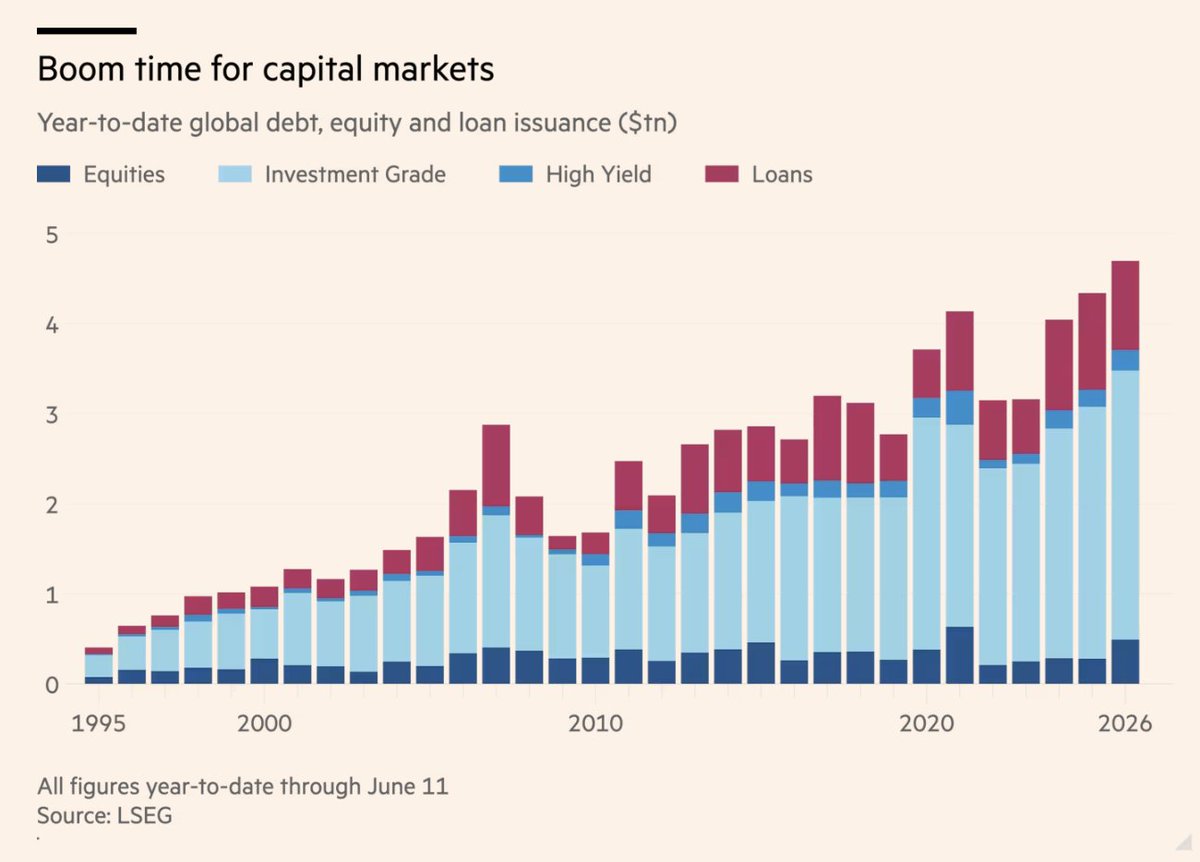
Wall Street digests record fundraising haul as AI race intensifies. Companies have raised roughly $4.7tn across global equity, debt and bank loan markets this year, a record pace, acc to data provider LSEG. That figure, up 7% YoY, does not include the spurt of activity in investment-grade private credit markets, which are increasingly being tapped to finance data centres, chips and power plants feeding the AI boom. That included a $35bn debt package cobbled together by Apollo and Blackstone this week for Anthropic.
https://t.co/sZzqDyyGvS
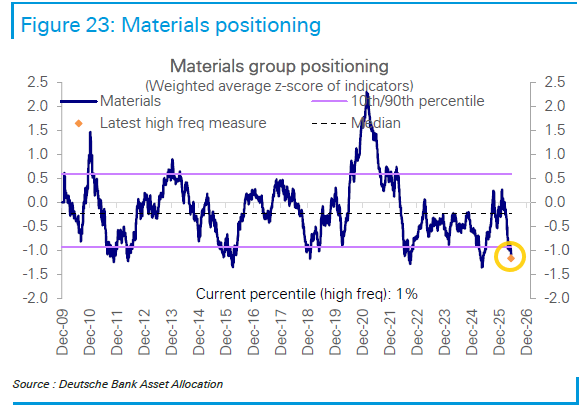
DB: Positioning in traditional cyclicals (Industrial Cyclicals, Consumer Cyclicals, Financials, Energy, Materials) has fallen to the 11th %ile since 2010, the lowest since 2024.
My June public newsletter is now available:
https://t.co/q9AWNzBSmY
The issue focuses on defining and planning for the more multipolar and volatile world we have moved into.
When the wager is whether the Fed can fire up its printing press before the wave of new stock supply and liquidation of legacy positions crushes the leveraged players, disturbances in the volatility surface become the main market-moving signal.
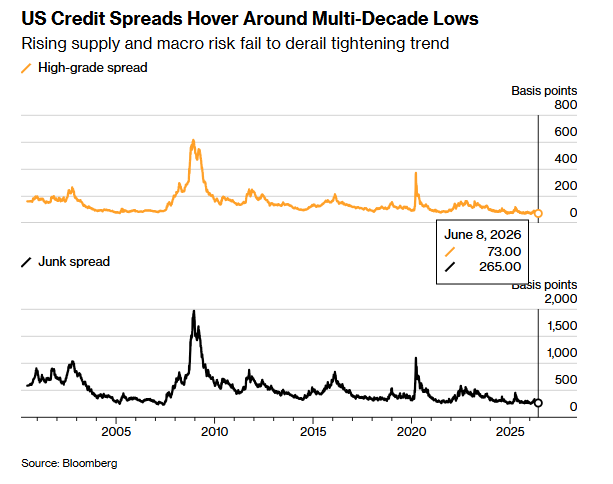
''The trouble is what tight spreads and record leverage mean together. They mean there’s no margin of safety left in the system''
https://t.co/RCZsyNFEyv
BBG: Pimco is warning that the “credit loss cycle is upon us” as heavy spending on artificial intelligence could widen economic outcomes and hit lower-quality borrowers saying “the default cycle is reasserting itself, and we expect significantly higher losses in lower-quality credit such as leveraged and private direct lending.”
Pimco said the backdrop of low credit spreads clashes with “elevated secular uncertainty,” and “we interpret this as complacency rather than strength.” While the US economy has been resilient, “AI will disrupt old economy companies, especially highly levered ones."
The firm also pointed to “increased instances of maturity extensions and payment-in-kind structures that allow borrowers to repay debt with more debt,” a trend it said suggests “a more genuine default cycle is now unfolding, and investors should not expect past patterns of rapid recovery to repeat with the same reliability.”
Pimco said “central banks will do what it takes to keep inflation expectations anchored over the next five years,” and that “for this reason, sovereign bonds offer income plus the potential for capital gains in a future downturn.”
The authors also noted that the “historical frequency of US recessions over five-year periods since World War II has been 69%,” and wrote, “Central banks have much more room to cut rates in future economic downturns than in the decade before the pandemic, and we expect them to use it.”
UBS says nearly one in every 11 American adults is now a millionaire. But when all of them try to cash out and head for the exit, they'll find out there's only one door. Turns out the megatrend is the same for everybody.
🧿The decline in global oil demand isn’t just real — it’s happening in real time before our eyes.
🧿Since the start of the Hormuz crisis, China and Europe alone have cut GLOBAL Oil Demand by about 6.2 mb/d.
🧿Subtract that from the Hormuz supply losses to find the real gap between supply and demand.
🛑Remember: demand is one thing, consumption is another!







![neilsethinew's tweet photo. BoA (Hartnett): since Warsh’s term started on May 22nd [through Thursday's close], US Treasuries up 3.2%, stocks (SPX) -1.6%;
early days and nouveau-hawkish Fed yet to convince any investor to abandon core “Anything But Bonds” allocation,
but Warsh thus far mirroring "lower yield" Fed chairs (Eccles, Volcker, Greenspan, Bernanke – Table), and long the long-end remains most contrarian secular trade in markets.](https://pbs.twimg.com/media/HLyPk_hWkAAUo67.jpg)