5 habits to help protect your business:
1. Enable MFA.
2. Verify payment changes by calling a trusted number.
3. Keep offline backups and test recovery.
4. Keep software updated.
5. Train staff to report phishing.
Which step are you missing?
#Cybersecurity#Java
PDF editing is a feature. A smoother document workflow is the business value.
Our Lumin PDF case study: real-time collaboration and cloud access that help teams keep work moving.
https://t.co/72yVmj8jVc
#Designveloper#LuminPDF
Designveloper is officially an OpenAI Select Partner!
Proud to join the OpenAI Partner Network and continue working with @OpenAI to help businesses build, deploy, and scale AI solutions responsibly and effectively.
#OpenAISelectPartner#EnterpriseAI
Freelancing by choice or fear of being replaced?
Stack Overflow’s 2026 survey finds roughly 1 in 10 respondents work as a “company of one.” AI may be helping drive this shift.
AI can help you do more. But does that mean more freedom or less job security?
#AI#OpenSource
A lower quote doesn't always mean a lower total cost.
Check testing, infrastructure, third-party fees, security and maintenance.
Designveloper clarifies feature pricing, operating cost estimates and what may change, so you can build with confidence.
#ForTheFaithful#dotnet
SpaceXAI to SpaceXSI: from “artificial intelligence” to “super intelligence”?
Elon Musk says he will rename SpaceX’s AI unit from SpaceXAI to SpaceXSI, following U.S. President Donald Trump’s call to use “super intelligence” instead of “artificial intelligence”.
According to Reuters, Musk has not announced a timeline or shared further details. At the time of publication, SpaceXAI’s X account had not been renamed.
For the tech community, what matters is not just the name, but the technology’s capabilities and real-world value.
Do you think AI needs a new name?
#SpaceXAI #ElonMusk
Could an AI agent help you find new customers without adding another monthly subscription?
Meta is expanding Muse to small businesses, aiming to help owners manage operations and reach new customers. The company says most uses will be free, with paid plans for additional features.
Muse connects with Shopify, QuickBooks, Stripe, Canva, and Meta business accounts. According to Meta, these integrations let it work with storefront, financial, and customer data.
Users still control important actions: Muse will not publish content, send messages, or make purchases without approval.
For small businesses, free access could make Muse worth exploring. The real test is whether it saves time and supports growth.
#MetaMuse #HappyNewMonth
Fewer hallucinations don't always mean higher accuracy.
Gemini 4 Argon: 15% hallucination rate, 50% accuracy.
GPT-6 Astra: 51% hallucination rate, 63% accuracy.
(AA-Omniscience)
Which would you trust more for work, and why?
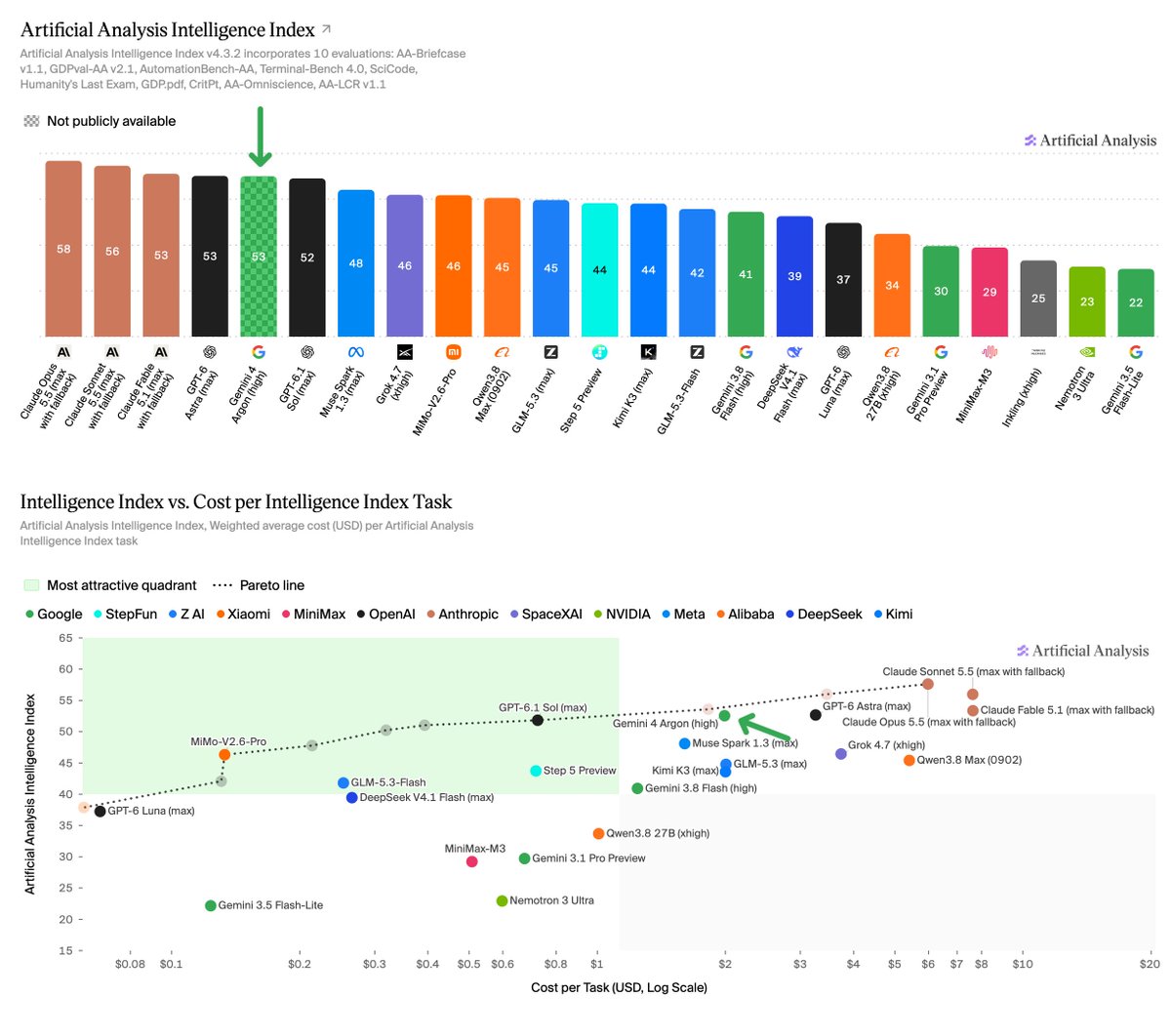
Google’s new Gemini 4 Argon equals GPT-6 Astra on the Artificial Analysis Intelligence Index at 60% of the Cost per Task with discounted prices. Google is now back to being one of the top three labs in intelligence achieved
Gemini 4 Argon is @GoogleDeepMind’s first proprietary model above the Flash class in over 7 months. With high reasoning (the highest available), it scores 53 on the Artificial Analysis Intelligence Index, matching GPT-6 Astra (max, 53) and 1 point ahead of GPT-6.1 Sol (max, 52), with gains driven by lower hallucinations and stronger agentic capabilities.
At its current 50% pricing discount and with cache discounts increased to 95%, Gemini 4 Argon costs $1.99 per Intelligence Index task, 60% of GPT-6 Astra (max), but 2.7x GPT-6.1 Sol (max). After the discount ends, this will rise to $3.98 (~1.2x GPT-6 Astra (max)).
Gemini 4 Argon is currently being rolled out to selected users and is not publicly available. The 50% discount is an initial promotion. Google has not yet confirmed the promotion end date
Key benchmarking results for Gemini 4 Argon with high reasoning:
➤ Google returns as one of the top three labs on intelligence: Gemini 4 Argon (high) scores 53 on the Artificial Analysis Intelligence Index, matching GPT-6 Astra (max, 53) and 1 point ahead of GPT-6.1 Sol (max, 52). This is 23 points above Google’s previous non-Flash model, Gemini 3.1 Pro Preview (30) and 12 points ahead of Gemini 3.8 Flash (high)
➤ Launch discounts of 50% make Gemini 4 Argon competitive on Cost per Task: At current discounted pricing, Gemini 4 Argon (high) costs $1.99 per Intelligence Index task, 60% of GPT-6 Astra (max, $3.26) for a comparable level of intelligence. This cost efficiency is driven by lower token prices, rather than reduced token use, with Gemini 4 Argon averaging 62k output tokens per task, compared with 27k for GPT-6 Astra (max). Google has not yet confirmed the promotion end date, but on standard pricing, Cost per Task will increase to $3.98
➤ Stronger agentic performance: Historically a weaker area for Gemini models, Gemini 4 Argon shows improvements across agentic evaluations. It ranks #1 on AutomationBench-AA at 77.5%, 6 points ahead of Claude Sonnet 5.5 (max, 71.3%). On Terminal Bench 4, Gemini 4 Argon achieves 57%, a +53 point improvement from Gemini 3.1 Pro Preview, only behind Claude Sonnet 5.5 (max, 64%), Claude Opus 5.5 (max, 60%) and GPT-6 Astra (59%). On AA-Briefcase, it reaches 1494 Elo. This is driven by a 65% rubric pass rate, the highest we have recorded, but lower Analytical Quality (1576 Elo) and Presentation Quality (1308 Elo)
➤ Lowest hallucination rate among leading models: On AA-Omniscience, Gemini 4 Argon has a 15% hallucination rate, the lowest of any model scoring 45+ on the Intelligence Index, compared with 51% for GPT-6 Astra (max) and 54% for GPT-6.1 Sol (max). This means Argon is much more likely to acknowledge when it does not know an answer rather than guess incorrectly. On accuracy, Gemini 4 Argon scores 50%, a 5 point decrease from Gemini 3.1 Pro Preview, and 13 points below GPT-6 Astra (max, 63%). With this slightly lower accuracy, its overall AA-Omniscience score of 42 remains in line with GPT-6 Astra (43) and GPT-6.1 Sol (42)
Key model details:
➤ Context Window: 1M tokens
➤ Multimodality: Text, image, video, and speech input, with text output
➤ Pricing: $4/$20 per 1M input/output tokens at standard pricing, currently discounted 50% to $2/$10. Cached input tokens receive a 95% discount ($0.10 per 1M at discounted pricing), up from 90% on Gemini 3.8 Flash
➤ Long Decode Continuation: We tested Gemini 4 Argon with Long Decode Continuation, a new Gemini API feature that pauses long responses and resumes them across follow-up calls. This lets reasoning run up to 1M output tokens without request timeouts
Anthropic Launches Claude Opus 5.5 with Top Performance at Lower Cost?
Claude Opus 5.5: Anthropic reports ~40% lower costs vs Opus 5 on typical workloads and >30% faster output. Terminal-Bench 4.0: 66.4% vs Opus 5's 52.3%. Anthropic cites a 680K-line code migration in <1 day.
API: $4 in/$20 out per 1M tokens.
Want more? Ask Designveloper below.
#ClaudeOpus #technews
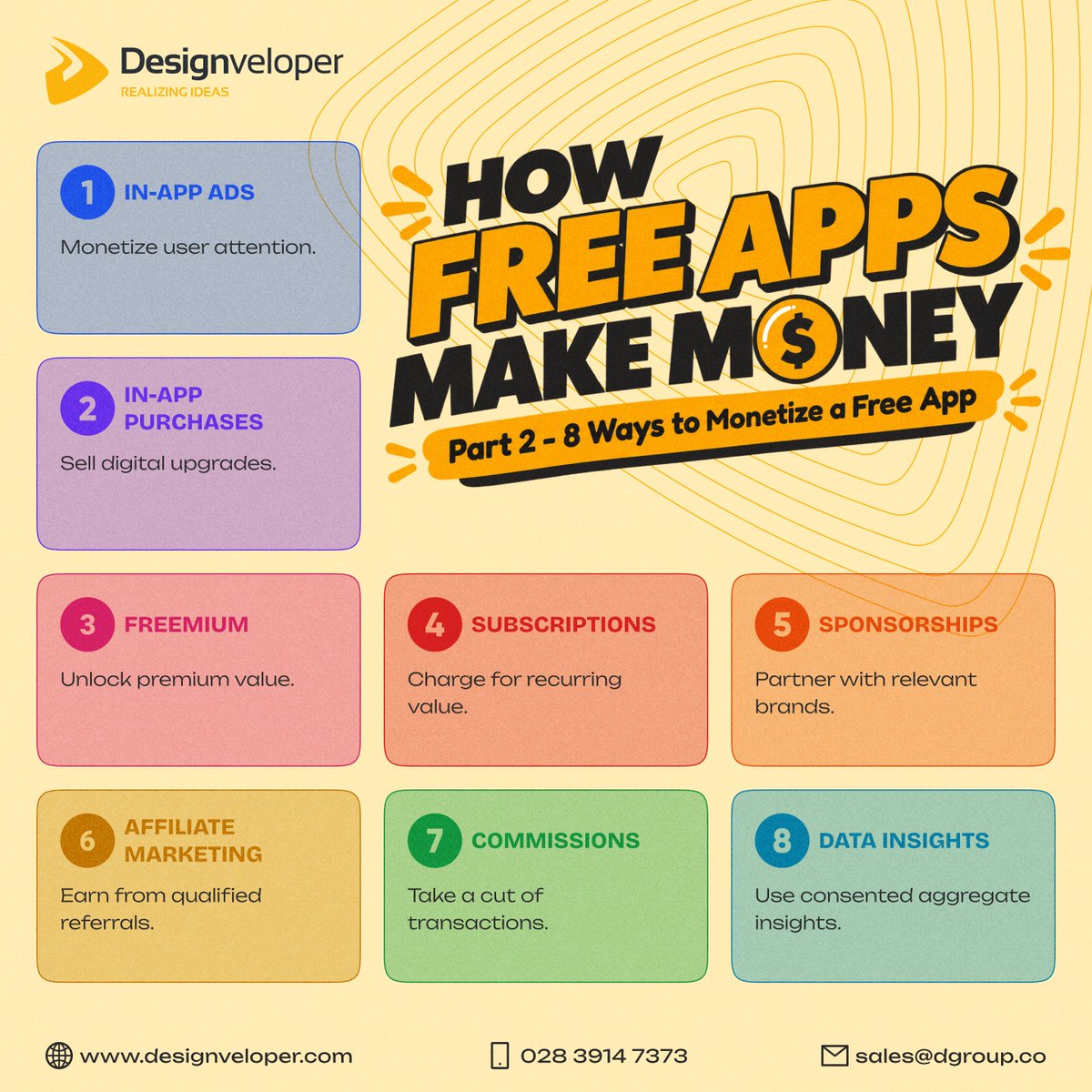
8 common ways free apps generate revenue:
1. In-app advertising for high-engagement apps, games, content platforms, and utilities.
2. In-app purchases for digital items, feature unlocks, credits, or premium content.
3. Freemium upgrades that keep core features free while charging for advanced value.
4. Subscriptions for recurring value, such as content, storage, coaching, or productivity tools.
5. Sponsorships and brand partnerships for trusted niche communities.
6. Affiliate marketing through relevant recommendations, bookings, or product referrals.
7. Transaction fees or commissions for marketplaces, bookings, commerce, or delivery apps.
8. Privacy-safe data insights based on lawful, consented, and aggregated user data.
Which model best fits your free app idea? Let us know in the comments.
#QMS0902 #TypeScript
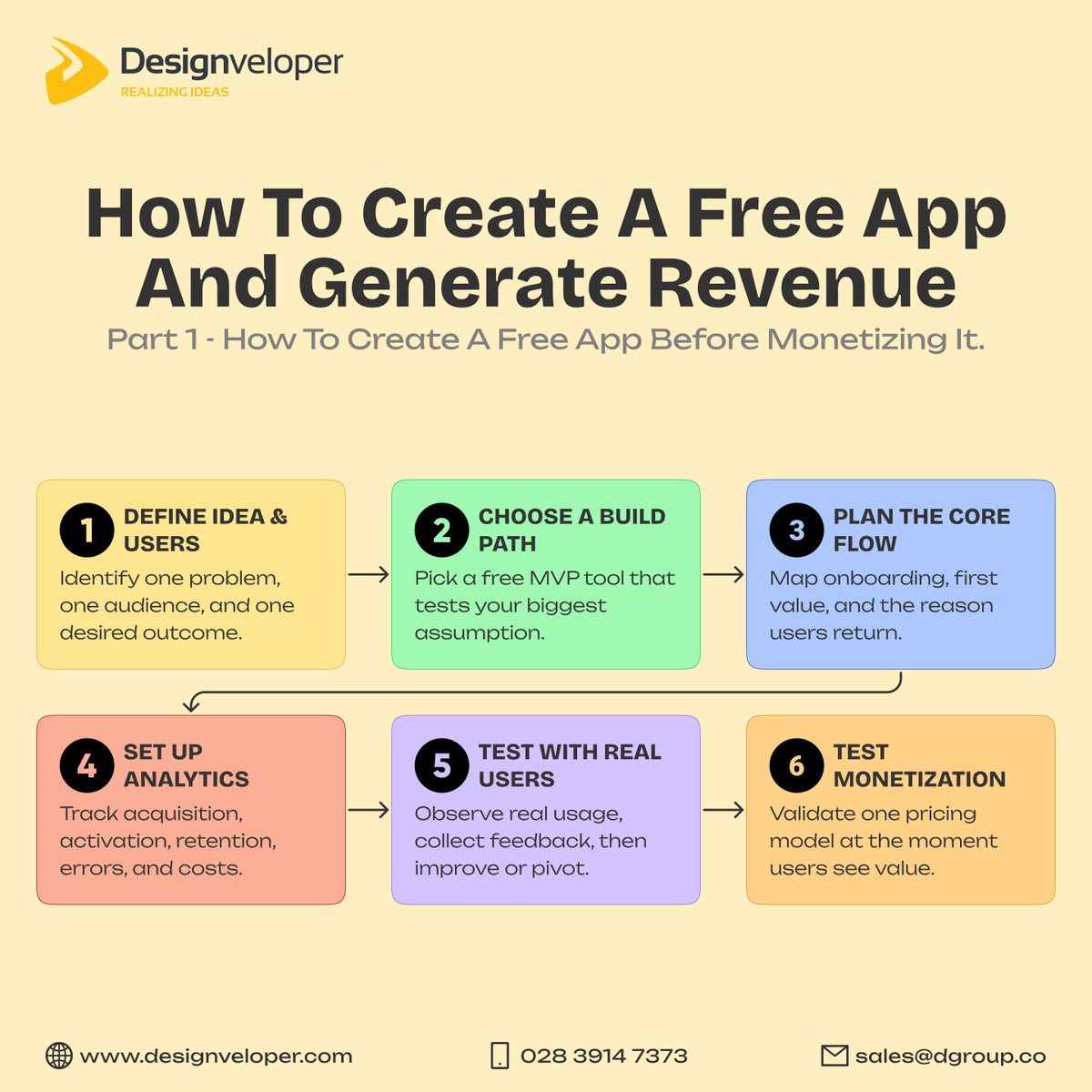
Building a free app that can make money does not start with ads or a paywall. It starts with creating real value for a specific group of users.
Here is the process:
1. Define one clear problem and your target users.
2. Choose a free or low-cost MVP build path.
3. Design a simple core flow that delivers value quickly.
4. Track key signals such as activation, retention, and user behavior.
5. Test the app with real users and improve it based on feedback.
6. Validate one monetization hypothesis only after users see value.
The goal is simple: create value first, validate demand, then build a revenue model that fits your users.
Stay tuned for Part 2 to discover the best ways to monetize free apps.
Read more: https://t.co/UH1juGSw8A
Some lines of code may never be seen by users, yet they power almost every digital experience around us.
Today, on the 256th day of the year, Designveloper is delighted to celebrate International Programmers’ Day!
This is a day to honor programmers who patiently turn ideas into products, complex challenges into practical solutions, and sometimes spend hours tracking down one misplaced semicolon.
Designveloper would like to express our appreciation to programmers everywhere, especially the talented members of our own team. Thank you for your curiosity, logical thinking, creativity, and dedication behind every product we build.
May you continue to find joy in creating new things, patience when facing every bug, and opportunities to become a better version of yourself with every line of code.
Happy International Programmers’ Day!
Tag a teammate who has been with you through those nerve-racking deployments.
#InternationalProgrammersDay #SundayVibes
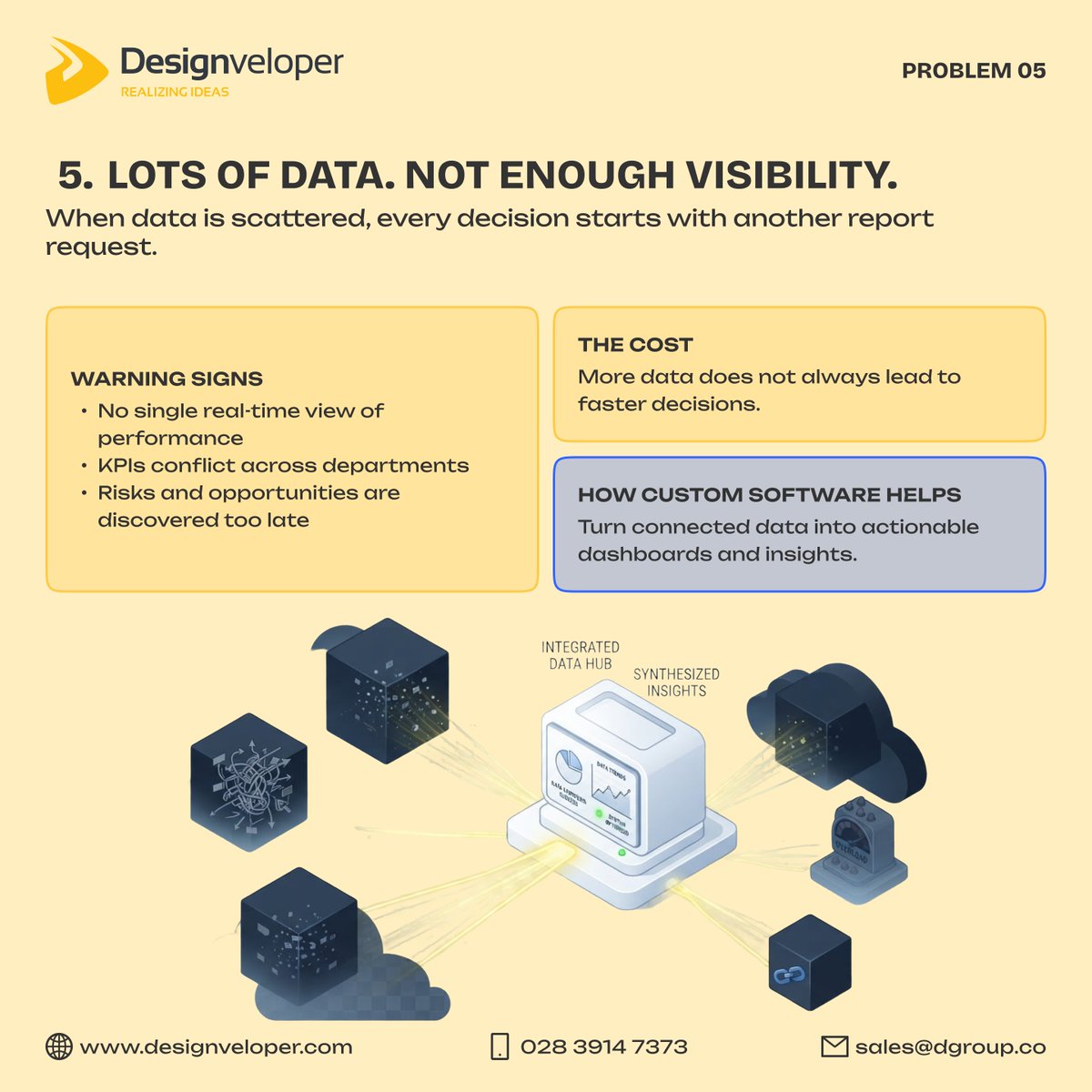
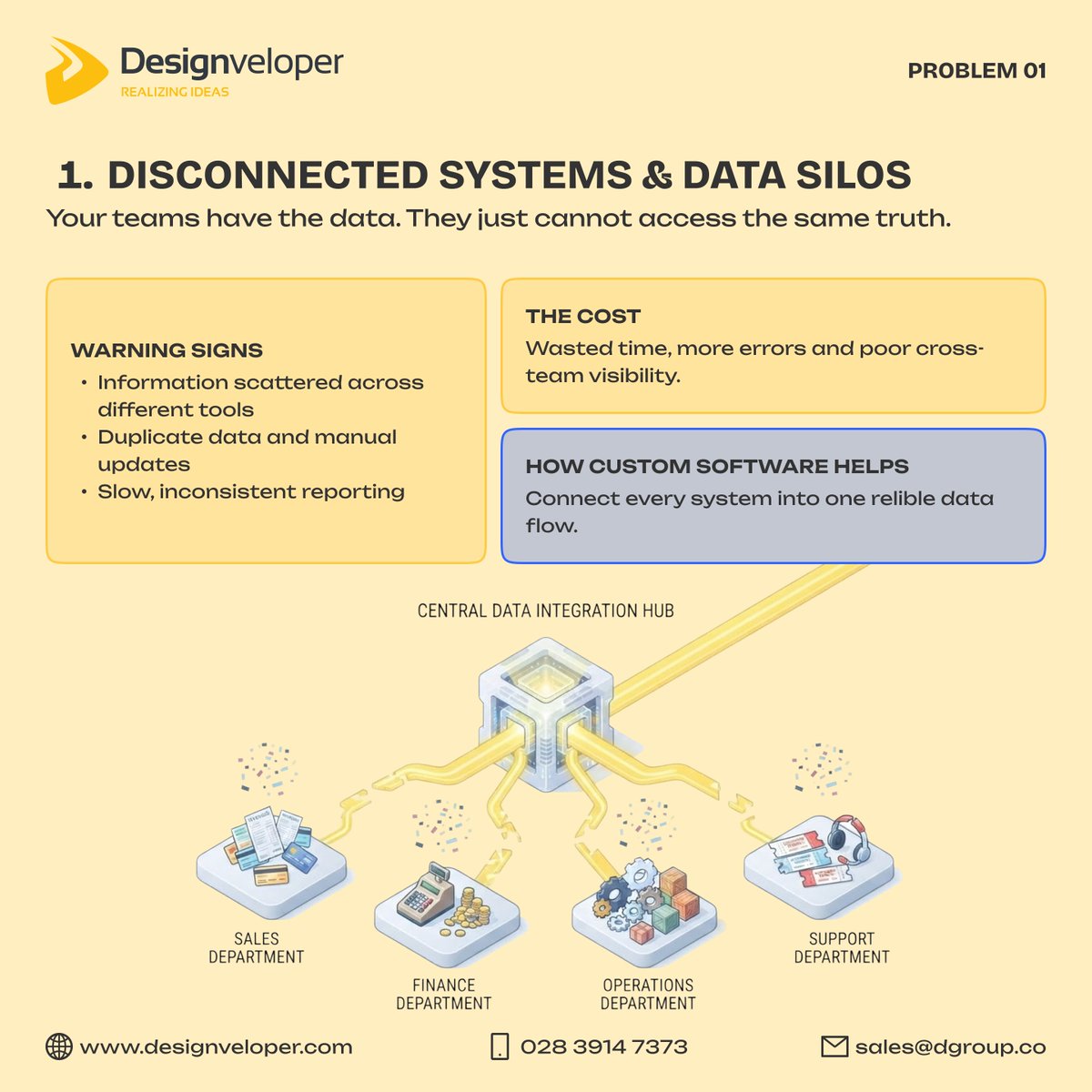
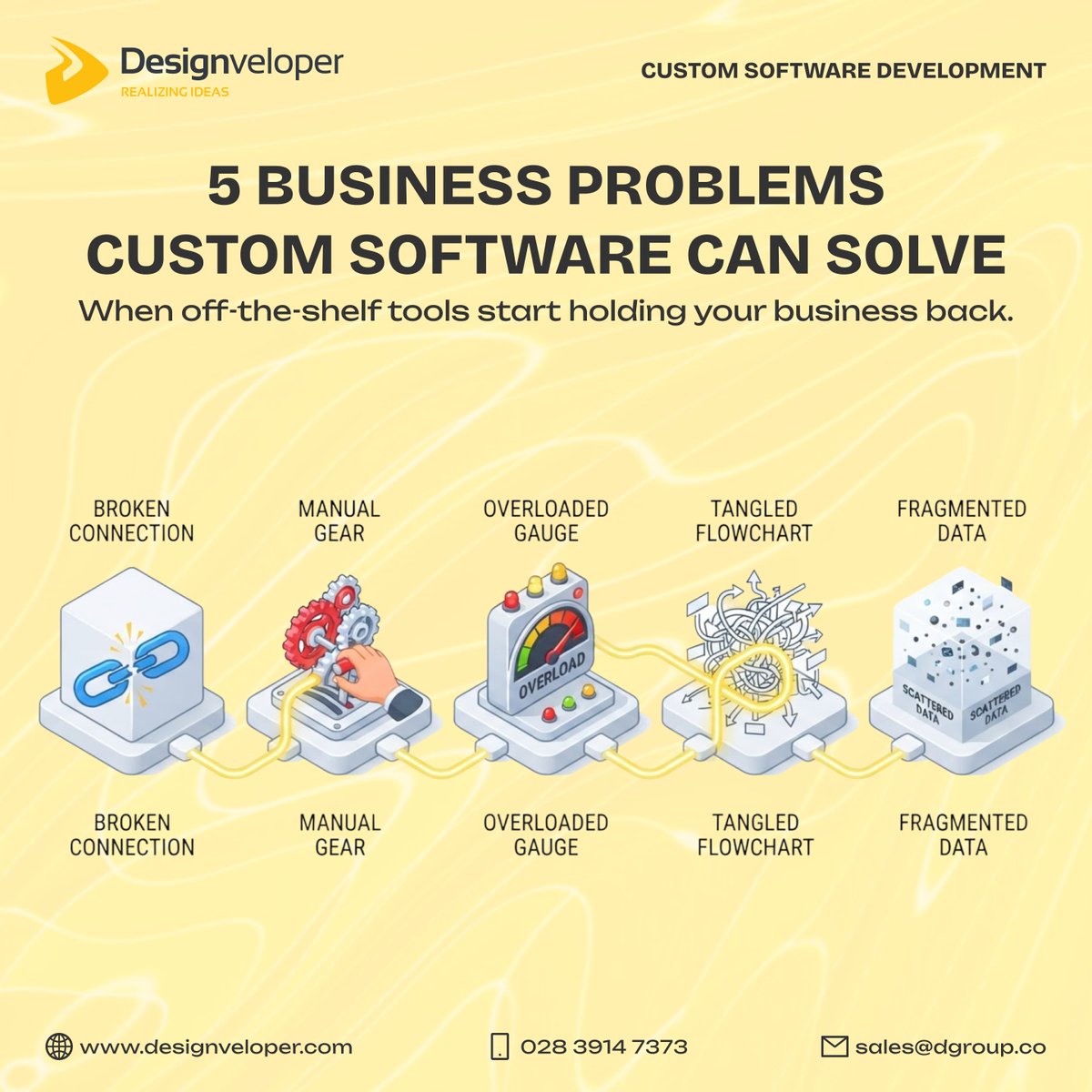
Your team isn't slow. Software may make them work twice.
Disconnected systems, manual work, and copy-paste hide costs: slower decisions and stalled growth.
Designveloper builds custom software around your workflows.
See the 5 signs.
#AgentsAPI#ReactNative
You don’t need to follow hundreds of blogs to become a better web developer. What matters is finding reliable sources that match your learning goals and work.
Here are 30 Best Web Development Blogs To Follow
Read more at: https://t.co/KHpzZ8IQdC
#tezostuesday#Anthropic