Teachers, you spend so much time pouring into everyone else that sometimes you forget about yourself.
But hear this: you deserve the same peace, love, happiness, and support that you encourage your students to seek. Don’t forget to take care of you too.
#educators#teachers #education
Students can make it all the way through a problem, but if their foundation isn't strong, they may not interpret the answer correctly. Blindly show these varying videos & see if your students can identify how much money the screen is displaying.
https://t.co/L7AD0zMDID
And how do you evaluate/compare pay between an Art, Music, PE, Foreign Language, Tech ... against a Math Teacher. Only ONE of those areas is in a measurably tested field. However, all of them are important! The ability to achieve any type of inserted measurable success also differs between each subject.
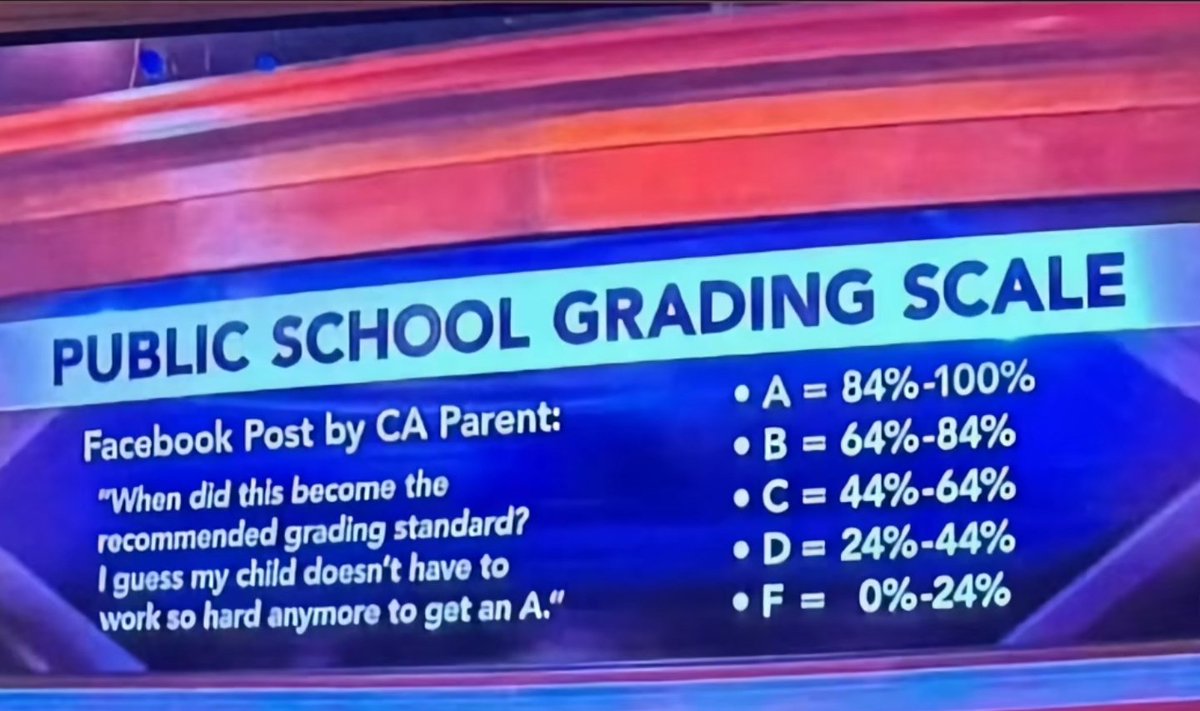
I am not trying to give a "hot take", but a grading scale has low relevancy in the grand scheme of things. Teachers unknowingly or on purpose will mold their teaching, assessments, and everything that surrounds the eventual output of a grade including rigor. An observed example: One teacher may give hints if a student comes up to their desk during an assessment. While, other teachers won't/don't.
There are various forms of this that often go without being noticed.
-The LCD projection in the back of the room. Is the font big enough?
-A teacher that mumbles is tough on people even with a slight hearing deficiency.
Years ago, an exemplary former student came to see me after school one day to tell me he was now flunking math, and that his teacher was getting increasingly irritated with him for “not paying attention.”
“Well, are you?” I asked.
“I'm trying to!” he said, with tears in his eyes.
I thought for a moment. As chance would have it, I had just had a similar situation in my own class.
“Are there assigned seats?”
“Yes.”
“Where do you sit?” I asked.
“In the front row!”
“Is your teacher right-handed?”
“Um… yeah?”
“Do you sit behind him to the left?”
“Yes!”
“Is he blocking you when he writes on the board?”
“YES!!”
A quick note to his mom resulted in his seat being moved, and the exemplary student quickly re-emerged.
Students who can't see the math can't learn the math.
This story and many others like it inspired me to create YouTeachYou, the first k-8 math method with a worked example for everything, printed on the page itself so all students are sure to see it.
See https://t.co/YTkPUsp7ve
We don’t have a classroom management problem.
We have an emotional regulation crisis that teachers are being asked to handle.
Somehow, “classroom management” has turned into:
• de-escalating trauma
• supporting anxiety and depression
• calming panic attacks
• breaking up fights
• being cursed at, threatened, and even assaulted
• being the counselor, social worker, and crisis team
And at the same time…
we remove the very things that actually help:
• recess
• movement
• art
• play
• connection
Teachers aren’t trained for this.
And they shouldn’t have to be.
Classroom management was never meant to do all of this.
It’s about:
relationships
rules
routines
responsibility
That’s it.
It was never designed to replace what families, communities, and systems failed to provide.
And until we stop offloading every societal failure onto schools,
teachers will keep drowning under expectations no human can meet.