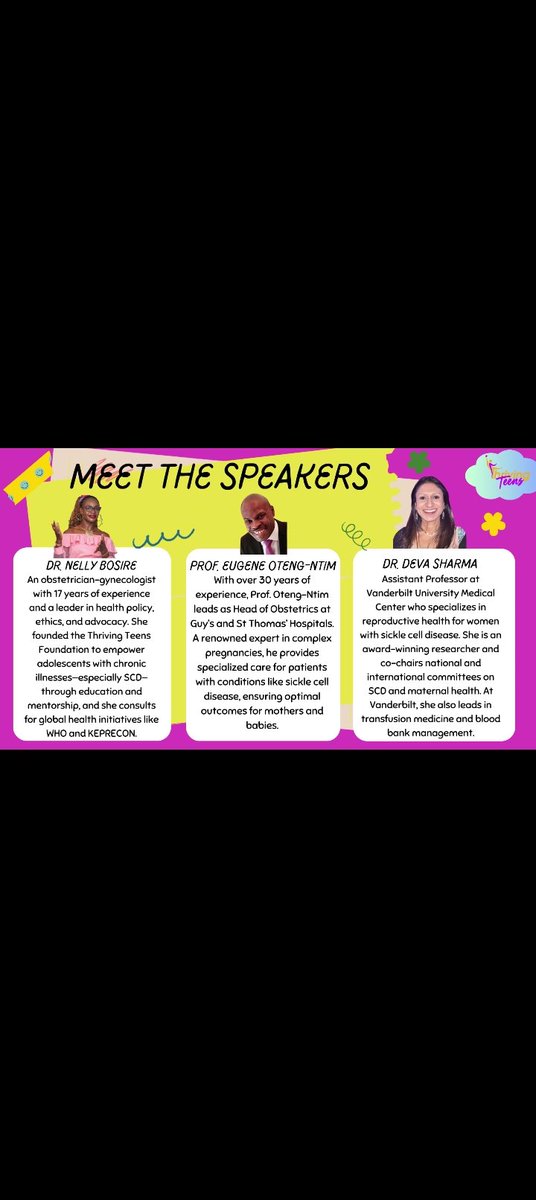
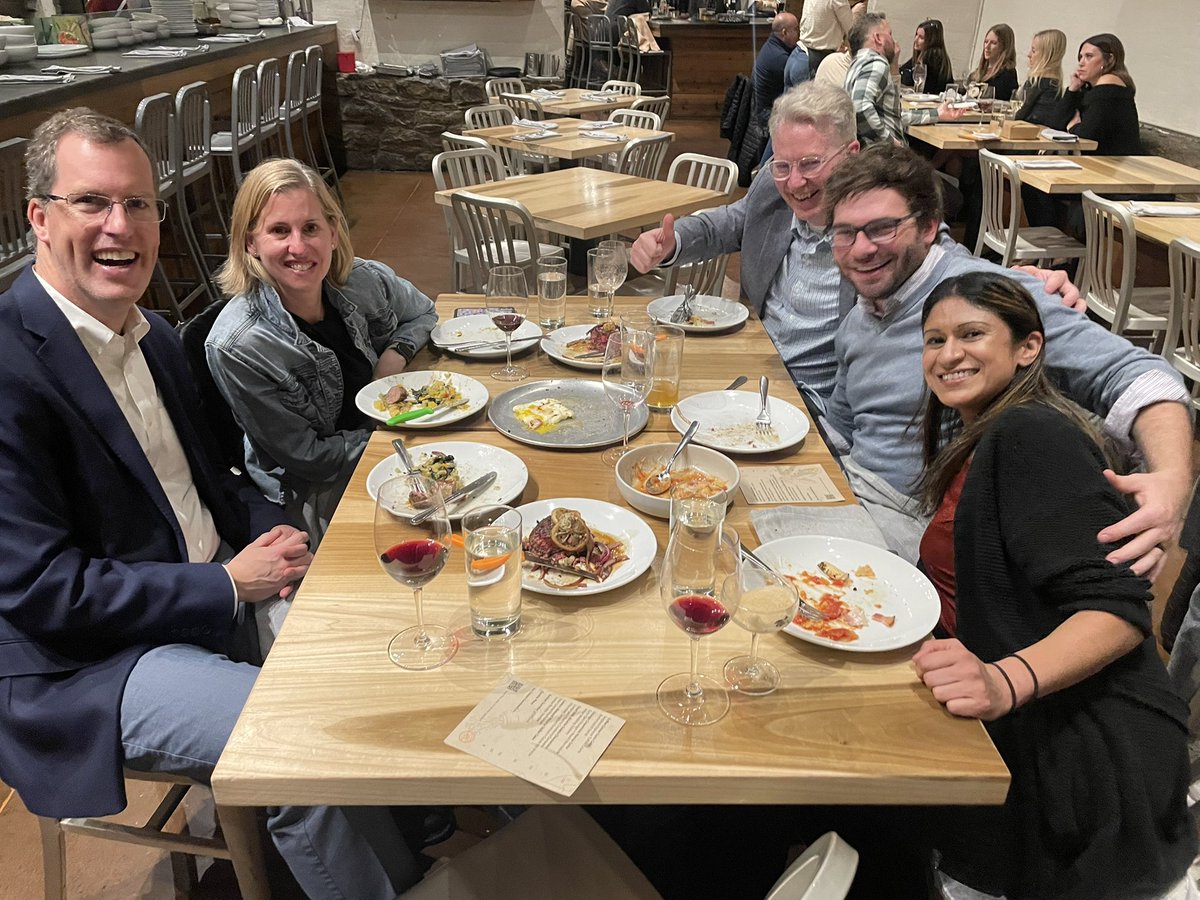
I also want to acknowledge internationally renowned thought leaders on this topic who have mentored and motivated me to continue this work: Professors Pecker, Malinowski and Oteng-Ntim. @LydiaPecker @ntim_oteng @SinaiHemeOB
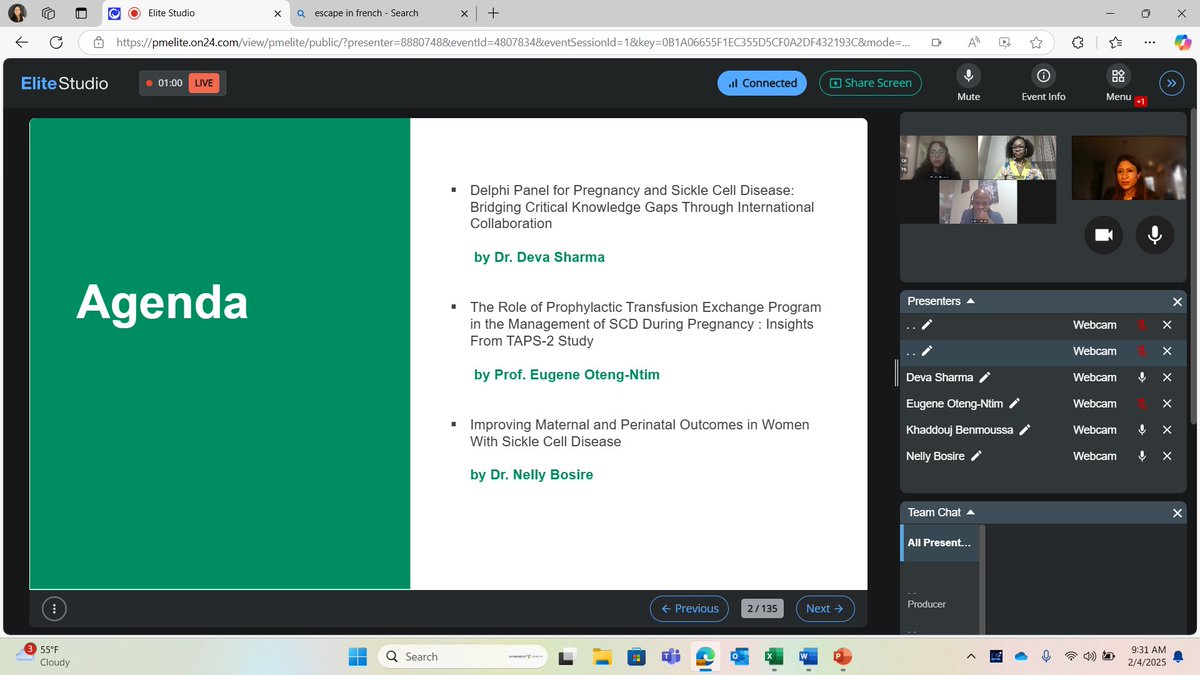
Honored to speak on an international panel this morning on transfusions, pregnancy and sickle cell disease with global experts Professor Oteng-Ntim and Professor Bosire. @terumobct @VUMC_Cancer @VUMCPathology @VUMCDiscoveries#sicklecelldisease#sicklecellanemia
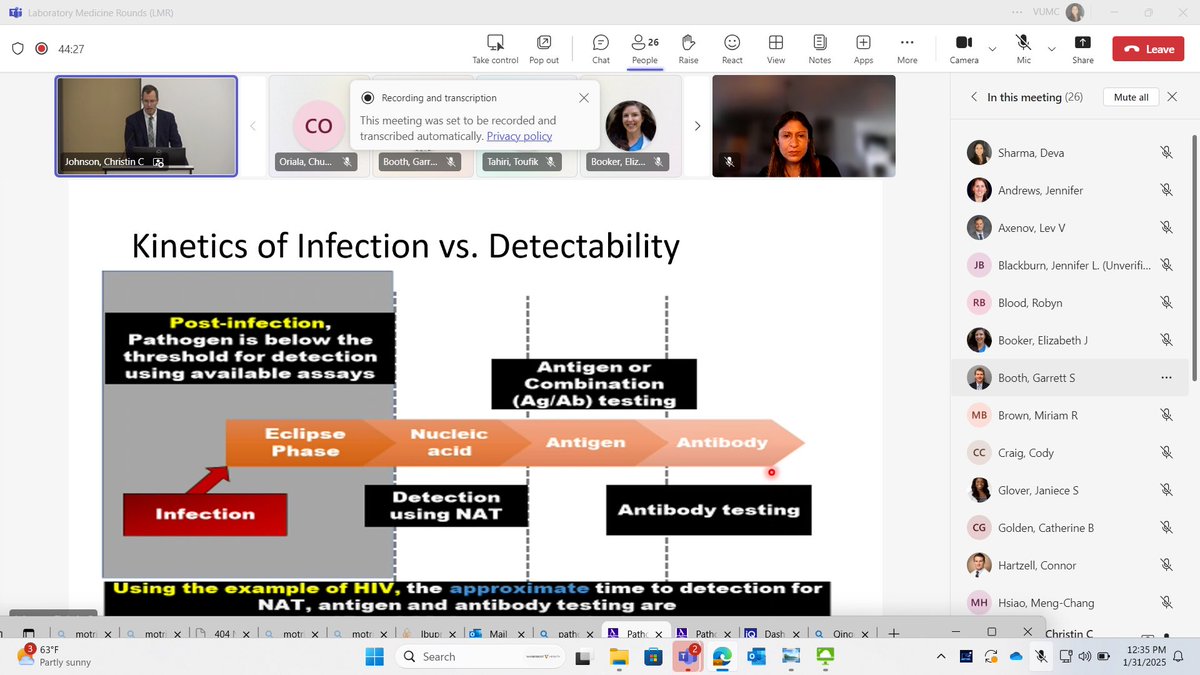
Phenomenal Grand Rounds today by Dr. Aaron Tobian, walking us through the landscape of pathogen reduction in low resource settings and the development of global health clinical trials. @VUMCPathology @JohnsHopkins@AaronTobian@VUMCDiscoveries@HopkinsMedicine
@LeahHoustonMD@drjfordo I think Telemedicine appropriate for many more patient visits in benign hematology as well. It rapidly expands care to patients who live far away and is much more efficient.
@VNikolian@LeahHoustonMD I agree with you. Telemedicine may be suboptimal for emergency medicine, but it's a tremendous asset in other specialties managing non urgent medical issues. In my specialty it has allowed me to extend care to patients who live far away without the inefficiencies of clinic.
@LeahHoustonMD Last point here: as a subspecialist I see patients who live 6 plus hours away and telemedicine allows me to see these patients more frequently. I understand your perspective as an emergency medicine physician but I am providing the perspective of outpatient doctors.
@LeahHoustonMD I also want to add that for clinic doctors, sometimes it can take the support staff 20 plus minutes to room a patients. Telemedicine allows us to see more patients with benign issues with much more efficacy and saves # of rooms and need for support staff.